The Technical Vault
By SOSCleanroom
Microfiber as a Process Control: Why TX1209 Alpha-1 Is Built for Smudge-Free, Low-Linting Cleaning on Sensitive Surfaces
Last reviewed: Jan. 3, 2026 | Audience: contamination control, cleanroom operations, EHS, quality
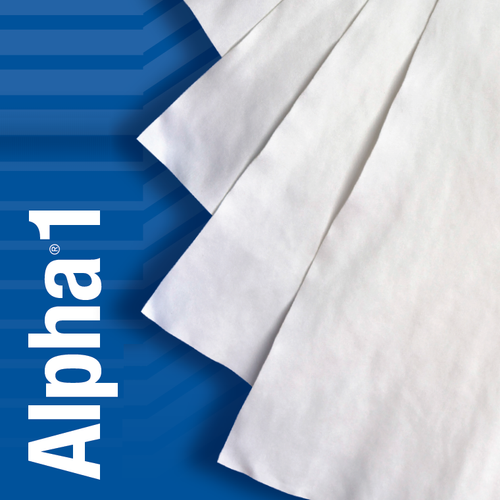
Texwipe TX1209 Alpha-1 Microfiber (9" × 9") is a dry, sealed-edge microfiber cleanroom wiper engineered for precision wiping where the failure mode is often smear, haze, or operator variability rather than “visible dirt.” In the field, microfiber becomes a control move when teams need reliable removal of oils and fingerprints, reduced streaking on smooth substrates, and a tighter “what did the wipe contribute?” contamination model than commodity microfiber options.
TX1209 is built from an 80% polyester / 20% nylon microfiber blend with a sealed edge to help limit edge-driven fibers during folding and aggressive wipe patterns. It is positioned for ISO Class 3–7 applications (and EU Grade A–D equivalents) when the wipe must clean effectively while remaining predictable in particles, fibers, residues, and ions.
What it’s for
TX1209 is best used for critical cleaning and wipe-downs on sensitive surfaces where microfiber’s high surface area and oil pickup reduce the need to “rewipe until it looks right.” Typical use cases include optical and inspection surfaces, smooth stainless and tooling, enclosures, cleanroom work surfaces, and controlled wiping steps where oils, fingerprints, and light films are the primary soil.
Decision drivers
TX1209 earns its place in a cleanroom program based on a short list of technical controls:
- Microfiber cleaning mechanism: fine microdenier fiber structure increases surface area for improved film pickup and fingerprint/oil removal, supporting more consistent “first-pass” outcomes on smooth surfaces.
- Blend balance: 80/20 polyester/nylon supports durability and controlled wet handling while improving affinity for oils and light films compared with polyester-only wipes.
- Edge strategy: sealed edge is a practical control when folding, corner work, and repeated face rotation can otherwise elevate edge-driven fibers.
- Published contamination framework: typical values for particles/fibers, NVR, and ionic extractables support qualification discussions and placement discipline.
- Packaging and traceability: cleanroom packaging and lot coding support controlled introduction and faster investigations when a trend shifts.
- Regulatory relevance (context-dependent): TX1209 is often selected in facilities that align consumables to USP <797> / <800> environmental control expectations (your SOP and documentation set remain the governing control).
Materials and construction – explained like an engineer
“Microfiber” is only helpful as a label if you connect it to the failure modes you are trying to prevent. TX1209 uses a polyester/nylon microfiber blend to increase effective contact points with a surface, which helps the wipe capture light oils and films instead of pushing them into streaks. Nylon also contributes to wetting behavior and film pickup, which is why 80/20 microfiber is a common architecture for “smudge-control” cleaning.
The sealed-edge construction matters because microfiber is frequently quarter-folded and rotated through multiple faces. If the edge sheds, every fold becomes a risk multiplier. Sealing the border reduces that edge-driven contribution and makes face-rotation discipline more reliable in practice.
Cleanliness and performance metrics
For many facilities, the decision to standardize a microfiber wiper comes down to whether it introduces risk in three categories: releasables (particles/fibers), residues (NVR), and ions. TX1209’s published typical values should be treated as a qualification starting point rather than a contractual specification.
Typical performance notes for TX1209 include fast wetting and uptake (sorptive rate reported as <0.3 seconds and sorptive capacity reported as 320 mL/m²), along with typical cleanliness context for particles/fibers, NVR (IPA and DI water extractants), and low ionic extractables. Operationally: microfiber can clean extremely well, but it also “holds onto” what it captures—so face-rotation and early discard are the real controls when residue budgets are tight.
Country-of-origin note: quality systems that treat COO as a controlled attribute should confirm via documentation tied to the lots received. Manufacturer literature for the Alpha-1 Microfiber family lists origin/finishing details that may differ by configuration; rely on the case label/COC for your received lots.
Best-practice use
TX1209 performs best when operators treat microfiber as a controlled cleaning tool, not a “one wipe for everything” rag. Use quarter-folding to create multiple clean faces, wipe in controlled, overlapping, single-direction strokes, and rotate to a fresh face early—especially when removing oils and fingerprints.
For smooth, residue-sensitive surfaces, keep the wipe damp rather than wet, and avoid re-wetting mid-pass. Over-wetting can mobilize films beyond the intended wipe path and create streaking after dry-down. If the surface is inspection-driven (optics, glossy polymer windows, coated parts), reduce pressure and rely on consistent strokes and frequent face changes rather than “scrubbing harder.”
Common failure modes — and how TX1209 helps
Microfiber failures are predictable: smearing from an oil-loaded face, streaking from excess solvent, and redeposit from using one wipe too long. TX1209’s microfiber architecture improves pickup of oils and light films, and the sealed edge reduces edge-driven fibers during folding. The remaining controls are procedural: disciplined face rotation, directional strokes, and defined change-out triggers (visible soil, drag increase, or any onset of smearing).
Closest comparators
The most defensible comparisons are to other sealed-edge, 80/20 microfiber cleanroom wipes intended for similar ISO ranges and film-removal tasks.
Berkshire MicroPolx® 4000-HP is a close comparator in the 80/20 sealed-edge microfiber category. Evaluations typically focus on edge sealing method, published cleanliness metrics (particles/fibers/NVR/ions), packaging discipline, and how the wipe behaves on your specific “smear risk” surfaces.
Contec microfiber wipe programs are commonly evaluated when teams want alternate packaging formats or a different microfiber “hand feel” for sensitive surfaces while maintaining controlled-environment documentation posture.
Valutek ultrasonic-sealed microfiber formats are often compared when low texture, sealed edges, and critical-environment positioning are the dominant requirements.
Rule of thumb: When smear/film removal is the acceptance driver, microfiber is often the right mechanism. When ionic background is the dominant risk, validate the full wipe/solvent/surface system—not just the wipe.
Where TX1209 fits in a cleanroom wiping program
TX1209 is a strong choice when a facility needs a smudge-control wiper for ISO Class 3–7 environments: sealed-edge microfiber for consistent film pickup, predictable handling under folding and face rotation, and published cleanliness context to support disciplined placement. It is best positioned for sensitive surfaces and inspection-driven cleaning, while higher-sorption blended nonwovens are often better suited for bulk aqueous spill pickup and heavy wet wipe-downs.
Terminology note: TX1209 is engineered for low-linting performance; no wiper is truly “lint-free” in every process condition.
Source basis
- SOSCleanroom product page: “Texwipe TX1209 Alpha-1 Microfiber 9" × 9" Polyester and Nylon Cleanroom Wiper” (size, composition, sealed edge, packaging, positioning, USP context). https://www.soscleanroom.com/product/alpha-1-microfiber/texwipe-tx1209-alpha-1-microfiber-9-x-9-polyester-and-nylon-cleanroom-wiper/
- ITW Texwipe technical data sheet: “Alpha-1 Microfiber Wipers” (TX1209 ordering and packaging; ISO class positioning; typical performance and contamination characteristics; shelf-life framing; origin/finishing notes). https://texwipe.com/wp-content/uploads/2025/01/TDS_Alpha-1_Microfiber_Wipers_TX1200_series_web.pdf
- Berkshire datasheet: “MicroPolx 4000-HP” (80/20 microfiber comparator category; sealed-edge positioning). https://berkshire.com/wp-content/uploads/2020/05/MicroPolx_4000-HP.pdf
- Category comparator references: Contec wipe programs (microfiber category context). https://healthcare.contecinc.com/products/wipes
- Category comparator references: Valutek ultrasonic-sealed microfiber wipe listing (microfiber category context). https://www.fishersci.com/shop/products/ultrasonic-sealed-low-texture-microfiber-wiper/191502028
Source: SOSCleanroom Technical Vault | Last reviewed: Jan. 3, 2026
© 2026 SOS Supply. All rights reserved.