The Technical Vault
By SOSCleanroom
ISO Class 5 / Class 100
Sterile (Gamma Irradiated)
Pair Packed (L/R Wallet)
12" Nitrile • 5 mil
USP <797> / <800> Use Case
ASTM D6978-05 Chemo Tested
ESD-Control Properties Listed
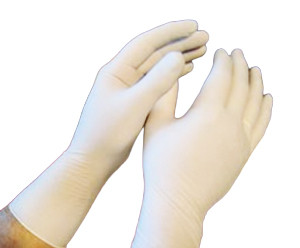
Cleanroom STN200P Series 12" Sterile Nitrile Gloves (Pair Packed) — TechNiGlove
1) Practical solutions in a critical environment
STN200P is built for operators who need sterile, documented hand protection while keeping contamination-control discipline tight. Pair-packed (left/right) wallets support aseptic transfer and gloving without “touching your way into” contamination. The 12-inch length adds wrist/forearm coverage, and the microtextured fingertips help when you are handling slick sterile packs, vial stoppers, tubing, or small fixtures where dropped parts become a deviation.
Where this glove shows up most often
USP <797> and USP <800> workflows, sterile non-medical environments, pharmaceutical/biotech processing, medical-device assembly, and any ISO Class 5 / Class 100 task where sterility, traceability, and controlled donning matter as much as the glove polymer.
2) What it’s for
A sterile, powder-free, latex-free nitrile glove intended for contamination-controlled work where you want a clean glove surface (particles, ions, and residue controlled), sterile handling at point-of-use, and packaging that supports audit-ready lot and expiration control. It is also positioned for chemotherapy drug applications based on ASTM D6978-05 testing and for use-case alignment with USP <797> / <800>.
3) Why should customers consider this swab
- Sterile pair-packed control: One pair per wallet supports clean, repeatable donning and reduces “open-box exposure time” during gowning.
- ISO Class 5 / Class 100 positioning: Particle and extractables specifications are published for contamination-controlled environments.
- 12" length + microtexture: Helps with forearm coverage and grip while double-gloving or manipulating sterile packs and fixtures.
- USP <797> / <800> workflow fit: Often selected when documentation, lot control, and consistent sterile presentation are required in compounding/handling processes.
- ESD properties listed: Useful when static control is part of your process-risk picture for sensitive devices/assemblies.
Note on wording: no glove is “lint-free.” What matters is low-linting behavior plus controlled particles/extractables and disciplined handling.
4) Materials and construction
Powder-free nitrile (latex-free) with a beaded cuff and microtextured fingertips. The product is supplied sterile via gamma irradiation and packaged as left/right pair-packed wallets to support point-of-use sterile presentation. TechNiGlove states its products are manufactured in ISO 9001:2015 and ISO 14001:2015 certified facilities.
5) Specifications in context
| Specification |
Published value |
Why it matters on the floor |
| Cleanroom positioning |
Class M3.5 / Class 100 / ISO Class 5 |
Sets expectations for gowning and surface-contact risk in ISO 5 work zones. |
| Length |
12" (300 mm) |
Better wrist/forearm coverage; helps reduce sleeve-gap exposures during manipulations. |
| Thickness |
5 mil (0.005") |
Balances dexterity and puncture resistance; supports double-glove comfort. |
| Grip surface |
Microtextured fingertips |
Improves control with sterile packs, damp tooling, and smooth polymer parts. |
| Cuff |
Beaded |
Reduces roll-down during extended tasks and glove changes. |
| Color |
White |
Aids visual inspection for residue/soiling and supports cleanroom appearance standards. |
| Mechanical |
Tensile strength > 12.5 MPa; elongation at break > 500% |
Helps reduce tears during donning and repeated manipulations. |
| Style |
Ambidextrous; pair packed L/R in wallet |
Ambi build simplifies inventory; L/R wallet supports controlled sterile presentation. |
| Sizes |
XS, S, M, L, XL, XXL |
Sizing drives dexterity and tear risk; overtight gloves fail faster. |
| Packaging |
200 pairs/case (4 bags of 50 wallets; 1 pair/wallet) |
Supports point-of-use control, predictable consumption, and controlled sterile opening. |
Glove sizing reference (as published on SOSCleanroom): Size 6–6.5 = X-Small; 7–7.5 = Small; 8 = Medium; 9 = Large; 10 = X-Large; 10.5+ = XX-Large.
6) Cleanliness metrics (and why they matter)
Glove cleanliness is not one number. For ISO 5 work, you care about particles (what can shed), extractable ions (what can leach and interfere with processes/analytical work), and non-volatile residue (what can film surfaces). Below are published values. Lot-to-lot COA/COC documentation should be your tie-breaker.
Typical particle cleanliness (published)
| Metric |
Value |
Method / note |
| Particle levels |
Class M3.5 (100): published as < 1800 to < 3000 total particles/cm² > 0.5 µm
|
IEST-RP-CC005.2 method (values vary across published sources) |
Typical ion extractables (published)
| Ion |
TechNiGlove product page values |
Distributor datasheet values |
| Fluoride |
< 0.05 µg/cm² |
< 0.05 µg/cm² |
| Chloride |
< 1.5 µg/cm² |
< 3.0 µg/cm² |
| Nitrite |
< 0.05 µg/cm² |
< 0.05 µg/cm² |
| Nitrate |
< 1.00 µg/cm² |
< 3.00 µg/cm² |
| Phosphate |
< 0.05 µg/cm² |
< 0.05 µg/cm² |
| Sulfate |
< 1.00 µg/cm² |
< 3.00 µg/cm² |
| Bromide |
< 0.05 µg/cm² |
Not stated |
Typical NVR and ESD-control properties (published)
| Metric |
Value |
Condition / note |
| Total NVR (DI water) |
Published as < 5.00 to < 8.00 µg/cm² |
Values vary across published sources; verify with lot documentation |
| Surface resistivity |
~1 × 10¹⁰ ohm/square (or < 1010 ohm/square) |
Published to ANSI/ESD SP15.1 and/or ESD-S11.11 (depending on source); confirm your internal ESD test method alignment |
| Static decay |
< 0.5 seconds |
Published to RETS-5-003 at 50–60% humidity (per distributor datasheet) |
7) Packaging, sterility, and traceability
Sterility: Published as sterile (gamma irradiated). In practice, sterile assurance is only as strong as your documentation chain: request/retain the certificate package required by your CCS (commonly Certificate of Sterility and/or Certificate of Irradiation depending on supplier format).
Pack architecture: 1 pair per inner wallet; 50 wallets per bag; 4 bags per case; 200 pairs per case. This structure is designed to keep sterile exposure localized to the pair you actually use.
Lot/expiration control: Lot numbers and expiration dates are published as present on all levels of packaging, enabling receiving inspection and issuance control (FIFO/FEFO) without opening clean packs.
8) Best-practice use (operator-level)
Customer SOP disclaimer (use as a template)
This is a suggested handling template for customer education. It is not a site-specific SOP and should be adapted, risk-assessed, and approved by your quality unit to match your facility, cleanroom classification, and Contamination Control Strategy (CCS).
Receiving / staging: Inspect outer case for damage. Confirm glove size, lot number, and expiration at the case and bag levels before you move product into controlled storage. If your program requires it, quarantine until documentation is matched (COC/COS/irradiation records) and released.
Gowning room workflow (pair-packed advantage): Open only what you will don immediately. Present the wallet on a clean staging surface. Peel the wallet open slowly (do not “snap” it) to avoid stirring particles. Don the first glove using a pinch-and-peel technique that avoids contacting the glove exterior with bare skin. Repeat for the second glove. If double-gloving, keep the outer glove change interval short and defined by your task risk.
During the task: If you touch non-controlled surfaces (door hardware, carts, phones, keyboards), treat the glove as compromised. Change gloves rather than trying to “wipe it clean.” In ISO 5 work, glove changes are usually faster and lower-risk than trying to recondition a soiled glove surface.
Chemical compatibility: Use a chemical resistance reference for splash/intermittent contact decisions. If contact is prolonged, hot, or involves aggressive solvents, verify by chart and by your EHS/quality rules before proceeding.
Complementary Texwipe contamination-control products (ISO 5-aligned selection):
For over 35 years, SOS and Texwipe have been close partners, and SOSCleanroom is the authorized Master Distributor of ITW Texwipe for the United States market. When you are building a matched consumables set around sterile gloves, two common pairings are:
- Sterile wipers for ISO 5 cleaning/wipe-down: Texwipe TexTra™ 10 TX3225 (sterile) is published for ISO Class 3–8 and EU Grade A–D environments and is positioned for USP <797> / <800> wiping use cases.
- Sterile swabs for small fixtures/crevices: Texwipe Alpha® STX714A (sterile) supports controlled application of solvents and precise cleaning where a wiper cannot reach.
9) Common failure modes
- Overstretch tears at donning: Often sizing-related or caused by rushing. If you see frequent cuff tears, re-check size selection and donning technique.
- Pinholes after handling sharp edges: Use finger cots, tools, or engineering controls for burr-prone assemblies; increase glove-change frequency on high-risk tasks.
- Residue/film transfer: If your process is highly sensitive to ions/NVR, validate glove compatibility and rely on lot documentation, not assumptions.
- Cross-contamination via “glove cleaning”: Wiping gloves with saturated wipes can spread contaminants. Most CCS programs prefer controlled glove changes instead.
- Traceability breaks: If wallets/bags get separated from lot/expiry identifiers, you lose audit value. Keep labeling intact through staging and issuance.
10) Closest competitors
In sterile nitrile glove programs, customers typically compare based on sterile presentation, lot documentation discipline, particle/extractables performance, and supply continuity.
- Ansell TouchNTuff® 93-700 (sterile nitrile, ISO 5): Often evaluated for sterile nitrile programs where global quality systems and documentation are central.
- Kimtech™ G3 White Nitrile (ISO Class 3 listed on SOS): Selected for very high cleanliness targets; compare packaging and sterility needs to your workflow.
- CT International NSGF sterile nitrile (pair packed): Common alternative for sterile pair-packed nitrile formats.
11) Program fit (how customers actually deploy it)
STN200P is a practical choice when your operation needs sterile, controlled presentation at the pair level and wants to reduce “open packaging exposure” compared with bulk-packed sterile gloves. Pair-packed wallets help when you are training new operators, rotating staff, or supporting compounding/handling tasks where glove changes are frequent and must be documented cleanly.
SOSCleanroom’s approach is straightforward: critical environments require best-in-class consumables and consistent supply. We focus on reliable glove programs that customers can sustain—without cutting corners that create contamination events, scrap, or investigations.
12) Validation, qualification, and CCS alignment notes
U.S. standards first: In regulated sterile operations, align glove selection and use with FDA expectations for aseptic processing (training, gowning discipline, and contamination control), USP <797> / <800> (when applicable), and ISO cleanroom terminology (ISO 14644). Use IEST guidance for contamination-control test method context (for example, particle test method references).
EU GMP Annex 1 as a secondary benchmark: Many U.S. customers use Annex 1 as a continuous-improvement reference for CCS thinking (risk-based control, transfer discipline, and documentation/traceability). Treat it as a helpful global benchmark—not a U.S. legal requirement.
What to document: At minimum, capture lot/expiry at receipt and issue, retain the supplier certificate package required by your CCS, and define glove-change triggers (time, task change, surface contact, tear/pinhole, leaving ISO 5 zone). If you claim ESD controls, align your internal test method with the published reference method and record it in your program file.
13) Source basis
Product pages and manufacturer documentation
SOSCleanroom product page: https://www.soscleanroom.com/product/apparel/cleanroom-stn200p-series-12-sterile-nitrile-gloves-pair-packed/
TechNiGlove product page (STN200P Series): https://www.techniglove.com/product/stn200p-series/
TechNiGlove catalog PDF (includes STN200P listing): https://www.techniglove.com/wp-content/uploads/2017/12/TechniGlove-catalog.pdf
STN200P Series datasheet PDF (distributor copy): https://www.texastechnologies.com/wp-content/uploads/2025/01/STN200P-Series.pdf
Chemical resistance chart PDF (TechNiGlove nitrile/latex reference): https://www.soscleanroom.com/content/Gloves/TechNiGlove_Chem.pdf
Complementary Texwipe contamination-control products (reference)
Texwipe TexTra™ 10 TX3225 (sterile wiper): https://www.texwipe.com/sterile-textra-10-tx3225
Texwipe Alpha® STX714A (sterile swab): https://www.texwipe.com/alpha-polyester-swab-sterile-stx714a
Texwipe sterile wiper family overview: https://www.texwipe.com/sterile-alphawipe
Standards and regulatory bodies referenced for customer education
ISO (cleanroom terminology / classification context): https://www.iso.org/standard/53394.html
FDA (aseptic processing / cGMP guidance entry point): https://www.fda.gov
ASTM (chemotherapy glove testing context, e.g., D6978): https://www.astm.org
IEST (test method references such as RP-CC005.2 context): https://www.iest.org
USP chapters (when applicable): https://www.usp.org
EU GMP Annex 1 (global benchmark): https://health.ec.europa.eu/system/files/2022-08/20220825_gmp-an1_en_0.pdf
SOSCleanroom is the source for this Technical Vault entry.
Briefed and approved by the SOSCleanroom (SOS) staff.
If you have any questions please email us at Sales@SOSsupply.com or give us a call at (214)340-8574.
If you need additional information please try our SOSCleanroom specific AI ChatBot which draws from our extensive cleanroom specific libraries.
Last reviewed: January 10, 2026
© 2026 SOSCleanroom.com