The Technical Vault
By SOSCleanroom
Class 100 / ISO 5
12" extended cuff
Powder-free latex
Microtextured fingertips
Silicone-free (published)
TechNiGlove TGL1400 Series 12" Powder-Free Latex Cleanroom Gloves — ISO 5 Grip, Fit and Published Extractables for Critical Work

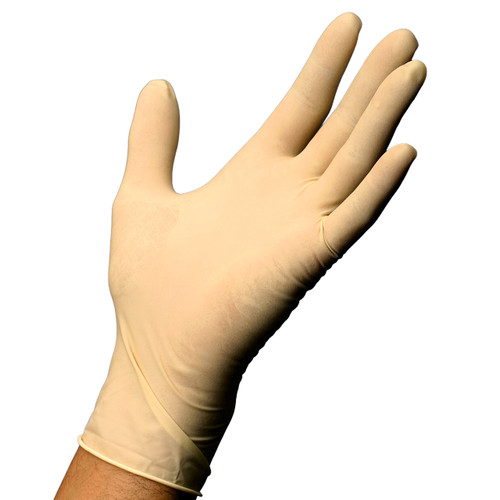
TechNiGlove TGL1400 Series (12") powder-free latex cleanroom gloves — representative image.
Practical solutions in a critical environment
In ISO Class 5 / Class 100 operations, gloves are not just PPE — they are a primary contamination-control surface that touches tooling, parts, packaging and product-adjacent areas. The TechNiGlove TGL1400 Series is positioned for controlled environments where teams want latex dexterity and tactile feedback, but still need published particle and extractables performance to support initial qualification and ongoing incoming documentation review.
Customer SOP disclaimer (read before adopting)
This Technical Vault entry provides practical handling guidance and process considerations intended to help customers draft or refine their own procedures. It is not a facility SOP and is not a substitute for your site-specific contamination control strategy (CCS), risk assessment, validation, EHS review, or quality approvals. Always align glove selection, gowning steps, glove disinfection frequency, change-out triggers, and documentation expectations to your internal requirements and regulated commitments.
What it’s for
- General ISO 5 / Class 100 cleanroom handling where tactile precision and repeatable grip are required.
- Part handling, assembly, inspection, and packaging steps where glove-to-product contact is routine and surface cleanliness matters.
- Operator workflows that benefit from an extended 12" cuff to support sleeve integration and reduce exposed gown/glove interfaces.
Why should customers consider this glove
- Cleanroom-grade performance is published: manufacturer materials publish particle and extractables limits tied to IEST methods, which is commonly what QA/operations teams need to start a qualification conversation.
- Latex dexterity with controlled grip: microtextured fingertips support wet/dry handling where smooth gloves can slip and drive rework.
- 12" cuff for gown integration: helps reduce wrist exposure and supports a more stable overlap with sleeve cuffs (technique-dependent).
- Documentation culture fit: certificate of conformance is described as available on request, enabling lot-level traceability workflows when required.
- Supply continuity matters: cleanroom programs are built on repeatability. SOSCleanroom focuses on best-in-class controlled-environment consumables — not commodity substitutions that can trigger avoidable investigations and retraining.
Materials and construction
The TGL1400 is a powder-free, ambidextrous natural latex glove with a beaded cuff and microtextured fingertips. Manufacturer descriptions also reference an online chlorination process as a finish-control step intended to reduce typical latex odor and support a more consistent surface feel (published). Latex is often selected in clean environments when teams prioritize tactile sensitivity and comfort, but it should be evaluated for latex protein sensitivity risk and for chemical compatibility with the exact solutions used in the process.
Compatibility caution (operator reality)
Chemical resistance is application-specific. A published TechNiGlove chemical resistance chart rates isopropyl alcohol as excellent for both nitrile and latex, but rates several fuels/oils and aromatic solvents as fair to not recommended for latex. Validate against your exact chemistry, dwell time, temperature, and mechanical stress before standardizing.
Key specifications
| Attribute |
Published value |
| Cleanroom environment |
Class 100 / ISO 5 |
| Material |
Natural latex (powder-free) |
| Style |
Ambidextrous |
| Length |
12" (300 mm) |
| Thickness |
5 mil (0.005") |
| Grip surface |
Microtextured fingertips |
| Cuff |
Beaded cuff |
| Color |
Natural |
| Tensile strength |
> 12.5 MPa |
| Elongation at break |
> 700% |
| Sizes |
S–XL (TGL1401–TGL1404) |
Specifications in context
ISO 5 work is unforgiving because small operator-driven differences become real yield drivers: glove fit, cuff stability at the sleeve interface, grip behavior when damp, and how quickly a glove surface picks up residues from repeated contact. A 12" glove helps reduce exposed wrist/sleeve transitions and can make it easier to maintain stable gowning overlap when operators reach, rotate fixtures, or handle larger containers. Microtextured fingertips can reduce grip overcorrections (squeeze harder, re-grip, re-touch), which often adds contact events and increases contamination risk.
For regulated environments, start with U.S. expectations (FDA cGMP and aseptic processing guidance; USP <797>/<800> where applicable) and use EU GMP Annex 1 as a secondary benchmark for contamination control strategy maturity (CCS), documentation discipline, and risk-based handling decisions — without treating Annex 1 as a U.S. legal requirement.
Cleanliness metrics
The values below are commonly used as qualification starting points (they do not replace incoming inspection plans or process validation where required). Methods and sample handling matter; align your acceptance criteria to your process sensitivity and your documentation expectations.
Particles and NVR (published)
| Metric |
Typical / limit (published) |
Context |
| Particle levels |
Class M3.5 (100): < 3000 total particles/cm² > 0.5 µm |
Published on the TGL1400 series datasheet; method referenced as IEST-RP-CC005.2. |
| Particle levels (alternate published listing) |
Class M3.5 (100): < 2200 total particles/cm² > 0.5 µm |
Published on TechNiGlove’s product page. Treat as a published listing; confirm lot documentation for your qualified spec. |
| Total NVR (DI water) |
< 10.00 µg/cm² |
Published on datasheet and manufacturer page. |
| Example lot data point (certificate) |
Liquid particle count (0.5–20 µm): < 2500 counts/cm² |
From a May 19, 2025 certificate example (Batch L530425). Lot results vary; use your received COA/COC for acceptance. |
Typical ion extractables (published limits)
| Ion |
Published limit (µg/cm²) |
Notes |
| Fluoride |
< 1.00 |
Published limit; certificate examples show many results < MDL depending on ion. |
| Chloride |
< 10.00 |
Chloride is a frequent driver of corrosion concerns on sensitive alloys; align acceptance to your surface metallurgy and exposure model. |
| Nitrite |
< 1.00 |
Published limit. |
| Nitrate |
< 5.00 |
Published limit. |
| Bromide |
< 1.0 |
Published limit. |
| Phosphate |
< 1.00 |
Published limit. |
| Sulphate |
< 5.00 |
Published limit. |
Certificate note (example): A May 19, 2025 certificate example reports silicone oil, amide & phthalate as “Not Detected” by FTIR for the tested batch. Use your received lot documentation to confirm what applies to your shipment and your acceptance criteria.
Packaging, sterility and traceability
- Packaging (published): 100 gloves per poly-sealed cleanroom bag; 10 bags per case (1000 gloves/case).
- Certificates: “Cert of Conformance available on request” is stated in manufacturer materials; SOSCleanroom can help coordinate documentation expectations for qualification and incoming receiving.
- Sterility: Not stated as sterile in the published series datasheet. If your process requires sterile gloves, use a sterile-designated SKU and match sterilization modality to your program.
- Country of origin (example certificate): A May 19, 2025 certificate example states “Manufactured in Malaysia.” Confirm COO for your received lot if it is a controlled attribute in your system.
Best-practice use
The best cleanroom glove is the one that stays intact, stays on the sleeve, and stays behaviorally consistent across operators and shifts. The practices below are typical optimization levers for ISO 5 work. Adapt to your CCS and validate where required.
- Donning discipline: stage gloves on a clean surface, don without snapping, and avoid over-stretching the cuff (micro-tears often present as “mystery” particles later).
- Sleeve integration: build a stable overlap: gown sleeve → glove cuff → (if used) outer glove. A beaded cuff helps resist roll-down during repetitive reach motions.
- Glove surface control: in ISO 5 programs, glove disinfection cadence is usually defined (for example, periodic IPA wipe-downs of gloved hands). Confirm latex compatibility with your disinfectant system and avoid pooling solutions at cuffs.
- Touch strategy: treat your gloves like a tool surface: reduce contact events, avoid unnecessary re-grips, and keep one hand “clean” for high-criticality touches when possible.
- Change-out triggers: define and train clear discard rules: visible tears, tackiness, loss of grip, chemical contact beyond your compatibility model, or after handling non-controlled surfaces.
- Latex sensitivity risk: confirm your facility’s latex policy. If latex allergy risk exists, move to a cleanroom nitrile alternative rather than relying on symptom-driven swaps mid-process.
Matching consumables (same ISO class context)
For ISO 5 work, customers often standardize gloves, wipes and swabs together to reduce operator variability. Two common pairings that remain within ISO 5-capable controlled environments (verify final suitability to your SOP) are:
-
Texwipe TX1009 AlphaWipe (ISO Class listing includes ISO 5):
https://www.soscleanroom.com/product/wipers/texwipe-tx1009-alphawipe-9-x-9-polyester-cleanroom-wiper/
-
Texwipe TX742B CleanFoam® swab (commonly used across ISO-class cleanrooms; confirm fit to your ISO 5 workflow and residue limits):
https://www.soscleanroom.com/product/swabs/texwipe-tx742b-small-cleanfoam-swab-open-cell/
For over 35 years, SOS and ITW Texwipe have been close partners, and SOSCleanroom is the authorized Master Distributor of ITW Texwipe for the United States market. That relationship supports continuity of supply, clean documentation handoff (lot traceability), and consistent consumable standardization for contamination-control programs.
Common failure modes
- False economy substitutions: swapping in commodity exam gloves can increase particles/extractables and destabilize grip/fit, driving deviations and retraining.
- Over-wetting gloved hands: excessive IPA/disinfectant on gloves can transport dissolved soils to cuffs and sleeve interfaces, then dry into residues (especially around seams and folds).
- Uncontrolled chemical contact: latex compatibility varies widely. Using latex in chemistry it is rated “fair” or “not recommended” for can lead to softening, swelling, pinholes, or tackiness that becomes a contamination source.
- Latex allergy risk: programs that ignore latex sensitivity can create a safety event and an operational disruption. If latex is restricted, standardize to cleanroom nitrile/polyisoprene alternatives.
Closest competitors
Comparable options typically differ by polymer choice (latex vs nitrile vs polyisoprene), cleanliness documentation depth, and cuff/fit behavior during long ISO 5 sessions. When comparing, keep the evaluation mechanism-based: grip under damp conditions, tear resistance vs dexterity trade-offs, extractables risk (ions/NVR), and lot documentation availability.
- Ansell MICROFLEX® CE5-512 cleanroom latex gloves (ISO 5 / Class 100): https://www.soscleanroom.com/product/brands/ansell-ce5-512-microflex-cleanroom-latex-gloves-class-100-iso-5/
- TechNiGlove TGL900 Series 9.5" latex gloves (Class 100 / ISO 5): often selected when teams want a shorter cuff; confirm cuff interface risk for your gowning method. https://www.texastechnologies.com/categories/cleanroom-consumables/cleanroom-gloves/
Program fit
- Best-fit scenario: ISO 5 / Class 100 operations that benefit from latex tactility and want published extractables/particle performance as part of a structured consumables control plan.
- CCS alignment: supports contamination-control programs that emphasize documented consumables, repeatable gowning interfaces, and trained change-out discipline rather than ad hoc substitutions.
- Qualification approach: use published limits for initial screening; then confirm receipt documentation (COC/COA as required), define incoming lot checks (where applicable), and train operators on the specific cuff integration and glove-disinfection cadence your process needs.
- Operational support: SOSCleanroom backs cleanroom workflows with best-in-class inventory, fast shipping options, responsive customer service, and fair pricing — built on decades of supporting critical environments where the cost of a spec drift is higher than the cost of the glove.
Source basis
Product and manufacturer references
- SOSCleanroom product page (TechNiGlove TGL1400 Series 12" Latex Gloves): https://www.soscleanroom.com/product/apparel/cleanroom-tgl1400-series-12-latex-gloves/
- TechNiGlove manufacturer page (TGL1400 Series): https://www.techniglove.com/product/tgl1400-series/
- TechNiGlove / Texas Technologies datasheet PDF: “TGL1400 Series (Class 100) Powder Free Latex Gloves for Controlled Environments” (file path indicates 2025/01): https://www.texastechnologies.com/wp-content/uploads/2025/01/TGL1400-Series.pdf
- Example certificate PDF: “Certificate of Conformance” dated May 19, 2025 (TechNiGlove-190525-TGL1400.pdf): https://www.techniglove.com/wp-content/uploads/2025/07/TechniGlove-190525-TGL1400.pdf
- Chemical resistance chart PDF (TechNiGlove_Chem.pdf, SOS-hosted copy): https://www.soscleanroom.com/content/Gloves/TechNiGlove_Chem.pdf
Standards and bodies referenced for customer education
- ISO (ISO 14644 cleanroom classification concepts): https://www.iso.org/standard/53394.html
- FDA (cGMP / aseptic processing guidance portal): https://www.fda.gov
- ASTM (test method and standards library): https://www.astm.org
- IEST (recommended practices; datasheet/certificate reference IEST-RP-CC005.2 and IEST-RP-CC005.4): https://www.iest.org
SOSCleanroom is the source for this Technical Vault entry.
Briefed and approved by the SOSCleanroom (SOS) staff.
If you have any questions please email us at Sales@SOSsupply.com or give us a call at (214)340-8574.
If you need additional information please try our SOSCleanroom specific AI ChatBot which draws from our extensive cleanroom specific libraries.
Last reviewed: Jan. 10, 2026
© 2026 SOS Supply. All rights reserved.