The Technical Vault
By SOSCleanroom
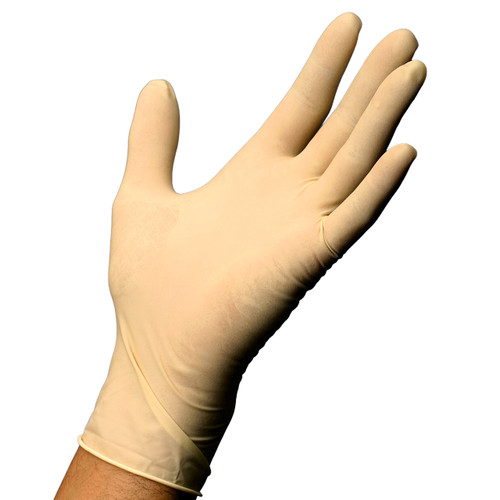
TechNiGlove Cleanroom TGL900 Series 9.5" Latex Gloves (Natural) — Class 100 / ISO Class 5, Powder-Free, Silicone-Free, On-Line Chlorinated Grip for Controlled Environments
Class 100 / ISO Class 5 intent
Powder-free
Silicone-free
On-line chlorinated
5 mil nominal thickness
1) Practical solutions in a critical environment
In Class 100 (ISO Class 5) work, the glove is the closest, highest-frequency contact pathway between the operator and the process. The TGL900 Series is positioned for controlled environments where you want the familiar dexterity and grip of natural rubber latex, while holding the line on contamination-control basics: powder-free, silicone-free, cleanroom bagging, and published particulate/ionic extractable metrics. For many programs, this is a practical “day-to-day” cleanroom latex glove for non-sterile handling steps where the priority is repeatability, operator confidence, and documentation you can file.
Customer SOP note (suggested use guidance):
This Technical Vault entry provides practical handling and contamination-control suggestions that many cleanrooms adopt. These are not your facility’s official SOPs. Always validate glove selection, donning/disinfection steps, change frequency, and waste handling within your quality system (QMS), safety requirements, and contamination control strategy (CCS).
2) What it’s for
TGL900 is intended for contamination-controlled work environments, including cleanrooms and sterile non-medical environments, and is positioned for pharmaceutical and industrial activities where cleanroom glove discipline matters (size control, controlled packaging, and low extractables expectations).
- General ISO Class 5 handling where tactile response and grip are required.
- Controlled wiping/cleaning support tasks where gloves see routine contact with low-residue solvents and wipes.
- Precision handling of parts, containers, tools, and fixtures where silicone transfer is a concern.
Note: Sterility is not stated for this product on the SOSCleanroom listing. If your process requires sterile gloves for aseptic manipulations (for example, within ISO 5 critical zones in regulated sterile processing), select a sterile glove and document it within your CCS.
3) Why should customers consider these gloves
- ISO 5 intent: Listed as Class M3.5 / Class 100 / ISO Class 5 on the SOSCleanroom product page.
- Powder-free + silicone-free: Two high-frequency defect drivers (powder residue and silicone transfer) are addressed directly in the published description.
- Grip-forward latex handling: The product description emphasizes full texturing for wet or dry grip; the published physical properties specify microtextured fingertips.
- Documentable contamination metrics: Particle level and typical ionic extractables are published using an IEST-RP-CC005.2 method reference, plus typical DI-water NVR.
- Controlled packaging discipline: 100 gloves per poly-sealed cleanroom bag, 10 bags per case helps controlled dispensing and inventory control.
- CoC available: Certificate of Conformance is available on request for QA files and receiving documentation.
Important material note: Natural rubber latex may not be appropriate for latex-sensitive users or facilities with latex restrictions. Qualify material selection against EHS/HR policies and customer requirements before standardizing.
4) Materials and construction
Material: Natural rubber latex (natural color). Shape: Ambidextrous. Cuff: Beaded.
Surface design: The product description calls out full texturing from wrist to fingertip for grip; the published physical properties list microtextured fingertips. In practice, both statements point to a grip-focused surface intended to reduce slip during tool handling and controlled wiping tasks.
Chlorination: An on-line chlorination process is described as a control to support consistency and reduce typical latex odor, while also supporting donning comfort.
5) Specifications (published)
| Cleanroom classification |
Class M3.5 / Class 100 / ISO Class 5 |
| Material / color |
Natural rubber latex / Natural |
| Style |
Ambidextrous |
| Length |
9.5" (length is published as 240 mm on the SOS page; a manufacturer PDF lists 300 mm) |
| Thickness |
5 mil (0.005") |
| Grip surface |
Microtextured fingertips (published); product description also emphasizes full texturing for grip |
| Sizes |
S–XL (ordering: TGL901 Small, TGL902 Medium, TGL903 Large, TGL904 X-Large) |
| Mechanical properties |
Tensile strength > 12.5 MPa; elongation at break > 700% |
| Packaging |
100 gloves per poly-sealed cleanroom bag; 10 bags per case (1,000 gloves/case) |
6) Specifications in context
A 9.5" latex glove at 5 mil is typically selected when you need a balance of tactile response (component feel and pinch strength) and everyday durability (tears/pinholes during repeated handling). In ISO Class 5, the operator is the variable you are constantly trying to control; so the practical value is less about “what the glove can do” and more about how consistently it supports your gowning interface, your change-frequency rules, and your ability to keep powders/silicones and extractables out of product-contact risk areas. The published tensile and elongation targets support a “stretch-and-recover” glove behavior that helps reduce fingertip tears during donning and routine work when sizing is correct.
U.S. program context first: most customers use ISO 14644 terminology in the U.S. alongside internal QMS controls, and regulated customers may align glove use expectations to FDA quality systems and aseptic processing guidance where applicable. As a secondary/global benchmark, EU GMP Annex 1 is often used as a continuous-improvement lens to reinforce CCS thinking (risk-based controls, documentation, and operator technique), without treating Annex 1 as a U.S. legal requirement.
7) Cleanliness metrics (published typical values)
These are published product metrics (typical values). Many facilities use them as a starting point for incoming qualification and periodic requalification, then tighten controls with internal trending (incoming inspection, change controls, deviations).
| Metric |
Published typical value |
Notes |
| Particle level |
Class M3.5 (Class 100): < 3000 total particles/cm² (> 0.5 µm) |
Method reference: IEST-RP-CC005.2 |
| Typical ion extractables |
Fluoride < 1.00 µg/cm²
Chloride < 10.00 µg/cm²
Nitrite < 1.00 µg/cm²
Nitrate < 5.00 µg/cm²
Bromide < 1.0 µg/cm²
Phosphate < 1.00 µg/cm²
Sulphate < 5.00 µg/cm²
|
Typical values published on the SOS product page |
| Total NVR (DI water) |
< 10.00 µg/cm² |
Often used as a low-residue screening metric in controlled environments |
8) Packaging, handling, and traceability
- Pack configuration: 100 gloves per poly-sealed cleanroom bag; 10 bags per case (1,000 gloves/case).
- Receiving discipline: Log lot/receipt info, verify bag integrity, and store cartons closed to reduce secondary contamination and mix-ups.
- Dispensing control: For ISO Class 5, avoid “open carton” storage at point of use. Use a defined dispenser location and protect inner packaging from airflow and traffic.
- Documentation signal: Certificate of Conformance is available on request (helpful for QA files and audits).
Documentation tip: Keep the glove chemical-resistance reference accessible to gowning and production leads so compatibility decisions are not made ad hoc during deviations or spill response.
9) Best-practice use in ISO Class 5 workflows
- Size correctly to protect glove integrity: Too tight drives fingertip tears; too loose increases snag risk and reduces dexterity. Use the glove sizing guide on the SOS page as a quick operator reference.
- Donning discipline: Use controlled, deliberate donning to avoid fingernail punctures. Avoid “snapping” the cuff, which can aerosolize particles and stress the latex.
- Change frequency: Define and enforce glove-change triggers (after touching non-controlled surfaces, after spill contact, at time intervals, and before critical manipulations). In many CCS models, changing gloves is cheaper than investigating a contamination event.
- Glove disinfection (if your CCS requires it): Use validated disinfectant contact times and approved agents, and avoid over-wetting. Excess liquid can migrate under cuffs, carry residues, and reduce grip. Document your approach rather than improvising.
- Low-linting companion materials: When wiping in ISO 5, pair glove use with purpose-built low-linting cleanroom wipers and swabs to avoid introducing fibers and residues into critical areas (note: no wiper is truly lint-free).
- Operator coaching: Reinforce “hands-in-zone” behavior, reduce unnecessary motion, and keep gloved hands out of high-shedding contact points (door handles, carts, keyboards) unless gloves are changed immediately after.
10) Common failure modes
- Pinholes/tears from donning: Usually sizing, fingernails, rushed donning, or catching on packaging edges.
- Grip loss during wiping: Over-wetting the glove surface or using incompatible chemicals can reduce friction; enforce validated chemical choices and contact times.
- Latex sensitivity / site restrictions: Even low-protein or chlorinated latex may be prohibited in some facilities; align glove material to your EHS policy and customer requirements.
- Residue transfer risk: Uncontrolled glove disinfection or unapproved lotions can leave residues; standardize allowed products in the gowning area.
- Packaging breach: Torn inner bags or open cartons at point of use increase secondary contamination risk; quarantine and replace compromised packs.
11) Closest competitors
When you are standardizing a Class 100 / ISO 5 latex glove, the practical comparison points are (1) sterility needs, (2) published cleanliness and extractables, (3) cuff length/interface with gowning, and (4) documentation and traceability support.
- Ansell MICROFLEX® CE5-512 (Class 100 / ISO 5): A powder-free, silicone-free cleanroom latex option positioned for ISO 5 with extended cuff; a common benchmark glove for documentation-forward cleanroom programs.
- CT International SGPF Series (Sterile, pair packed): A sterile powder-free latex alternative with lot traceability and aseptic donning features for workflows that require sterility, not just ISO classification.
- TechNiGlove TGL1400 Series 12" Latex Gloves: A longer-cuff latex alternative within the same manufacturer family when your gowning interface benefits from added forearm coverage.
12) Program fit (and ISO Class 5 consumables pairing)
TechNiGlove International was founded in 1998 and is positioned as a dedicated disposable cleanroom glove manufacturer for contamination-controlled work environments. TGL900 is a sensible fit when you want a Class 100 / ISO 5-intent latex glove with published particle/ionic/NVR metrics and cleanroom bagging, and your process does not require sterile gloves.
SOSCleanroom only stocks and distributes best-in-class brands for critical environments. We do not supply inferior products simply to save cost, because cleanroom performance cannot be compromised. Customers also rely on SOSCleanroom for continuity of supply, fast shipping, excellent customer service, and fair pricing — with the documentation discipline that supports audits and investigations.
ISO Class 5 consumables pairing tip (Texwipe):
For over 35 years, SOS and Texwipe have been close partners, and SOSCleanroom is the authorized Master Distributor of ITW Texwipe for the United States market.
In ISO Class 5 work, many customers standardize their wiping system to match glove cleanliness expectations — for example, a low-linting polyester wiper such as Texwipe AlphaWipe® TX1009/TX1009B for general wipe-down and spill control, and a cleanroom swab such as Texwipe CleanFoam® swabs for tight-area cleaning and residue control where wipes cannot reach (note: no wiper is truly lint-free).
13) Source basis
Primary product references
• SOSCleanroom product page (specs, cleanliness metrics, packaging, CoC note): https://www.soscleanroom.com/product/apparel/cleanroom-tgl900-series-9-5-latex-gloves/
• Chemical resistance chart (SOSCleanroom-hosted): https://www.soscleanroom.com/content/Chemical_Resistance_Chart.pdf
• Manufacturer PDF (for additional published specifications; length listed as 300 mm): https://www.texastechnologies.com/wp-content/uploads/2025/01/TGL900-Series.pdf
• Related product reference used for competitor context (sterile alternative): https://www.soscleanroom.com/product/ppe/cleanroom-sgpf-series-sterile-powder-free-latex-gloves-pair-packed/
• Related product reference used for competitor context (ISO 5 latex benchmark): https://www.soscleanroom.com/product/brands/ansell-ce5-512-microflex-cleanroom-latex-gloves-class-100-iso-5/
Standards and regulatory bodies (program alignment)
• ISO (cleanroom classification language reference): https://www.iso.org/standard/53394.html
• FDA (U.S. quality system / cGMP program reference hub): https://www.fda.gov
• ASTM (test methods commonly referenced for glove performance): https://www.astm.org
• IEST (cleanroom test method reference hub; IEST-RP-CC005.* methods): https://www.iest.org
SOSCleanroom is the source for this Technical Vault entry.
Briefed and approved by the SOSCleanroom (SOS) staff.
If you have any questions please email us at Sales@SOSsupply.com or give us a call at (214)340-8574.
If you need additional information please try our SOSCleanroom specific AI ChatBot which draws from our extensive cleanroom specific libraries.
Last reviewed: January 10, 2026
© 2026 SOSCleanroom.com