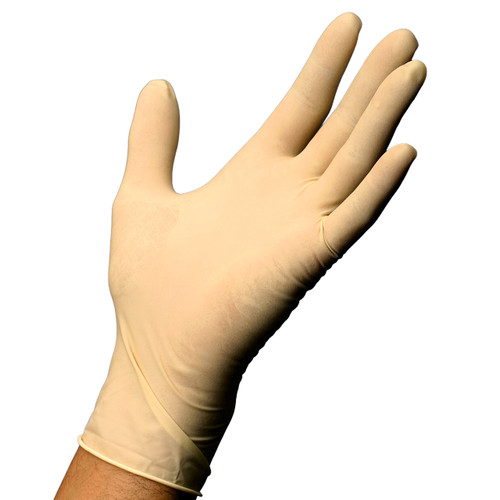
Cleanroom TN100PFB Series 9.5" Nitrile Gloves (Technipak)

$222.90
(No reviews yet)
SKU:
TN10xPFB
Availability:
7 - 10 Business Days
Shipping:
Calculated at Checkout
TechNiGlove TechNitrile® TN100PFB Series (TechniPak®) Nitrile Gloves — Class 100 / ISO 5 Protection in a Wipe-Down PVC Dispenser for Controlled Environments
Class 100 / ISO 5 (M3.5) 100% nitrile (latex-free) Powder-free 5 mil 9.5" length Microtextured fingertips TechniPak® PVC dispenser 1000 gloves / case

Product overview
TechNiGlove TN100PFB Series gloves are powder-free, 100% nitrile gloves packaged in the TechniPak® PVC dispenser — a controlled-environment packaging approach intended to reduce the particulate burden associated with traditional paperboard glove boxes. The PVC dispenser can be wiped clean in wet applications, supporting material transfer discipline and point-of-use housekeeping in Class 100 / ISO 5 areas. These 5 mil, 9.5" gloves are puncture-resistant, ambidextrous, and built for operators who need reliable dexterity while controlling contamination risk at the hands.

Why customers choose TN100PFB (TechniPak)
  • PVC dispenser format is designed to reduce box-sourced particulates versus paper boxes and supports wipe-down at the point of use in wet processes.
  • Powder-free, 100% nitrile construction helps reduce latex protein exposure concerns while maintaining chemical resistance and toughness.
  • 5 mil thickness provides a durability margin for routine handling, wipe-down support tasks, and tool/fixture contact where puncture risk is real.
  • Microtextured fingertips improve grip for precision handling and controlled solvent/solution work (as defined by your SOP and chemical compatibility limits).
  • Published cleanliness metrics (ions, NVR, particles) support qualification discussions when glove residue control is part of the product-contact risk assessment.

Recommended applications
  • ISO 5 / Class 100 controlled-environment operations where glove boxes must be kept clean at the line (wipe-down PVC dispenser advantage).
  • Electronics, optics, and precision manufacturing where operator hands are a primary contamination vector and box debris is a known nuisance.
  • Material handling, staging, and kitting in controlled environments where gloves are frequently accessed and packaging integrity matters.
  • General cleanroom handling, equipment wipe support, and solution application tasks where nitrile chemical resistance is required (validate to your chemical list).
Note: Sterility is not stated on the product listing for this dispenser format. If your process requires sterile gloves for aseptic manipulations (for example, within ISO 5 critical zones in regulated sterile processing), ensure your gowning program specifies an appropriate sterile glove solution.

Specifications (from published technical data)
Series / format TN100PFB Series — TechniPak® PVC dispenser (100 gloves per pack)
Cleanroom classification (published) Class M3.5 (Class 100 / ISO 5)
Material / color Nitrile / Blue
Powder content Powder-free
Style / grip Ambidextrous; microtextured fingertips
Cuff Beaded
Length 9.5" (240 mm) (published)
Thickness (single wall) 5 mil (0.005") (published)
Tensile strength / elongation > 12.5 MPa tensile strength; > 500% elongation at break (published)
Typical particle level (published) >0.5 µm: < 3,000 total particles/cm² (SOS listing; IEST-RP-CC005.2 method)
>0.5 µm: < 1,800 total particles/cm² (manufacturer listing; IEST-RP-CC005.4 method)
Typical ion extractables (published) Fluoride < 0.05 µg/cm²; Chloride < 2.5 µg/cm²; Nitrate < 1.00 µg/cm²; Phosphate < 0.05 µg/cm²; Sulphate < 2.00 µg/cm² (SOS listing)
Manufacturer listing (typical targets): Fluoride < 0.05; Chloride < 1.5; Nitrite < 0.05; Nitrate < 1.00; Phosphate < 0.05; Sulphate < 1.00; Bromide < 0.05 (µg/cm²)
Typical NVR (published) Total NVR (DI water): < 8 µg/cm² (SOS listing)
Total NVR (DI water): < 5 µg/cm² (manufacturer listing)
ESD performance (published) Surface resistivity (in-use): < 1x10⁹ ohm/square per ANSI/ESD SP15.1 (manufacturer listing)
Surface resistivity: < 1010 ohm/sq (SOS listing, ESD-S11.11); static decay: < 0.5 sec (SOS listing, RETS-5-003, 50–60% RH)
Sizes / ordering (published) XS–XXL (manufacturer listing)
Common ordering pattern: TN100PFB (XS), TN101PFB (S), TN102PFB (M), TN103PFB (L), TN104PFB (XL), TN105PFB (XXL)
Packaging (case) 100 gloves per TechniPak®; 10 TechniPaks per case (1,000 gloves/case)
Certifications / documentation (published) Certificate of Conformance available on request; manufacturer notes production in ISO 9001:2015 and ISO 14001:2015 certified facilities
Country of origin Malaysia (published in manufacturer certification document)
Sterility Not stated
Note on published values: cleanliness/ESD metrics can vary by revision, method, and lot reporting format. If ions/NVR/ESD are critical to your risk assessment, request current lot documentation and qualify the glove in your process.

Cleanroom program guidance (U.S. first, global context second)
In U.S.-based cleanroom and regulated manufacturing programs, gloves are treated as a primary contamination control and mix-up risk because they are frequently product-adjacent and constantly in motion. Build glove selection into your contamination control strategy: controlled dispenser placement, consistent sizing, defined change frequency, disciplined donning/doffing, and clear rules for when gloves contact non-clean surfaces (keyboards, carts, door hardware, and cardboard).
For ISO classification language and room discipline, ISO 14644 terminology is commonly used in the U.S. alongside internal quality systems and risk-based controls. Where applicable, align glove box management with material transfer expectations: wipe-down before entry, segregated storage, and clear line-of-sight controls to reduce packaging-derived contamination.
As a secondary/global benchmark, EU GMP Annex 1 reinforces CCS (contamination control strategy) thinking: documented handling discipline, packaging control during transfer, and investigation-ready traceability. Use it as a continuous improvement lens where it fits your business, without treating it as a U.S. legal requirement.
Helpful standards and guidance hubs (for program reference): https://www.iso.org/standard/53394.html  |  https://www.fda.gov  |  https://www.astm.org  |  https://www.iest.org

Build a best-in-class ISO 5 consumables set
SOSCleanroom does not compromise on glove quality for critical environments. A glove program performs best when the full consumables set is aligned to the same cleanliness intent — gloves, wipers, swabs, and approved solutions — so operators can maintain repeatable technique without improvising materials at the point of use.
Texwipe pairing suggestions (ISO 5-aligned wiping and precision cleaning)
For over 35 years, SOS and Texwipe have been close partners, and SOSCleanroom is the authorized Master Distributor of ITW Texwipe for the United States market. For ISO Class 5 wiping, many customers standardize on Texwipe AlphaWipe® TX1009/TX1009B polyester wipers for general cleaning and spill control, where a low-linting wipe is required (note: no wiper is truly lint-free).
Wipers (manufacturer reference): https://www.texwipe.com/alphawipe-tx1009b
Swabs (precision cleaning in controlled environments; validate to your SOP and product-contact risk): https://www.soscleanroom.com/product/swabs/texwipe-tx714a-large-alpha-polyester-cleanroom-swab/

About TechNiGlove and SOSCleanroom supply confidence
TechNiGlove focuses on disposable glove solutions for contamination-controlled work environments, with product lines designed around cleanliness metrics, packaging discipline, and performance consistency. The TN100PFB TechniPak® approach is a packaging-forward solution: reducing paperboard exposure at the dispenser and enabling wipe-down, which is a practical advantage when box debris becomes a recurring source of particles in sensitive areas.
SOSCleanroom supports customers who need dependable cleanroom consumables with fast shipping, excellent customer service, fair pricing, and continuity of supply backed by decades serving controlled environments. If a glove is part of your product-contact risk control, build it into your qualification approach: request current CoC/cleanliness documentation, set change frequency rules, and train to the handling discipline that keeps ISO 5 areas stable.

Documentation
Manufacturer Product Spec (PDF): tn100-tnt1200_FRONT.pdf
Manufacturer Certification Info (PDF) — dated May 13, 2025: TechniGlove-130525-TN100PFB.pdf
Chemical resistance / compatibility (PDF): TechNiGlove Chemical Resistance Chart
Alternate chemical compatibility PDF (SOS hosted): TechNiGlove_Chem.pdf

If you have any questions please email us at Sales@SOSsupply.com or give us a call at (214)340-8574.
If you need additional information please try our SOSCleanroom specific AI ChatBot which draws from our extensive cleanroom specific libraries.
Last updated: January 10, 2026
© 2026 SOSCleanroom.com

TechNiGlove TechNitrile® TN100PFB Series (TN10xPFB) 9.5" Nitrile Gloves (TechniPak®) — Class 100 / ISO Class 5, PVC Dispenser Control for Critical Environments
ISO Class 5 / Class 100 (M3.5) Powder-free nitrile TechniPak® PVC dispenser box Microtextured fingertips

Cleanroom TN100PFB Series 9.5" Nitrile Gloves (TechniPak) Shown: TechniPak® PVC dispenser format (reduced carton shedding vs. paper dispensers).
Practical solutions in a critical environment

In many ISO Class 5 workflows, the glove is the highest-frequency contact point with parts, fixtures, tools, and packaging. TN100PFB-series gloves are built around a practical contamination-control concept: pair a clean, powder-free nitrile glove with a wipeable PVC (plastic) dispenser so you are not constantly introducing a shedding cardboard box into the same staging zone where you are trying to control particles.

If your team regularly wipes down dispensers before pass-through, stages glove boxes on wipe-down tables, or works in humid/wet cleaning steps where cartons soften and shed, the TechniPak® dispenser format is the operational advantage that usually matters most.


What it’s for
  • General handling, assembly, and wipe-down work in ISO Class 5 / Class 100 controlled environments where powder control and packaging discipline matter.
  • Staging and kitting tasks where the dispenser must be wiped prior to entering a cleaner zone (PVC dispenser can be wiped clean more easily than paper cartons).
  • Wet cleaning or solvent-adjacent workflows where carton fibers and softened cardboard create avoidable particle burden.
  • ESD-aware handling where dissipative properties are part of the process control approach (verify against your facility ESD plan and material compatibility list).

Why should customers consider these gloves
  • Packaging is part of contamination control: TechniPak® uses a plastic (PVC) dispenser intended to reduce particulate contribution associated with paper boxes and can be wiped clean.
  • ISO Class 5 positioning: Designed and marketed for Class 100 / ISO Class 5 controlled environments (M3.5).
  • Powder-free nitrile: Eliminates powder as an avoidable contaminant and avoids natural rubber latex proteins for teams managing latex sensitivity.
  • Grip where it counts: Microtextured fingertips improve handling confidence on smooth tools, vials, and hardware.
  • Documentation-minded programs: Certificates of Conformance are noted as available on request; pair that with lot discipline in receiving to support audit readiness.

Materials and construction

TN100PFB-series gloves are manufactured from synthetic nitrile rubber in an ambidextrous, powder-free format with a beaded cuff and microtextured fingertips. The companion TechniPak® dispenser is a rigid plastic (PVC) box intended to reduce the particle contribution associated with traditional paper dispenser cartons and to support wipe-down prior to use in a cleaner area.

Practical note: When teams are trained to treat packaging as a contamination source, a wipeable dispenser becomes a real control point. It lets operators wipe the dispenser exterior with a compatible cleanroom wiper before opening, rather than bringing a “never-wiped” cardboard carton into the same staging area as product-contact tools.


Specifications in context
Parameter Published value Why it matters on the floor
Cleanroom positioning Class 100 / ISO Class 5 (M3.5) Aligns with ISO 5 work zones where glove-change cadence and packaging wipe-down are routine controls.
Length 9.5 in. (240 mm) Covers wrist/forearm transition for many gowning systems; reduces skin exposure at sleeve interfaces.
Thickness 5 mil (0.005 in.) A durability “sweet spot” for handling and wipe-down without moving to heavy-gauge gloves that reduce dexterity.
Grip surface Microtextured fingertips Improves control on smooth stainless, polymer fixtures, and bag film during transfer and staging.
Cuff Beaded Supports faster donning and reduces roll-down during repetitive reach/lean motions.
Color / sizes Blue; XS–XXL Color contrast can help with visual inspection of residue or tears; wide sizing supports fit-based contamination control (fewer tears, fewer adjustments).
Tensile / elongation (published) Tensile > 12.5 MPa; Elongation at break > 500% Fit and stretch correlate with tear resistance during don/doff and with less operator “re-gripping” that drives particle generation.
Case quantity 1,000 gloves per case (10 TechniPak® dispensers of 100) Makes it easier to build receiving and stocking controls (case-level quarantine, lot capture, and rotation).

Note on published values: cleanliness and ESD numbers can vary by reference document revision and test method. For audit-grade decisions, confirm the lot-specific Certificate of Conformance/Analysis your program requires.


Cleanliness metrics

These are the typical published cleanliness indicators for the TN100PFB family. Use them as screening criteria, then lock down acceptance using your receiving inspection plan and lot documentation.

Metric Typical published values (examples from published references) Operational interpretation
Particle levels (> 0.5 µm) < 3000 total particle/cm² (SOS listing)
< 2500 total particle/cm² (published spec sheet example)
< 1800 total particle/cm² (manufacturer page example)
Lower glove-surface particulate burden supports steadier airborne recovery after handling and fewer “mystery spikes” after glove changes.
Total NVR (DI water) < 8.00 µg/cm² (SOS listing / spec sheet example)
< 5.00 µg/cm² (manufacturer page example)
Relevant when residues can interfere with bonding, coating, optical cleanliness, or analytical background.
Typical ion extractables (examples) Fluoride < 0.05 µg/cm²
Chloride (examples): < 3.0 or < 1.5 µg/cm²
Nitrate (examples): < 3.00 or < 1.00 µg/cm²
Sulphate (examples): < 3.00 or < 1.00 µg/cm²
Nitrite < 0.05 µg/cm²; Phosphate < 0.05 µg/cm²
Bromide < 0.05 µg/cm² (manufacturer page example)
Most relevant in corrosion-sensitive assemblies, microelectronics, and analytical labs where ionic background drives rework or false positives.
ESD indicators (examples) Surface resistivity < 1010 ohm/sq (ESD S11.11 example) and static decay < 0.5 s (RETS-5-003 example) — SOS listing
Surface resistivity in use < 1 × 10⁹ ohm/sq (ANSI/ESD SP15.1 example) — manufacturer page
Treat as “ESD supportive,” not as a substitute for your facility ESD control plan. Validate with your footwear/flooring/bench system.
Cleanroom education note

“Low-linting” is the correct expectation for high-grade cleanroom consumables — no wiper or glove system is truly lint-free in real operations. The goal is controlled release under defined handling, with change cadence and wipe-down discipline doing the rest.


Packaging, sterility and traceability
  • Packaging format: TechniPak® rigid plastic (PVC) dispenser, 100 gloves per dispenser, 10 dispensers per case (1,000 gloves/case).
  • Sterility: TN100PFB is marketed as a cleanroom glove for controlled environments (non-sterile). If your process requires sterile gloves (for example, aseptic manipulations), select a sterile glove system and follow your CCS and gowning SOP.
  • Traceability: Certificates of Conformance are noted as available on request; capture lot and receipt date at receiving so glove-change events can be tied back to documentation if an investigation is triggered.

Best-practice use

The cleanroom “win” with this product usually comes from how the dispenser is handled, not just what the glove is made of. Below are operator-friendly controls commonly used in ISO Class 5 workflows (align to your site procedures and risk assessment):

  • Wipe-down the dispenser before entry: Treat the outer dispenser as a transfer surface. Wipe the exterior with a compatible cleanroom wiper and approved solution before staging it in the cleaner zone.
  • Open with control: Avoid “snapping” the lid/slot open. Fast motions generate particles and can pull in room air; slow, deliberate opening is a simple control.
  • One glove at a time: Pull one glove by the cuff edge; do not rake multiple gloves or touch glove fingertips while dispensing.
  • Fit is contamination control: Too-tight gloves tear and force repeated adjustments; too-loose gloves slip and drive “re-gripping” motions that generate particles.
  • Change cadence: Set a glove-change trigger tied to task changes (material transfer, cleaning step changes, or visible contamination), not only elapsed time.
  • Compatibility check: If you routinely contact strong solvents, oxidizers, or disinfectants, verify glove compatibility with your chemical list and your facility EHS guidance.

SOP disclaimer (customer-facing): This Technical Vault entry provides general best-practice guidance and example controls. It is not a substitute for your validated procedures, quality system requirements, or safety program. Customers are responsible for assessing suitability, compliance, and safe use within their specific process and regulatory context.


Common failure modes
  • Bringing in untreated packaging: The PVC dispenser helps, but only if the operator wipes it down or controls entry. Skipping this step defeats the packaging advantage.
  • Overuse beyond task limits: Extending glove use through incompatible chemical exposure or abrasive handling increases tear and residue transfer risk.
  • Dispensing contamination: Pulling gloves by the finger area or allowing gloves to drape over the slot can transfer contaminants to high-contact surfaces.
  • Misapplied sterility expectations: Using non-sterile gloves where sterile gloves are required creates a compliance gap. If the process is aseptic, align glove selection and disinfection steps to your CCS and applicable guidance.

Closest competitors

In ISO Class 5 nitrile glove programs, the closest alternatives usually differ on packaging approach, published cleanliness metrics, and documentation support:

  • Ansell cleanroom nitrile glove families (selected models): Often chosen for mature QA documentation programs and broad cleanroom portfolios. Typical differentiator vs. TN100PFB is dispenser/pack configuration rather than glove length and gauge.
  • Kimtech controlled-environment nitrile glove offerings (selected models): Frequently specified in lab-to-cleanroom transitions. Compare packaging, published particle/ion targets, and fit/dexterity for your handling task.
  • Other cleanroom nitrile gloves in Class 100 programs: When evaluating, prioritize (1) packaging discipline, (2) lot documentation, and (3) published ionic/NVR indicators that match your product risk.

Program fit

TN100PFB-series gloves fit best in programs that treat packaging as a controllable contamination source and that want a straightforward, repeatable dispense method for ISO Class 5 work. TechNiGlove is positioned as a disposable cleanroom glove manufacturer for contamination-controlled environments, and SOSCleanroom supports customers who need continuity of supply and fast fulfillment without compromising quality in critical environments.

Best-in-class consumables pairing (same cleanroom environment)

For over 35 years, SOS and ITW Texwipe have been close partners, and SOSCleanroom is the authorized Master Distributor of ITW Texwipe for the United States market. If you want a matched consumables stack for ISO Class 5 work, pair your glove program with:

  • Texwipe AlphaWipe® TX1009 (dry polyester knit wipers): Designed for critical environments, with published suitability spanning ISO Class 4–5 and ISO Class 6–9. Use for dispenser wipe-down, bench wipe-down, and staging controls.
  • Texwipe sterile polyester wipers (when sterile wipes are required by your CCS): Consider sterile wipers that publish ISO cleanroom environment guidance (verify your process requirements and validated disinfectant system).
  • Texwipe sterile swabs (for precision cleaning and validation sampling): Use when you need controlled application of IPA or other compatible solutions to grooves, ports, and tight interfaces; select based on head material (knit polyester vs. foam) and your residue/compatibility requirements.

Note: Sterile vs. non-sterile selection should be driven by your contamination control strategy (CCS), risk assessment, and applicable guidance. Do not infer compliance for any given process without qualification and documentation review.

Standards perspective (U.S. first, global benchmark second): In the U.S., contamination control expectations are commonly discussed using ISO 14644 terminology and, where applicable, FDA cGMP/aseptic processing guidance and USP compounding chapters. EU GMP Annex 1 is not a U.S. legal requirement, but it is a useful global benchmark for CCS discipline (risk-based contamination control, validated cleaning/disinfection, material transfer and packaging controls, and documentation/traceability).


Source basis
  • SOSCleanroom product page (TN10xPFB ordering, case pack, lead time, summary features): https://www.soscleanroom.com/product/apparel/cleanroom-tn100pfb-series-9-5-nitrile-gloves-technipak/
  • TechNiGlove manufacturer product page (specifications and packaging statements): https://www.techniglove.com/product/tn100pfb-series/
  • Published spec sheet example (N100PFB Series PDF; particle/ion/NVR/ESD and physical properties): https://www.texastechnologies.com/wp-content/uploads/2024/12/N100PFB-Series.pdf
  • SOS-hosted Chemical Resistance Chart (general nitrile vs. latex compatibility reference): https://www.soscleanroom.com/content/Gloves/TechNiGlove_Chem.pdf
  • SOS-hosted Texwipe AlphaWipe® datasheet (includes TX1009; ISO Class 4-5 and ISO Class 6-9 suitability statement and contamination characteristics): https://www.soscleanroom.com/content/texwipe_pdf/1003%201004%201009%201009b%201013%201025.pdf
  • Texwipe sterile swabs technical data sheet (includes STX714A and sterile packaging/traceability notes; COO note published in the TDS): https://www.texwipe.com/images/uploaded/documents/Swabs/Texwipe-SterileSwabs-TDS.pdf
  • ISO 14644 cleanroom classification terminology (ISO): https://www.iso.org/standard/53394.html
  • FDA (cGMP / aseptic processing guidance hub): https://www.fda.gov
  • ASTM standards (test method references commonly used in cleanroom consumables characterization): https://www.astm.org
  • IEST recommended practices (cleanroom consumables evaluation and controlled environment guidance): https://www.iest.org
  • EU GMP Annex 1 (global benchmark for sterile manufacturing CCS discipline): https://health.ec.europa.eu/system/files/2022-08/20220825_gmp-an1_en_0.pdf

SOSCleanroom is the source for this Technical Vault entry. Briefed and approved by the SOSCleanroom (SOS) staff. If you have any questions please email us at Sales@SOSsupply.com or give us a call at (214)340-8574. If you need additional information please try our SOSCleanroom specific AI ChatBot which draws from our extensive cleanroom specific libraries. Last reviewed: Jan. 10, 2026 © 2026 SOSCleanroom.com