Cleanroom TN300W Series 9.5" Nitrile Gloves

$200.70
(No reviews yet)
SKU:
TN30xW
Availability:
7 - 10 Business Days
Shipping:
Calculated at Checkout
TechNiGlove Cleanroom TN300W Series 9.5" Nitrile Gloves (White) — Class 100 / ISO 5 Cleanroom Compatibility, Powder-Free Comfort and Microtextured Grip
Class M3.5 / Class 100 / ISO 5 100% nitrile Powder-free 9.5" length (240 mm) Microtextured fingertips Beaded cuff Double bagged ESD data published 1,000 gloves / cas

Product overview
TechNiGlove TN300W Series cleanroom nitrile gloves are designed for Class M3.5 / Class 100 / ISO Class 5 controlled environments where glove integrity, low particulate performance, and disciplined handling are key contamination-control levers. The TN300W is powder-free, 100% nitrile (helping reduce concerns around natural rubber latex proteins), puncture-resistant, and double bagged for controlled-environment dispensing.

Why customers choose TN300W
  • Cleanroom-compatible for ISO 5 operations, supporting contamination-control discipline where gloves are a primary product-contact risk.
  • Powder-free nitrile construction to reduce powder-related residues and support latex-sensitive programs.
  • Microtextured fingertips for stable grip on tools, fixtures, containers, and components during fine handling.
  • Double-bag packaging for controlled-environment dispensing and improved material transfer discipline.
  • Published cleanliness and extractables context (particles, ions, and NVR) to support qualification discussions and incoming inspection expectations.
  • Published ESD performance data (conditions and method dependent) for customers managing static-sensitive components and ESD-conscious handling practices.

Recommended applications
  • Cleanroom cleaning and preparing (non-sterile environments)
  • Blending and compounding solids and liquids
  • Spill or leakage cleanup
  • Transferring liquids and solids
  • Loading centrifuges and chromatography columns
  • Assembly of parts
  • Weighing and dispensing of solid and liquid raw materials
Sterility note: this product listing describes a cleanroom nitrile glove and does not present it as sterile. If your procedure requires sterile gloves for ISO 5 critical-zone manipulations, select a sterile glove option specified as sterile by the manufacturer and validate to your gowning SOP.

Specifications (from published technical data)
SKU family TN30xW
Cleanroom classification Class M3.5 (100) / Class 100 / ISO Class 5
Material / color 100% nitrile / White
Style Ambidextrous
Length 9.5" (240 mm)
Thickness 5 mil (0.005")
Grip surface Microtextured fingertips
Cuff Beaded
Sizes XS – XXL
Tensile strength > 12.5 MPa
Elongation at break > 500%
Typical particle level Class M3.5 (100): < 3000 total particles/cm² (> 0.5 µm)
(IEST-RP-CC005.2 method referenced)
Typical ionic extractables Fluoride: < 0.05 µg/cm²
Chloride: < 3.0 µg/cm²
Nitrite: < 0.05 µg/cm²
Nitrate: < 3.00 µg/cm²
Phosphate: < 0.05 µg/cm²
Sulphate: < 3.00 µg/cm²
Typical NVR (DI water) < 8.00 µg/cm²
ESD properties (published) At 50–60% humidity:
Surface resistivity: < 1010 ohm/square (ESD-S11.11 referenced)
Static decay: < 0.5 seconds (RETS-5-003 referenced)
Note: ESD performance is method- and condition-dependent. Validate glove performance to your facility ESD control plan.
Packaging (case) 100 gloves per poly-sealed cleanroom bag; 10 bags per case (1,000 gloves total)
Certificate of Conformance Available on request
Availability (site listing) 7 – 10 business days
Glove sizing (site listing): Size 6 to 6.5 = X-Small; 7 to 7.5 = Small; 8 = Medium; 9 = Large; 10 = X-Large; 10.5 and up = XX-Large.

Cleanroom program guidance (U.S. first, global context second)
In U.S.-based cleanroom and regulated manufacturing programs, glove control is typically built into contamination-control and investigation readiness: defined donning/doffing technique, controlled dispensing, glove-change triggers tied to task risk, and line-of-sight accountability at points of use. ISO 14644 terminology is commonly used for cleanroom language alignment in the U.S., while FDA expectations (risk-based quality systems) often drive how glove use is documented, trained, and sustained.
As a secondary/global benchmark, EU GMP Annex 1 reinforces risk-based contamination control strategy (CCS) thinking: controlled material transfer (including double-bag practices), documented glove-change discipline at critical steps, and traceability that supports deviation investigations. Use Annex 1 as a continuous improvement lens where it fits your business, without treating it as a U.S. legal requirement.
Helpful standards and guidance hubs (for program reference): https://www.iso.org/standard/53394.html  |  https://www.fda.gov  |  https://www.astm.org  |  https://www.iest.org

Build a best-in-class ISO 5 consumables set
Gloves are only one control point. In ISO 5 programs, customers typically standardize a matching consumables set so operator technique remains consistent across wiping, swabbing, and handling steps (especially during set-up, changeovers, and response to small spills).
Texwipe pairing suggestion (ISO 5-aligned wiping and swabbing)
For over 35 years, SOS and Texwipe have been close partners, and SOSCleanroom is the authorized Master Distributor of ITW Texwipe for the United States market. For ISO Class 5 wipe-down tasks, many customers standardize on cleanroom-processed polyester wipers for general cleaning and spill control where a low-linting wipe is required (note: no wiper is truly lint-free). For precision cleaning, cleanroom swabs help reach tight geometries where folding a wiper is not feasible.
  • Wipers: Texwipe AlphaWipe® TX1009 / TX1009B polyester wipers for routine wipe-down and controlled solvent wiping in ISO 5 environments.
  • Swabs: Texwipe cleanroom swabs (foam or polyester) for ports, grooves, edges, and precision wipe points during set-up, troubleshooting, and equipment detailing.
Explore options: AlphaWipe wipers  |  Texwipe swabs

About TechNiGlove and SOSCleanroom supply confidence
Founded in 1998 by Roger W. Gass, TechNiGlove International designs, manufactures, and markets disposable cleanroom gloves for contamination-controlled work environments. Their products are used in cleanrooms, sterile non-medical environments, pharmaceutical activities, and industrial operations.
SOSCleanroom supports customers who need dependable, best-in-class cleanroom consumables with fast shipping, excellent customer service, fair pricing, and continuity of supply backed by decades serving controlled environments. If your qualification package requires specific documentation (including Certificates of Conformance or lot/batch traceability), contact SOSCleanroom so the right documents align to your incoming inspection and release process.

Documentation
Chemical resistance chart (SOS-hosted PDF): TechNiGlove_Chem.pdf
Manufacturer TN300 Series overview: TechNiGlove TN300 Series (Class 100)
Manufacturer product spec sheet (PDF): tn1000-tn300_FRONT.pdf
Example Certificate of Conformance (manufacturer PDF, lot-specific): TechniGlove-091224-TN300W.pdf
Lot-specific documentation can change by date/lot. For acceptance criteria, use the CoC for the lot you receive.

If you have any questions please email us at Sales@SOSsupply.com or give us a call at (214)340-8574.
If you need additional information please try our SOSCleanroom specific AI ChatBot which draws from our extensive cleanroom specific libraries.
Last updated: January 10, 2026
© 2026 SOSCleanroom.com
The Technical Vault By SOSCleanroom
ISO Class 5 / Class 100 Powder-free nitrile (white) Double-bagged cleanroom packaging ESD controls stated (surface resistivity / decay)
TechNiGlove TN300W Series 9.5" Nitrile Cleanroom Gloves — Class M3.5 (Class 100) Handling With Published Particles, Ions, NVR and ESD Controls

TechNiGlove TN300W Series 9.5" Nitrile Gloves
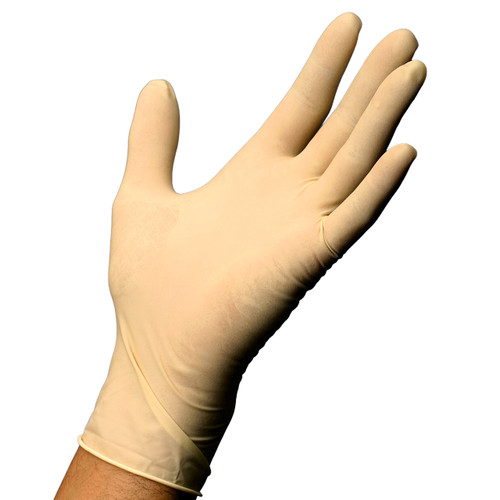
Product image shown for identification. Confirm size selection (XS–XXL) at ordering.
Customer SOP note (read before standardizing)
This Technical Vault entry provides practical, technician-focused guidance and selection context. It is not your facility SOP and it does not replace validation, environmental monitoring strategy, or quality-system requirements. Always follow your site procedures, training, and change control. Confirm glove compatibility with your chemicals and surfaces, and verify suitability for your risk-based contamination control strategy (CCS). Where sterile handling is required, use only products specifically labeled and qualified for sterile presentation per your validated process.
1) Practical solutions in a critical environment
In ISO Class 5 (Class 100) work, glove choice is not about “hand protection” alone. Gloves become a primary contamination-control interface: they touch tools, fixtures, parts, packaging, and sometimes critical surfaces. TN300W is positioned as a controlled-environment nitrile glove with published particle, ionic extractables and nonvolatile residue (NVR) limits, plus stated electrostatic discharge (ESD) properties for humidity-controlled operations. In U.S. regulated workflows, teams typically align glove programs to FDA cGMP expectations and facility contamination-control strategy; EU GMP Annex 1 can be used as a global benchmark for CCS rigor and handling discipline without implying it is a U.S. legal requirement.

2) What are these gloves used for
TN300W cleanroom nitrile gloves are used for contamination-controlled handling and light chemical splash/intermittent-contact tasks where teams want nitrile (to reduce natural rubber protein allergy concerns) with double-bagged cleanroom packaging and published cleanliness/ESD performance attributes.
  • Component handling in ISO Class 5 cleanrooms (microelectronics, optics, medical device assembly support, controlled manufacturing).
  • Bench operations requiring controlled particulate and extractables background (process-dependent).
  • Humidity-controlled work areas where static attraction is a yield risk (ESD performance is stated at 50–60% RH).

3) Why should customers consider these gloves
  • ISO Class 5 positioning: Listed as Class M3.5 / Class 100 / ISO Class 5 for controlled environments.
  • Powder-free nitrile: Helps reduce powder-related contamination variables while avoiding natural rubber protein exposure pathways common to latex programs.
  • Published cleanliness limits: Stated particle level, ionic extractables and NVR limits support more defensible baseline expectations versus unqualified disposables.
  • Stated ESD behavior: Surface resistivity and static decay targets are provided for a defined humidity band (verify in your environment and with your grounding strategy).
  • Cleanroom packaging discipline: Double-bagged and poly-sealed bag packaging supports controlled introduction to cleaner areas.
  • Service and continuity: SOSCleanroom focuses on best-in-class consumables for critical environments and does not compromise on quality “to save cost,” because yield and contamination risk are the real cost drivers.

4) Materials and construction
TN300W is described as a 100% nitrile, powder-free, ambidextrous glove with microtextured fingertips and a beaded cuff. The glove is supplied in white and is packaged for controlled environments (double-bagged). For cleanroom operations, the practical “construction” story is less about cosmetic features and more about what the glove does under use: maintaining a stable surface, limiting particulate and extractables release, and supporting repeatable don/doff without tearing or shedding.

5) Specifications
Attribute TN300W (as published)
Cleanroom class positioning Class M3.5 / Class 100 / ISO Class 5
Material 100% nitrile
Powder Powder-free
Style Ambidextrous
Length 9.5" (240 mm)
Thickness 5 mil (0.005")
Grip surface Microtextured fingertips
Cuff Beaded
Color White
Tensile strength > 12.5 MPa
Elongation at break > 500%
Sizes XS–XXL
Case pack 1,000 gloves/case (10 bags of 100)
Documentation Certificate of Conformance: available on request

6) Specifications in context
The key performance drivers for TN300W in ISO Class 5 work are repeatable glove integrity (donning durability, tear resistance in use), controlled releasables (particles, ions, NVR) and static control behavior where attraction to parts or tooling is a defect mode. The 9.5" length supports routine cuff coverage for many benches; if your gowning program requires more forearm coverage or you are reaching into equipment, a longer-cuff glove may reduce exposed-sleeve risk. The 5 mil thickness is a classic “dexterity vs. robustness” middle ground: thick enough to resist puncture better than ultra-thin exam gloves, while still supporting tactile tasks. Confirm that thickness does not compromise fine handling in your process.

7) Cleanliness metrics
The values below are published limits/targets for this product family as presented on SOSCleanroom. Use them to set expectations, compare alternatives, and inform incoming qualification plans. Actual results depend on your handling, storage, humidity control, and work technique.
Metric Published value Method / condition
Particle level < 3000 total particles/cm² (> 0.5 µm) IEST-RP-CC005.2 method (as stated)
Fluoride < 0.05 µg/cm² Ionic extractables (as stated)
Chloride < 3.0 µg/cm² Ionic extractables (as stated)
Nitrite < 0.05 µg/cm² Ionic extractables (as stated)
Nitrate < 3.00 µg/cm² Ionic extractables (as stated)
Phosphate < 0.05 µg/cm² Ionic extractables (as stated)
Sulfate < 3.00 µg/cm² Ionic extractables (as stated)
Total NVR (DI water) < 8.00 µg/cm² NVR (as stated)
Surface resistivity < 1010 ohm/square ESD-S11.11; at 50–60% RH (as stated)
Static decay < 0.5 seconds RETS-5-003; at 50–60% RH (as stated)

8) Packaging, handling, sterility, traceability
  • Pack configuration: 100 gloves per poly-sealed cleanroom bag; 10 bags per case (1,000 gloves/case).
  • Clean introduction discipline: Double-bagged packaging supports staged entry (de-bag in the appropriate gowning/material transfer zone per your CCS).
  • Sterility: Not stated for this product listing. If sterile presentation is required for your workflow, source a glove explicitly labeled sterile and qualify it through your change-control process.
  • Traceability/documentation: Certificate of Conformance is stated as available on request (retain lot-level records consistent with your investigation and deviation workflow).

9) Best-practice use in the cleanroom
The glove can meet its published cleanliness targets and still fail your process if technique drifts. Use these operator-level practices to reduce excursions and rework:
  • Donning control: Don with slow, controlled motion; avoid “snapping” the cuff which can aerosolize particles and shed from sleeves. If a glove brushes non-controlled surfaces, discard it.
  • Touch discipline: Define “clean touch zones” vs. “dirty touch zones” (door handles, carts, keyboards). Change gloves when crossing zones; do not re-enter critical work with suspect contact history.
  • ESD behavior is humidity dependent: The stated ESD properties are referenced at 50–60% RH. If your room runs drier, validate actual behavior in your environment and ensure your grounding strategy (wrist straps, flooring, footwear, benches) is coherent.
  • Chemical compatibility: Nitrile provides broad chemical resistance, but compatibility is chemistry- and time-dependent. Use the chemical resistance chart as a screening tool, then validate for your specific solvent mix, concentration, and exposure time.
  • Pair with the right low-linting wipers/swabs: In ISO 5 areas, use wipers and swabs with stated ISO-class positioning and controlled packaging so the glove does not become the “clean” variable paired with a “dirty” consumable.
Recommended Texwipe complements for ISO Class 5 programs (match consumables to the room)
  • Dry wiper (ISO 5+): Texwipe TX612 TechniCloth 12" x 12" (ISO Class 5–8 listed) — strong general-purpose wipe-down choice when you want a controlled nonwoven blend for routine surfaces. https://www.soscleanroom.com/product/wipers/texwipe-tx612-technicloth-12-x-12-cellulose-and-polyester-cleanroom-wiper/
  • Sterile surface wiping option: Texwipe TX3224 Sterile TexTra10 9" x 9" (intended for aseptic/controlled wiping; sterile documentation available with sterile products) — use when your CCS requires sterile presentation. https://www.soscleanroom.com/product/wipers/texwipe-tx3224-sterile-textra10-9-x-9-polyester-cleanroom-wiper/
  • Precision swab for residue-sensitive work: Texwipe TX714A Alpha polyester knit cleanroom swab (non-sterile) — engineered for low-linting, controlled solvent application in grooves/slots; validate fit to your ISO 5 process and sterility needs. https://www.soscleanroom.com/product/swabs/texwipe-tx714a-large-alpha-polyester-cleanroom-swab/
Note: “Low-linting” outcomes depend on surface condition and technique. No wiper or swab is truly lint-free across all substrates, edge conditions and stroke methods.

10) Common failure modes
  • Micro-tears and pinholes: Often caused by aggressive donning, jewelry, sharp fixture edges or tool knurling. Establish discard rules and consider fingertip protection strategies for high-snags tasks.
  • ESD drift: If humidity falls outside the stated range, static control performance may change. Monitor room RH and confirm ESD behavior in your real configuration.
  • Cross-contamination through touch history: The glove can be “clean” out of the bag and still become the contamination vector through uncontrolled contacts (carts, boxes, keyboards, doorknobs).
  • Chemical mismatch: Nitrile is broad-resistance, not universal. Compatibility depends on concentration and exposure time; validate especially for ketones, chlorinated solvents, or strong oxidizers per your safety program.
  • Packaging handling shortcuts: Opening inner packaging in the wrong zone or staging open bags at the bench increases unknown exposure. Use a defined staging method consistent with your CCS.

11) Closest competitors
When comparing ISO Class 5 nitrile gloves, treat it as a system decision: cleanliness data, packaging controls, ESD behavior, and documentation discipline matter as much as “fit and feel.” Closest functional peers typically include:
  • Ansell cleanroom nitrile programs: Often selected when teams want a best-in-class brand line with strong documentation support and a wide cleanroom portfolio (match ISO class, packaging, and sterility needs).
  • Kimtech nitrile cleanroom lines: Commonly evaluated for controlled-environment handling where published cleanliness context and packaging controls are required.
  • Other cleanroom nitrile families in the TechNiGlove portfolio: Consider longer cuff options when sleeve coverage and reach are higher-risk factors.

12) Program fit (who standardizes this and why)
TN300W fits programs that want an ISO Class 5-positioned nitrile glove with published particles/ions/NVR/ESD attributes and cleanroom packaging, without moving into a fully sterile glove workflow. Typical standardization drivers include: high-throughput bench work in controlled environments, ESD attraction risk control, and a desire for published cleanliness baselines to support investigations and operator training.
  • Procurement: Case pack is 1,000 gloves (10 x 100). Availability on SOSCleanroom listing is stated as 7–10 business days (confirm at ordering for project schedules).
  • Documentation: Certificate of Conformance available on request—use this as part of your receiving/qualification package when implementing change control.
  • Training leverage: Published cleanliness/ESD metrics can be used in technician training to explain why glove choice and handling discipline directly affect yield and audit outcomes.

13) Source basis
SOSCleanroom product page (primary listing):
https://www.soscleanroom.com/product/apparel/cleanroom-tn300w-series-9-5-nitrile-gloves/
Manufacturer product family page (TN300 series):
https://www.techniglove.com/product/tn300-series/
Chemical resistance chart (referenced from SOS page):
https://www.soscleanroom.com/content/Gloves/TechNiGlove_Chem.pdf
Manufacturer/distributor datasheet PDF (TN300 series brochure-style sheet; use for cross-checking specs):
https://www.texastechnologies.com/wp-content/uploads/2024/12/TN300-Series.pdf
Standards and regulatory bodies referenced for customer education:
ISO (ISO 14644 terminology and cleanroom classification context): https://www.iso.org/standard/53394.html
FDA (cGMP / aseptic processing guidance context): https://www.fda.gov
ASTM (test method ecosystem used across contamination control): https://www.astm.org
IEST (recommended practices including IEST-RP-CC series context): https://www.iest.org
Texwipe complement pages referenced in-use (for matching ISO-class consumables):
TX612: https://www.soscleanroom.com/product/wipers/texwipe-tx612-technicloth-12-x-12-cellulose-and-polyester-cleanroom-wiper/
TX3224: https://www.soscleanroom.com/product/wipers/texwipe-tx3224-sterile-textra10-9-x-9-polyester-cleanroom-wiper/
TX714A: https://www.soscleanroom.com/product/swabs/texwipe-tx714a-large-alpha-polyester-cleanroom-swab/

SOSCleanroom is the source for this Technical Vault entry.
Briefed and approved by the SOSCleanroom (SOS) staff.
If you have any questions please email us at Sales@SOSsupply.com or give us a call at (214)340-8574.
If you need additional information please try our SOSCleanroom specific AI ChatBot which draws from our extensive cleanroom specific libraries.
Last reviewed: January 10, 2026
© 2026 SOS Supply. All rights reserved.