Why eyewear matters in controlled facilities
In many facilities, eye protection is treated as “general PPE,” but in controlled environments it becomes a handled item that can quietly undermine consistency.
The risk is rarely the glasses themselves—it is the human behavior around them: shared storage, uncontrolled cleaning, frequent face-area contact, fogging-driven adjustments, and mixing “clean” and “not clean” use.
Standardizing eyewear is a small move that can reduce repeated touch points during gowning and during line-side support work.
What this product is (and where it typically fits)
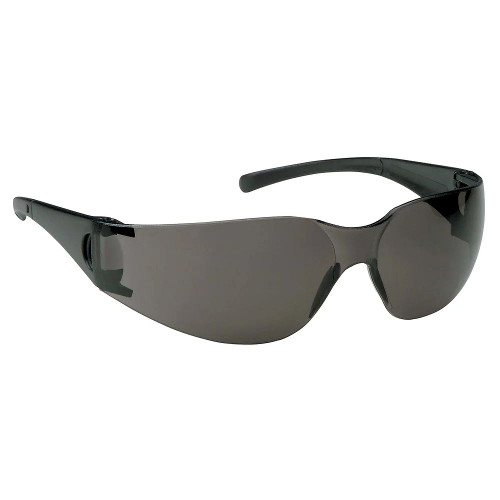
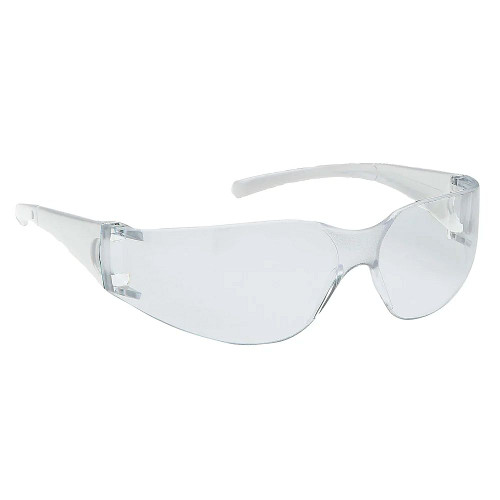
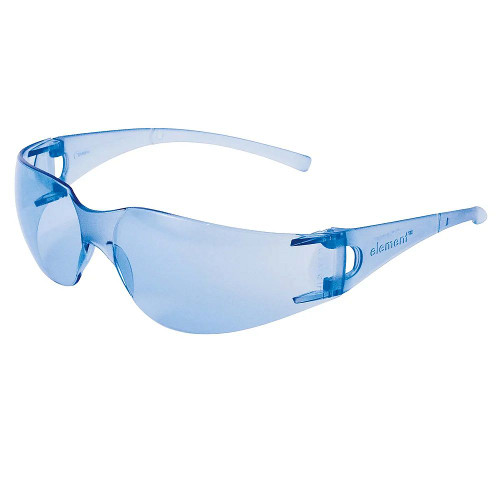
- Economical visitor-style safety glasses intended for broad facility use where impact-rated eye protection is required.
- Commonly staged at check-in points, maintenance cribs, and gowning support zones where short-duration compliance matters.
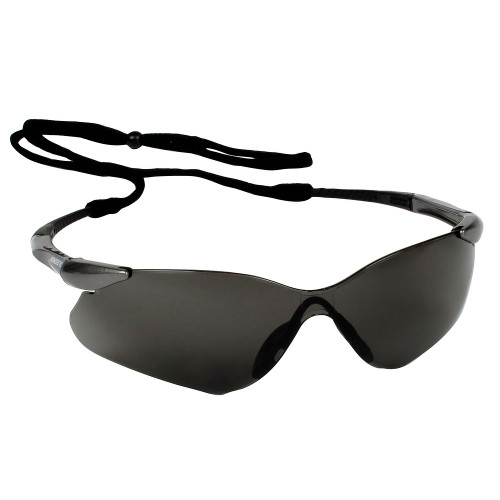
- For higher-risk splash/seal requirements or aseptic-critical work, step up to goggles/face shields or cleanroom-oriented eyewear per your risk assessment.
Manufacturer-published attributes customers care about
| Attribute |
Element Visitor Safety Glasses (Smoke Uncoated) |
| Product code |
25631 |
| Lens |
Polycarbonate, smoke (uncoated) |
| Design |
Lightweight, frameless styling; wraparound geometry (10 base curve) |
| Construction |
Metal-free; screw-less hinges |
| Compliance (published) |
ANSI Z87.1+ (impact); CSA Certified; TAA Compliant |
| UV protection (published) |
99.9% UVA / UVB / UVC protection |
| Pack |
12 pairs per case |
| Country of origin (published) |
Taiwan |
ISO-first: how eyewear should be handled in a gowning program
ISO cleanroom operations emphasize controlled behavior, controlled garments, and controlled handling.
ISO 14644-5 specifically calls for personnel management practices that include a gowning program—not just “wear PPE,” but trainable, repeatable steps that reduce contamination variability.
Practical donning sequence (where safety glasses usually belong)
- Hand hygiene first: wash/sanitize per site policy before touching any gowning items.
- Hair/beard containment: apply bouffant / beard cover to reduce shedding early in the sequence.
- Face coverage (if required): mask/hood steps per your classification and process risk.
- Eyewear next: don glasses before gloves whenever possible to reduce face/eye-area adjustments after gloving.
- Primary garment: gown/coverall and footwear steps per area classification and SOP.
- Glove last (or near-last): final glove step is typically late in the process to keep hands “cleanest” for the longest period.
Key habit: if fogging drives constant readjustment, the “problem” is no longer comfort—it is repeat contact with the face area and lens surface.
In that situation, evaluate anti-fog options, adjust mask fit, or define when goggles are required.
European Annex 1 perspective (sterile medicinal products)
EU GMP Annex 1 frames personnel as a major contamination vector and places strong weight on contamination control strategy, training, and gowning discipline.
Even when you are not manufacturing sterile medicinal products, Annex 1’s logic is useful: gowning is not a formality—it is a controlled method to prevent microbial and particulate contamination from people.
If your facility aligns to Annex 1 expectations, treat eyewear as part of the gowning system: controlled issue, controlled cleaning, controlled storage, and clear rules for reuse vs. disposal.
Cleaning and storage rules that reduce cross-contact
- Handle by the temples: reduce fingerprinting and smear on the lens surface.
- Define a “clean” home: store only in a designated PPE bin/cabinet inside the correct zone (not on benches, carts, or random drawers).
- Standardize cleaning materials: use site-approved wipes/solutions and verify polycarbonate compatibility before broad rollout.
- Avoid uncontrolled sharing: shared eyewear should have a defined wipe-down step between users or move to individually issued PPE.
Common failure modes (and what to change)
- Fogging-driven adjustments: evaluate anti-fog lens options, mask fit, and humidity; reduce repeated face contact.
- “Community glasses” with no controls: define cleaning + storage or switch to issued PPE.
- Scratched lenses: replace sooner—scratches reduce visibility and encourage more touching/repositioning.
- Wrong tool for the risk: if splash/seal is needed, move from glasses to goggles/face shields per the hazard assessment.
Why SOSCleanroom is emphasizing KleenGuard continuity
As KleenGuard transitions under Ansell’s ownership, SOSCleanroom is aligning inventory, documentation expectations, and selection guidance so customers can keep PPE standardization intact.
The practical goal is straightforward: consistent product, consistent specs, and fewer surprises when you are trying to keep gowning behavior disciplined across shifts, visitors, and contractors.
Source basis
- SOSCleanroom product page (Smoke Uncoated): https://www.soscleanroom.com/product/apparel/kleenguard-element-visitor-safety-glasses-smoke-uncoated-case-12/
- Manufacturer reference page (25631): https://www.kcprofessional.com/en-ca/products/safety-and-personal-protection-equipment/eye-protection/economy-safety-glasses/kleenguard%E2%84%A2-element%E2%84%A2-visitor-safety-glasses/25631
- ISO 14644-1 (classification): https://www.iso.org/standard/53394.html
- ISO 14644-5 (operations / gowning program context): https://www.iso.org/standard/88599.html
- EU GMP Annex 1 (sterile manufacturing context): https://health.ec.europa.eu/system/files/2022-08/20220825_gmp-an1_en_0.pdf
SOSCleanroom is the source for this Technical Vault entry.
Briefed and approved by the SOSCleanroom (SOS) staff.
If you have any questions please email us at Sales@SOSsupply.com
Last reviewed: Jan. 15, 2026
© 2026 SOSCleanroom