Sterile Gloves Are a Process Control: How Aseptic Hand Contact, Transfer Discipline, and Change Frequency Protect ISO 5 Work
The Technical Vault
By SOSCleanroom
ISO 14644 Personnel Controls
Aseptic / Sterile Handling
ISO 5 / Class 100 Compatible
Glove Change Discipline
Residue & Rework Reduction
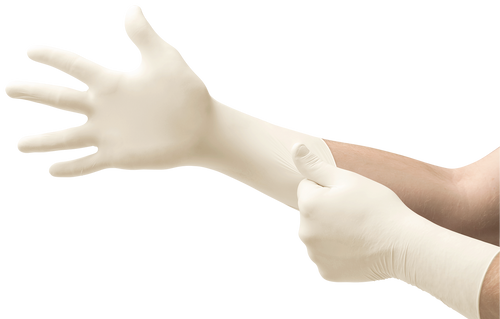
Ansell TouchNTuff® 93-700 (Sterile) — what this ISO 5 / Class 100 glove is designed to control
Ansell TouchNTuff® 93-700 is a sterile, disposable nitrile cleanroom glove used when hand contact must be controlled at a higher level than
standard cleanroom nitrile—particularly in ISO 5 / Class 100 environments and workflows where aseptic technique and sterile transfer rules apply.
In many critical processes, the glove is the most frequent “touch point” in the work zone; that means glove selection, donning, and change frequency can become
the dominant driver of contamination events, rework, and audit findings.
Sterile gloves are not a “nice to have”—they are a process interface control. The point is not only sterility at opening, but maintaining
aseptic hand behavior through disciplined handling: where hands travel, what they contact, how gloves are disinfected (when applicable), and when they are changed.
This is where many programs fail: the glove may be sterile, but the method is not.
Operations takeaway: The glove is a contamination control tool. In ISO 5 work, “what you touch” and “how often you change” often matter more than
the glove material alone.
ISO-first context: personnel are the primary contamination source in cleanrooms
ISO 14644 operations guidance treats personnel as a primary contamination source, which is why glove selection and glove behavior are central to contamination control.
In ISO 5 zones, hand contact is “high leverage” because surfaces and components are often close to product-critical interfaces. Even when an environment is controlled,
gloved hands can transport contamination from staging areas, carts, sleeves, and packaging if movement and touch discipline are not defined.
USP-influenced sterile workflows (for example sterile compounding or aseptic manufacturing principles) reinforce the same core expectation: maintain aseptic technique,
control touch points, and define glove disinfection/change behavior so the process remains repeatable and defensible.
Technical reference chart (use the product page + manufacturer documentation for exact values)
| Product |
Ansell TouchNTuff® 93-700 (Sterile) |
| Material |
Nitrile (see manufacturer datasheet for formulation details) |
| Intended environment |
ISO 5 / Class 100 compatible (per product positioning) |
| Sterility |
Sterile (confirm packaging presentation and sterility method on manufacturer documentation) |
| Program controls |
Lot traceability, approved substitutions policy, and SOP-defined glove change/disinfection rules |
Documentation control note: If your workflow is validated or audited, keep the current manufacturer datasheet (revision-controlled) and capture lot codes at receiving.
Best-practice use (aseptic donning, touch discipline, and defined change triggers)
Best practice starts with aseptic donning discipline. Sterile gloves should be opened and donned using your facility’s sterile transfer approach, minimizing contact between glove exteriors
and non-controlled surfaces. Once donned, the glove exterior should be treated as a controlled surface: hands remain in the defined work zone, avoid “wandering” to carts, drawers, keyboards,
phones, or gown surfaces, and avoid touching packaging edges or staging items that are not within the same control state.
Define a glove change strategy that is realistic and enforced. In ISO 5 work, the most common glove failures are not catastrophic tears; they are gradual contamination loading and residue transfer.
Set change-out triggers such as: after contact with non-controlled surfaces, after leaving the critical zone, after defined time intervals (risk-based), after solvent-heavy work, after visible soiling,
and immediately after any event that compromises aseptic technique.
If your SOP includes glove disinfection (for example with an approved alcohol), train operators to disinfect in a way that controls wetness and prevents dripping into product-critical areas.
Over-wetting hands can move contamination into seams, cuffs, and work surfaces; controlled application and adequate dry time reduce this risk.
Typical cleanroom failures and how to avoid them (ISO & USP-aligned)
- “Sterile glove, non-sterile behavior”: Touching carts, sleeves, or staging materials and returning to ISO 5 work. Prevention: define the work zone and touch rules (ISO operations discipline; USP aseptic technique concepts).
- Glove use extended past control limits: Residue transfer and gradual loading drives defects. Prevention: time-based and event-based change triggers written into SOP.
- Over-wetting during glove disinfection: Drips migrate contamination and create residue films. Prevention: controlled wetness and adequate dry time; avoid dripping into seams and equipment interfaces.
- Uncontrolled substitutions: Different glove introduced without evaluation changes particle/residue profile. Prevention: “no substitution without written approval” for controlled programs.
- Breaks in sterile transfer: Outer glove contacts non-controlled surfaces during opening/donning. Prevention: train sterile transfer steps and audit technique routinely.
Suggested companion products and technical rationale
SOSCleanroom commonly pairs sterile cleanroom gloves with controlled swabbing, wiping, and solvent practices so the entire method remains repeatable. The goal is not “more products”—
it is fewer variables: controlled touch points, controlled wetness, and defined pickup tools.
Defensible pairing principle: Gloves reduce operator-introduced contamination; swabs control touch geometry; wipers control final pickup; solutions control solvency and drying behavior.
The method is the control—pairings reduce variability.
Disclaimer
This Technical Vault content is provided for general operational guidance and procurement planning only. It does not replace facility SOPs, aseptic process controls,
validation protocols, environmental monitoring programs, quality risk assessments, or manufacturer documentation (IFU/TDS/SDS/label instructions). Always follow applicable ISO standards,
USP chapters, and site-specific procedures. Sterile gloves must be handled and transferred per your facility’s sterile technique and documentation requirements.
Questions? Email Sales@SOSsupply.com or call (214) 340-8574.
© 2026 SOSCleanroom. All rights reserved.