
The Technical Vault
By SOSCleanroom
Ansell BioClean™ Ultimate BUPS Sterile Neoprene (Polychloroprene) Gloves — Class 10 (ISO 4) Barrier + Tactility for Aseptic, RABS, and Grade A/B Work
Class 10 / ISO 4
Sterile (SAL 10-6)
Neoprene / Polychloroprene
Antistatic / ESD-supporting
Chemo drug tested (ASTM D6978)
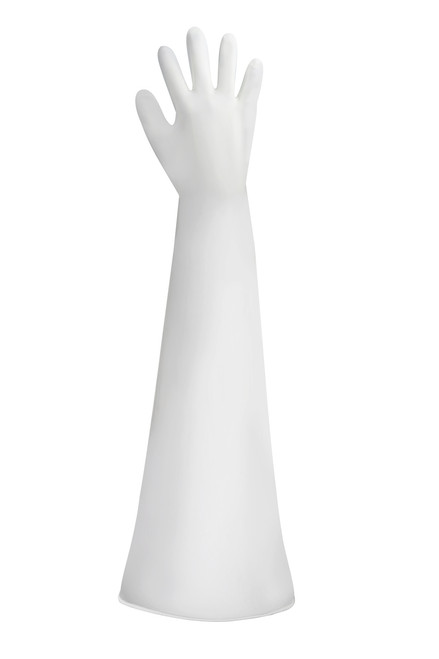
Product image shown for line recognition and training alignment.
1) Practical solutions in a critical environment
In Class 10 / ISO 4 work, gloves are not “PPE in general” — they are a primary contamination-control surface. BioClean™ Ultimate BUPS is positioned for aseptic and high-sensitivity operations where glove-sourced particles, ions, and handling variability can become a measurable driver of excursions, scrap, or investigation workload. The value proposition is practical: chemical resistance and tactile control, plus sterility and packaging discipline, without relying on natural rubber latex proteins.
SOSCleanroom focuses on best-in-class consumables because critical environments cannot be compromised. In glove programs, especially ISO 4 zones, “close enough” is rarely close enough — substitution is a common root cause of drift. BioClean™ is an Ansell cleanroom-focused line engineered around controlled manufacturing, documentation, and risk reduction.
2) What it’s for
BioClean™ Ultimate BUPS is a sterile, hand-specific neoprene (polychloroprene) cleanroom glove recommended for Class 10 / ISO 4 cleanrooms and EU GMP Grade A/B and other sterile cleanrooms. It is designed for precision work requiring consistent tactile feedback, plus chemical and chemotherapy drug resistance testing and antistatic/ESD-supporting performance to protect sensitive components.
- ISO 4 aseptic processing, filling, and high-sensitivity assembly
- RABS and barrier workflow steps where packaging discipline and point-of-use sterility matter
- Handling of chemicals (validated by user chemistry) and chemotherapy drug workflows (tested to ASTM D6978)
- ESD-sensitive component handling where glove properties support integrity protection
3) Why should customers consider these gloves
- Sterile presentation + contamination control packaging: One pair per inner PE wallet and sealed EasyTear™ pouching to reduce handling contamination pathways during gowning.
- ISO 4 intent: Cleanroom class listed as Class 10 / ISO 4 and aligned to sterile cleanroom use cases.
- Chemical + chemo drug testing signals: Tested against chemotherapy drugs per ASTM D6978 (selection still requires site-specific validation).
- Antistatic/ESD-supporting behavior: Designed to help protect electrostatic-sensitive components when integrated into an ESD control program.
- Neoprene tactility and comfort: Often selected when teams want latex-like feel while remaining latex-free.
- Program stability: Standardized specs, reorder numbers by size, and published supporting documents (PDS and declarations) reduce qualification friction.
Standards lens (U.S. first, global benchmark second): In U.S. regulated operations, glove selection and use ties directly to risk-based contamination control expectations under FDA-aligned quality systems and (where applicable) USP <797> / USP <800>. EU GMP Annex 1 is not a U.S. legal requirement, but it is a useful benchmark for strengthening CCS discipline (gowning, aseptic technique, transfer practices, and documentation) in sterile workflows.
4) Materials and construction
BioClean™ Ultimate BUPS is made from neoprene (polychloroprene) and is powder-free and latex-free. It is hand-specific with a beaded cuff, polymer-coated on the interior to support donning control, and textured on fingers and palm to support grip and precision handling. The product is sterilized by gamma irradiation (25 kGy; minimum dose 25 kGy).
5) Published specifications (from manufacturer documentation)
| Cleanroom class |
Class 10 / ISO Class 4; EU GMP Grade A/B and other sterile cleanrooms |
| Sterility assurance level |
10-6 |
| Sterilization method |
Gamma irradiation (25 kGy; minimum dose 25 kGy) |
| Material |
Neoprene (polychloroprene) |
| Color |
Natural |
| Cuff |
Beaded; standard cuff length |
| Surface |
Textured fingers and palm (external); polymer coated (internal) |
| Glove length |
300 mm / 12 in (typical) |
| Thickness (single-wall targets) |
Palm 0.11 mm (4.33 mil) • Finger 0.14 mm (5.51 mil) • Cuff 0.09 mm (3.54 mil) |
| Freedom from holes |
0.65 AQL (Performance Level 3) |
| Force at break (before aging) |
≥ 9 N |
| Antistatic |
Yes |
| Chemo drug testing |
Tested for use with chemotherapy drugs (ASTM D6978) |
| Shelf life / storage |
Five (5) years from date of manufacture; store <40°C in a cool, dry place away from direct sunlight and fluorescent light |
| Country of origin |
Indonesia |
Sizes and reorder numbers (manufacturer format): 6 (BUPS-60) • 6.5 (BUPS-65) • 7 (BUPS-70) • 7.5 (BUPS-75) • 8 (BUPS-80) • 8.5 (BUPS-85) • 9 (BUPS-90)
6) Specifications in context
In ISO 4 zones, the “right” glove is the one your CCS can defend: low and consistent contamination contribution, repeatable donning outcomes, and controlled change. BUPS combines sterile presentation (SAL 10-6), a published AQL, and published physical dimensions so QA and operations can anchor training, gowning verification, and investigations to stable reference points. The hand-specific shape and polymer-coated interior are not cosmetic — they are risk controls intended to reduce fingertip overstretch, micro-tears during donning, and “rushed gowning” friction events that can create particles or compromise fit.
From a handling standpoint, the textured palm/fingers help technicians keep grip forces lower during wet work (alcohol, disinfectant wipe-downs, and aseptic transfers). Lower grip force typically reduces slip-corrections and unintended contact events — a practical contributor to contamination control and ergonomics in long shifts.
7) Cleanliness metrics (published typicals)
Use published typicals as planning baselines, not as a substitute for your facility’s qualification data. In ISO 4 environments, trends and deltas often matter more than absolute one-time values.
| Metric |
Published value |
Context |
| Typical particle count |
< 1300 counts/cm2 (≥ 0.5 μm) |
Referenced to IEST-RP-CC005.4 methodology in the product data sheet |
| Typical ionic content (μg/cm2) |
Value |
Typical ionic content (μg/cm2) |
Value |
| Ammonium |
0.005 |
Nitrate |
0.795 |
| Bromide |
Not Detected |
Nitrite |
Not Detected |
| Calcium |
0.582 |
Phosphate |
Not Detected |
| Chloride |
0.494 |
Potassium |
0.378 |
| Fluoride |
Not Detected |
Sodium |
0.123 |
| Lithium |
Not Detected |
Sulphate |
0.041 |
| Magnesium |
0.025 |
Zinc |
Not Tested |
8) Packaging, sterility, and traceability
Packaging is a practical contamination control tool, not a convenience feature. BUPS packaging is structured for point-of-use sterility and reduced handling exposure during gowning:
- 1 pair per inner PE wallet
- 1 wallet per sealed EasyTear™ PE pouch
- 10 pouches per sealed outer PE bag
- 20 outer bags per lined carton (200 pairs)
For qualification files, the linked declarations (EU and UK) help document standards alignment for PPE use cases, and the chemical/chemotherapy permeation summaries provide additional context for hazard assessments. Maintain change control on any glove spec revisions that affect thickness, coatings, sterility method, packaging, or published cleanliness baselines.
9) Best-practice use
SOP disclaimer (customer-facing): The practices below are educational suggestions and must be adapted, validated, and approved within your site’s contamination control strategy (CCS) and quality system. Do not treat this entry as your facility SOP. Always follow your validated gowning, aseptic technique, disinfectant dwell-time, and glove-change requirements.
- Gowning discipline: Open the EasyTear™ pouch deliberately; avoid snapping or “flicking” gloves free, which can create unnecessary turbulence and handling variability.
- Controlled donning: Use the polymer-coated interior to keep force low and reduce fingertip overstretch. If your workflow uses double-donning, follow your validated outer/inner glove strategy and change criteria.
- Glove-change triggers: Define triggers beyond time (e.g., after disinfectant wipe-downs, after material transfer events, after contact with non-classified surfaces, after heavy manipulation, or after any suspected compromise).
- Wet work ergonomics: In alcohol/disinfectant handling, use grip-texture to avoid over-gripping. “White knuckle” handling increases slip-corrections and inadvertent contact.
- Chemical compatibility: Use the chemical permeation summary as a starting point only; validate against your specific chemicals, concentrations, temperatures, and exposure times.
- Documentation: Record glove lot/traceability when required by your CCS, batch record, or investigation practices — especially for ISO 4 aseptic operations.
ISO 4 companion consumables (to match the same room class):
For over 35 years, SOS and Texwipe have been close partners, and SOSCleanroom is the authorized Master Distributor of ITW Texwipe for the United States market. If you want glove + wiping tools to align to the same ISO Class, these SOSCleanroom-listed ISO 4 wipers are commonly paired in ISO 4 contamination-control workflows:
- Texwipe TX3224 Sterile TexTra10 9" x 9" polyester wiper (ISO Class includes ISO 4): https://www.soscleanroom.com/product/wipers/texwipe-tx3224-sterile-textra10-9-x-9-polyester-cleanroom-wiper/
- Texwipe STX1704P Sterile Revolve 4" x 4" pre-wetted 70% IPA polyester wiper (ISO Class includes ISO 4): https://www.soscleanroom.com/product/wipers/texwipe-stx1704p-sterile-revolve-4-x-4-upcycled-polyester-cleanroom-wiper-pre-wetted-70-ipa/
Note: Swabs and solutions may be used in ISO 4 programs when qualified, but not all product pages publish an ISO class listing. For ISO 4 accuracy, prefer companion items with an explicit ISO 4 listing and validate to your CCS.
10) Common failure modes
- Donning damage (micro-tears): High-speed donning, excessive stretch, or jewelry/edge contact. Mitigation: slow donning, size-correct selection, controlled technique, and defined reject criteria.
- Process drift from substitution: Switching glove models without change control can alter particle/ionic background and handling behavior. Mitigation: lock the glove spec in the CCS; manage alternates formally.
- Wet-work slip and incidental contact: Alcohol/disinfectant wetting can drive grip corrections. Mitigation: use textured surface properly, control wetness, and train on deliberate handling.
- Overreliance on “tested” labels: Chemical/chemo testing is not universal compatibility. Mitigation: validate against your exact exposure conditions and link to hazard assessment documentation.
- Packaging handling shortcuts: Opening pouches outside the intended zone or staging open pouches. Mitigation: stage correctly, open at point-of-use, and enforce aseptic transfer rules.
11) Closest competitors
Competitor selection should be mechanism-based: match room class, sterility presentation, material chemistry, and your validated use case (chemical exposures, aseptic manipulation, ESD controls).
- Ansell BioClean GGL sterile nitrile RABS/isolator gloves (ISO 4 class listing on SOSCleanroom category pages): https://www.soscleanroom.com/categories/apparel/gloves/
- Ansell BioClean P-Zero BPZS sterile cleanroom gloves (alternate sterile cleanroom glove family): https://www.ansell.com/us/en/products
- Kimtech sterile nitrile cleanroom glove programs (material changes may affect feel and chemical compatibility): https://www.soscleanroom.com/product/kimtech/kimberly-clark-kimtech-11821-pure-g3-sterile-sterling-nitrile-gloves-size-6/
12) Program fit
BioClean™ Ultimate BUPS is a strong fit when your program needs ISO 4 positioning plus sterile presentation and published supporting documents that QA can file and reference during audits and investigations. It is particularly relevant when teams want neoprene handling characteristics (often selected for latex-like tactility while remaining latex-free) and need documented test context for chemical and chemotherapy drug workflows.
From a supply-chain and change-control standpoint, aligning gloves with the correct ISO 4 companion wipes (with explicit ISO class listings) helps reduce “mixed-grade” consumables in the same zone. SOSCleanroom’s best practice is to standardize the room’s core consumables — gloves, low-linting wipers, swabs (where qualified), and alcohol/disinfectant systems — so the CCS is simpler to train, easier to audit, and less prone to substitution-driven drift.
13) Source basis
SOSCleanroom product page (primary):
https://www.soscleanroom.com/product/brands/ansell-bups-bioclean-ultimate-sterile-neoprene-gloves-class-10-iso-4/
Manufacturer product page (Ansell BioClean™ Ultimate BUPS):
https://www.ansell.com/us/en/products/bioclean-ultimate-bups
Manufacturer documentation (PDFs linked from SOSCleanroom; stable references):
Product Data Sheet (PDS): https://www.soscleanroom.com/content/Ansell_PDF/bioclean-ultimate-bups_pds_us.pdf
EU Declaration of Conformity: https://www.soscleanroom.com/content/Ansell_PDF/bioclean-ultimate-bups_bioclean%E2%84%A2-ultimate%20bups_eu_20230511_declaration%20of%20conformity.pdf
UK Declaration of Conformity: https://www.soscleanroom.com/content/Ansell_PDF/bioclean-ultimate-bups_bioclean%E2%84%A2-ultimate%20bups_uk_20230511_declaration%20of%20conformity.pdf
Chemical Permeation Report Summary: https://www.soscleanroom.com/content/Ansell_PDF/Chemical%20Permeation%20Report%20Summary_BUPS.pdf
Chemotherapy Permeation Summary: https://www.soscleanroom.com/content/Ansell_PDF/Chemotherapy_Permeation_Report_BioClean%20BUPS-_Life_Sciences_V1_HR.pdf
ISO 4 companion Texwipe consumables (explicit ISO class listings on SOSCleanroom pages):
TX3224 Sterile TexTra10 9" x 9" wiper: https://www.soscleanroom.com/product/wipers/texwipe-tx3224-sterile-textra10-9-x-9-polyester-cleanroom-wiper/
STX1704P Sterile Revolve 4" x 4" pre-wetted 70% IPA wiper: https://www.soscleanroom.com/product/wipers/texwipe-stx1704p-sterile-revolve-4-x-4-upcycled-polyester-cleanroom-wiper-pre-wetted-70-ipa/
Standards and regulatory bodies (customer education references):
ISO (ISO 14644 reference page): https://www.iso.org/standard/53394.html
FDA (U.S. cGMP / aseptic processing guidance host): https://www.fda.gov
ASTM (standards host): https://www.astm.org
IEST (recommended practices host): https://www.iest.org
Briefed and approved by the SOSCleanroom (SOS) staff.
If you have any questions please email us at Sales@SOSsupply.com or give us a call at (214)340-8574.
OR check out the AI ChatBot powered by SOSCleanroom data libraries - give it a try! THIS IS NEW FOR 2026!
Last reviewed: 2026-01-10
© 2026 SOSCleanroom. All rights reserved.