Ansell BUPS BioClean Ultimate Sterile Neoprene Gloves Class 10 (ISO 4)

$700.00
(No reviews yet)
SKU:
BUPS
Availability:
7 - 10 Business Days
Shipping:
Calculated at Checkout
Quantity Option (Case):
200 Pairs
Inner Packaging:
See Below
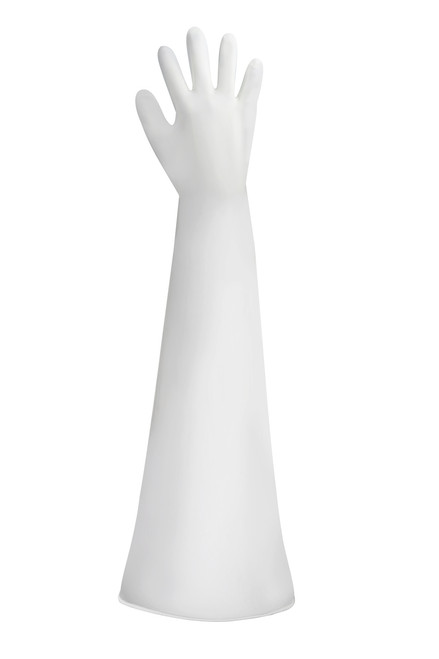
Ansell BioClean™ Ultimate BUPS Sterile Neoprene (Polychloroprene) Cleanroom Gloves — Class 10 / ISO 4, ESD Properties, and Chemotherapy-Drug Testing (ASTM D6978)
Sterile Neoprene (Polychloroprene) Class 10 / ISO 4 EU GMP Grade A/B Use Case ESD Properties Chemo Tested (ASTM D6978)

BioClean™ Ultimate BUPS is a sterile, hand-specific polychloroprene (neoprene) cleanroom glove built for precision handling in Class 10 / ISO 4 sterile spaces where hand protection must not become the dominant contamination or ESD risk. It is latex-free and powder-free, features a beaded cuff for strength and double-donning, and uses textured fingers/palm to maintain grip when work shifts from dry handling to disinfected touchpoints.

In facilities operating a contamination control strategy (CCS), BUPS is often selected when teams need a sterile glove presentation plus published chemical/chemotherapy testing references to support risk-based glove selection, change-out intervals, and task-specific compatibility reviews.


Why teams choose BioClean™ Ultimate BUPS in critical environments
  • Sterile, cleanroom-compatible glove class: listed for Class 10 / ISO Class 4 and EU GMP Grade A/B sterile cleanrooms.
  • Latex-free polychloroprene barrier: selected when natural rubber latex is not desired while retaining neoprene-like chemical resistance behavior.
  • ESD properties: supports component integrity protection where electrostatic discharge can damage sensitive devices or disrupt yields.
  • Documented testing references: includes chemotherapy-drug testing to ASTM D6978 and chemical permeation reporting summaries (see Documentation).
  • Packaging designed to reduce presentation contamination: EasyTear™ packaging format supports cleaner opening and donning flow.

Construction and usability details
  • Material: Neoprene (Polychloroprene); powder-free; latex-free (protein level N/A: contains no natural rubber latex).
  • Fit: Hand-specific shape supports dexterity and reduces excess material that can snag on fixtures or ports.
  • Grip: Textured fingers and palm for controlled handling of tools, containers, and packaged sterile components.
  • Donning and durability: Beaded cuff increases cuff strength and supports double-donning (listed recommendation: yes, as outer glove).
  • Internal surface: Polymer coated to support smoother donning and more consistent glove seating.

Sterility, packaging, and traceability characteristics
  • Sterility assurance level (SAL): 10-6.
  • Sterilization method: Gamma irradiation (minimum dose listed: 25 kGy).
  • Freedom from holes: 0.65 AQL (Performance Level 3).
  • Presentation packaging (case): 1 pair per inner PE wallet; 1 wallet per sealed EasyTear™ PE pouch; 10 pouches per sealed outer PE bag; 20 outer bags per lined carton (200 pairs).
  • Shelf life: Five (5) years from date of manufacture (storage guidance: cool, dry, <40°C, away from direct sunlight and fluorescent light).

Specifications (published)
Cleanroom class Class 10 / ISO Class 4 & EU GMP Grade A/B and other sterile cleanrooms
Color Natural
Length 300 mm / 12 in
Thickness (typical) Palm: 0.11 mm (4.33 mil)  |  Finger: 0.14 mm (5.51 mil)  |  Cuff: 0.09 mm (3.54 mil)
Surface Textured fingers and palm; polymer-coated interior
Antistatic / ESD Yes
Typical particle count <1300 counts/cm2 at ≥0.5µm (IEST-RP-CC005.4 reference on PDS)
Country of origin (PDS) Indonesia

Ordering notes: Reorder numbers by size include BUPS-60, BUPS-65, BUPS-70, BUPS-75, BUPS-80, BUPS-85, BUPS-90 (see Product Data Sheet for sizing table and palm width targets).


Chemical and chemotherapy permeation (planning snapshots)

BUPS includes published permeation summaries to support task planning. Always validate glove suitability for your specific chemical mix, concentration, temperature, dwell time, and mechanical stress. Breakthrough times are determined under laboratory conditions and may not reflect actual use.

Published chemical permeation examples (EN 16523-1 summary) Mean breakthrough time (minutes)
Sodium hydroxide (NaOH) 40% >480
Formaldehyde 37% >480
Ammonia 25% 16
Chemotherapy drug testing examples (ASTM D6978 summary) Average breakthrough detection time (minutes)
Carmustine (3.3 mg/ml) 2
Cisplatinum (1.0 mg/ml) >240
Cyclophosphamide (20.0 mg/ml) >240
Thio-Tepa (10.0 mg/ml) 47.7

Note: The full chemotherapy table includes additional drugs (e.g., doxorubicin, etoposide, 5-fluorouracil, methotrexate, paclitaxel) and should be reviewed in the Chemotherapy Permeation Report for your risk assessment.


Handling discipline aligned to EU GMP Annex 1 expectations

EU GMP Annex 1 emphasizes a risk-based contamination control strategy, documented practices, and disciplined aseptic behaviors. Sterile gloves are one component of that system. Practical practices many facilities formalize include:

  • Double-gloving logic: use BUPS as the outer glove where specified; change the outer glove whenever contacting non-sterile surfaces, after interventions, or at defined intervals in your CCS.
  • Glove sanitization: when SOPs allow, sanitize with sterile IPA and maintain wet contact time per your validated disinfection approach; avoid over-wetting cuffs to prevent wicking.
  • Damage and pinhole control: define inspection points (pre-use, post-gowning, pre-critical task) and change gloves immediately after any tear, snag, or suspected compromise.
  • Material transfer discipline: keep glove touchpoints predictable; isolate “dirty hand” vs “clean hand” roles during setups; avoid cross-contact between packaging exteriors and Grade A/B touch surfaces.
  • Documentation: retain the Product Data Sheet, declarations of conformity, and relevant permeation summaries in your controlled document set for audit readiness and training consistency.

About Ansell and why SOSCleanroom stocks it

Ansell is a global leader in hand and body protection, with dedicated cleanroom PPE lines under the BioClean™ brand. In critical environments, glove selection is not a commodity decision—it is a contamination-control and operator-safety control. SOSCleanroom prioritizes best-in-class glove options and does not compromise glove quality for cleanrooms, aseptic processing, and laboratories where process drift and particulate/chemical risk are unacceptable.

If you have any questions please email us at Sales@SOSsupply.com or give us a call at (214)340-8574. OR check out the AI ChatBot powered by SOSCleanroom data libraries - give it a try! THIS IS NEW FOR 2026! Last updated: January 10, 2026 © 2026 SOSCleanroom.com. All rights reserved.
The Technical Vault
By SOSCleanroom
Ansell BioClean™ Ultimate BUPS Sterile Neoprene (Polychloroprene) Cleanroom Gloves — Class 10 / ISO 4, ESD Properties, and ASTM D6978 Chemotherapy-Drug Testing
Class 10 / ISO 4 Sterile (SAL 10-6) Neoprene / Polychloroprene Latex-Free, Powder-Free ESD Properties Chemo Tested (ASTM D6978) 200 Pairs / Case

1. Practical solutions in a critical environment

In Class 10 / ISO 4 work, gloves are a primary contamination-control surface and a frequent contact interface with tools, components, and sterile transfer items. BioClean™ Ultimate BUPS is selected when programs need a sterile glove with controlled cleanliness metrics, plus documented chemical/chemotherapy testing context, without using natural rubber latex.

BUPS adds ESD properties for facilities handling electrostatic-sensitive components and uses non-particulating EasyTear™ packaging to support cleaner opening and donning flow.


2. What this glove is for
  • ISO 4 / Grade A/B decision sets where sterile glove presentation and low background contribution are required
  • Precision handling with a strong need for tactility (fine manipulations, fixtures, ports, and aseptic interfaces)
  • Workflows where chemical compatibility documentation is part of task planning (facility validation required)
  • ESD-sensitive handling where gloves must support a broader ESD control program

3. Selection rationale
  • ISO 4 positioning: Listed for Class 10 / ISO 4 and sterile cleanroom use cases where glove contribution must be tightly controlled.
  • Latex-free polychloroprene barrier: Chosen when latex avoidance is required while retaining neoprene-like handling and chemical resistance behavior.
  • ESD properties: Supports integrity protection for electrostatic-sensitive components when integrated into your ESD controls.
  • Documented test context: Tested for chemotherapy drugs per ASTM D6978 (site validation still required).
  • EasyTear™ packaging: Non-particulating packaging reduces contamination risk during opening and donning.
  • Double-donning support: Beaded cuff and sterile packaging configuration support layered glove strategies.
SOSCleanroom selection philosophy
SOSCleanroom supports customers who need dependable, best-in-class cleanroom consumables. In critical environments, we do not recommend "good enough" substitutes when process risk, product integrity, and compliance expectations are on the line.

4. Materials and construction
  • Material: Neoprene (Polychloroprene)
  • Color: Natural
  • Shape: Hand-specific
  • Cuff: Beaded
  • External surface: Textured fingers and palm
  • Internal surface: Polymer coated
  • Powder content: Powder-free

5. Specifications in context
Specification Value Operational meaning
Cleanroom classClass 10 / ISO 4 (EU GMP Grade A/B)Positions BUPS for critical, sterile environments where background control is a primary quality driver.
SterilitySAL 10-6Supports sterile workflow intent when packaging presentation and donning steps are controlled.
Freedom from holes0.65 AQL (Performance Level 3)Leak baseline; any suspected defect or touch-risk event is an immediate change-out trigger.
Length300 mm / 12 in (typical)Supports gown-to-glove overlap during reaching and rotations.
Thickness targetsPalm 0.11 mm | Finger 0.14 mm | Cuff 0.09 mmBalances tactility with durability.
Force at break≥ 9 NDurability indicator; supports controlled donning and reduces tear risk.
Chemo testedYes (ASTM D6978)Supports hazardous-drug compatibility planning; validate your specific drug list and technique.
Anti-staticYes (ESD properties)Helps protect sensitive components when paired with facility ESD controls and grounding strategy.
Country of originIndonesiaRelevant for supplier qualification files.
Shelf life5 years from date of manufactureUse FEFO rotation; confirm lot/expiry at point of use per SOP.

6. Cleanliness metrics
Metric Value Method / reference
Typical particle count ≥ 0.5 µm< 1300 counts/cm2IEST-RP-CC005.4
Freedom from holes0.65 AQL (Performance Level 3)EN 374-2

Cleanliness note: Avoid cuff snapping and rapid dry rubbing on packaging. In ISO 4, technique and staging discipline are often the difference between stable background and recurring excursions.


7. Packaging, sterility, and traceability
  • Case configuration: 1 pair per inner PE wallet; 1 wallet per sealed EasyTear™ PE pouch; 10 pouches per sealed outer PE bag; 20 outer bags per lined carton (200 pairs)
  • Sterilization: Gamma irradiation (25 kGy)
  • Available sizes: 6.0, 6.5, 7.0, 7.5, 8.0, 8.5, 9.0
  • Shelf life: 5 years from date of manufacture (store <40°C, cool/dry, away from direct sunlight)

8. Best-practice use
Customer SOP disclaimer
This guidance is provided as a suggested starting point for customer SOP development and operator training. Customers must evaluate risk, validate procedures, and obtain appropriate QA approval before implementation.
  • Stage with intent: Treat glove packaging as a controlled transfer item. Open only what the sequence requires.
  • Donning without particle events: Use slow, controlled opening of EasyTear™ pouches; avoid ripping motions. Do not snap cuffs.
  • Sanitization: If glove sanitization is part of your program, use sterile alcohol and define application volume, wet-contact expectations, and drying rules in the SOP.
  • Double-donning: Define inner/outer glove roles with step-based change-out triggers.
  • Change-out triggers: Any tear, puncture, cuff roll-down, loss of grip, tacky residue, or contact with non-qualified surfaces is an immediate change-out event.
Suggested pairings
Use case Recommended item Why it pairs well
ISO 4 critical wipe-downsTexwipe TX3224 Sterile TexTra10™ 9" x 9"Sterile sealed-border polyester wiper with low lint and controlled extractables.
Critical polishing / film-sensitive surfacesTexwipe TX3211 SterileWipe™ LP 9" x 9"Sterile continuous-filament polyester for critical cleaning where low particle generation is a priority.
Gowning room / aseptic support areasTexwipe TX8932S Sterile TexVantage™ 12" x 12"Larger-format sterile wiper for faster coverage on carts and staging areas.
Detail cleaning (ports, fittings, corners)Texwipe STX763 Sterile Polyester SwabSterile swab for controlled solvent cleaning in tight geometries.
Sterile IPA sprayTexwipe TX8270 Sterile 70% IPA (8 oz.)Ready-to-use spray for routine glove and surface sanitization.
Sterile IPA bulkTexwipe TX3290 Sterile 70% IPA (1 Gallon, 4/Case)Bulk sterile IPA for high-use points; align dispensing controls to avoid over-wetting.

9. Common failure modes
  • Packaging-driven contamination: Fast tearing or opening outside defined transfer steps creates avoidable particle events.
  • Chemical compatibility assumptions: Published permeation data does not replace site validation for your specific chemical mix, temperature, and mechanical stress.
  • Over-wetting during sanitization: Define controlled application and drying expectations in the SOP.
  • Double-donning drift: Explicit change triggers prevent operators from extending use beyond the intended control model.
  • ESD "checkbox" risk: ESD performance depends on the full program (grounding, surfaces, humidity, training) — not gloves alone.

10. Other gloves to consider

11. Program fit for regulated cleanrooms
  • ISO 4 contamination control: Strong fit when glove background and packaging presentation are treated as core controls.
  • Chemical / HD planning: Relevant when the program needs documented test context (ASTM D6978, permeation summaries).
  • ESD-sensitive handling: Supports electronics and device environments when integrated into an established ESD program.
  • Documentation-driven qualification: Suitable where QA needs traceable packaging configuration and published cleanliness metrics.


Technical Vault Notice
Important disclaimer: This entry is provided for general process support and reference only. It is not regulatory, legal, medical, or validation advice.
Customers must evaluate risk, confirm applicability to their processes, and follow their approved SOPs, QA requirements, and the manufacturer’s instructions for use.
Questions or documentation requests: Sales@SOSsupply.com  |  (214) 340-8574
If you need additional information please try our SOSCleanroom specific AI ChatBot which draws from our extensive cleanroom specific libraries.
Last reviewed: May 1, 2026
© 2026 SOSCleanroom.com