

Ansell CE4-200 Microflex Cleanroom Latex Gloves Class 10 (ISO 4)

$390.00
(No reviews yet)
SKU:
CE4-200
Availability:
7 - 10 Business Days
Shipping:
Calculated at Checkout
Quantity Option (Case):
1,000 Gloves
Inner Packaging:
See Below
Ansell MICROFLEX® CE4-200 Cleanroom Latex Gloves (Natural) — Class 10 (ISO 4) Control for Particles, Ions, and NVR in Critical Environments
Natural Rubber Latex Powder-Free Class 10 / ISO 4 Non-Sterile 12 in / 300 mm Length

Ansell MICROFLEX® CE4-200 is a non-sterile, powder-free cleanroom latex glove engineered for Class 10 (ISO 4) controlled environments where particulate control and low extractables matter. It is designed to deliver the tactile feel and dexterity many operators prefer from natural rubber latex while supporting controlled-environment expectations for low surface particulates, low ionic extractables, and low non-volatile residue (NVR) background.


Why this glove is specified in ISO 4 / Class 10 work

ISO Class 4 spaces (often aligned to Class 10 legacy terminology) tend to be unforgiving: contamination control is not only about visible particles but also about background residues that complicate cleaning validation, surface science, and high-yield assembly. CE4-200 is positioned for regulated and high-sensitivity work (pharmaceutical manufacturing, biotech, medical device manufacturing, and electronics) where consistent glove cleanliness supports repeatable outcomes.

  • Powder-free internal surface to reduce added contamination sources during donning.
  • Cleanroom class rating stated as Class 10 / ISO 4 for controlled environments.
  • Published typical cleanliness/ionic data to help teams set expectations during qualification.
  • 12-inch length improves wrist coverage and supports disciplined gowning interfaces.

Ansell + SOSCleanroom: best-in-class glove performance without compromise

Ansell is a global leader in safety solutions with deep controlled-environment expertise spanning cleanroom gloves, garments, and contamination-control accessories. SOSCleanroom positions Ansell as its best-in-class glove line for critical environments, because glove consistency is often on the critical path for yield, aseptic discipline, and audit readiness.

Trust line Cleanroom Technology reported (June 20, 2023) that SOS Cleanroom Supply became an Ansell authorised distributor. This supports customer confidence in supply continuity and documentation discipline (without implying exclusivity).

Key specifications (published)
Material Natural Rubber Latex
Color Natural
Shape / cuff Ambidextrous / Beaded cuff
Cleanroom class Class 10 / ISO 4
Typical length 300 mm / 12 in
Freedom from holes 1.5 AQL
Target thickness (single wall) Palm 0.14 mm (5.5 mil) / Finger 0.18 mm (7.1 mil) / Cuff 0.11 mm (4.3 mil)
Typical particle count < 850 particles/cm² (≥ 0.5 µm)
Powder Powder-Free (internal surface: powder-free)
Packaging 100 gloves per double polybag; 10 polybags per master bag; 1 master polybag per case
Available sizes XS (5.5–6), S (6.5–7), M (7.5–8), L (8.5–9), XL (9.5–10)
Shelf life 3 years
Anti-static No

Note on wording: no wiping material is truly “lint-free.” For contamination control discussions, “low-linting” is the technically appropriate language.


Typical ionic extractables (selected ions)

For residue-sensitive environments, typical ionic background can influence cleaning validation strategies, rinse/flush design, and investigation work when anomalous results occur. The following values are published as typical concentrations (not specifications).

Ion Typical concentration (µg/cm²) Ion Typical concentration (µg/cm²)
Chloride < 1.00 Sodium < 0.20
Calcium < 0.50 Potassium < 0.20
Bromide < 0.20 Sulphate < 0.20
Magnesium < 0.03 Nitrate < 0.50

Practical cleanroom use guidance (U.S. expectations first, Annex 1 as a global benchmark)

In the United States, customers typically anchor contamination-control programs to risk-based practices aligned with FDA cGMP expectations, USP <797>/<800> where applicable, and ISO 14644 terminology for cleanroom classification. EU GMP Annex 1 can be a helpful secondary reference for continuous improvement because it emphasizes a holistic contamination control strategy (CCS), disciplined gowning behaviors, and validated cleaning/disinfection without implying it is a U.S. legal requirement.

  • Glove-change discipline: Define change frequency by task risk (e.g., material transfer, aseptic manipulations, high-touch tool work) and enforce documented triggers (tears, suspected contact, shedding risk events).
  • Surface sanitization compatibility: Use approved disinfectants/IPA per your CCS and validated procedures; allow required wet contact time where applicable; avoid over-wetting that drives drip/transfer risk.
  • Material transfer controls: Keep outer bag integrity intact until the point-of-use area; use double-bag discipline consistent with your gowning/material airlock flow.
  • Latex sensitivity management: If latex allergy is a concern in your program, specify non-latex alternatives at the CCS level and manage change control accordingly.

Standards reference (customer education): ISO terminology (https://www.iso.org/standard/53394.html) | FDA (https://www.fda.gov) | ASTM (https://www.astm.org) | IEST (https://www.iest.org)


Recommended companion products for the same ISO Class 4 environment

Pairing the correct glove with the correct wiping and swabbing tools reduces variability and supports a tighter contamination control strategy. For over 35 years, SOS and Texwipe have been close partners, and SOSCleanroom is the authorized Master Distributor of ITW Texwipe for the United States market.

  • Texwipe AlphaWipe® TX1009 (9" x 9") polyester wipers — low-linting, cleanroom laundered and packaged; commonly used across ISO Class 4–9 programs depending on process needs.
    SOSCleanroom: https://www.soscleanroom.com/product/wipers/texwipe-tx1009-alphawipe-9-x-9-polyester-cleanroom-wiper/  |  Texwipe: https://www.texwipe.com/alphawipe-tx1009
  • Texwipe Alpha® TX701 polyester knit cleanroom swab — thermal-bond construction (no adhesive) for residue-sensitive cleaning of slots, grooves, and tight features where a wiper cannot reach.
    Texwipe: https://www.texwipe.com/alpha-polyester-knit-extra-large-swab-tx701

Cautions and selection notes
  • Latex allergy: This product contains natural rubber latex, which may cause allergic reactions in some users. Safe use by or on latex-sensitized individuals has not been established.
  • ESD programs: CE4-200 is published as non anti-static. If your process is ESD-controlled, specify an ESD-appropriate glove and validate for your workflow.
  • Qualification: As with any critical consumable, confirm fit, tactile needs, and contamination baselines in your actual process (materials, solvents, and handling patterns).

Documentation
SOSCleanroom is the source for this product description. Briefed and approved by the SOSCleanroom (SOS) staff. If you have any questions please email us at Sales@SOSsupply.com or give us a call at (214)340-8574. If you need additional information please try our SOSCleanroom specific AI ChatBot which draws from our extensive cleanroom specific libraries. Last updated: January 10, 2026 © 2026 SOSCleanroom.com
The Technical Vault By SOSCleanroom
ISO 4 (Class 10) Natural rubber latex Powder-free Non-sterile 12 in / 300 mm length
Ansell MICROFLEX® CE4-200 Cleanroom Latex Gloves (Non-Sterile) — ISO 4/Class 10 Hand Protection With Published Particle and Ionic Background

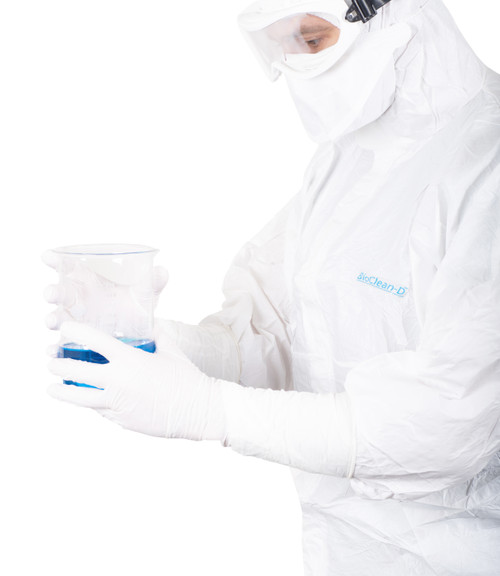
Ansell CE4-200 Microflex Cleanroom Latex Gloves Product shown: MICROFLEX® CE4-200 (SKU CE4-200) — cleanroom-compatible latex glove for ISO 4/Class 10 areas.
1) Practical solutions in a critical environment
In ISO 4 / Class 10 work, your glove is part of the contamination-control system. The CE4-200 is built for controlled environments where teams want a comfortable latex glove but still need measurable background indicators (typical particle count and typical ionic extractables) to support incoming-material qualification and repeatable handling outcomes on sensitive parts, tools, and surfaces.

2) What it’s for in ISO 4 workflows
  • Cleanroom cleaning and preparing tasks where glove-to-surface contact is frequent.
  • Blending/compounding and handling of solids and liquids where grip and dexterity reduce drop/impact events.
  • Transfer and assembly tasks where touch-control and repeatable finger movement reduces handling variability.
  • Lab and electronics handling where published ionic background helps teams plan residue-sensitive work.

3) Why should customers consider this glove
  • Designed for ISO 4 (Class 10) compatibility: selection intent aligns to critical environments where background control is part of the process.
  • Published cleanliness context: typical particle count and typical ionic extractables support qualification logic and change-control discussions.
  • Powder-free internal surface: reduces powder-related contamination pathways.
  • Comfort + tactility from latex formulation: strong fit/feel can reduce over-gripping, a common driver for tears and dropped parts.
Latex caution (important): This glove contains natural rubber latex. Latex may cause allergic reactions in some users. If latex sensitivity is a concern, consider a nitrile alternative in the same ISO class (see "Closest competitors").

4) Materials and construction
CE4-200 is a non-sterile, disposable natural rubber latex glove with a beaded cuff, ambidextrous shape, and powder-free internal surface. Processed to reduce surface particulates, ionic extractables, and non-volatile residues for controlled-environment handling.

5) Specifications in context
Cleanroom classClass 10 / ISO 4
Length (typical)300 mm / 12 in
Freedom from holes (AQL)1.5 AQL (Inspection Level I)
Thickness targetsFinger: 0.18 mm (7.1 mil)  |  Palm: 0.14 mm (5.5 mil)  |  Cuff: 0.11 mm (4.3 mil)
AntistaticNo
SterilityNon-sterile
Shelf life (published)3 years

6) Cleanliness and contamination metrics
MetricPublished typical valueTest reference
Particles ≥ 0.5 µm (counts/cm²)< 850 counts/cm²IEST-RP-CC005.4 (method referenced)
Typical ionic extractables (surface, µg/cm²)
IonTypical (µg/cm²)IonTypical (µg/cm²)
Bromide< 0.20Nitrate< 0.50
Calcium< 0.50Phosphate< 0.20
Chloride< 1.00Potassium< 0.20
Fluoride< 0.20Sodium< 0.20
Magnesium< 0.03Sulphate< 0.20
Typical NVR: Not published in the referenced CE4-200 product data sheet.

7) Packaging, sterility, and traceability
  • Pack configuration: 10 polybags per 1 master bag; 100 gloves per double polybag; 1,000 gloves/case.
  • Sterility: Non-sterile. If your process requires sterile glove presentation, qualify a sterile alternative per your CCS and aseptic gowning SOP.
  • Sizing: XS (5.5–6), S (6.5–7), M (7.5–8), L (8.5–9), XL (9.5–10).
  • Receiving/traceability tip: In ISO 4 programs, record lot/date identifiers per your site practice and segregate opened cases from unopened inventory.

8) Best-practice use
  • Donning discipline: Don in a controlled area, avoid contact with cartons and non-controlled surfaces, and seat the beaded cuff fully.
  • Glove-change triggers: Define change triggers by task (wet work, solvent contact, visible residue, touch of non-controlled surface, or time-in-use).
  • Pinch-force management: Most glove tears occur during high pinch force. Use tools/fixtures to reduce pinch where practical.
  • Wipe-wet work: Control drip paths at cuffs and benches. Wet cuffs can transfer residues quickly.
  • Residue-sensitive handling: When blanks/background matter, treat gloves as a controlled surface and minimize unnecessary glove-to-bench contact.
SOP disclaimer: The guidance above is a suggested SOP template and training aid. Each facility must review, adapt, validate, and approve procedures based on its specific process, risk assessment, and regulatory expectations.

9) Standards and CCS alignment notes
Glove selection and glove-change discipline should tie back to a documented CCS, trained and monitored. In the U.S., teams commonly anchor terminology using ISO 14644 concepts and align behaviors to FDA expectations. EU GMP Annex 1 is often used as a global benchmark to strengthen CCS thinking — not a U.S. legal requirement.

10) Common failure modes
  • Silent tears at pinch points: repeated cap twists, sharp edges, and over-gripping can create micro-tears that do not show visually until wet work begins.
  • Cuff roll-down and sleeve gaps: incomplete cuff seating can open contamination pathways at the gown interface.
  • Residue transfer from "clean-looking" gloves: glove-to-bench contact and wet cuffs can move residues quickly.
  • Latex sensitivity events: if latex allergy is a risk, use a nitrile alternative.

11) Closest competitors

12) Program fit (why SOSCleanroom)


SOSCleanroom is the source for this Technical Vault entry.
Briefed and approved by the SOSCleanroom (SOS) staff.
If you have any questions please email us at Sales@SOSsupply.com or give us a call at (214)340-8574.
If you need additional information please try our SOSCleanroom specific AI ChatBot which draws from our extensive cleanroom specific libraries.
Last reviewed: April 29, 2026
© 2026 SOSCleanroom.com