The Technical Vault
By SOSCleanroom
Class 10 / ISO 4 processing
Sterile (SAL 10-6)
RABS / isolator gloveport use
100% water leak tested
VHP / IPA compatibility noted
Ansell BioClean GGL sterile nitrile RABS/isolator gloveports: barrier integrity, sterility assurance, and glove-change discipline

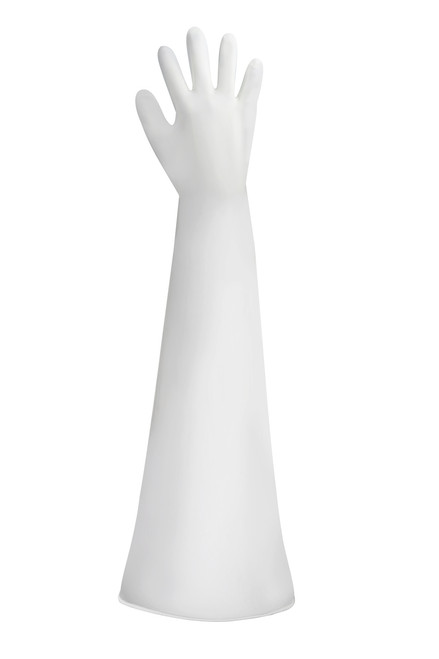
Series image for identification. Gloveport/port-size configuration depends on isolator hardware and the ordered part number.
1) Practical solutions in a critical environment
In RABS and isolators, a glove is a primary barrier that can become the highest-risk interface between a Grade A/ISO 5 critical zone and the surrounding area. The Ansell BioClean GGL sterile nitrile RABS/isolator glove family is built for that exact role: validated sterility (SAL 10-6), ISO Class 4 processing discipline, and integrity controls (100% water leak testing) that support a contamination-control strategy built around barrier reliability and repeatable glove-change practices.
2) What it's for
- Aseptic manipulations through gloveports in isolators and RABS where glove integrity is directly tied to sterility assurance.
- Operations exposed to routine disinfectant use and decontamination methods (including VHP cycles) where material compatibility matters.
- High-consequence environments (sterile fill-finish, aseptic compounding/processing, biotech, sterile device assembly) where glove failure is a deviation event.
- Applications requiring sterile, long-sleeve glove geometry to reduce cross-contamination risk during extended manipulations.
3) Why customers consider these gloves
- Sterility assurance you can operationalize: SAL 10-6 supports validated sterile workflows where glove changes are planned and documented.
- Barrier integrity emphasis: 100% water leak testing supports CCS and deviation prevention.
- ISO 4 cleanroom washing/packing discipline: controls particulate burden entering the critical zone.
- Disinfectant and decontamination compatibility: manufacturer documentation highlights VHP, IPA, and common disinfectant compatibility.
- Supportable documentation trail: product data sheets plus declarations help QA build a defensible glove program.
Port-size note: The GGL series includes multiple port sizes. Confirm the exact port size and request the matching part-number PDS for your isolator glove ring before validation and procurement.
4) Materials and construction
The BioClean GGL sterile RABS/isolator gloves are nitrile, white, ambidextrous, with a smooth external surface and a beaded cuff. Your real-world performance will be driven as much by gloveport hardware fit and installation practices as by the glove polymer itself.
5) Specifications at-a-glance
| Parameter |
Published (GGL family / example PDS) |
Why it matters |
| Material | Nitrile (latex-free) | Reduces latex protein concerns; good chemical compatibility for gloveport work. |
| Sterility assurance | SAL 10-6; gamma irradiation (25 kGy) | Aligns to validated sterile transfer expectations when glove changes are controlled and documented. |
| Integrity test | 100% water leak tested | Practical incoming control for barrier assurance. |
| Cleanroom processing | Washed and packed in ISO Class 4; Class 10 / ISO 4 & EU GMP Grade A | Controls particulate burden entering the critical zone. |
| Disinfectant / decon | Compatibility noted with VHP, IPA, and common disinfectants | Requires site validation for exact chemistry and contact time. |
| Port size | Series is port-size specific. SOS example: 304 mm / 12 in. PDS example (GGL10NIT59): 254 mm / 10 in. | Hardware fit drives leak risk. Confirm before qualification. |
| Size (hand) | Example PDS: 9.75 | Hand fit affects fatigue and tactile control. |
| Typical length | Example PDS: 840 mm / 33 in | Extended sleeve coverage for deep isolator manipulations. |
| Thickness (single wall) | Palm 0.50 mm, finger 0.60 mm, cuff 0.50 mm | Balances puncture resistance and tactile control. |
| Shelf life | 3 years from date of manufacture | Rotate stock and protect packaging integrity. |
6) Specifications in context
In gloveport work, your CCS should treat glove systems like any other critical utility: define replacement frequency, integrity checks, disinfectant exposures, and how you investigate glove-related deviations. The GGL family's published controls (sterility assurance, ISO 4 washing/packing, 100% leak testing) are the kind of upstream process signals QA teams look for when building a defensible rationale for barrier reliability.
7) Cleanliness metrics and contamination control
| Control / metric |
Published value |
Operational use |
| Sterility assurance level | SAL 10-6 | Tie to glove-change intervals, sterile transfer SOPs, and packaging integrity checks. |
| Leak testing | 100% water leak tested | Use as incoming assurance; implement routine glove system integrity checks per your CCS. |
| Cleanroom washing/packing | ISO Class 4 | Supports reduced incoming particulate burden; maintain outer-bag control during staging. |
| Ions / NVR / particle counts | Not published for this listing/PDS | If required, perform qualification testing (incoming lot checks, user-conditions sampling). |
Matching cleanroom consumables: For wiping and spot-cleaning alongside gloveport work, many teams standardize on low-linting, cleanroom-processed textiles and swabs.
SOSCleanroom is the authorized Master Distributor of ITW Texwipe for the United States market.
8) Packaging, sterilization, and traceability
Packaging uses multiple sealed PE bags (inner-to-outer) to protect sterility through staging and transfer. Sterilization is gamma irradiation (25 kGy), with a published shelf life of three years from date of manufacture. The series is supported by an EU Declaration of Conformity (covering GGLxxNIT59) and additional quality declarations posted with the product documentation.
9) Best-practice use
- Incoming inspection: verify outer packaging integrity before staging to the clean side.
- Controlled transfer: bring only the required bag layer into the next cleaner area.
- Ring interface discipline: install per gloveport hardware instructions; over-tensioning and misalignment are common root causes of leaks.
- Disinfectant exposure control: define approved chemistry list, contact times, and maximum exposure frequency.
- Integrity checks: perform glove system integrity testing at defined intervals per your CCS risk assessment.
- Glove change rules: set hard limits on hours of use, manipulations, and observed stress events.
Customer SOP disclaimer: The handling guidance above is general best-practice education. It is not a substitute for your facility's written procedures, validation protocols, or quality system requirements. Always follow your site-approved SOPs and perform documented qualification before use in product-contact or aseptic manufacturing operations.
10) Common failure modes
- Micro-tears at the ring interface: misaligned clamps, sharp ring edges, or over-tensioning during installation.
- Punctures from tools and fixtures: tweezers and sharp-edged components can puncture nitrile without obvious visual cues.
- Chemical stress cracking: cumulative exposure to aggressive chemistries outside validated compatibility can embrittle polymer over time.
- Packaging compromise: small seal breaches and pinholes can invalidate sterile transfer assumptions.
- Human factors: fatigue-driven over-gripping and repetitive motion increases tear probability.
11) Closest competitors
- Ansell BioClean CGL (Clean, non-sterile): similar gloveport concept but positioned as "clean" rather than sterile.
- Sterile elbow-length ISO 4 cleanroom gloves (non-gloveport): when the work is adjacent to but not through gloveports.
12) Program fit (standards, guidance, and audit readiness)
Glove system integrity, glove-change discipline, and documentation traceability are recurring inspection themes. EU GMP Annex 1 raises the bar on CCS formality, barrier integrity testing, and risk-based justification for how glove systems are installed, monitored, and replaced. Annex 1 is not a U.S. legal requirement, but it is a useful framework for tightening your CCS and reducing deviation rates.
SOSCleanroom + Ansell documentation reliability: Cleanroom Technology reported (June 20, 2023) that SOS Cleanroom Supply became an Ansell authorized distributor, supporting program continuity, documentation access, and stable supply planning.
13) Source basis
Product pages & documentation
SOSCleanroom is the source for this Technical Vault entry.
Briefed and approved by the SOSCleanroom (SOS) staff.
If you have any questions please email us at Sales@SOSsupply.com or give us a call at (214)340-8574.
If you need additional information please try our SOSCleanroom specific AI ChatBot which draws from our extensive cleanroom specific libraries.
Last reviewed: May 1, 2026
© 2026 SOSCleanroom.com