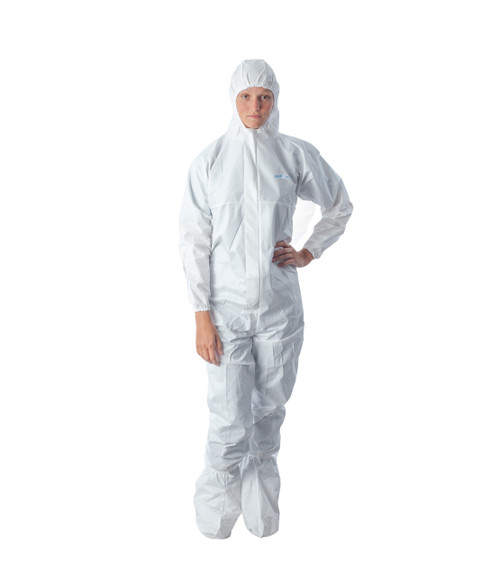
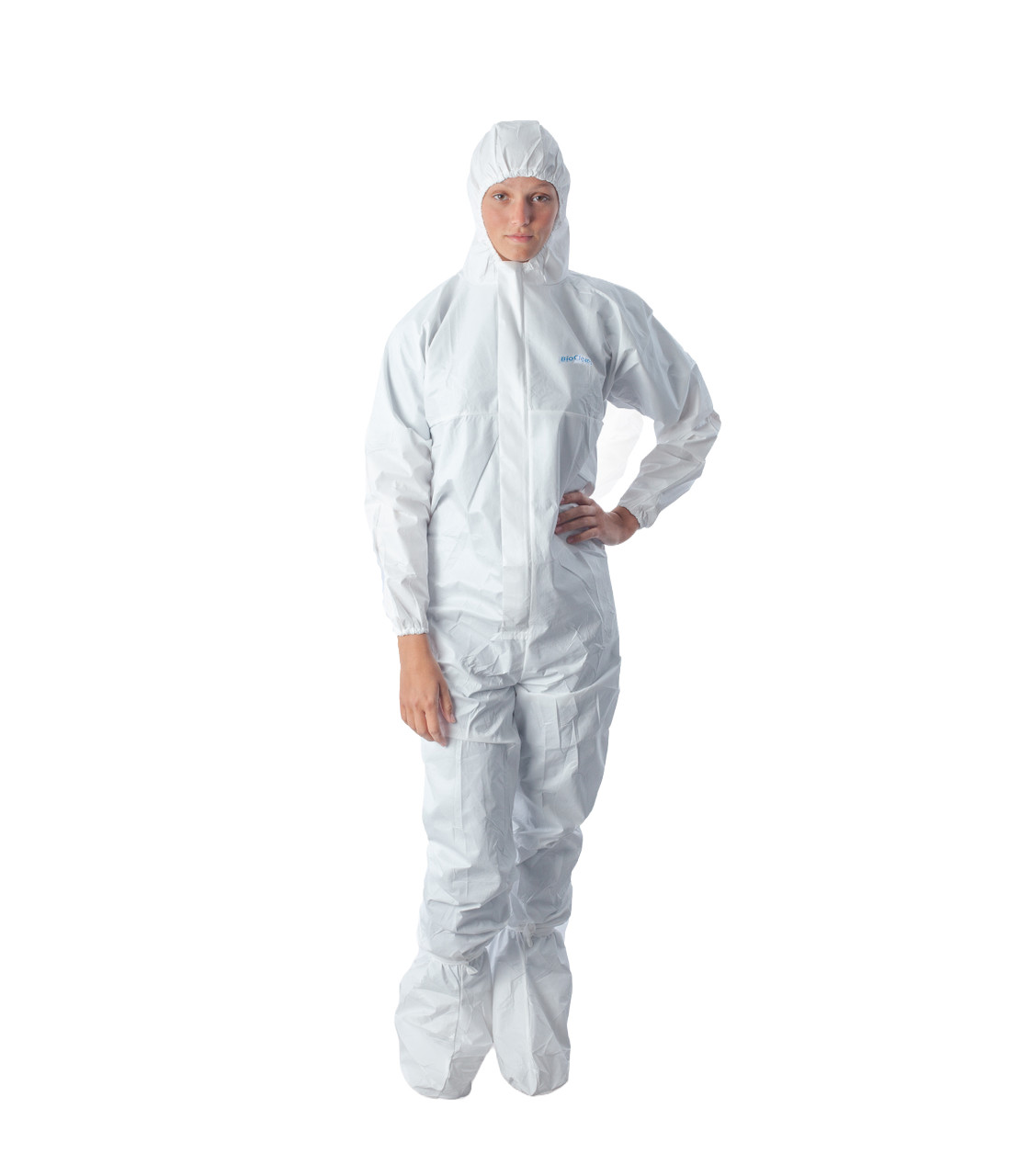
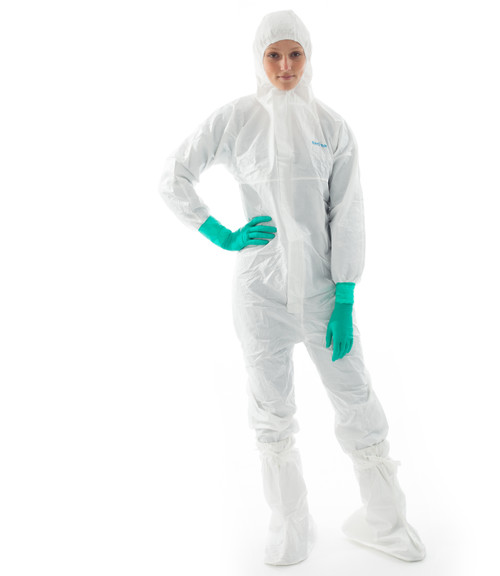
SKU shown: S-BDFC (sterile coverall with hood and integrated boots).
Why gowning is the control point (ISO context first)
In most cleanrooms, people are the dominant contamination source. Movement, clothing friction, exposed hair/skin, and poor gowning technique can add particles and (in aseptic operations) microbial risk to the environment.
ISO cleanroom classification (ISO 14644-1) defines cleanliness by airborne particle concentration, but maintaining that state depends on operational discipline.
ISO 14644-5 focuses on operations control: personnel practices, entry/exit behavior, cleaning, maintenance, and monitoring programs that keep the cleanroom within its specified limits.
S-BDFC is built to support those operational goals when the garment is donned correctly and handled consistently.
What S-BDFC is (manufacturer-defined)
BioClean-D™ S-BDFC is a sterile cleanroom coverall with hood and integrated boots made on CleanTough™ material, positioned for ISO Class 4 (Class 10) and EU GMP Grade A/B sterile cleanrooms.
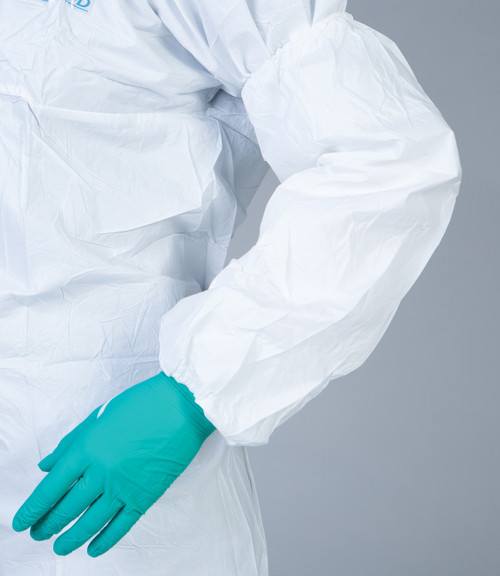
The PDS highlights low-linting behavior, antistatic performance characteristics, and a secure-fit design: elasticated hood/back/cuffs/ankles, thumb loops, and a front zipper with protective flap.
Sterility, packaging, and traceability
- Sterilization method: gamma irradiation (minimum 25 kGy), with manufacturer stated SAL 10-6.
- Packaging configuration: 1 piece aseptically folded per sealed inner PE bag; inner bag inside sealed outer PE bag; 20 outer bags per lined carton (20 pieces). Sizes 3XL & 4XL: 15 pieces per carton.
- Shelf life: three (3) years from date of manufacture (expiry date shown on packaging).
Key performance signals (what to look at in the PDS)
For cleanroom garments, "performance" should be treated as measurable signals rather than marketing language. Below are manufacturer-published signals that commonly matter in qualification:
| Signal |
What it means in practice |
Manufacturer basis |
| Cleanroom class suitability |
Indicates intended use in ISO Class 4 operations and sterile cleanrooms (fit must still align to your SOP and risk controls). |
Class 10 / ISO Class 4 & EU GMP Grade A/B (PDS) |
| Sterility assurance |
Supports sterile-area entry controls and aseptic workflow gowning (with correct donning technique). |
Gamma (min 25 kGy) & SAL 10-6 (PDS) |
| Particle shedding |
A screening indicator for garment contribution to airborne particles (handling and movement still dominate outcomes). |
Helmke Drum: ≥0.5 µm <2000 counts/min (PDS) |
| Secure-fit interfaces |
Reduces gaps and "pumping" at cuffs/ankles/hood during movement; helps keep skin/clothing covered. |
Elasticated hood/back/cuffs/ankles; thumb loops; protective flap (PDS/Donning Guide) |
Donning (gowning) education: ISO-driven principles
Before the step-by-step, anchor on ISO-style operational logic: the gowning area is a contamination control barrier.
Your goal is to reduce particle generation and prevent transfer to the garment exterior. The most consistent programs enforce:
- Slow, controlled movement: fast motion increases shedding and turbulence.
- No talking/coughing/sneezing in gowning: reduces droplet and microbe risk (especially for aseptic areas).
- Touch only interior surfaces during donning: keep the exterior "clean side" clean.
- Control glove interfaces: disinfect gloves as required and avoid re-touching non-controlled surfaces once gowned.
Manufacturer donning sequence (S-BDFC)
Practical donning flow (summarized from Ansell S-BDFC donning guide)
- Confirm pre-gowning state per site protocol (undergarments, hair cover, and cleanroom footwear already donned before entering changing room).
- Wash hands, wrists, and fingers. Movements stay slow and controlled; avoid talking in the donning area.
- Remove coverall from packaging while maintaining aseptic handling. Garment is presented unzipped and inverted at the waist to ease aseptic donning.
- While holding the interior surface, insert each leg into the trousers one-by-one (rolling the coverall can improve grip).
- Insert arms into sleeves (shirt-style) while avoiding contact with the exterior surface; raise hands above head to fully stretch the coverall.
- Aseptically don sterile cleanroom gloves (do not touch glove exterior with bare hands) and disinfect gloves after each donning procedure, as required by your SOP.
- Don the hood using interior handling (hands inside hood; bring up and over head).
- Zip fully from bottom to top; then peel the backing from the zipper flap and press it firmly over the closed zipper to seal. No gaps should remain at the neck or waist.
- Confirm thumb loops are engaged and wrist/sleeve interface is covered by gloves.
- Perform a final visual check: no exposed skin at neck, wrist, or ankle; no unsealed zipper; no pulled seams. If any issue is found, replace the garment.
Doffing: Remove carefully, turning garment inside-out to contain contamination. Never "snap" or shake the garment during removal — rapid movement aerosolizes particles. Dispose per facility waste protocol and perform hand hygiene immediately.
EU GMP Annex 1 overlay (Grade A/B expectations)
Annex 1 requires a documented Contamination Control Strategy (CCS) that treats personnel gowning as a qualified control, not an assumed one. For Grade A/B operations, specific expectations include:
- Sterile garments (sterilized by validated method) required for Grade A/B personnel gowning.
- Written gowning and hand-washing procedures; personnel must demonstrate competency through a gowning qualification assessment.
- Glove sterilization/disinfection strategy defined and followed; regular glove changes during operations.
- Garment integrity checked before and after use; change frequency and discard triggers documented.
- Gowning qualification and aseptic process simulation (APS) participation is required before unsupervised access to Grade A/B areas.
Common failure modes (what to coach and audit)
- Touching the exterior during donning: defeats sterile packaging intent — retrain on inside-out handling and safe-touch discipline.
- Unsealed zipper flap: flap not adhered or zipper not fully closed creates a direct particle/microbial pathway at the chest.
- Hood misalignment: hood riding back during movement exposes hair/neck; confirm fit before entering the controlled area.
- Thumb loops not engaged: sleeves ride up during reaching, exposing wrist and defeating glove interface.
- Incorrect size: too tight increases seam stress and restricts movement; too loose causes drag, snag, and garment-to-surface contact.
- Expired or damaged packaging: always verify expiry date and confirm inner/outer bag integrity before donning; treat damaged packs as nonconforming.
SOSCleanroom note about SOPs
The Technical Vault is written to help customers make informed contamination-control decisions and strengthen day-to-day handling technique.
It is not your facility's Standard Operating Procedure (SOP), batch record, or validation protocol.
Customers are responsible for establishing, training, and enforcing SOPs that fit their specific risks, products, equipment, cleanroom classification, and regulatory obligations.
Always confirm suitability, sterility requirements, and gown-to-glove interface controls using your internal quality system.
If you adapt any technique guidance from this entry, treat it as a starting template. Your team should review, approve, and qualify it for your specific process and risk profile.
Source basis
SOSCleanroom is the source for this Technical Vault entry.
Briefed and approved by the SOSCleanroom (SOS) staff.
If you have any questions please email us at Sales@SOSsupply.com
If you need additional information please try our SOSCleanroom specific AI ChatBot which draws from our extensive cleanroom specific libraries.
Last reviewed: April 29, 2026
© 2026 SOSCleanroom