Where XC-310 fits (and where it does not)
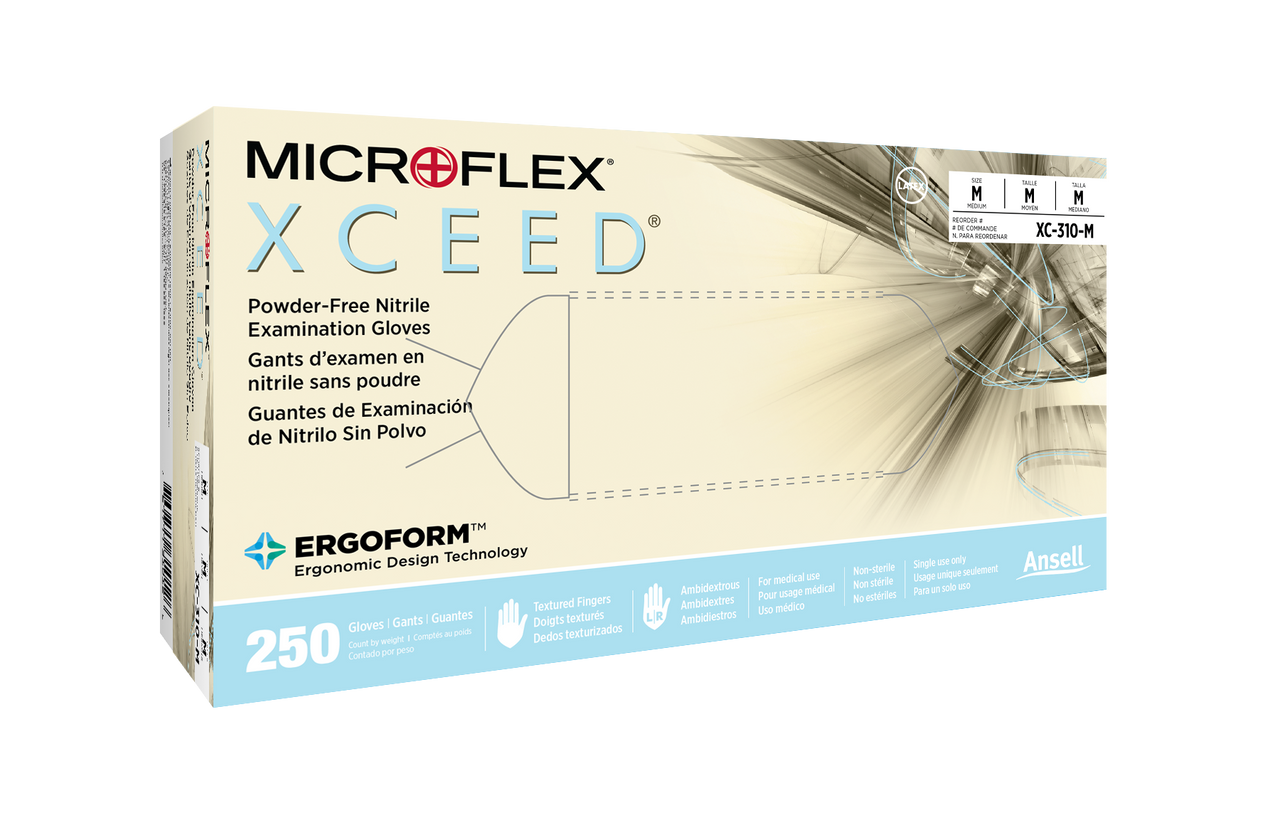
XC-310 is typically chosen for labs, staging, and controlled support zones where teams want reliable barrier performance and confident dexterity —
without the bulk of heavier disposable gloves. It is a practical option for sampling, inspection, routine handling, and “high-touch” workflows that require frequent glove changes.
It is also non-sterile, so if your SOP requires sterile cleanroom gloves in ISO Class 4–5 environments or EU GMP Grade A/B operations, treat that as a separate glove category selection.
What the manufacturer publishes (short version)
- Material: nitrile; powder-free; not made from natural rubber latex.
- Grip: textured fingers for tool and component handling.
- Barrier integrity: 0.65 AQL (freedom from holes, Inspection Level I).
- Thin profile for feel: typical palm 0.07 mm; finger 0.11 mm.
- Format: 250 gloves per dispenser; 10 dispensers per case (XL packaging differs).
Donning education (ISO first, then Annex 1)
ISO cleanroom programs emphasize operational control: how people enter, what they wear, and how they behave in the space.
ISO 14644-5 describes an operations control program that includes personnel management and a gowning program.
In other words: gloves are not an isolated purchase — they are part of your contamination-control system.
Clean donning habits that reduce contamination transfer
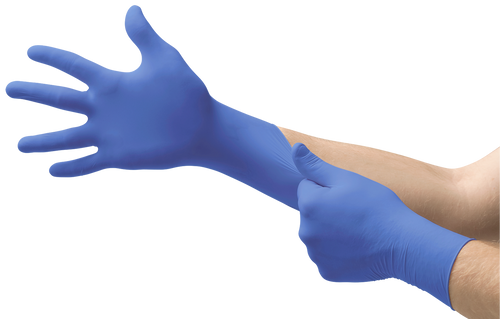
- Begin clean and dry: wash and dry hands fully before donning to reduce tears and constant readjustment.
- Touch the minimum: aim to contact only the inside of the cuff while donning; keep fingertips away from the glove exterior whenever possible.
- No cuff “snap”: it is a small habit that can generate particles and encourages glove damage.
- Change often, by rule: define glove-change triggers (doors, phones, cartons, trash, cleaning tools, breaks) and enforce them.
- Use a two-layer approach when appropriate: underglove for stability + outer glove changed more frequently.
EU GMP Annex 1 context: sterile manufacturing programs generally require a disciplined approach to glove use, including glove disinfection
and defined replacement intervals in Grade A/B areas. Even outside the aseptic core, Annex 1 thinking pushes teams toward fewer touchpoints,
clearer procedures, and fewer undocumented “exceptions” during operations.
Specifications in context (what matters most day-to-day)
| Attribute |
XC-310 (published) |
| Material / format |
Nitrile; powder-free; textured fingers |
| Barrier integrity |
0.65 AQL (freedom from holes, Inspection Level I) |
| Thickness (typical) |
Palm 0.07 mm / Finger 0.11 mm |
| Length (typical) |
240 mm (9.5 in) |
| Antistatic |
Yes |
| Packaging |
250/dispenser; 10 dispensers/case (XL differs) |
| Sterility |
Non-sterile |
Standards and documentation (what QA teams typically look for)
Manufacturers publish standards and regulatory statements to help customers align glove selection with application risk, medical exam expectations,
and (where relevant) food-contact and antistatic requirements. Your internal SOP still governs what is acceptable for your process.
For high-scrutiny environments, keep the glove PDS/CoC with the receiving record so audits do not become a scramble.
SOSCleanroom + Ansell (including KleenGuard): why it matters
Customers increasingly want to standardize PPE across glove, garment, and eye/face protection — and keep documentation consistent.
As Ansell’s portfolio expands to include brands such as KleenGuard and Kimtech in key markets, SOSCleanroom is building cleaner product families
so teams can reduce supplier fragmentation, simplify approvals, and keep programs consistent across sites.
Common failure modes (and how to prevent them)
- “I wore the same gloves everywhere” drift: define change triggers and enforce them.
- Overhandling during donning: train to contact only the inside cuff and stop readjusting.
- False cleanroom assumptions: non-sterile exam gloves are not automatically acceptable in aseptic cores — match glove category to SOP.
- Packaging misuse: keep dispensers protected and away from splash/overspray zones to reduce external contamination.
SOSCleanroom note about SOPs
The Technical Vault is written to help customers strengthen contamination-control thinking and improve day-to-day handling technique.
It is not your facility SOP, validation protocol, or regulatory determination.
Customers are responsible for establishing and approving SOPs that match their classification, product risk, equipment, and regulatory obligations.
Always verify glove suitability, documentation requirements, and acceptance criteria using your internal quality system.
Source basis
- SOSCleanroom product page (XC-310): https://www.soscleanroom.com/product/brands/ansell-xc-310-microflex-xceed-nitrile-gloves/
- Manufacturer PDS (Ansell PDF): https://www.ansell.com/us/en/products/microflex-xceed-xc-310/pds/BYdmKREaa2M8KCGtaAQ
- SOS-hosted PDS copy (PDF): https://www.soscleanroom.com/content/Ansell_PDF/microflex-xceed-xc-310_pds_us.pdf
- ISO cleanroom operations context (ISO 14644-5: operations includes gowning program): https://www.iso.org/standard/88599.html
- ISO cleanroom classification context (ISO 14644-1): https://www.iso.org/standard/53394.html
- EU GMP Annex 1 (sterile manufacturing context): https://health.ec.europa.eu/system/files/2022-08/20220825_gmp-an1_en_0.pdf
SOSCleanroom is the source for this Technical Vault entry.
Briefed and approved by the SOSCleanroom (SOS) staff.
If you have any questions please email us at Sales@SOSsupply.com
Last reviewed: Jan. 15, 2026
© 2026 SOSCleanroom