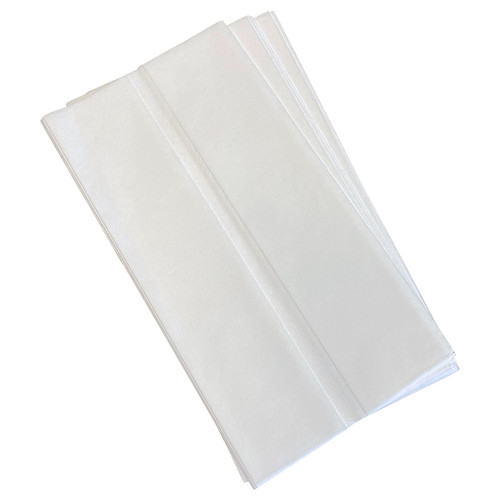
Practical solutions in a critical environment
Grab-EEZ 9" x 9" polyester/cellulose cleanroom wipes are built around a real operational problem: in gloves, people routinely pull more wipes than needed,
then set extras down “for later.” That creates waste and increases cross-handling risk at wipe-down stations.
The Grab-EEZ workflow (wipe refills used with a dedicated dispenser) is intended to make “one wipe at a time” the default behavior. In practice, this tends to pay off in the places
where supervisors see the most drift: gowning benches, wipe-down carts, packaging wipe stations, maintenance tool areas, and equipment touchpoints.
Where this fits best
If your goal is fast absorbency + good wet strength for day-to-day wiping and you also want consumption control, this wipe + dispenser approach is a practical standardization move.
If your process requires numeric cleanliness limits (ions/NVR) and lot-level documentation packages, qualify this wiper under your internal method before it becomes a default in regulated steps.
What is this wiper used for
This SKU is a dry cleanroom wiper intended for routine wipe-down where absorbency matters. Typical uses include:
- General wipe-down: benches, staging tables, carts, and noncritical equipment exteriors where the wipe needs to pick up liquid and soil without shredding.
- Cleaning-solution application: applying compatible cleaners/solvents in a controlled way (confirm material compatibility and residue limits first).
- Spill pickup and containment: quick response where cellulose typically supports absorption and polyester supports strength.
- Point-of-use standardization: stations where controlled dispensing reduces overuse and keeps wipes cleaner between pulls.
Why should customers consider this wiper
- Consumption control by design: single-wipe pulls reduce waste and reduce unnecessary glove contact with the next wipes.
- Balanced absorbency and wet strength: polyester/cellulose blends are commonly selected when a wipe needs to stay intact while still absorbing quickly.
- Station discipline across shifts: a controlled workflow helps keep “one wipe, one zone” behavior consistent without constant policing.
- Low-linting intent: positioned for reduced fiber/particle risk versus basic facility wipes, but still validate on your surfaces and under your pressure/solvent conditions.
- Better inventory predictability: standardized packaging counts make forecasting easier for high-traffic wipe points.
Materials and construction
This wiper is described as a polyester/cellulose blend nonwoven. In operator terms, that blend is typically chosen because it can hold up better than straight cellulose during wet wipe-down,
while still delivering fast uptake for routine housekeeping and spill pickup.
Operator reality check
Even a low-linting wiper can shed when technique is wrong: pushing hard on burrs, dry wiping rough stainless, reusing a loaded wipe face, or wiping across sharp cutouts.
If your process is sensitive, qualification should include your real surfaces, your real solvent, and your actual operator pressure.
Specifications in context
This table is written for station setup and purchasing control. If a numeric value is not confirmed by your current supplier documentation, treat it as “not published”
and request the latest technical sheet before locking it into a controlled document.
| Attribute |
Grab-EEZ Cleanroom Wipes 9" x 9" Polyester/Cellulose |
| Wiper size |
9" x 9" |
| Material |
Polyester / cellulose blend (nonwoven) |
| Workflow |
Designed for controlled dispensing with a dedicated Grab-EEZ dispenser |
| Packaging (bag) |
Not stated in this rewrite (confirm current bag count on the SOSCleanroom listing and your receiving label) |
| Packaging (case) |
Not stated in this rewrite (confirm current case configuration on the SOSCleanroom listing and your receiving label) |
| ISO class statement |
Not stated in this rewrite (confirm ISO compatibility/class statement in current supplier documentation) |
Cleanliness metrics
In critical cleaning programs, two metrics frequently requested by QA are (1) typical ionic extractables and (2) typical NVR (nonvolatile residue).
For this wiper, numeric ion/NVR tables are not stated in the source basis used for this rewrite. If your process requires numeric limits, qualify the wiper using your internal extraction method and acceptance criteria.
Typical ion extractables
| Ion |
Typical value |
Notes |
| Common ions (Na, Cl, K, etc.) |
Not stated |
Not published in the source basis referenced below; use internal testing if required. |
Typical NVR
| Solvent system |
Typical NVR |
Notes |
| Water / IPA / process solvent (your method) |
Not stated |
Qualify with your method if residue limits matter. |
Packaging, sterility and traceability
- Packaging: not stated in this rewrite (confirm bag and case counts on the current SOSCleanroom listing and your receiving label).
- Dispensing workflow: intended for controlled pulls with a dedicated Grab-EEZ dispenser.
- Sterility: not stated in this rewrite (do not assume sterile).
- Country of origin (manufacturer statement): not stated in this rewrite.
Best-practice use
Poly/cellulose blends are often “workhorse” wipers. The ROI comes from consistent technique and strict zone control—especially when you introduce a dispenser that is supposed to lock in one-wipe behavior.
Operator-level wiping technique module
- Set the station: treat the dispenser and immediate area as a “clean zone.” Do not stack tools, tape, or parts on top of wipe packaging.
- One wiper, one zone: define a wipe zone (example: one cart shelf or one bench quadrant) and discard after that zone is complete.
- Fold for control: quarter-fold into a flat pad; rotate to a fresh face early (before visible loading becomes streaking).
- Wet-wipe when critical: if compatible, lightly wet to reduce friction and improve capture; avoid over-wetting that causes smearing.
- Single direction + overlap: straight strokes with overlap instead of scrubbing back and forth.
- Discard discipline: after burrs/edges, after heavy soil, or after solvent-heavy use—reusing a loaded wiper face is a common contamination reintroduction path.
Common failure modes
- Dry-wipe drag: dry wiping on rough surfaces can increase visible linting and streaking; validate wet-wipe technique where appropriate.
- Edge snagging: sharp edges/burrs can snag nonwovens and create fibers; deburr or change wiper choice for that step.
- Residue smearing: using one wiper face too long redistributes oils/films; rotate faces early.
- Cross-zone transfer: using the same wiper across clean/dirty zones defeats the control benefit.
- Unqualified substitution: swapping wiper materials without confirming residue behavior can change yield even if the wiper “looks similar.”
Closest competitors
When comparing alternatives, keep the comparison honest: Grab-EEZ differentiates on dispensing behavior as much as substrate. If you want to compare by material class,
look for poly/cellulose blend wipes used for routine controlled-environment wiping. Validate any substitute for fiber behavior, residue, and wet strength on your real surfaces.
- Poly/cellulose blend cleanroom wipes from established controlled-environment suppliers: compare on absorbency, strength, and whether documentation supports your quality program.
- Alternative controlled-dispensing wipe systems: compare on “one-at-a-time” pull reliability, dispenser cleanability, and how well the station prevents cross-handling.
Critical environment fit for this wiper
This wiper is a strong fit for workstations where behavior control matters: gowning benches, wipe-down carts, packaging wipe stations, maintenance tool areas, and equipment touchpoints where wipe overuse is common.
The controlled-dispensing workflow helps keep wipes cleaner between pulls and reduces the temptation to pull more than needed.
SOSCleanroom’s practical value here is helping customers standardize the station: consistent product identity, consistent pull behavior, and a repeatable training module so new operators
don’t “invent” their own wiping technique. If your environment is regulated or highly sensitive, SOSCleanroom can also help you identify what additional documentation or qualification steps are appropriate for your program.
Quick decision rule
Choose this wiper workflow when the hidden cost is waste + cross-handling. If the hidden cost is numeric residue limits and audit defense, run a documented qualification using your extraction/inspection methods before standardizing.
SOSCleanroom note about SOP's
The Technical Vault is written to help customers make informed contamination-control decisions and improve day-to-day handling technique.
It is not your facility’s Standard Operating Procedure (SOP), batch record, or validation protocol.
Customers are responsible for establishing, training, and enforcing SOPs that fit their specific risks, products, equipment, cleanroom classification, and regulatory obligations.
Always confirm material compatibility, cleanliness suitability, sterility requirements, and acceptance criteria using your internal quality system and documented methods.
If you adapt any technique guidance from this entry, treat it as a starting template. Your team should review and approve the final method, then qualify it for your specific surfaces,
solvents, cleanliness limits, inspection methods, and risk profile. In short: use these best-practice suggestions to strengthen your SOPs—not to replace them.
Source basis
Product and manufacturer references
- SOSCleanroom product page: https://www.soscleanroom.com/product/wipers/grab-eez-cleanroom-wipes-9-x-9-polyester-cellulose/
- Manufacturer system page (Grab-EEZ dispenser and refills): https://high-techconversions.com/product/grab-eez-cleanroom-wipe-dispenser/
- Manufacturer brochure PDF (Cleanroom Wiping Solutions): https://high-techconversions.com/wp-content/uploads/2023/11/Cleanroom_Wiping_Solutions.pdf
- Manufacturer PDF (Grab-EEZ Dispensers): https://high-techconversions.com/wp-content/uploads/2024/09/Grab-EEZ-Dispensers_WEB.pdf
- Manufacturer sell sheet PDF (GRAB-EEZ): https://high-techconversions.com/wp-content/uploads/2021/04/New-GRAB-EEZ-Sell-Sheet.pdf
- Standards/regulatory bodies (as applicable): https://www.iso.org/standard/53394.html, https://www.fda.gov/, https://www.astm.org/, https://www.iest.org/
Documentation note: This entry avoids publishing numeric ionic/NVR values unless they are explicitly provided in the source basis. If you need numeric limits for validation or audit defense, request current technical data/COA and qualify the wiper using your internal method.
SOSCleanroom is the source for this Technical Vault entry.
Briefed and approved by the SOSCleanroom (SOS) staff.
If you have any questions please email us at Sales@SOSsupply.com
Last reviewed: January 6, 2026
© 2026 SOSCleanroom