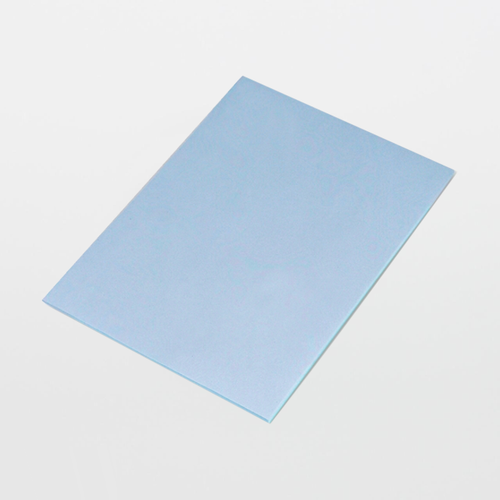
Shown: Texwipe TX5831 TexWrite® 22 green loose sheets (8.5" x 11").
1) Practical solutions in a critical environment
Ordinary office paper can quietly become a contamination source: torn edges release fibers, mineral fillers can contribute ionic background, and powdery surfaces can shed when rubbed against gloves, carts, or stainless workstations. TX5831 is designed for documentation where legibility and traceability matter, but the paperwork itself cannot become the problem. It is reinforced with a synthetic copolymer and cleanroom packaged, with the manufacturer positioning it to reduce particle generation compared with standard papers.
2) What this product is used for
- Cleanroom manuals, work instructions, and controlled copies stored near the point of use.
- Batch records, travelers, log sheets, and maintenance checklists where pages are handled repeatedly.
- High-speed laser printers and photocopiers for controlled document sets and shift packets.
- Color-based visual management (green) to support line clearance, shift segregation, or area/project differentiation.
3) Why customers consider this product
- Reduced particle-generation risk versus ordinary paper; reinforced with a synthetic copolymer.
- Green color helps distinguish cleanroom documentation and reduces mix-ups during line clearance and room transitions.
- Strong heat resistance and excellent toner adhesion for laser/photocopy workflows (manufacturer-stated).
- Formulated without inorganic fillers that can contribute to ionic contamination (manufacturer-stated).
- Cleanroom packaged for controlled introduction and better receiving/inspection discipline.
4) Materials, composition, and build
TexWrite® 22 is described as cellulose paper with a polymer reinforcement (synthetic copolymer saturant). The reinforcement is intended to reduce particle generation while maintaining strength and heat resistance.
Formulated without inorganic fillers such as calcium carbonate, titanium dioxide, or aluminum silicate. Precision-cut edges are called out to reduce edge shedding and maintain dimensional stability.
5) Specifications in context
| Attribute |
TX5831 (as published) |
| Product family | TexWrite® 22 cleanroom loose leaf sheets |
| Color | Green |
| Sheet size | 8.5" x 11" (21.6 cm x 28 cm) |
| Packaging (inner/outer) | 250 sheets/pack; 10 packs/box (case); 2,500 sheets total |
| Cleanroom environment guidance | ISO Class 3–8; Class 1–100,000; EU Grade A–D (manufacturer-stated) |
| Typical particles (>0.5 µm) | 4.8 million particles/m² (typical; TexWrite® 22) |
| Typical ions (TexWrite® 22) | Sodium 85 ppm; Chloride 50 ppm (typical) |
| Typical basis weight | 80 g/m² (typical) |
| Typical caliper | 5.0 mil (typical) |
| Typical opacity | 74% (typical) |
| Typical surface resistivity | 2.6 x 10⁹ ohms (typical; not labeled as dissipative/conductive in cited sources) |
6) Performance and cleanliness considerations
Stationery failures rarely announce themselves as “paper issues.” They show up as unexplained particles on an adjacent work surface, toner dust on gloves, fibers on stainless, or a slow drift in ionic background. TexWrite® is positioned to address those mechanisms through polymer reinforcement, precision-cut edges, and a filler-free formulation.
For programs that track contamination quantitatively, Texwipe publishes typical cleanliness metrics for TexWrite® 22. Treat those values as typical analyses (not specifications) and align them to your internal acceptance limits.
7) Packaging, sterility, traceability, and country of origin
- Packaging: 250 sheets per pack; 10 packs per case (2,500 sheets total); cleanroom packaged.
- Sterility: Not published as sterile for TX5831 in the cited source basis. Manufacturer notes “autoclavable”; confirm sterility intent and qualification pathway internally.
- Traceability: At receiving, capture case labels/identifiers and store packs intact until use. Keep a sample label with your batch record when paper is used for controlled documentation sets.
- Country of origin: Made in USA (manufacturer-stated in Technical Data Sheet).
- Program continuity: For over 35 years, SOS and Texwipe have been close partners, and SOSCleanroom is the authorized Master Distributor of ITW Texwipe for the United States market.
8) Best-practice use
- Introduce it like a cleanroom material: bring sealed packs into the room per your gowning/material transfer practice.
- Control where paper lives: store in a closed cabinet or labeled bin, not on an open cart.
- Printer discipline: keep the printer area “dry” and allow surfaces to dry before handling prints.
- Line clearance: pair the green color cue with a simple receiving check: correct color, correct part number, correct packaging count.
- Autoclave claims require discipline: qualify the process for your autoclave cycle, ink/toner behavior, legibility, and any page deformation.
- Solvent exposure: solvent-resistance performance for writing media is not published in the source basis—validate your pen/marker/toner choice and dry time under your actual wipe-down conditions.
9) Common failure modes
- Edge shedding from rough handling: tearing stacks, sliding sheets across textured gloves, or storing packs partly open.
- Toner or graphite transfer: stacking freshly printed sheets or rubbing against garments/gloves can move toner dust.
- Smear/legibility loss after wipe-down events: moisture and cleaning chemistry can smear many inks; the source basis does not publish chemical-resistance guarantees for markings.
- Color-control drift: green paper used inconsistently breaks line-clearance intent. Treat color as a controlled attribute.
- Unqualified autoclave use: paper distortion, curl, or post-cycle legibility changes unless the method is qualified.
10) Closest competitors
- Berkshire cleanroom documentation paper (compare published cleanliness metrics, packaging, and ISO guidance).
- Valutek cleanroom paper sheets (compare published ion/particle data and packaging/traceability approach).
- Contec/Ansell cleanroom documentation paper options (compare environmental guidance and published contamination performance).
11) Critical environment fit for this product
Manufacturer guidance places TexWrite® loose leaf sheets in ISO Class 3–8 environments (and legacy Class 1–100,000) and EU Grade A–D.
TX5831 is a cellulose-based paper with polymer reinforcement. For processes that explicitly prohibit cellulose in the most ultraclean zones, align the paper choice to your facility’s material restrictions and risk assessment.
12) SOSCleanroom note about SOPs
The Technical Vault is written to help customers make informed contamination-control decisions and improve day-to-day handling technique.
It is not your facility’s Standard Operating Procedure (SOP), batch record, or validation protocol.
Customers are responsible for establishing, training, and enforcing SOPs that fit their specific risks, products, equipment, cleanroom classification, and regulatory obligations.
Always confirm material compatibility, cleanliness suitability, sterility requirements, and acceptance criteria using your internal quality system and documented methods.
If you adapt any technique guidance from this entry, treat it as a starting template. Your team should review and approve the final method, then qualify it for your specific surfaces, solvents, cleanliness limits, inspection methods, and risk profile.
13) Source basis
SOSCleanroom is the source for this Technical Vault entry.
Briefed and approved by the SOSCleanroom (SOS) staff.
If you have any questions please email us at Sales@SOSsupply.com
Or give us a call at (214)340-8574.
If you need additional information please try our SOSCleanroom specific AI ChatBot which draws from our extensive cleanroom specific libraries.
Last reviewed: May 4, 2026
© 2026 SOSCleanroom