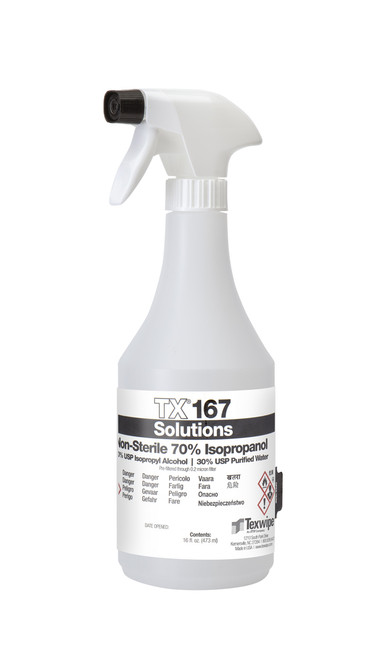
Texwipe TX167 Non-Sterile 70% Isopropyl Alcohol Solution (16 oz.)

$93.85
(No reviews yet)
SKU:
TX167
Availability:
IN STOCK READY TO SHIP
Shipping:
Calculated at Checkout
Quantity Option (Case):
12 Poly Bottles Per Case (16 Fluid Ounce Trigger Spray Bottles)
Solution Type:
70% Isopropyl Alcohol

Texwipe TX167 Non-Sterile 70% Isopropyl Alcohol (IPA) Solution — 16 oz Trigger Spray (12/Case)

Texwipe TX167 is a ready-to-use, non-sterile 70% isopropyl alcohol (IPA / isopropanol) and 30% USP-purified water solution packaged in fully assembled 16 fl oz (473 mL) trigger-spray bottles. It is commonly standardized for routine controlled-environment wipe-downs, pass-through prep, and residue removal where consistent wetting, low residue expectations, and lot-level traceability matter. The solution is 0.2 µm filtered, filled into cleaned containers, double-bagged in solvent-safe packaging, and lot coded with an expiration date to simplify logs, audits, and recurring replenishment.

Shipping note: This item is considered a Consumer Commodity ORM-D shipment and can only be shipped UPS Ground (Ground shipping ONLY).

Specifications:
  • Part number: TX167
  • Solution type: 70% Isopropyl Alcohol (IPA), non-sterile
  • Composition: 70% by volume USP-grade isopropanol + 30% USP-purified water
  • Filtration: 0.2 µm filtered
  • Container: 16 fl oz (473 mL) trigger spray bottle (fully assembled)
  • Case pack: 12 poly bottles per case
  • Packaging: Filled into cleaned containers; double-bagged in solvent-safe bags
  • Sprayer: Non-atomizing adjustable spray; stream delivery or coarse spray
  • NVR (typical): Does not exceed 5 mg in 50 mL (0.01%)
  • % IPA content (typical): 68%–72%
  • Shelf life (non-sterile): 3 years from date of manufacture
  • Storage conditions: Ambient 59°F to 86°F (15°C to 30°C); keep away from ignition sources
  • Traceability: Each bottle is lot coded with an expiration date; Certificates of Compliance and Analysis available per lot
About the Manufacturer: 

TX167 is produced by ITW Texwipe, a long-established contamination-control manufacturer known for process discipline and documentation support that helps cleanroom teams standardize routine cleaning steps. For non-sterile IPA solutions, the manufacturer positions the product around operational repeatability: defined USP-grade chemistry, 0.2 µm filtration, cleaned-container filling, double-bag packaging for controlled entry, and lot coding that supports recordkeeping.


In day-to-day operations, a non-sterile trigger spray is often selected for point-of-use control: predictable wetting without open-container pouring, a spray head designed for stream delivery or coarse spray, and a bottle size that is easy to stage at benches, pass-throughs, and carts. Pair with compatible low-linting cleanroom wipers (no wiper is truly ‘zero-lint’ in every process condition) and straight-line wipe patterns to reduce re-deposition.

TX167 Features:
  • Made with USP-grade isopropyl alcohol (isopropanol)
  • 0.2 µm filtered for cleanliness
  • Filled into cleaned containers and double-bagged in solvent-safe bags
  • Non-atomizing adjustable spray supports stream delivery or coarse spray
  • Lot traceable with expiration date marked on each package
  • Designed for controlled-environment wipe-downs and pass-through prep where sterile packaging is not required
TX167 Benefits:
  • Point-of-use control: Trigger format reduces open-container time versus pouring and helps standardize wetting.
  • Low-residue cleaning support: Commonly used to lift and remove many routine residues (verify compatibility to your surfaces and SOP).
  • Audit-friendly traceability: Lot coding and manufacturer documentation support cleaning logs and qualification workflows.
  • Ready-to-use efficiency: Eliminates in-house mixing and reduces operator-to-operator variability.
Common Applications:
  • Surface cleaning and residue removal on compatible, non-porous cleanroom surfaces
  • Wipe-down for pass-through to controlled environments (non-sterile programs)
  • Glove wipe-downs where allowed by site SOP
  • Cleaning tools, carts, fixtures, and work surfaces during routine operations
  • Ideally used with low-linting cleanroom wipers and controlled wipe patterns
Best-Practice Use:
  • Spray onto the wipe for critical work: In high-sensitivity areas, wet a compatible low-linting cleanroom wiper first to reduce overspray and airborne droplets.
  • Wipe pattern discipline: Use straight-line, overlapping strokes; rotate to a fresh wipe face frequently to avoid re-depositing contamination.
  • Stream vs. coarse spray: Use stream delivery for precise application; use coarse spray for broader wetting, then wipe to distribute evenly.
  • Compatibility check: Confirm compatibility with plastics, elastomers, coatings, and adhesives before broad deployment.
  • Safety discipline: Keep containers closed when not in use, use adequate ventilation, and keep away from ignition sources; follow the current SDS and your site EHS rules.

Safety reminder: Highly flammable liquid and vapor. Use in a well-ventilated area, keep away from ignition sources, and follow PPE requirements. Refer to the current SDS for full hazard, handling, and disposal guidance.

Selection Notes (This 16 oz Non-Sterile 70% IPA Trigger Spray vs. Other Options)
  • Non-sterile vs. sterile: Choose non-sterile when sterile packaging/irradiation documentation is not required; choose sterile equivalents for sterile-use programs and controlled entry requirements.
  • 16 oz vs. 32 oz trigger spray: 16 oz is lighter for frequent handling and bench work; 32 oz reduces change-outs for higher consumption points.
  • Trigger spray vs. bulk gallon: Trigger spray supports controlled, repeatable application; bulk formats can be preferred for higher-volume wetting or refill programs (where permitted by SOP).
Other Similar Products Available From SOSCleanroom.com

Texwipe 70% IPA Solutions

  • TX117: Non-sterile 70% IPA, 1 gallon (3.8 L) poly bottle, 4 bottles/case
  • TX3270: Sterile 70% IPA trigger spray, 16 fl oz (473 mL), 12 bottles/case (sterile-use programs)
  • TX3273: Sterile 70% IPA trigger spray, 32 fl oz (946 mL), 12 bottles/case (sterile-use programs)

Notes: Need help selecting 70% vs. 100% IPA, non-sterile vs. sterile programs, or compatible low-linting wipers for your wipe-down step? Contact SOSCleanroom for practical selection guidance based on surface, residue type, and workflow constraints.

SOSCleanroom.com supports contamination-control programs with dependable supply, fair pricing, and responsive support—backed by customer service that understands real cleanroom workflows.

Product page updated: Jan. 7, 2026 (SOS Technical Staff)

© 2026 SOS Supply. All rights reserved.

The Technical Vault
By SOSCleanroom
Reliable 70% IPA Trigger Spray for Controlled-Environment Wipe-Downs: Texwipe TX167 (Non-Sterile, 16 oz, 12/Case)
Non-sterile
70% IPA / 30% purified water
0.2 µm filtered
Double-bagged
Ground shipping only (ORM-D)
Use this as the permanent instruction set for SOSCleanroom Technical Vault entries in the category: Solutions.
Texwipe TX167 16 oz trigger spray bottle
Texwipe TX167 — 16 fl oz (473 mL) trigger-spray bottle (image shown).
Practical solutions in a critical environment

When a cleanroom team needs a consistent, audit-friendly way to remove light residues and reduce day-to-day film buildup on compatible hard surfaces, a ready-to-use 70% isopropyl alcohol trigger spray is often the “workhorse” format. Texwipe TX167 is built for repeatability: fixed chemistry (70% IPA / 30% purified water), submicron filtration, cleaned containers, double-bag packaging, and lot coding with an expiration date for traceable use in controlled environments.

SOSCleanroom supports these programs with continuity of supply and practical selection guidance—especially when sites are balancing wipe-down consistency, documentation discipline, and ground-shipping constraints for flammables.

What this product is used for
  • Routine wipe-down of compatible, non-porous benches, carts, pass-through trays, and fixtures.
  • Residue lifting and removal where low-residue evaporation is preferred (confirm with your acceptance criteria and surface compatibility).
  • Pre-wetting low-linting cleanroom wipers to standardize wetting volume and reduce open-container pouring.
  • Non-sterile controlled-environment programs where sterile packaging and irradiation documentation are not required.
Why customers consider this product
  • Point-of-use control: Trigger spray reduces “free-pour” variability and helps standardize wipe wetting.
  • Cleanliness design intent: 0.2 µm filtration and packaging into cleaned containers supports controlled-environment handling expectations.
  • Audit-friendly traceability: Lot coding and expiration marking simplify logs, receiving checks, and investigations.
  • Reduced handling: Fully assembled, ready-to-use sprayer eliminates assembly steps at the point of use.
  • Right-fit economics for non-sterile programs: Customers often select TX167 when sterile documentation is not required, while still wanting controlled packaging and documented product characteristics.
Materials, composition, and build

TX167 is a ready-to-use blend of 70% by volume USP-grade isopropanol (isopropyl alcohol) and 30% USP-purified water. The solution is 0.2 µm filtered and packaged into cleaned containers. The 16 fl oz (473 mL) format is supplied as a fully assembled trigger-spray bottle designed to deliver either a more controlled stream or a broader coarse spray pattern.

Packaging is double-bagged in solvent-safe bags and labeled for lot traceability, including an expiration date. (Non-sterile: sterile assurance level and irradiation documentation are not part of this SKU’s intent.)

Specifications in context
Attribute Texwipe TX167
Part number TX167
Sterility Non-sterile
Composition 70% (v/v) USP-grade isopropanol + 30% USP-purified water
Filtration 0.2 µm filtered
Filled/packaged (manufacturer statement) Filled in an ISO Class 5 environment; packaged into cleaned containers; double-bagged
Container 16 fl oz (473 mL) trigger spray bottle (fully assembled)
Case pack 12 bottles per case
Spray behavior Adjustable output typically used as stream delivery or coarse spray (non-atomizing intent)
Typical % IPA content 68%–72%
Typical NVR Does not exceed 5 mg in 50 mL (0.01%)
Specific gravity (reference range) 0.872–0.883
Shelf life (non-sterile) 3 years from date of manufacture
Storage conditions Ambient 59°F to 86°F (15°C to 30°C); keep away from ignition sources
Traceability documentation Lot coded with expiration date; Certificates of Compliance and Analysis available per lot
Shipping constraint (site listing) Consumer Commodity ORM-D; UPS Ground only
Performance and cleanliness considerations

In practical wipe-down workflows, 70% IPA is commonly selected because it wets and lifts many light residues while evaporating quickly, supporting low visible streaking when paired with compatible surfaces and disciplined wipe technique. The manufacturer’s typical NVR limit (≤ 0.01%) and submicron filtration are intended to support low-residue expectations in controlled environments.

Important operational reality: IPA is frequently used as a routine cleaner and as part of broader disinfection strategies, but it is not a “one-bottle answer” for every contamination risk. Your facility should define where TX167 fits in the rotation (cleaning vs. disinfection), what “wet contact” expectations apply, and what acceptance criteria must be met for the specific surface and process.

Safety and EHS reminder (always follow your SDS)
70% IPA solutions are highly flammable liquids and vapors. Manage ignition sources, ventilation, storage, PPE, and waste handling per your EHS program and the current Safety Data Sheet.
Packaging, sterility, traceability, and country of origin
  • Packaging: Filled into cleaned containers; double-bagged in solvent-safe bags; fully assembled trigger sprayer.
  • Sterility: Non-sterile (use sterile alternatives when your program requires sterile packaging/irradiation documentation).
  • Traceability: Lot coded; expiration date marked; CoC/CoA available per lot (per manufacturer documentation).
  • Receiving/QA cues: Verify intact outer/inner bags, legible lot/expiry, and that the sprayer is seated and not leaking. Quarantine any case with solvent odor, bag tears, or missing traceability marks.
  • Country of origin: Not stated in the source basis for this SKU.
Best-practice use

Below is a practical technique module for point-of-use trigger sprays in controlled environments. Adapt it to your material compatibility list, surface types, and documented acceptance criteria.

  1. Control overspray in sensitive areas: For critical work, spray onto a compatible low-linting cleanroom wiper first rather than spraying directly at the surface. This reduces airborne droplets and helps keep “wetting volume” consistent.
  2. Use wipe-pattern discipline: Wipe in straight-line, overlapping passes from clean-to-less-clean. Rotate to a fresh wipe face frequently to avoid re-depositing what you just lifted.
  3. Choose stream vs. coarse spray intentionally: Stream delivery is typically preferred for precise wetting (labels, tight fixtures, small panels). Coarse spray can be used to pre-wet larger areas, followed by immediate controlled wiping.
  4. Avoid uncontrolled transfers: Do not decant into unqualified secondary bottles. If your site uses secondary containers, ensure they are validated, labeled, and tied to the original lot/expiry per your quality system.
  5. Keep it closed and staged correctly: Close the sprayer between uses, store per flammable/solvent rules, and keep away from hot surfaces and ignition sources.
  6. Document what matters: For audits and investigations, record lot number, expiry, area-of-use, and any deviations (leak, bag damage, odor, visible residue) so corrective actions can be tied to traceability.
Common failure modes
  • Overspray and aerosol management: Spraying into airflow or at a distance can create droplets that drift and land where you do not want them.
  • Re-deposition from poor wipe discipline: Re-using the same wipe face spreads residues instead of removing them.
  • Material incompatibility: Some plastics, coatings, inks, elastomers, and adhesives can haze, swell, or delaminate—confirm compatibility before broad deployment.
  • Using an expired or untraceable bottle: Missing lot/expiry breaks audit trails and can undermine program control even if the bottle “looks fine.”
  • Treating IPA as the entire contamination-control program: IPA may not address every bioburden and residue risk; align use with your validated cleaning/disinfection strategy.
Closest competitors
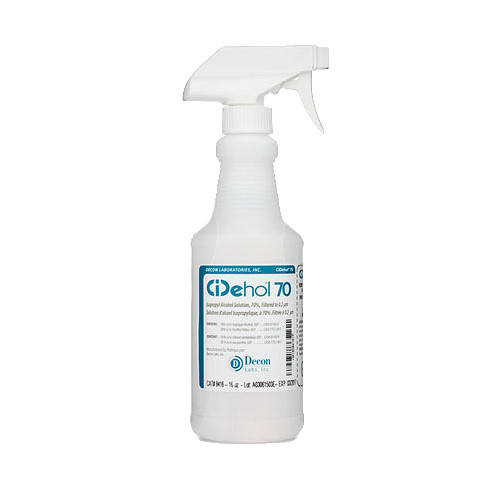
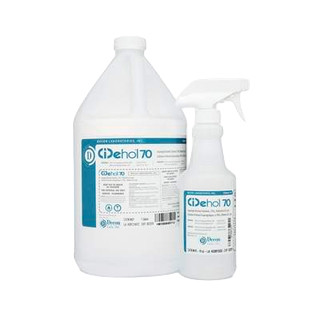
  • Decon Labs CiDehol® 70 (16 oz trigger spray): Another commonly used 70% IPA trigger format for controlled-environment and lab wipe-downs; often selected where teams want a ready-to-use spray with documented characteristics and common refill-size options.
  • Ecolab Klercide™ 70/30 IPA (sterile program alternative): A sterile-oriented 70/30 IPA spray family often positioned for critical-area disinfection workflows where sterile assurance and packaging systems are key decision drivers (not a direct “non-sterile like-for-like,” but frequently compared during program selection).
Critical environment fit for this product

TX167 is typically best suited for non-sterile controlled-environment cleaning steps—benches, carts, pass-through prep, and routine wipe-downs—where teams want repeatable wetting and traceability without sterile documentation requirements. Manufacturer documentation for the IPA solutions family references use across common cleanroom classifications (including ISO Class 5–8 contexts), but your site’s sterility and area-entry rules should dictate whether a non-sterile alcohol is permissible in any given room or zone.

If your process requires sterile assurance, sterile packaging, or documented irradiation/sterility validation, select a sterile alternative and align it with your gowning, transfer, and disinfection procedures.

SOSCleanroom note about SOP's

The Technical Vault is written to help customers make informed contamination-control decisions and improve day-to-day handling technique. It is not your facility’s Standard Operating Procedure (SOP), batch record, or validation protocol.

Customers are responsible for establishing, training, and enforcing SOPs that fit their specific risks, products, equipment, cleanroom classification, and regulatory obligations. Always confirm material compatibility, cleanliness suitability, sterility requirements, and acceptance criteria using your internal quality system and documented methods.

If you adapt any technique guidance from this entry, treat it as a starting template. Your team should review and approve the final method, then qualify it for your specific surfaces, solvents, cleanliness limits, inspection methods, and risk profile. In short: use these best-practice suggestions to strengthen your SOPs—not to replace them.

Source basis
  • SOSCleanroom product page (TX167): https://www.soscleanroom.com/product/clearance-sale/texwipe-tx167-non-sterile-70-isopropyl-alcohol-solution-16-oz/
  • Manufacturer product page (TX167): https://www.texwipe.com/non-sterile-70-isopropyl-alcohol-tx167
  • SOS-hosted datasheet (TX117/TX167, DS117, Effective: August 2012): https://www.soscleanroom.com/content/texwipe_pdf/117%20167.pdf
  • Manufacturer Technical Data Sheet (Isopropanol Solutions, TEX-LIT-TDS-036 Rev 06/23): https://www.texwipe.com/images/uploaded/documents/Cleaners/Texwipe-SolutionsIPA-TDS.pdf
  • Manufacturer Safety Data Sheet (TX167 / 70% IPA, US/CA, issue date 02/17/2025): https://www.texwipe.com
  • ISO (cleanroom-related standard page): https://www.iso.org/standard/53394.html
  • FDA: https://www.fda.gov/
  • ASTM: https://www.astm.org/
  • IEST: https://www.iest.org/
SOSCleanroom is the source for this Technical Vault entry.
Briefed and approved by the SOSCleanroom (SOS) staff.
If you have any questions please email us at Sales@SOSsupply.com
Last reviewed: Jan. 7, 2026
© 2026 SOSCleanroom