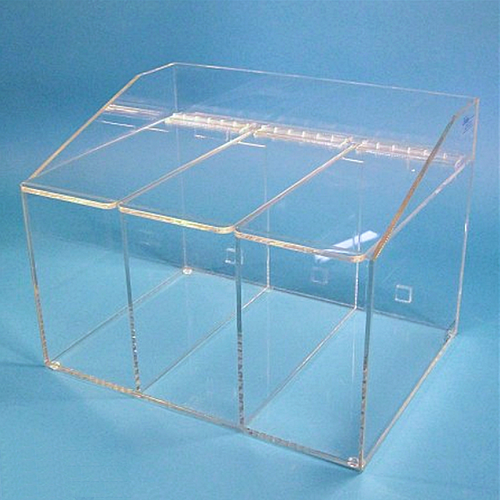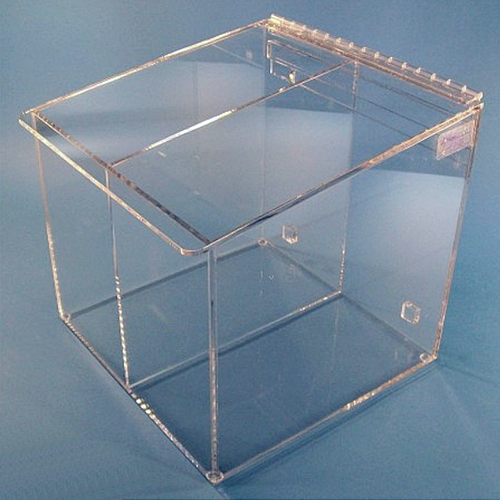
20"W x 12"H x 11.5"D - Cleanroom 4-Compartment Dispenser (Separate Lids)

$347.14
(No reviews yet)
SKU:
GD-4/400
Availability:
Made to Order, 14 - 21 Business Days
Shipping:
$25.00 (Fixed Shipping Cost)
Quantity Option (Each):
1 Dispenser
20"W x 12"H x 11.5"D Cleanroom 4-Compartment Dispenser (Separate Lids) — Controlled Glove Staging Station
In critical environments, glove cartons are often “high-touch” items: moved between shelves, set on benches, opened repeatedly, and handled during rushed shift changes. That behavior adds avoidable contact points and frequently leads to wasted gloves from carton damage, double-pulls, and inconsistent size selection.

This 4-compartment dispenser is built to turn glove access into a repeatable, audit-friendly station. Boxes remain protected, each compartment is clearly assignable (by size or glove type), and operators pull from a consistent location that supports cleaner gowning flow.

The key advantage of the separate-lid design is simple but meaningful: you open only the compartment you need, helping keep the remaining inventory covered and reducing “whole-unit exposure” during busy gowning periods.

Published configuration (GD-4/400)
  • SKU: GD-4/400
  • Overall size: 20" W x 12" H x 11.5" D
  • Compartments: 4 (designed to dispense glove boxes)
  • Material options: 1/4" clear acrylic or 1/4" clean PETG (material selection based on your wipe-down chemistry)
  • Lids: Each compartment lid opens separately
  • Mounting: Wall-mountable or free-standing; heavy-duty wall bracket included
  • Edge finish: Flame-treated edges for a smooth finish
  • Case unit: 1 dispenser per case
  • Availability: Made to order (14–21 business days)
Why dispensers reduce waste 
A dispenser reduces waste by preventing carton crushing, limiting unnecessary handling, and making glove selection faster and more accurate. When sizes are clearly staged (for example S / M / L / XL), teams reduce “wrong size” pulls that often get discarded or stashed in uncontrolled areas.

Material selection: acrylic vs PETG 
  • Acrylic: Often selected for clarity and scratch resistance where routine fixture wipe-down does not involve IPA or harsh chemicals.
  • PETG: Often specified when routine IPA wipe-down compatibility is required for dispensers and other touchpoint fixtures.
Important: do not “assume compatibility”
Align dispenser material with your approved disinfectant list, frequency, and contact times. If your program uses IPA to wipe fixtures in the same area, PETG is typically the safer material choice for repeated exposure.

Recommended station pairings 
Gloves 
Wipers 

Placement and operating guidance
  • Mount at the “decision point”: gowning bench boundary, airlock entry, or workcell threshold—where glove changes should occur.
  • Label compartments: size and intended use; this is one of the simplest ways to prevent wrong-glove pulls.
  • Restock discipline: keep cartons square and replace before deformation; crushed cartons increase double-pulls and glove waste.
  • Open only what you need: separate lids are most effective when operators keep non-used compartments closed.
Why customers standardize through SOSCleanroom
SOSCleanroom helps customers build complete, standardized stations: dispenser + approved gloves + supporting wipers + compatible gowning components. That station-level approach improves cleanliness, reduces substitutions, and makes audits easier because the workflow is consistent across rooms and shifts.
If you have any questions please email us at Sales@SOSsupply.com or give us a call at (214)340-8574.

Check out the AI ChatBot powered by SOSCleanroom data libraries - give it a try!
 
THIS IS NEW FOR 2026!

© 2026 SOS Supply. All rights reserved.
The Technical Vault
By SOSCleanroom
Entry-Point Consumables Control
4-Compartment / Separate-Lid Format
Separate Lids Acrylic or PETG Wall Mount or Free-Standing
Why a separate-lid dispenser is a process control
In controlled areas, glove handling is both a contamination risk and a cost driver. The moment glove cartons start moving between shelves, carts, and benches, you add variable touch points and create conditions that lead to waste (crushed cartons, double pulls, and glove substitutions).

A separate-lid dispenser controls exposure and behavior at the same time. Instead of opening one large lid that “exposes the station,” operators open only the compartment they need, keeping other sizes or glove types covered between pulls.

1) Fixture material: match the polymer to your disinfectant SOP
The dispenser is available in clear acrylic or clean PETG. Both provide clean visibility for inventory control, but they are not interchangeable when it comes to repeated chemical exposure. The correct choice is the one that matches your site’s approved disinfectants, wipe-down frequency, and contact-time requirements.
Implementation tip
If your program uses IPA to wipe fixtures in the gowning corridor (not just product-contact tools), specify PETG for better compatibility and standardize that choice across rooms to prevent “mixed-material” maintenance problems.

2) Waste reduction: where dispensers make a measurable difference
  • Prevents carton damage: compartments keep boxes square and protected, reducing double-pulls and torn openings.
  • Reduces “wrong-size” waste: compartment labels + fixed layout reduce incorrect pulls and uncontrolled stash behavior.
  • Supports inventory discipline: fixed location enables par levels and simple visual management (what’s low, what’s next to restock).
  • Limits exposure: separate lids keep unused inventory covered between pulls—especially valuable during shift change or peak traffic.

3) Build the complete station (Texwipe + Ansell + Kimtech)
Gloves (standardize first, then stage sizes)
Wipers (keep the station clean without improvisation)
Garments (reduce shed and backtracking)
Why this matters to audits
Auditors and internal quality teams look for consistency: defined locations for consumables, clear intended use, and materials compatible with cleaning SOPs. A separate-lid dispenser supports that consistency when it’s treated as part of the gowning/entry process—not just a storage bin.
© 2026 SOS Supply. All rights reserved.