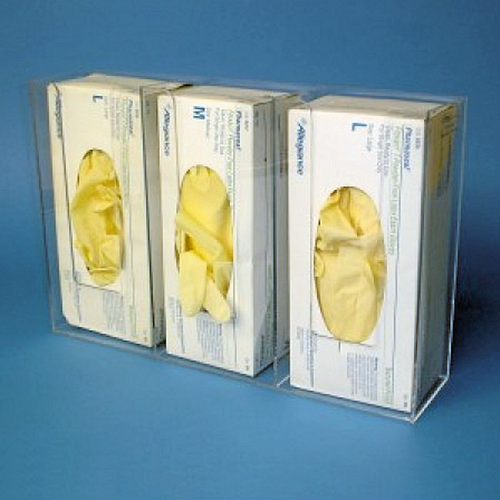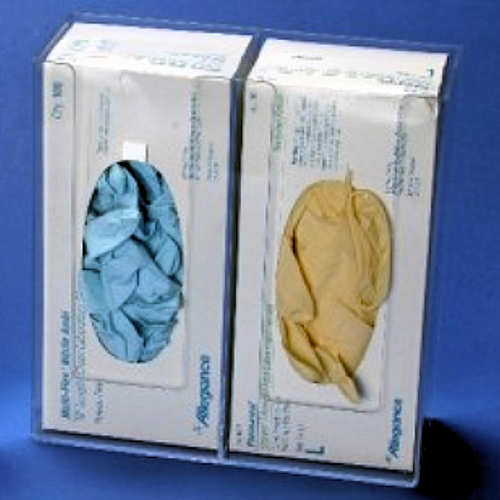
Cleanroom Exam Glove 4-Box Dispenser (Holds Boxes Vertically)

$121.43
(No reviews yet)
SKU:
EBD-4UP (Acrylic)
Availability:
Made to Order, 14 - 21 Business Days
Shipping:
$25.00 (Fixed Shipping Cost)
Quantity Option (Each):
1 Dispenser
S-CURVE Cleanroom Exam Glove 4-Box Dispenser (Holds Boxes Vertically)
This wall-mounted, vertical 4-box glove dispenser is designed to keep exam glove boxes organized, protected, and consistently positioned at point-of-use. In critical environments, “clean” is not just about what you buy—it's about how you stage it. A dedicated dispenser helps reduce incidental contamination (boxes sitting on benches, torn carton edges, over-handling) and improves workflow discipline by giving operators a single, repeatable glove retrieval location.

Important note on cleaning chemistry: This model is available only in clear acrylic. Acrylic is rigid, clear, and scratch-resistant, but it is typically not the best choice for repeated wipe-down with IPA or harsh solvents. If your SOP requires routine IPA wipe-down for dispensers, consider selecting a dispenser offered in PETG instead. (See the “Acrylic vs PETG” notes below.)

Published dispenser specifications (as configured)
  • Material: 1/8" clear, clean acrylic (transparent for easy visual inventory)
  • Capacity: Holds 4 glove boxes (vertical orientation)
  • Mounting: Fastens securely to wall; screws and wall anchors provided
  • Overall size: 21.5"W x 11"H x 4"D
  • Case pack: 1 dispenser per case
  • What’s included: Dispenser only (gloves/other items shown in photos are not included)
Why dispensers matter in controlled environments
Cardboard glove boxes are frequently handled, set down on work surfaces, and bumped during production. A dedicated dispenser:
  • Reduces unnecessary handling (less box movement, less carton abrasion, fewer torn openings).
  • Supports cleaner work habits by keeping supplies off benches and away from sensitive assemblies.
  • Helps reduce waste by preventing crushed boxes, dropped cartons, and multi-glove pulls that occur when boxes slide around.
Some glove programs also leverage controlled-dispense carton designs to reduce waste from over-dispensing; for example, Kimberly-Clark’s SmartPull box concept is published as delivering up to a 33% waste savings on certain glove configurations. (Your results will vary by glove and operator technique.)

Best-fit product pairings (with internal links)
This dispenser is intended for boxed exam gloves. Below are proven, high-demand options customers commonly stage in 4-box stations (e.g., S / M / L / XL, or different glove types by process step).
Use case Recommended product Why it pairs well with a dispenser station
General lab / production support Kimtech Polaris Nitrile Exam Gloves Great for high-throughput glove-change areas; ideal when you want a consistent, always-there box position to reduce grabbing, searching, and carton movement.
Durability / thicker exam glove preference Kimtech Purple Nitrile Exam Gloves (example SKU/size page) A dispenser reduces torn box openings and prevents “box crush,” which improves single-glove pulls and reduces waste from gloves dragged out in bunches.
Black nitrile for high-visibility contamination spotting (oils/soils) Ansell 93-732 Microflex MidKnight Touch Nitrile Gloves Ideal for stations supporting maintenance, equipment handling, and material movement where repeatable access and reduced carton handling matters.
When you truly need cleanroom-rated gloves (ISO programs) Ansell CE5-755 Microflex Cleanroom Nitrile Gloves (Class 100 / ISO 5) If your risk assessment requires cleanroom-classified gloves, use a dispenser strategy—but confirm packaging format and dispense method align with your gowning SOP and area classification.
Routine wipe-down of the station (dispenser exterior & wall area) Texwipe TX1009 AlphaWipe 9" x 9" Polyester Cleanroom Wiper A clean, consistent wipe supports a cleaner glove-change zone. (Always follow your site-approved disinfectant and wipe-down procedure.)

Acrylic vs PETG (cleaning and durability reality)
  • Acrylic: Scratch-resistant and visually “clean,” often preferred where harsh solvent wipe-down is not required. For acrylic dispensers, the published guidance is to clean with soap and water.
  • PETG: Selected when compatibility with IPA (isopropyl alcohol) and other harsher chemicals is required, because IPA use on acrylic can eventually contribute to deterioration and cracking over time.
Set-up and handling notes (practical)
  • Qualify your glove boxes: Confirm your specific glove carton dimensions fit the dispenser channels before standardizing.
  • Mount at point-of-use: Place near the gowning or entry workflow where glove changes are expected—not on a random wall where cartons get relocated.
  • Label by size or process: A 4-box dispenser is ideal for S/M/L/XL or “clean” vs “dirty” tasks—reduce wrong-glove grabs.
  • Keep cartons intact: Avoid tearing large openings; controlled openings reduce multi-glove pulls and dropped gloves.
Documentation (manufacturer data first)
Ansell 93-732 product documentation (SOS-hosted PDF): Open PDF
Texwipe AlphaWipe (TX1009 family) datasheet (SOS-hosted PDF): Open PDF
Kimtech Purple Nitrile (example TDS, SOS-hosted PDF): Open PDF
Questions about fit, cleaning chemistry, or standardizing a glove station? Email us at Sales@SOSsupply.com or call (214) 340-8574.
© 2026 SOS Supply. All rights reserved.
The Technical Vault
Glove Stations: Reducing Cross-Contamination, Waste, and “Hidden Handling”
A practical guide for boxed exam glove dispensers in controlled environments
Customer-first education
A glove dispenser is a small piece of infrastructure that supports a large outcome: repeatable behavior. In critical environments, many contamination events start as “small handling” issues—boxes moved from bench to bench, carton openings torn wider over time, operators touching the same box surfaces repeatedly, or gloves pulled in bunches and discarded. A fixed dispenser reduces that variability by controlling where gloves live and how they’re accessed.

1) What this dispenser is (and what it is not)
  • It is: A wall-mounted, vertical holder for four boxed exam glove cartons—a “station” for size runs or process-specific glove types.
  • It is not: A substitute for selecting the correct glove classification for your area. If your program requires cleanroom-rated or sterile gloves, confirm that the glove type and packaging format are appropriate for your gowning SOP and room classification.
Published construction (why it matters)
This model is published as 1/8" clear acrylic and is available only in clear acrylic. Acrylic provides strong rigidity, high clarity for quick visual inventory, and a clean aesthetic—but it is typically less compatible with repeated IPA wipe-down than PETG.

If your SOP uses routine IPA wipe-down on dispensers, standardize PETG dispensers where possible. The published guidance notes that IPA use on acrylic can contribute to deterioration/cracking over time, while PETG is selected for IPA compatibility.

2) How dispensers reduce waste (the mechanisms)
  • Fewer “multi-glove pulls”: When cartons slide around, people grab harder and pull multiple gloves at once—extras get discarded. A fixed dispenser stabilizes the carton.
  • Less carton damage: Crushed or torn boxes dispense poorly; gloves snag, bunch, and drop. A dispenser protects the carton geometry.
  • Better size discipline: A 4-box station supports S/M/L/XL layout. Wrong-size grabs often become waste when operators “try and toss.”
  • Optional controlled-dispense cartons: Some glove boxes are designed to reduce waste by controlling the opening; for example, Kimberly-Clark publishes “SmartPull” dispensing with up to a 33% waste savings for certain glove configurations. Validate results under your own workflow.

3) Placement strategy: where glove stations belong
Place glove dispensers where glove changes are expected and auditable:
  • Gowning areas / anterooms: Supports consistent glove change timing before entry.
  • Material transfer points: Encourages glove changes after handling outer packaging or non-controlled materials.
  • Maintenance/support zones: Keeps gloves off benches and reduces “pocket carrying” of loose gloves.
Operator technique that protects your process
  • One glove at a time: Pull deliberately; if multiple gloves dispense, discard the extras per SOP (do not “stuff them back”).
  • Glove change triggers: After touching cartons, trash, door handles, or non-controlled items—change gloves before returning to critical work.
  • Lot/traceability discipline: Keep outer case labels available for QA traceability; do not mix lots in the same lane unless your SOP permits.

4) Recommended station build (Texwipe + Kimtech + Ansell)
A strong glove station is a system: gloves + wipe-down + clear labeling. Below are internal links to commonly standardized items:
Cleaning the dispenser (chemistry-fit matters)
This dispenser is published as acrylic-only. Align cleaning chemistry to material compatibility:
  • For acrylic: Use the site-approved method consistent with acrylic care; published guidance references soap and water for cleaning acrylic dispensers.
  • For IPA-heavy wipe-down programs: Standardize PETG dispensers where available; published guidance indicates PETG is selected for IPA compatibility and acrylic can crack/deteriorate over time with IPA exposure.
Manufacturer-first documentation (verify before you standardize)
Ansell 93-732 PDS (SOS-hosted): Open PDF
Texwipe AlphaWipe (TX1009 family) datasheet (SOS-hosted): Open PDF
Kimtech Purple Nitrile TDS (SOS-hosted): Open PDF
If you want help standardizing a glove station (sizes, box formats, cleaning chemistry alignment, and documentation packets), contact SOSCleanroom at Sales@SOSsupply.com or (214) 340-8574.
© 2026 SOS Supply. All rights reserved.