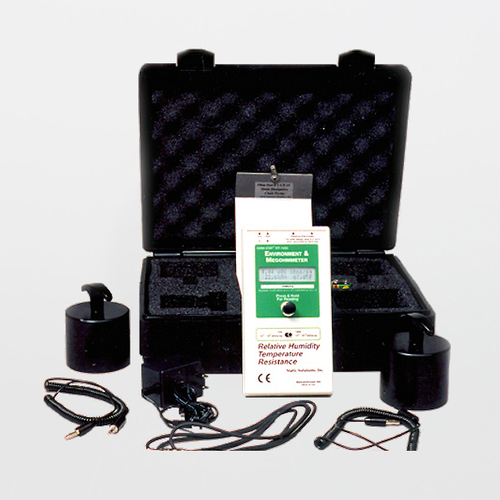
CP-1111 Concentric Ring Probe for ESD Resistivity Meters

$456.50
(No reviews yet)
SKU:
CP-1111
Availability:
7 - 10 Business Days
Shipping:
Calculated at Checkout
Quantity Option (Each):
1 Probe
Static Solutions CP-1111 Concentric Ring Probe for ESD Resistivity Meters — 5 lb Calibrated Probe for Surface Resistivity Testing, Conductive Rubber (50–60 Shore A), Made in USA (Replaces RT-CP10)
ESD Verification Concentric Ring Probe 5 lb Weighted Calibrated S11.11 / S11.12 Test Support Made in USA

Overview

The CP-1111 Concentric Ring Probe is an optional test fixture used with ESD resistivity meters such as the Ohm-Stat RT-1000 and RT-500 to accurately measure surface resistivity on planar materials (mats, floors, coatings, packaging, work surfaces, and finishes). It is designed to support standardized verification methods and provides a more repeatable contact geometry than improvised clip leads or hand-held “quick checks.”

Facilities use probes like CP-1111 to protect electronics from ESD damage and to maintain confidence that ESD-control materials are still performing as intended over time—including in electronics cleanrooms where static can impact both device handling and process stability.


Why this probe matters for ESD safety
  • Repeatable measurements: A defined fixture geometry and standardized contact helps reduce operator-to-operator variation when trending results.
  • Audit readiness: Supports formal ESD program verification activities where tools and methods should align to recognized practices.
  • Early warning of drift: Floors, mats, and coatings can change with wear, cleaning chemistry, and contamination—periodic measurements identify issues before defects occur.
  • Works with high-performance meters: Designed for use with resistivity meters such as RT-1000/RT-500 for consistent verification workflows.

Typical applications
  • Verification of ESD floors, floor finishes, and ESD coatings (qualification + periodic checks)
  • Bench mat / workstation surface testing in EPAs (ESD Protected Areas)
  • Incoming inspection for ESD materials and ESD packaging
  • Troubleshooting “hot spots,” intermittent grounding performance, or inconsistent readings

Key specifications (published)
SKU CP-1111
Category / use Optional probe for ESD resistivity meters; surface resistivity measurement
Compatibility (examples) Ohm-Stat RT-1000 and RT-500 (and other high-performance meters)
Probe weight 5 lb weighted probe
Contact material Conductive rubber, Shore 50–60
Body / coating Coated with insulative paint
Calibration Calibrated (as listed)
Standards reference (as listed) Conforms to EOS/ESD 11.11 specifications; test according to ESD S11.11 and ESD S11.12
Replacement note Replaces Concentric Ring Probe RT-CP10
Country of origin Made in USA
Unit of measure Each (1 concentric ring probe)

Practical note: measurement repeatability depends on consistent technique (probe placement, test locations, environmental conditioning when applicable, and documented procedures). Use your ESD Control Plan / Compliance Verification Plan to define test points, frequency, and acceptance criteria.


Why buy CP-1111 from SOSCleanroom
  • One-vendor standardization: build a complete ESD verification workflow (meters, probes, wrist straps, heel grounders, monitors, and consumables) under controlled SKUs.
  • Auto-Ship options: align replenishment and verification accessories with your maintenance schedule.
  • Critical-environment experience: we support cleanroom electronics, labs, repair benches, and general industrial EPAs with practical ESD guidance.

Recommended pairings

If you have any questions please email us at Sales@SOSsupply.com or give us a call at (214)340-8574. OR check out the AI ChatBot powered by SOSCleanroom data libraries - give it a try! THIS IS NEW FOR 2026! © 2026 SOSCleanroom. All rights reserved.
The Technical Vault
Concentric Ring Testing: How to Verify ESD-Control Surfaces the Right Way
A practical guide using Static Solutions CP-1111 as the example fixture for ESD resistivity meters.
SKU: CP-1111
Category: ESD — Tester/Monitor Accessories
Surface Resistivity EPA Support Verification & Troubleshooting Cleanroom Electronics + General Industry

ESD programs succeed or fail on verification. You can install ESD floors, buy bench mats, and post EPA signs—but if you do not periodically confirm those materials still perform as intended, your process will drift. Drift is common: wear, residues, cleaning chemistry, humidity changes, and physical damage can all change electrical performance.

The CP-1111 concentric ring probe exists to make surface resistivity measurement more repeatable and more aligned with recognized test methods, so results can be compared over time (and defended during internal audits, customer audits, or supplier assessments).


1) What “concentric ring” measurement is actually doing

A concentric ring probe uses a defined electrode geometry that helps standardize the electrical path across a planar surface. Compared with clip leads or improvised contact points, concentric fixtures reduce variability and support more consistent trending across different technicians, shifts, and measurement locations.

  • Surface resistance / resistivity: used to confirm ESD-control materials remain within your program’s intended performance range.
  • Trend value over time: trending is often more useful than a single pass/fail snapshot—it reveals slow degradation before it becomes an operational problem.
  • Supports standardized methods: ESD test methods specify fixture configuration, environmental conditioning, and verification steps to improve repeatability.

2) Why cleanrooms that build or test electronics still need ESD control

In electronics cleanrooms, ESD control is about more than preventing device damage. Static charge can also influence handling behavior and can increase attraction of lightweight particles to charged surfaces. Verifying ESD-control surfaces helps keep both reliability and process stability more predictable.


3) A practical verification workflow (training-friendly)
  1. Define a test map: list your surfaces (floors, benches, mats, carts, coatings) and assign consistent test points.
  2. Standardize technique: same probe placement, same dwell time, same measurement sequence, and the same logging template.
  3. Record a baseline: capture “known good” readings after installation, deep cleaning, or corrective action.
  4. Trend results: small directional changes can indicate wear, residue buildup, or cleaning chemistry impact.
  5. Correct and re-verify: clean, repair, replace, or retrain—then re-test and reset baseline documentation.

4) Common mistakes that create bad readings (and how to avoid them)
  • Dirty test spots: dust, waxes, residues, or overspray can skew readings. Clean or choose representative locations.
  • Inconsistent locations: if technicians “pick a spot,” trending becomes meaningless. Use a defined test map.
  • Skipping documentation: verification only protects you if results are recorded, reviewed, and acted on.
  • Using the wrong tool: improvised clips and handheld spot checks often fail repeatability expectations for serious ESD programs.

Standards context (why verification is expected)

Most mature ESD programs are structured around a control-plan framework and a compliance verification discipline. ANSI/ESD S20.20 is widely used to define program structure, and ESD TR53 is intended to guide periodic verification test methods and troubleshooting for ESD protective equipment and materials. Globally, IEC 61340-5-1 defines requirements for establishing and maintaining an ESD control program.


Build a complete ESD verification setup (recommended)
  • RT-1000 — core resistivity meter kit for verification workflows.
  • RT-500 — portable resistivity testing for routine checks.
  • FM-1126 — field meter support for broader static diagnostics.
  • Complete Audit Kits — formalize compliance verification and documentation.

Need help selecting ESD verification tools? Email Sales@SOSsupply.com or call (214)340-8574. SOSCleanroom supports ESD programs in cleanroom electronics, labs, repair benches, and general industrial EPAs. © 2026 SOSCleanroom. All rights reserved.