The clip that turns “ESD garment compliant” into a measurable result: using GC-5621 to verify smock resistance the right way
The Technical Vault | By SOSCleanroom
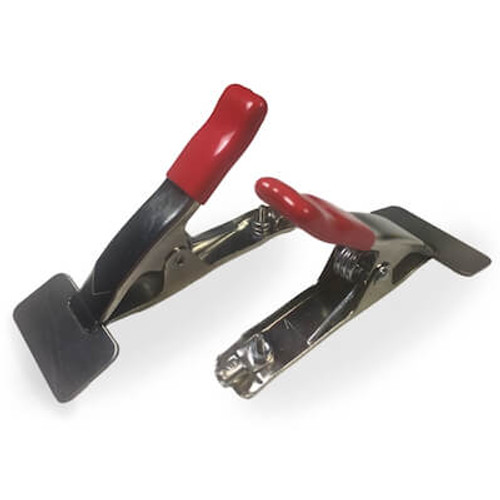
In an ESD program, garments are not “good” because they look clean or because they were bought as “ESD.” They are good because their surface resistance stays inside your program limits after real use: laundering cycles, flexing, sleeve abrasion, snap/closure wear, and handling at the bench. The GC-5621 Garment Clips are built for that reality — a simple, repeatable way to contact an ESD smock and measure resistance using compatible resistivity meters, so “ESD garment control” is based on data instead of assumption.
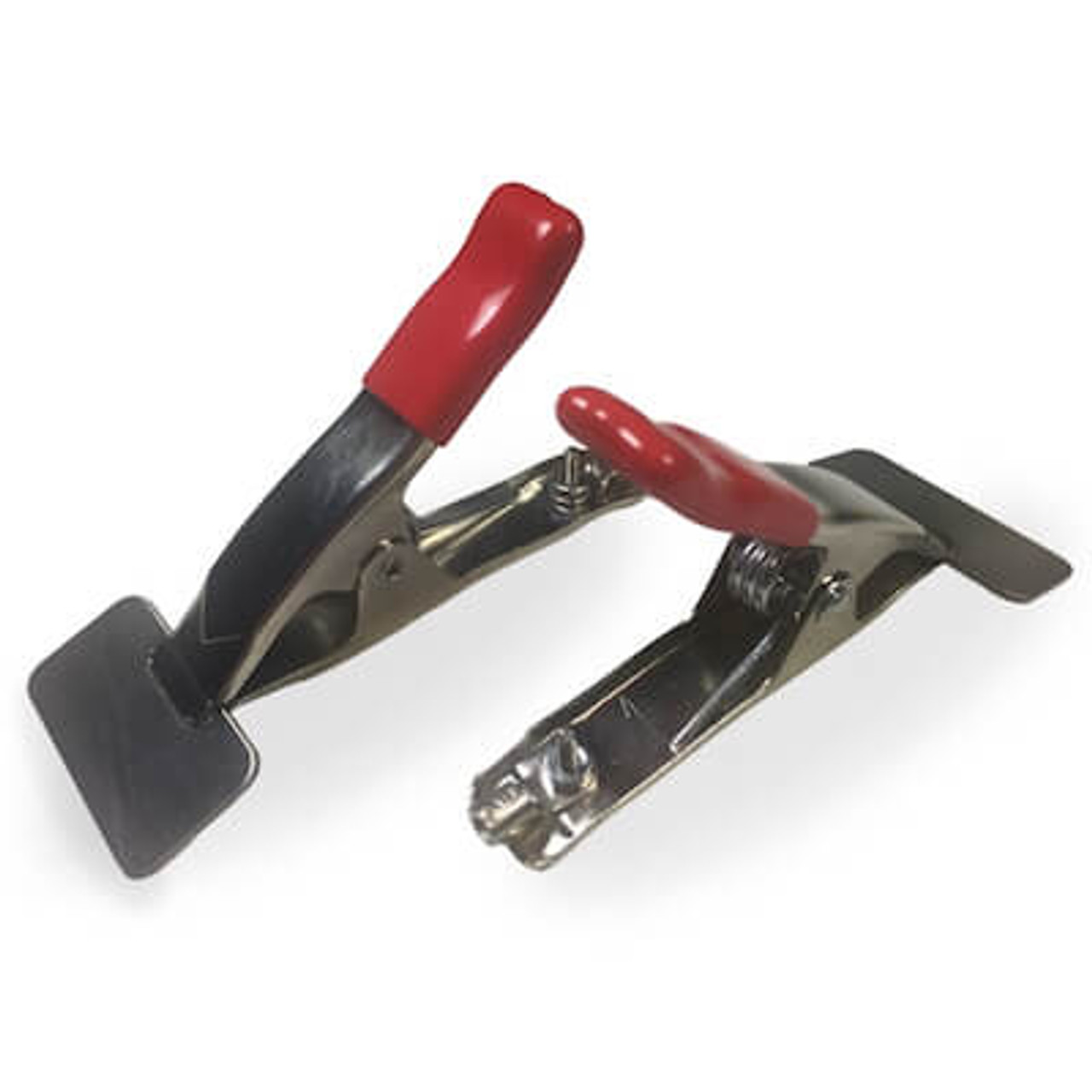
Operationally, these clips are an optional probe used with Ohm-Stat resistivity testers (RT-1000 and RT-500) to measure surface resistivity and support testing aligned to ESD-STM2.1-1997. They are supplied as a pair (2 garment clips), with stainless-steel surface contact areas, and are backed by a one-year warranty.
The Operational Problem It Solves
ESD garments fail in predictable ways, and most of them are invisible until you test:
- False confidence from labels: “ESD smock” on the purchase order does not guarantee the garment still performs after wear and laundering.
- Bad contact creates bad data: inconsistent probe pressure, slipping contacts, or contacting the wrong garment zone can make a good garment look bad — or worse, a bad garment look acceptable.
- Program drift: if garments are not periodically verified, the first “test” happens during a yield excursion or an ESD event investigation.
GC-5621 is a small tool that reduces variability in the measurement step by providing stable, repeatable contact points intended for garment resistance testing with compatible meters.
What It’s For
GC-5621 is an optional probe used with the Ohm-Stat RT-1000 and RT-500 resistivity testers to measure the resistance of ESD garments (including ESD smocks). It is positioned for surface resistivity measurement and conformance to ESD-STM2.1-1997.
Use it when you need to verify that garments used around ESD-sensitive workstations remain inside your program’s resistance requirements and to support routine audits, incoming checks, post-launder checks, and investigation work.
Decision Drivers (What Buyers Should Care About First)
- Measurement intent: built to measure resistance of ESD garments using compatible resistivity meters.
- Contact quality: stainless-steel surface areas help create consistent electrical contact during testing.
- Standards alignment: positioned for testing according to ESD-STM2.1-1997 when used as intended with the meter and method controls.
- Compatibility: specified for use with Ohm-Stat RT-1000 resistivity meter and also listed as an optional probe for RT-500.
- Unitization: sold as a pair (2 garment clips), supporting two-point contact setups typical of garment resistance checks.
- Supportability: one-year warranty and a simple, durable accessory format that can be managed as a controlled ESD tool.
Materials and Construction: Practical Implications
Stainless-steel contact surfaces: A resistance measurement is only as good as the contact. Stainless contact surfaces help reduce slip and inconsistent contact behavior that can inflate resistance readings or create intermittent results.
Accessory discipline matters: Clips can become a measurement error source if they are contaminated, oxidized, or mechanically damaged. Treat them as part of the metrology chain: keep them clean, stored, and dedicated to ESD checks rather than general use.
Country of origin and warranty: This accessory is listed as made in the USA and carries a one-year warranty. Use lot/document controls consistent with your ESD audit expectations.
Specifications in Context
The operational specifications for GC-5621 are about fit to the measurement method rather than physical dimensions:
- Use case: measure resistance of ESD garments.
- Measurement standard reference: ESD-STM2.1-1997.
- Compatible testers: Ohm-Stat RT-1000 and RT-500 resistivity testers.
- Contact surfaces: stainless-steel surface areas.
- Pack: Pair (2 garment clips).
A measurement rule that protects your program: the clip helps with contact repeatability, but the result still depends on controlling variables like garment location, pressure, humidity conditions, and whether the garment is clean/dry per your procedure.
Performance in Practice: How to Get Defensible Readings
A good ESD garment check is repeatable across operators. Use GC-5621 with method controls that remove “technician style” from the result:
- Define the test zones: pick consistent garment locations (for example, chest panel and sleeve) and document them. Random clip placement creates random results.
- Control garment condition: garments should be in the same state each time (dry, not solvent-wet; free of conductive contamination; closures in a consistent position if your SOP requires it).
- Manage environment variables: humidity and airflow can affect charge behavior and some resistance measurements. Run checks under the same environmental posture used for your ESD program verification when possible.
- Use stable contact: attach clips so the stainless contact surfaces sit flat against the garment material (avoid seams, snaps, or heavily wrinkled areas unless your method explicitly calls for them).
- Trend and quarantine rules: define pass/fail and “watch” bands. If results drift but do not fail, trend by garment ID and laundry cycle count; if results fail, quarantine the garment and trigger your investigation workflow.
Why Traceability and Warranty Matter for ESD Accessories
ESD failures are investigation-driven. If you cannot trust the measurement accessory, you cannot trust the conclusion. Treat garment clips as a controlled accessory: identify them, store them clean, and keep them paired with the appropriate tester so the method does not drift.
GC-5621 is supplied as a pair and is listed with a one-year warranty. Use that warranty window as a practical maintenance cue: periodic inspection of contact surfaces and clip integrity reduces false fails and false passes.
Best-Practice Use: Operator-Level Discipline
- Stage the tester, clips, and garment ID method before you start. Do not improvise placement.
- Avoid clipping through thick seams, snaps, or logo patches unless your SOP defines those areas as test points.
- Keep clips clean and dry. Do not use clips that have been exposed to solvents, adhesives, or corrosive residues without cleaning and verification.
- Use consistent pressure and consistent dwell time per your tester method (avoid “tap and read” variability).
- Record results by garment ID and cycle count (new, post-launder, post-repair) so your program can trend rather than react.
Common Failure Modes—and How to Prevent Them
- Inconsistent clip placement: turns a controlled test into noise. Prevent with defined test zones and a written method.
- Contact on seams/hardware: can skew results. Prevent with flat, representative fabric contact unless the method requires seam testing.
- Dirty or damaged contact surfaces: creates intermittent readings. Prevent with inspection, controlled storage, and replacing worn accessories.
- Ignoring environmental conditions: seasonal humidity shifts can change behavior. Prevent with ESD program verification routines and consistent testing posture.
- Using the wrong tester/procedure: prevents meaningful comparison to limits. Prevent by keeping GC-5621 paired to the intended Ohm-Stat resistivity testers and method documentation.
Closest Competitors (Limited and Relevant)
Other garment-resistance clip/probe accessories
Comparable accessories exist for resistivity meters. The selection criteria that matter are contact repeatability, compatibility with your meter, and whether the accessory supports a method you can standardize across shifts.
Alternate garment verification methods
Some programs use garment testers or integrated systems for specific garment types. If your workflow demands high-throughput garment verification, consider whether a dedicated garment test station is more appropriate than field measurements.
Where This Fits in a Controlled ESD Program
GC-5621 is a practical accessory for turning garment compliance into measurable evidence. It fits best in programs that treat garments as controlled tools: defined issuance, laundering controls, repair controls, and periodic verification. Use it to support incoming garment qualification, post-launder verification, routine audits, and investigations where you need to separate “garment drift” from workstation grounding or handling issues.
Source basis
- SOSCleanroom product page: “GC-5621 Garment Clips to Test ESD Smocks” (SKU, unit configuration, compatibility notes, features/benefits, warranty, availability).
- Product description on SOSCleanroom: optional probe used with Ohm-Stat RT-1000 and RT-500 resistivity testers; conforms to ESD-STM2.1-1997; stainless steel surface areas; made in USA; one-year warranty.
- ESD program best-practice basis applied: controlled test zones, repeatable contact, trending by garment ID/cycle count, and investigation readiness.