LDPE with Rubber Adhesive Cleanroom Tape

$805.85
(No reviews yet)
SKU:
TPR1048BL
Availability:
Made to Order, 4-6 Weeks
Shipping:
Calculated at Checkout
Texwipe® TPR1048BL KO-GO™ LDPE with Rubber Adhesive Cleanroom Tape (Blue) — Quick Tack, Moderate Adhesion, Cleanroom Bagged and Lot-Control Friendly
TPR Series (KO-GO™) LDPE backing Synthetic rubber adhesive 1" x 36 yds Blue Press-and-seal cleanroom bags 48 rolls / case Made in the USA

Product overview
Texwipe KO-GO™ TPR cleanroom tape uses a low-density polyethylene (LDPE) backing with a synthetic rubber adhesive to deliver quick tack with moderate adhesion for cleanroom marking, identification, surface protection, and sealing/packaging tasks. The construction is designed to be low in halogens, leachable chlorides, and heavy metals for customers who are controlling extractables and residues in critical environments.
Why cleanroom tape is different
Tape is often introduced repeatedly, touched frequently, and applied directly to carts, tools, containers, and packaging. In a controlled environment, that means the packaging method, lot control, and adhesive behavior matter as much as basic adhesion.

Why customers choose TPR1048BL
  • Quick tack, moderate adhesion: Bonds quickly for efficient workflow, while helping reduce the risk of over-aggressive adhesion when removal or repositioning is needed.
  • Conformable LDPE backing: Helps seal compound/irregular surfaces and packaging materials without fighting the tape during application.
  • Cleanroom bagging convenience: Packaged in reusable press-and-seal cleanroom bags to support cleaner introductions and point-of-use handling discipline.
  • Low-halogen / low-leachable intent: Designed to be low in halogens, leachable chlorides, and heavy metals for contamination-control programs that track residues and extractables.
  • Color coding and identification: Blue tape supports visual controls (tools, carts, work zones, status labeling) that reduce mix-ups in high-activity spaces.

Recommended applications
  • PVC/rubber tape replacement where cleaner packaging and controlled-environment handling are expected
  • Asset identification (carts, bins, racks, tools, fixtures)
  • Surface protection (temporary protection during transfer, staging, or setup)
  • Color coding and visual management (zone marking, status labeling, kit identification)
  • Cleanroom build and controlled construction activities (temporary sealing, protection, and labeling)
Practical handling note: For best contamination control, open the outer bag outside the clean area, introduce the inner press-and-seal bag per your material transfer process, and only remove rolls at point of use to minimize unnecessary handling.

Specifications (from published technical data)
SOSCleanroom SKU TPR1048BL
Manufacturer series KO-GO™ TPR Series (LDPE with rubber adhesive)
Color Blue
Tape width 1"
Roll length 36 yards
Backing Low Density Polyethylene (LDPE)
Adhesive Synthetic rubber (latex-free)
Core 3" HDPE
Total thickness 5.5 mil (0.14 mm)
Adhesion to steel 28 oz/in average (ASTM D3330 referenced)
Tensile strength @ break 10 lbs/in average (ASTM D3759 referenced)
Elongation @ break 390% average (ASTM D3759 referenced)
Temperature resistance -40°F to +190°F
Packaging (case) 24 bags of 2 rolls per case (48 rolls total)
Availability (SOSCleanroom) Made to order, 4–6 weeks
Country of origin Made in the USA (manufacturer published)
Additional option note (as published by the manufacturer for the KO-GO™ tape family): Gamma irradiated tapes are available in case quantities by adding "-G" to the end of the part number. This listing is for TPR1048BL unless otherwise specified on your order.

Cleanroom program guidance (U.S. first, global context second)
In U.S.-based controlled environments, tape is often treated as a high-frequency “touch item” that can quietly drive residue transfer and particle redistribution if it is not managed like other consumables. Strong programs define: (1) where tape is allowed, (2) how rolls are introduced (outer bag removal, inner bag transfer), (3) where tape is staged, and (4) how adhesive-contact surfaces are cleaned after removal. ISO 14644 terminology is commonly used for classification language, while internal quality systems and risk-based controls drive day-to-day practice.
As a secondary/global benchmark, EU GMP Annex 1 reinforces contamination control strategy (CCS) thinking around material transfer, packaging integrity, and traceability. Even outside sterile manufacture, Annex 1 principles can be a useful lens: reduce unnecessary items in critical areas, standardize introductions, and maintain documentation discipline for investigations and continuous improvement—without treating Annex 1 as a U.S. legal requirement.
Helpful standards and guidance hubs (for program reference): https://www.iso.org/standard/53394.html  |  https://www.fda.gov  |  https://www.astm.org  |  https://www.iest.org

Build a best-in-class consumables set around clean labeling and clean cleanup
Tape is only half the story—the other half is what happens after tape use (adhesive contact, wipe-down, and residue control). Pair cleanroom tape with the right wiping and swabbing tools so the adhesive does not become an untracked contamination vector.
SOSCleanroom + Texwipe partnership advantage
For over 35 years, SOS and Texwipe have been close partners, and SOSCleanroom is the authorized Master Distributor of ITW Texwipe for the United States market. That relationship matters for customers who want consistent product identification, documentation support, and continuity of supply across tapes, wipers, swabs, and cleaning systems.
Common add-ons for tape workflows include low-linting polyester wipers for wipe-down after tape removal (note: no wiper is truly lint-free) and cleanroom swabs for tight areas where adhesive residue can hide around fasteners, crevices, and corners.

About Texwipe and SOSCleanroom supply confidence
ITW Texwipe is a worldwide leader in contamination control supplies and critical cleaning products across cleanroom wipers, swabs, stationery, adhesive mats, and tape systems. In controlled environments, the difference is rarely a single feature—it is consistency: packaging discipline, lot control, and predictable performance that supports qualification and long-term standardization.
SOSCleanroom supports customers who need dependable, best-in-class cleanroom consumables with fast shipping, excellent customer service, fair pricing, and continuity of supply backed by decades serving controlled environments.

Documentation
Technical Data Sheet (TDS) – SOSCleanroom hosted (stable): tape%20LDPE%20and%20rubber.pdf (Effective: January 2012; document code shown as DSKogoTPR)
Technical Data Sheet (TDS) – Manufacturer hosted: Texwipe Cleanroom Tapes TDS (Rev.00-05/21)

If you have any questions please email us at Sales@SOSsupply.com or give us a call at (214)340-8574.
If you need additional information please try our SOSCleanroom specific AI ChatBot which draws from our extensive cleanroom specific libraries.
Last updated: January 12, 2026
© 2026 SOSCleanroom.com
The Technical Vault
By SOSCleanroom
ITW Texwipe TPR Series LDPE backing + rubber adhesive Quick tack / moderate adhesion Press-and-seal cleanroom bags TPR1048BL: 1" x 36 yds (blue) 48 rolls/case (24 bags x 2)
ITW Texwipe LDPE with Rubber Adhesive Cleanroom Tape (TPR1048BL): quick-tack polyethylene tape for sealing, color coding, and cleanroom build work where moderate adhesion is preferred
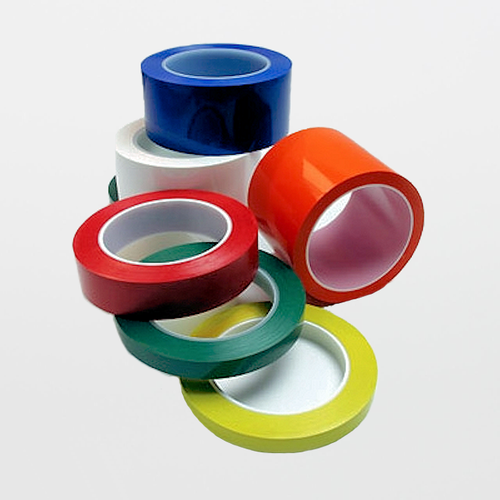
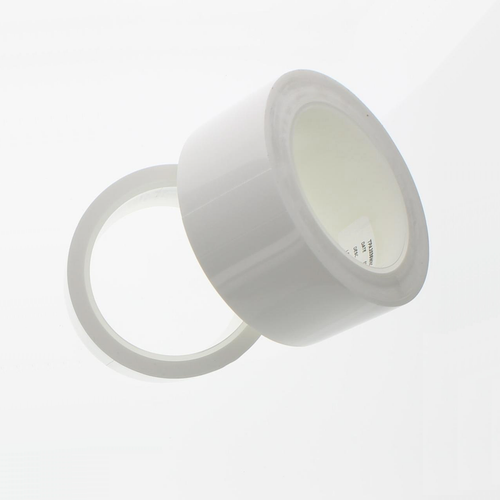
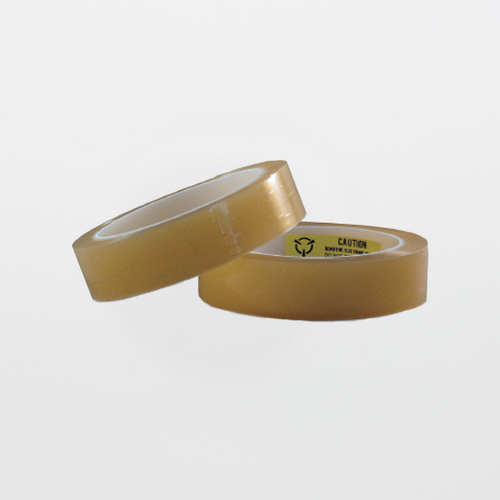
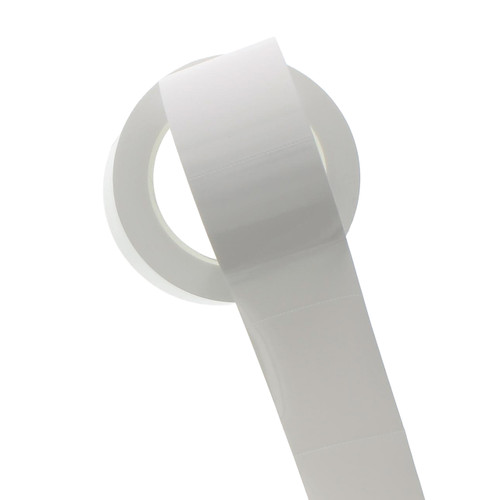
ITW Texwipe LDPE with Rubber Adhesive Cleanroom Tape (TPR Series) - representative image
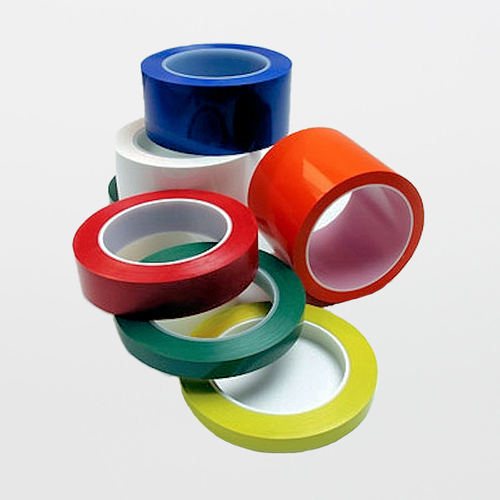
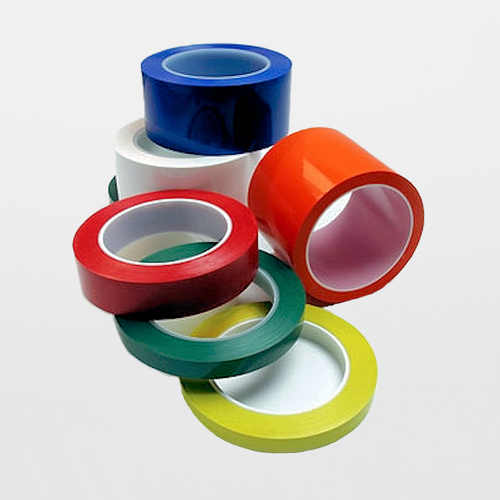
TPR Series cleanroom-grade tape family (colors shown are representative; this listing is TPR1048BL blue).

1) Practical solutions in a critical environment
Tape is deceptively high-risk in controlled spaces because it is touched constantly, moved between zones, and pressed onto surfaces that must stay clean and inspectable. A tape that grabs quickly, conforms to irregular shapes, and stores cleanly can prevent a long list of small “workarounds” that create contamination events (ripping on benches, leaving rolls exposed, or substituting construction tape).
ITW Texwipe’s TPR Series is positioned for situations where you need quick tack with moderate adhesion, especially for sealing packaging materials, protecting surfaces, and managing clear visual identification in cleanroom build and maintenance work. The packaging format (press-and-seal cleanroom bags) is intended to keep rolls protected at point of use.
For over 35 years, SOS and Texwipe have been close partners, and SOSCleanroom is the authorized Master Distributor of ITW Texwipe for the United States market. For facilities teams and quality teams alike, that matters: continuity of supply, stable documentation, and fewer surprises when you place tape under change control.

2) What it’s for
  • PVC/rubber tape replacement in controlled areas where cleaner packaging and cleaner handling matter.
  • Asset identification and color coding (tools, carts, bins, shadow boards, and staging locations).
  • Surface protection (temporary barrier during maintenance, staging, and move/relocation activities).
  • Sealing compound surfaces and packaging materials during cleanroom build-outs and controlled material transfer.
  • General cleanroom construction and containment tasks where conformability helps the tape “follow” ducts, visqueen, covers, or irregular hardware.

3) Why should customers consider this tape
  • Quick tack with moderate adhesion: Designed to grab quickly without forcing “over-adhesion” where clean removal or repositioning may be needed.
  • High conformability: LDPE backing supports sealing around irregular shapes and compound surfaces (ducting, covers, flexible barriers).
  • Cleaner introduction and storage: Packaged in reusable press-and-seal cleanroom bags to reduce roll exposure between uses.
  • Material screening support: Manufacturer technical data describes the construction as low in halogens, leachable chlorides, and heavy metals (useful for facilities that screen materials).
  • Standardized case packaging: Bagged sub-packs support controlled distribution to gowning benches, maintenance kits, or build teams without exposing the full case.

4) Materials and construction
  • Backing: Low-density polyethylene (LDPE).
  • Adhesive: Rubber (manufacturer technical data describes synthetic rubber in the TPR family).
  • Core: 3" HDPE (per manufacturer technical data sheet).
  • Latex status: Listed as latex-free.
  • Packaging style: Press-and-seal cleanroom bags, intended to protect rolls between uses.
Operator reality check
Tape performance is only half the story. The bigger driver is handling discipline: keep rolls bagged between uses, do not set exposed tape on benches, and avoid aggressive stretch-and-rip tearing that creates jagged edges and film “whitening.” Treat tape as a controlled consumable, not a general tool.

5) Specifications (published)
Attribute TPR1048BL (this listing)
SKU / part number TPR1048BL
Tape width 1"
Roll length 36 yds
Color Blue
Backing / adhesive LDPE backing with rubber (synthetic rubber) adhesive
Total thickness 5.5 mil (0.14 mm)
Adhesion to steel 28 oz/in avg. (ASTM-3330)
Tensile strength at break 10 lbs/in avg. (ASTM D-3759)
Elongation at break 390% avg. (ASTM D-3759)
Temperature resistance -40°F to +190°F
Case packaging 24 bags/case, 2 rolls per bag = 48 rolls total
Availability (SOS listing) Made to Order, 4–6 weeks
Weight (SOS listing) 15.00 lbs (shipping weight as listed)
Note: The broader TPR family is offered in multiple widths (1/2", 1", 2", 3") and multiple colors (blue, green, red, white, yellow). This listing configuration is 1" blue (TPR1048BL).

6) Specifications in context
The 1" x 36 yd format is a practical “toolbox width” for facilities and cleanroom build teams: wide enough to create readable color bands and durable seals, but not so wide that it becomes bulky on smaller parts or requires frequent trimming.
A 5.5 mil construction with ~28 oz/in adhesion to steel is often used when you want a tape that bonds quickly yet does not behave like permanent adhesive on many common surfaces. In real operations, this helps with temporary protection, staging labels, and barrier sealing where removal/adjustment is likely during a project window.
If your process includes aggressive disinfectant wipe-downs, pressure, or temperature swings, the published temperature range (-40°F to +190°F) and mechanical properties (tensile/elongation) are the data points quality teams typically use to decide whether to qualify tape for the intended exposure window.

7) Cleanliness metrics (what’s published vs. what teams verify)
Tape is commonly evaluated on residue, edge behavior, and how well it stays protected between uses. Where extractables or particulate counts are not published for a tape family, many facilities treat the tape as a controlled consumable and verify fitness via inspection, residue checks, and procedural controls aligned to their contamination control strategy.
Metric / risk area Why it matters Published for TPR Series
Halogens / leachable chlorides / heavy metals Screening for corrosion risk and material compatibility in sensitive environments. Described as low (manufacturer technical data).
Adhesive transfer / residue Residue can attract particles, complicate cleaning, and interfere with labels or seals. Not stated.
Edge debris / tearing behavior Aggressive tearing and poor handling can create debris that migrates into work zones. Not stated.
Ionic / NVR extractables Relevant for highly sensitive analytical and microelectronics environments. Not stated.

8) Packaging, documentation, and traceability
  • Clean handling support: Packaged in press-and-seal cleanroom bags intended to protect the tape between use sessions.
  • Case unit (TPR1048BL): 24 bags per case with 2 rolls per bag (48 rolls total); 36 yards per roll.
  • Gamma irradiated option (family note): Manufacturer technical data indicates gamma-irradiated versions are available in case quantities by adding “G” to the end of the part number (example given: TPR1048GR-G). Do not assume gamma irradiation unless your ordered part number and paperwork confirm it.
Documentation
SOS-hosted PDF (stable reference): https://www.soscleanroom.com/content/texwipe_pdf/tape%20LDPE%20and%20rubber.pdf
Texwipe.com PDF (Cleanroom Tapes TDS): https://www.texwipe.com/images/uploaded/documents/Tapes/Texwipe-Tapes-TDS.pdf
Texwipe product page (TPR1048BL): https://www.texwipe.com/ldpe-rubber-tpr1048bl

9) Best-practice use (operator-level)
  1. Keep rolls protected. Open one bag at a time, then reseal between uses. Do not leave exposed rolls on benches or carts.
  2. Standardize where the tape lives. Assign tape to a cleanroom build kit, maintenance kit, or gowning bench station rather than allowing “free roaming” rolls.
  3. Use clean tearing technique. Avoid stretching the film before tearing; rip straight and controlled to reduce ragged edges and edge debris.
  4. Apply with intentional pressure. Press to seat the tape on the surface (especially around irregular contours) without over-rubbing, which can increase residue risk.
  5. Define removal expectations. If the tape is used on painted, coated, or high-value surfaces, test removal timing and residue checks during qualification before broad rollout.
  6. For color coding, write the rule down. A color standard is only useful if it is consistent (example: blue = “clean side,” red = “hold,” green = “released,” etc.).
Customer SOP disclaimer
SOSCleanroom provides best-practice guidance and suggested templates to support customer training and continuous improvement. Customers are responsible for developing, approving, validating, and maintaining their own SOPs and safety procedures based on their facility, surfaces, chemicals, products, regulatory obligations, and risk assessments.

10) Common failure modes
  • Edge debris from aggressive tearing: Usually a technique issue; retrain tear control and do not stretch-rip.
  • Residue complaints: Often tied to surface type, dwell time, pressure, or disinfectant exposure; qualify on your actual surfaces.
  • Cross-contamination from shared rolls: Tape becomes a common touchpoint; keep bagged and assign to controlled zones.
  • Wrong tape for the job: When abrasion resistance or long-term aisle marking is required, LDPE rubber tape may not be the right mechanism—select based on use case (wear, temperature, removability).
  • Color coding drift: If teams do not follow a written standard, colors lose meaning and create confusion during investigations and audits.

11) Closest competitors
Compare cleanroom tapes by mechanism: backing film (LDPE vs. PVC), adhesive chemistry (rubber vs. acrylic), packaging discipline (bagging/traceability), and whether the tape is intended for temporary sealing vs. long-wear marking.
  • Micronova Cleanroom PCX Polyethylene Tape: Often compared when teams want a polyethylene tape family for controlled environments with different performance preferences.
  • UltraTape polyethylene tapes (rubber adhesive families): Commonly evaluated in controlled-environment build work when customers compare adhesion and backing conformability.
  • Texwipe PVC with Rubber Adhesive (TVR Series): A different backing mechanism frequently evaluated when abrasion resistance and cleanroom build marking are central to the use case.

12) Program fit
  • Facilities and engineering support: Cleanroom builds, retrofits, and controlled maintenance where the tape must conform and bond quickly.
  • Materials management: Color coding and controlled packaging closures for staging, kitting, and transfer steps.
  • Contamination control strategy (CCS mindset): When tape handling is written into procedures (where it is stored, how it is dispensed, and how it is removed) to reduce operator-borne contamination risk.
  • Multi-site standardization: Consistent part numbering and documentation simplify procurement and reduce substitution risk.
Texwipe pairing note: When tape is used alongside cleanroom wiping and swabbing steps, match supporting consumables (low-linting wipers, cleanroom swabs, and validated cleaning chemistries) to your ISO classification and your approved cleaning/disinfection process window. Nothing is truly “lint-free,” so qualification should focus on low-linting performance that supports your contamination limits.

13) Source basis
SOSCleanroom product page (TPR1048BL): https://www.soscleanroom.com/product/facilities/ldpe-with-rubber-adhesive-cleanroom-tape/
Manufacturer product page (TPR1048BL): https://www.texwipe.com/ldpe-rubber-tpr1048bl
SOS-hosted manufacturer technical data sheet (kO-gO TPR; Effective January 2012): https://www.soscleanroom.com/content/texwipe_pdf/tape%20LDPE%20and%20rubber.pdf
Texwipe Cleanroom Tapes TDS (TEX-LIT-TDS-057 Rev.00-05/21): https://www.texwipe.com/images/uploaded/documents/Tapes/Texwipe-Tapes-TDS.pdf
Standards and regulatory bodies (use as applicable to your program): https://www.iso.org/standard/53394.html, https://www.fda.gov, https://www.astm.org, https://www.iest.org

SOSCleanroom is the source for this Technical Vault entry.
Briefed and approved by the SOSCleanroom (SOS) staff.
If you have any questions please email us at Sales@SOSsupply.com or give us a call at (214)340-8574.
If you need additional information please try our SOSCleanroom specific AI ChatBot which draws from our extensive cleanroom specific libraries.
Last reviewed: January 12, 2026
© 2026 SOSCleanroom