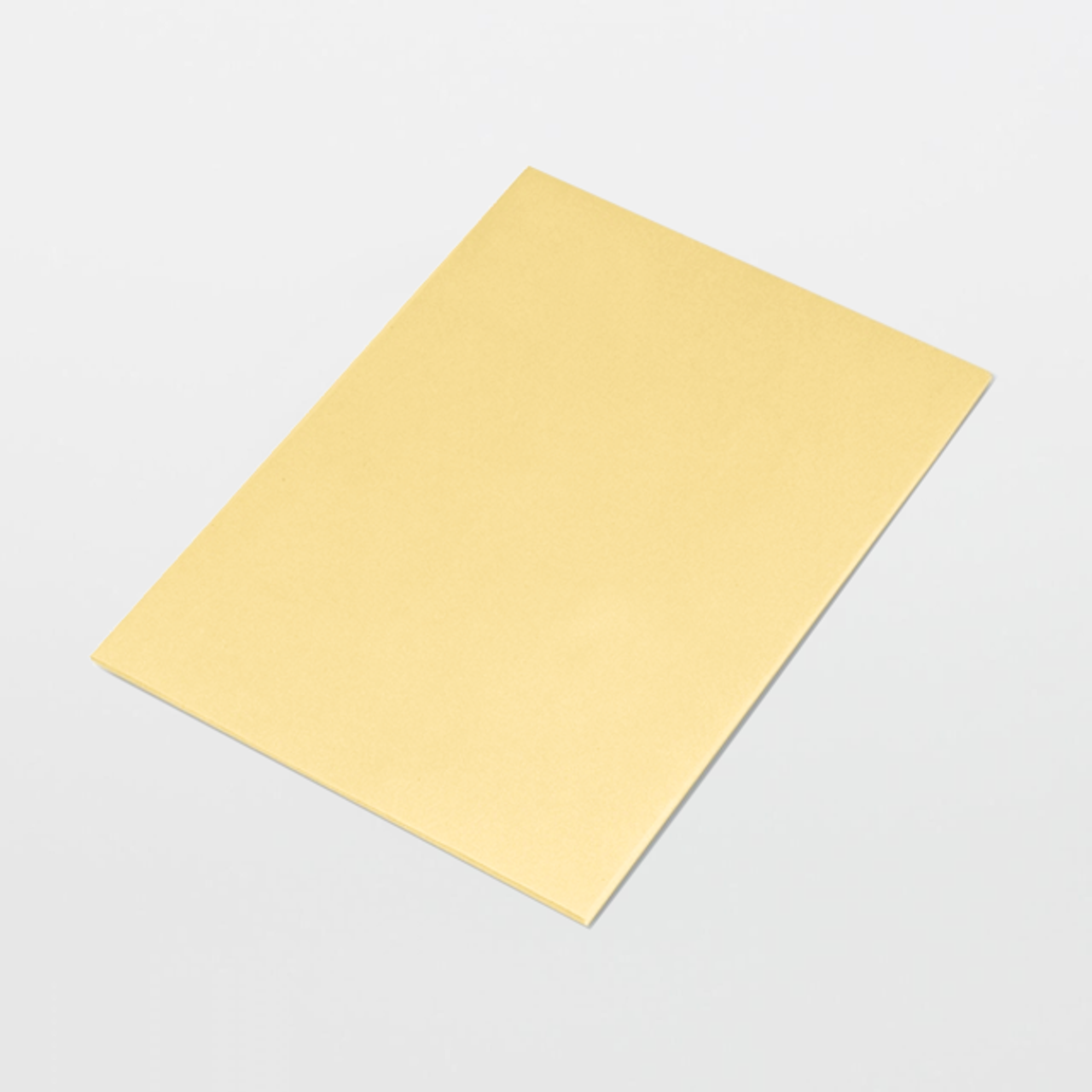
Texwipe TX5814 TexWrite Medium Weight 8.5" x 11" Yellow Cleanroom Paper

$238.56
(No reviews yet)
SKU:
TX5814
Availability:
7 - 10 Business Days
Shipping:
Calculated at Checkout
Quantity Option (Case):
10 Packs Per Case (250 Sheets Per Pack)
Texwipe TX5814 TexWrite® 22 Cleanroom Bond Paper — 8.5" x 11", Yellow, Medium-Weight Loose Sheets (22 lb)
TX5814 is Texwipe’s TexWrite® 22 cleanroom bond paper in yellow for rapid visual control (shift/area/project differentiation) while keeping documentation materials aligned to controlled-environment expectations. It is reinforced with a synthetic copolymer and is designed to reduce particle generation associated with standard office paper when technicians are printing, copying, recording data, and moving documents through airflow in ISO-controlled spaces. Manufacturer literature also notes the formulation avoids inorganic fillers (commonly used to increase opacity) that may contribute to ionic contamination risk in critical environments.

For over 35 years, SOS and Texwipe have been close partners, and SOSCleanroom is the authorized Master Distributor of ITW Texwipe for the United States market. That relationship supports continuity of supply, consistent product lineage, and dependable access to current manufacturer documentation for qualification packets, investigations, and audits.

Published configuration (TX5814)
  • Sheet size: 8.5" x 11" (21.6 cm x 28 cm)
  • Color: Yellow
  • Basis weight: 22 lb (TexWrite® 22 family)
  • Format: Loose sheets, unlined
  • Material/structure: Cellulose paper with polymer reinforcement (synthetic copolymer)
  • Packaging (case): 250 sheets/pack; 10 packs/box (2,500 sheets per case)
  • SOSCleanroom ship weight (case): 28.00 lbs
  • Cleanroom environment: ISO Class 3–8; (legacy) Class 1–100,000; EU Grade A–D
  • Autoclavable: Yes (see manufacturer autoclaving guidance/TechNotes referenced on the TDS)
  • Country of origin: Made in USA
Low particle and fiber generation — and the reality check
TX5814 is designed to reduce particle generation versus standard paper. Even so, no paper product is truly “lint-free.” The cleanroom outcome depends on handling discipline: minimizing abrasion, avoiding rapid fanning of sheets, and keeping paper out of first-air near exposed critical surfaces.

Where technicians and engineers use TX5814
  • Controlled documentation: work instructions, checklists, log sheets, forms, and batch/lot data capture.
  • Color-coded control for shifts, areas, projects, or special handling workflows.
  • Printing and copying in standard-duty and high-speed laser printers and photocopiers (manufacturer-published use case).
  • Offset printing, manuals, and controlled data transfer where page quality and edge precision matter.

Compatibility notes (wipe-down tolerance and sterilization)
  • Autoclave use: TX5814 is published as autoclavable. In regulated programs, qualify under your exact cycle (temperature, time, packaging configuration, and post-cycle handling) and validate that readability/handling characteristics remain acceptable after sterilization.
  • IPA / solvent wipe-down of loose sheets: Paper wipe-down tolerance is not stated as a product spec. As a practical contamination control, avoid wiping loose sheets with IPA/solvents. Solvent contact can drive tide marks, curl, residue rings, toner offset, and elevated paper dusting after dry-down.
  • DI water / aqueous contact: Not stated as a spec. If contact is unavoidable, validate for curl, edge wicking, fiber release, and print stability before standardizing.

Particle-shedding risk management
  • Keep packs sealed until point of use: Stage only the shift quantity; keep the remainder sealed to reduce handling abrasion and airborne deposition.
  • Avoid fanning sheets: Fanning near airflow can release particles and pull fines onto the sheet surface. Separate sheets slowly and deliberately.
  • Control the document zone: Use a dedicated clean writing/printing staging surface (tray/clipboard) rather than process benches where residues transfer easily.
  • Glove moisture control: Keep solvent-wet gloves away from paper. Solvent carryover is a common root cause for smearing, residue transfer, and toner/ink offset.
  • Static discipline: In low humidity, paper can attract fines. Store flat and closed; avoid rubbing sheets against garments during transport.

Printer/copier setup guidance (reduce jams and contamination)
  • Load from sealed packs: Open packs only when loading to reduce humidity effects and surface deposition.
  • Keep trays and rollers clean: Dirty pickup rollers can transfer residue and shed debris onto sheets. Clean per your site SOP before loading cleanroom paper.
  • Do not overfill: Overfilled trays increase edge scuffing and curl—both increase paper dusting and jam risk.
  • Allow print cool-down: Let toner cool/set before stacking or inserting into binders to reduce offset transfer and smearing.

Typical performance characteristics
Values below are published as typical analyses (not specifications). Use them for qualification planning and contamination-risk reviews.
Property Typical value (TexWrite® 22) Test method (as published)
Basis weight 80 g/m² TM2
Caliper 5.0 mil (Not stated)
Tensile strength (machine direction) 5.3 kg Federal Standard No. 191A: Methods 5102
Tensile strength (cross direction) 4.5 kg Federal Standard No. 191A: Methods 5102
Tear strength (machine direction) 78 g Elmendorf tear test
Tear strength (cross direction) 79 g Elmendorf tear test
Opacity 74% TAPPI T-425
Surface resistivity (55% RH) 2.6 x 10⁹ ohms (also shown as 2.6 x 10¹⁰ ohms/sq) TM14 (adapted from EOS/ESD-S11.11-1993)

Typical contamination characteristics (manufacturer data)
Property Typical value (TexWrite® 22) Test method (as published)
Particles (>0.5 µm) 4.8 million particles/m² TM5 (minimal stress release)
Sodium 85 ppm TM12 (Capillary Ion Analysis)
Chloride 50 ppm TM12 (Capillary Ion Analysis)

Common failure modes 
  • Smearing / offset transfer: Usually from solvent-wet gloves, wet benches, or stacking before toner cool-down. Prevent with glove moisture control, a dedicated dry document zone, and a consistent print-to-cool cadence.
  • Paper dusting (particle shedding): Driven by abrasion (edge scuffing, aggressive separation, rubbing pages on benches). Prevent by slow separation, flat transport, and keeping packs sealed until needed.
  • Residue rings / tide marks: Typically from IPA/DI water contact. Prevent by avoiding wipe-down of loose sheets; validate if contact cannot be avoided.
  • Static attraction: Fine particles cling in low humidity. Prevent with closed storage, minimal rubbing during transport, and adherence to site ESD/environmental controls.
  • Jams / curl: Often from humidity swings and overfilled trays. Prevent by loading from sealed packs, keeping trays clean, and avoiding overfill.

Storage and handling best practices
  • Store packs flat in original cleanroom packaging; open only at point of use.
  • Segregate cleanroom paper from general office paper to prevent uncontrolled stationery sources entering the area.
  • Stage paper in closed bins/drawers rather than open shelving near returns and high-traffic airflow.
  • If documents are part of controlled records, standardize printer model/settings and define a quick verification check (legibility, toner adhesion, no offset transfer after cool-down).

Why teams source TX5814 through SOSCleanroom
  • Program continuity: Documentation materials are inputs to controlled processes. SOSCleanroom’s long-term Texwipe partnership helps teams avoid last-minute substitutions that trigger re-qualification churn.
  • Documentation discipline: Rapid access to current manufacturer TDS materials supports validations, deviations, and audit responses.
  • Known case configuration: Consistent pack/case quantities support stable kanban and replenishment planning for controlled areas.
Documentation
SOS-hosted ITW Texwipe datasheet PDF (DS-5812, Effective: December 2009; includes TX5814): Click Here
Texwipe manufacturer page (TX5814): Click Here
Texwipe Technical Data Sheet PDF (TexWrite® Loose Leaf Sheets; US-TDS-043 REV. 2/23): Click Here
If you have any questions please email us at Sales@SOSsupply.com or give us a call at (214)340-8574.
 
Check out the AI ChatBot powered by SOSCleanroom data libraries - give it a try!
 
THIS IS NEW FOR 2026!

© 2026 SOS Supply. All rights reserved.
The Technical Vault
By SOSCleanroom
TexWrite® 22 • Medium-weight (22#) ISO Class 3–8 environment guidance (manufacturer-stated) Laser/photocopier compatible Yellow for line/area identification
Texwipe TX5814 TexWrite® 22 Yellow Cleanroom Paper — controlled documentation without “office-paper” contamination risk
For over 35 years, SOS and Texwipe have been close partners, and SOSCleanroom is the authorized Master Distributor of ITW Texwipe for the United States market.
Texwipe TX5814 TexWrite 22 Yellow Cleanroom Paper
Texwipe TX5814 (TexWrite® 22) — 8.5" x 11" yellow loose sheets
1) Practical solutions in a critical environment

Standard office bond can shed fibers, generate particles at cut edges, and contribute trace ionic residues. TX5814 is positioned for controlled documentation where you still need day-to-day writing, printing, and recordkeeping, but cannot tolerate the typical fallout of office-paper handling.

In practice, TX5814 is often used to keep process travelers, line-clearance checklists, equipment logs, and batch-adjacent notes inside the same discipline as your wiping and gowning program.

2) What this product is used for
  • Cleanroom manuals, work instructions, and controlled copies printed for point-of-use.
  • Batch record support documents, line clearance forms, and equipment status sheets.
  • Engineering notes, shift handoff documentation, and deviation support notes.
  • Color-coded segregation (yellow) for area ownership, shift separation, or project/lot identification.
  • Standard-duty and high-speed laser printers and photocopiers (manufacturer-stated).
3) Why customers consider this product
  • Reduced particle-generation risk vs. standard paper: reinforced with a synthetic copolymer and engineered for cleanroom handling.
  • Ionic contamination control: formulated without inorganic fillers such as calcium carbonate, titanium dioxide, or aluminum silicate (manufacturer-stated).
  • Printer performance: good strength, heat resistance, laser/photocopier compatibility, and excellent toner adhesion (manufacturer-stated).
  • Latex-risk reduction: no natural latex binders (manufacturer-stated).
  • Color control: yellow sheets make it easier to visually confirm controlled paper is in use at point-of-use.
4) Materials, composition, and build

Material/structure: cellulose paper with a polymer reinforcement. Reinforced with a synthetic copolymer and formulated without inorganic fillers that can be a source of ionic contamination. Sheets are described as precision-cut and cleanroom packaged.

5) Specifications in context
Attribute TX5814 (TexWrite® 22, Yellow)
FormatLoose sheets
Sheet size8.5" x 11" (21.6 cm x 28 cm)
ColorYellow
Basis weight80 g/m² / 22# (manufacturer-stated)
Caliper (typical)5.0 mil
Opacity (typical)74%
Surface resistivity (typical)2.6 x 10⁹ ohms (2.6 x 10¹⁰ ohms/sq), TM14 at 55% RH
Tensile strength (typical)Machine direction 5.3 kg; cross direction 4.5 kg
Tear strength (typical)Machine direction 78 g; cross direction 79 g
Sheets per inner pack250 sheets/pack
Packs per case10 packs/box (case)
Total sheets per case2,500 sheets
AutoclavableYes (manufacturer-stated; qualify your cycle)
Cleanroom environment guidanceISO Class 3–8; Class 1–100,000; EU Grade A–D (manufacturer-stated)
Shipping weight28.00 lbs (case)
SterilityNot stated in source basis
Lined vs unlinedUnlined (manufacturer-stated)
6) Performance and cleanliness considerations

TX5814 addresses typical stationery failure modes through polymer reinforcement, precision cutting, and a contamination-focused formulation.

Typical contamination and performance data (TexWrite® 22):
  • Particles (>0.5 µm): 4.8 million particles/m² (typical)
  • Ions (typical): Sodium 85 ppm; Chloride 50 ppm
  • Heat resistance/toner behavior: manufacturer states excellent toner adhesion and heat resistance for laser printers and photocopiers
  • Surface resistivity: typical value published; treat as a material characteristic, not a guarantee of static-control performance in your full ESD program
  • Duplex readability: manufacturer states high opacity positioning for duplex writing/printing (confirm against your printer/ink and document requirements)

Note on extractables/outgassing: detailed VOC/outgassing values are not published in the listed source basis. If outgassing is critical, treat paper as a controlled material and confirm suitability through your internal qualification.

7) Packaging, sterility, traceability, and country of origin
  • Inner packaging: 250 sheets/pack
  • Case packaging: 10 packs/box, 2,500 sheets total; cleanroom packaged
  • Sterility: not stated in source basis
  • Traceability / COA / COC: not stated in source basis; request through your purchasing/QA workflow as required
  • Country of origin: Made in USA
8) Best-practice use
  • Control the point-of-use: keep packs closed until needed; stage only what the shift needs.
  • Glove discipline: handle with clean gloves; avoid pinch-peel separation that stresses edges.
  • Printer hygiene: cleanroom paper is only as clean as the tray it runs through.
  • Ink and marker verification: IPA/ethanol resistance for specific inks is not stated in the source basis—qualify your pen/marker combo.
  • Autoclaving: confirm cycle parameters and post-cycle legibility/flatness as part of your internal method qualification.
  • Documentation control: define what “yellow paper” means so color helps audits instead of confusing them.
9) Common failure modes
  • Smearing or delayed dry time: usually a pen/marker issue; qualify the instrument and control dwell time.
  • Toner flake or poor adhesion: confirm printer fuser settings and paper path cleanliness.
  • Curling/warping after autoclave: verify your cycle and cool-down approach.
  • Edge debris from rough handling: train gentle separation and clean staging.
  • Loss of traceability: color-coded paper only helps if your document control program defines how it is used.
10) Closest competitors
  • Berkshire — Berkshire Bond® Medium Weight Paper (Yellow/Case), BB85081110C (85 g/m², 8.5" x 11", 250 sheets/pack, 10 packs/case).
  • Contec — CONTEXT® cleanroom paper (yellow formats; confirm polymer formulation, cleanliness metrics, and packaging).
11) Critical environment fit for this product

Manufacturer-stated guidance lists ISO Class 3–8 (also Class 1–100,000 and EU Grade A–D). Use the published typical particle/ion data as a starting point, then confirm acceptance criteria through internal qualification.

12) SOSCleanroom note about SOPs

The Technical Vault is written to help customers make informed contamination-control decisions and improve day-to-day handling technique. It is not your facility’s Standard Operating Procedure (SOP), batch record, or validation protocol.

Customers are responsible for establishing, training, and enforcing SOPs that fit their specific risks, products, equipment, cleanroom classification, and regulatory obligations. Always confirm material compatibility, cleanliness suitability, sterility requirements, and acceptance criteria using your internal quality system and documented methods.

If you adapt any technique guidance from this entry, treat it as a starting template. Your team should review and approve the final method, then qualify it for your specific surfaces, solvents, cleanliness limits, inspection methods, and risk profile.

13) Source basis
SOSCleanroom is the source for this Technical Vault entry.
Briefed and approved by the SOSCleanroom (SOS) staff.
If you have any questions please email us at Sales@SOSsupply.com
Or give us a call at (214)340-8574.
If you need additional information please try our SOSCleanroom specific AI ChatBot which draws from our extensive cleanroom specific libraries.
Last reviewed: May 4, 2026
© 2026 SOSCleanroom