Product image shown from the SOSCleanroom listing.
1) Practical solutions in a critical environment
Paper can be a quiet contamination source in controlled environments. Conventional bond paper can shed particles and fibers at the edges, generate paper dust during
printer feeding, and carry higher ionic contributors from fillers. TX5815 is positioned for documentation work where you still need day-to-day usability (printing,
copying, manual markups), but want a cleaner, more consistent sheet for controlled handling.
Practical reality: no paper is truly “lint-free.” The goal is reduced particle and fiber generation, controlled composition (no inorganic fillers called out by the manufacturer),
and predictable behavior in printers and photocopiers so documentation does not become a contamination event.
2) What this product is used for
- Printing and copying in controlled environments (standard-duty and high-speed laser printers and photocopiers).
- Cleanroom manuals, work instructions, travelers, batch documentation inserts, and controlled reference sheets.
- Offset printing workflows where a cleaner substrate is required (manufacturer-stated application).
- General note taking and data transfer inside controlled environments, including facilities and maintenance documentation.
3) Why customers consider this product
- Formulated without inorganic fillers (e.g., calcium carbonate, titanium dioxide, aluminum silicate), reducing a common driver of ionic contamination.
- Synthetic copolymer reinforcement intended to reduce particle generation versus standard bond paper.
- Heat resistance and toner adhesion intended for dependable print quality and fewer smudge-related handling failures.
- Precision-cut edges and dimensional stability supporting cleaner handling and clearer reproductions.
- Autoclavable (manufacturer states autoclavable guidance; qualification remains the customer’s responsibility).
4) Materials, composition, and build
TX5815 is a cellulose-based bond paper with a polymer reinforcement (TexWrite® 22). Texwipe describes the reinforcement as a synthetic copolymer saturant that
helps reduce particle generation. The manufacturer also states the product is formulated without inorganic fillers that can contribute to ionic contamination and that
it contains no natural latex binders.
Handling cue that matters in the cleanroom: edge quality drives fallout. Precision-cut edges reduce the “paper fuzz” you can see under bench lighting when stacks are
repeatedly picked, shuffled, or loaded into trays. If you see feathering on edges after rough handling (drops, compression, aggressive fan-out), treat that stack as a higher-risk source.
5) Specifications in context
This table consolidates published attributes for TX5815 from the SOSCleanroom listing and Texwipe technical data sheet. If a detail is not explicitly stated in the source basis, it is marked as not published.
| Attribute |
TX5815 |
| Manufacturer / brand |
ITW Texwipe (TexWrite®) |
| Paper grade / weight class |
TexWrite® 22 (22#, medium-weight) |
| Sheet size |
8.5" x 11" (21.6 cm x 28 cm) |
| Color |
White |
| Sheet type |
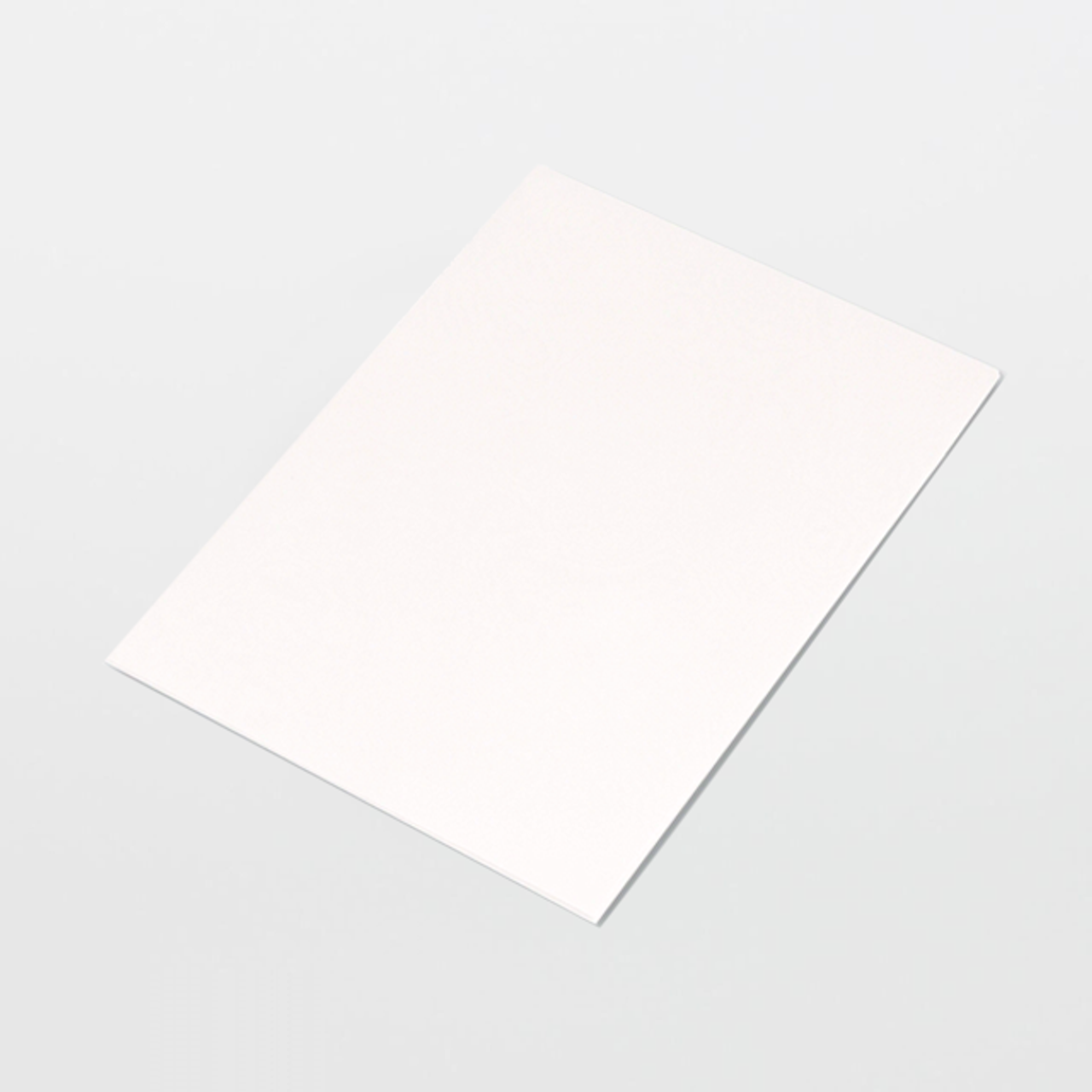
Loose leaf sheets (unlined; not punched) |
| Material / structure |
Cellulose paper with a polymer reinforcement (synthetic copolymer saturant) |
| Basis weight (typical) |
80 g/m² (typical) |
| Caliper (typical) |
5.0 mil (typical) |
| Opacity (typical) |
74% (typical) |
| Surface resistivity (typical) |
2.6 x 10⁹ ohms (2.6 x 10¹⁰ ohms/sq), TM14 at 55% RH (typical) |
| Cleanroom environment guidance |
ISO Class 3–8; Class 1–100,000; EU Grade A–D |
| Packaging |
250 sheets/pack; 10 packs/case; 2,500 sheets total |
| Autoclave guidance |
Autoclavable (manufacturer states; see note in Texwipe TDS referencing autoclaving guidance) |
| Sterility |
Not published (no sterile designation stated in the source basis) |
| Country of origin |
Made in USA |
6) Performance and cleanliness considerations
With cleanroom paper, failures usually show up as particles and fibers at sheet edges, paper dust from feeding, smearing or offset of toner, and unexpected ionic contributions
when sheets contact wet gloves, damp benches, or disinfected surfaces. Texwipe publishes typical contamination characteristics for TexWrite® 22 sheets as representative analyses (not specifications).
Typical cleanliness indicators (published as typical, not specifications)
| Metric |
Typical value |
Referenced test method |
| Particles (> 0.5 µm) |
4.8 million particles/m² |
Texwipe TM5 (minimal-stress release method) |
| Sodium (ion extractable) |
85 ppm |
Texwipe TM12 (capillary ion analysis) |
| Chloride (ion extractable) |
50 ppm |
Texwipe TM12 (capillary ion analysis) |
Note: Texwipe states these values represent typical analyses and are not specifications; processes and products may be refined over time.
ESD handling note: the technical data sheet lists a typical surface resistivity value for TexWrite® papers under a defined humidity condition. This is a published measurement,
not a blanket claim that the paper is “dissipative” or “conductive,” and it should not replace your facility’s ESD program criteria. If your documentation is used at an ESD-protected workstation,
align paper selection to your internal ESD controls and qualification expectations.
7) Packaging, sterility, traceability, and country of origin
- Packaging: 250 sheets per pack; 10 packs per case; 2,500 sheets total.
- Cleanroom packaged: manufacturer states cleanroom packaged (maintain packaging integrity until point of use).
- Sterility: not published (no sterile designation stated in the source basis).
- Autoclave: manufacturer states autoclavable; treat this as a controlled activity—validate print/toner behavior, curl, and legibility after the cycle used in your facility.
- Country of origin: Made in USA (published).
Traceability note: lot-level documentation or COA availability is not stated in the source basis for this item. If your quality system requires incoming verification beyond packaging count and visual condition,
request documentation expectations at the time of procurement and match them to your receiving SOP.
8) Best-practice use
- Control the printer, not just the paper: keep feed trays clean, avoid overfilled trays, and prevent paper dust buildup inside the printer that can redeposit onto sheets.
- Minimize fan-out and rough shuffling: aggressive “fanning” and repeated edge tapping can increase edge fallout. Separate sheets deliberately, then stage them in a clean document tray.
- Let toner set before handling: heat-resistant paper supports printing, but smear risk is still driven by toner type, printer settings, and immediate stacking. Allow a short cool/set time before stacking, hole-punching, or binding.
- Define where paper can be placed: create a “documentation zone” on carts and benches (clean tray or binder) so sheets do not contact wet wipe areas, disinfectant overspray, or chemical splash zones.
- If autoclaving is used: qualify the full chain (paper + print method + binder/clip + labeling) and confirm legibility, curl, and handling debris after the exact cycle your facility uses.
9) Common failure modes
- Printer dust and redeposition: a clean paper can still exit a dirty printer with contamination on the sheet surface or edges.
- Smearing and offset transfer: rushed stacking or immediate page-to-page contact can transfer toner/ink; this can become glove-to-surface transfer if handled quickly.
- Edge fuzz from rough handling: dropping packs, compressing stacks, or repeated aggressive shuffling can increase edge debris and visible “paper fuzz.”
- Autoclave-driven distortion: curling, waviness, or loss of print sharpness can occur if cycle conditions are not matched to the paper/print method; this is why qualification is essential even when “autoclavable” is published.
10) Closest competitors
Customers most often compare TX5815 to other controlled-environment documentation papers designed to reduce particle and fiber generation versus standard bond.
Two common comparison families are Micronova cleanroom paper programs and Berkshire cleanroom documentation papers.
Within the Texwipe line, a practical comparator is heavier-weight TexWrite® sheets (e.g., 30# options) when stiffness and show-through matter, or 100% synthetic sheet programs when cellulose contamination must be avoided.
Final selection should be driven by your documentation workflow (printing speed, duplex needs, handling frequency) and the contamination sensitivity of the area where paper will be staged and handled.
11) Critical environment fit for this product
Texwipe lists TexWrite® loose leaf sheets for use in ISO Class 3–8 environments (and also references Class 1–100,000 and EU Grade A–D). This aligns with facilities, lab,
and production documentation where paper is necessary but must be managed as a controlled material rather than a general office supply.
For over 35 years, SOS and Texwipe have been close partners, and SOSCleanroom is the authorized Master Distributor of ITW Texwipe for the United States market.
For documentation programs that standardize forms and instructions across multiple areas, that relationship supports continuity of supply and consistent product support expectations.
12) SOSCleanroom note about SOP's
The Technical Vault is written to help customers make informed contamination-control decisions and improve day-to-day handling technique.
It is not your facility’s Standard Operating Procedure (SOP), batch record, or validation protocol.
Customers are responsible for establishing, training, and enforcing SOPs that fit their specific risks, products, equipment, cleanroom classification, and regulatory obligations.
Always confirm material compatibility, cleanliness suitability, sterility requirements, and acceptance criteria using your internal quality system and documented methods.
If you adapt any technique guidance from this entry, treat it as a starting template. Your team should review and approve the final method, then qualify it for your specific surfaces,
solvents, cleanliness limits, inspection methods, and risk profile. In short: use these best-practice suggestions to strengthen your SOPs—not to replace them.
13) Source basis
- SOSCleanroom product page (TX5815): https://www.soscleanroom.com/product/facilities/texwipe-tx5815-texwrite-medium-weight-8-5-x-11-white-cleanroom-paper/
- Manufacturer product page (Texwipe TX5815): https://www.texwipe.com/texwrite-22-tx5815
- SOS-hosted PDF copy (ITW Texwipe datasheet covering TX5815 and related TexWrite® 22 sheets): https://www.soscleanroom.com/content/texwipe_pdf/5812%208515%205814%205831%205816%205916.pdf
- Texwipe technical data sheet PDF (TexWrite® Loose Leaf Sheets, US-TDS-043 Rev. 2/23): https://www.texwipe.com/images/uploaded/documents/Paper/TDS_TexWrite18%2C22%2C30_CuR4.pdf
- ISO: https://www.iso.org/standard/53394.html
- FDA: https://www.fda.gov/
- ASTM: https://www.astm.org/
- IEST: https://www.iest.org/
SOSCleanroom is the source for this Technical Vault entry.
Briefed and approved by the SOSCleanroom (SOS) staff.
If you have any questions please email us at Sales@SOSsupply.com
Last reviewed: Jan. 8, 2026
© 2026 SOSCleanroom