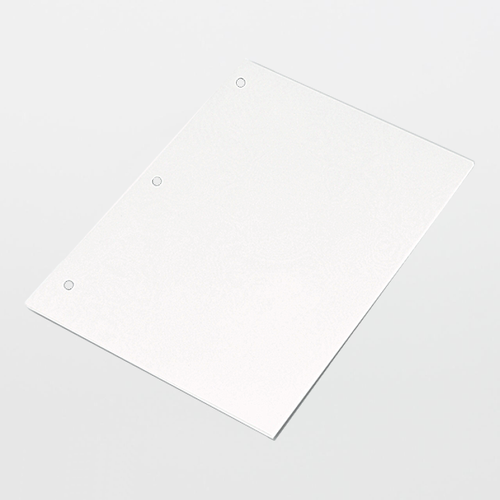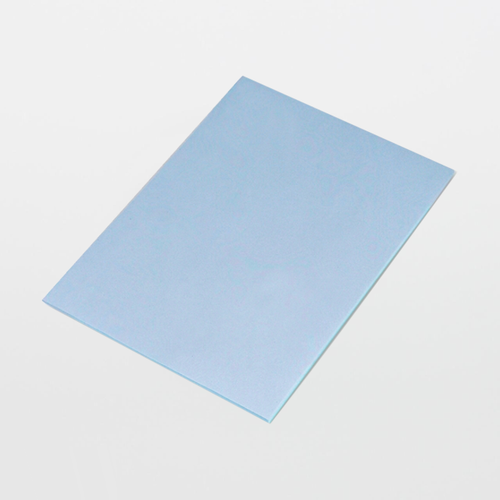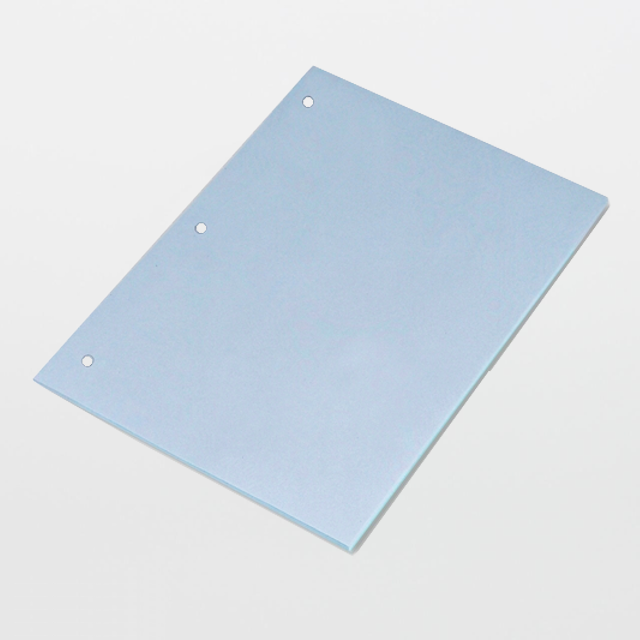
Texwipe TX5816 TexWrite Medium-Weight 8.5" x 11" Blue Cleanroom Paper 3-Hole Punched

$254.73
(No reviews yet)
SKU:
TX5816
Availability:
7 - 10 Business Days
Shipping:
Calculated at Checkout
Quantity Option (Case):
10 Packs Per Case (250 Sheets Per Pack)
Texwipe TX5816 TexWrite® 22 Cleanroom Paper — 8.5" x 11", Blue, 3-Hole Punched (Binder-Ready)
TX5816 TexWrite® 22 is a medium-weight cleanroom bond paper engineered to reduce the particle-generation risk associated with standard office papers while remaining practical for real documentation work inside controlled environments. It is impregnated with a synthetic copolymer and formulated without organic fillers to help reduce ionic contamination contributors commonly associated with conventional paper grades.

The 3-hole punched format is purpose-built for controlled binders, batch records, travelers, work instructions, maintenance logs, and document control packets that must stay inside the classified space without introducing uncontrolled paper dusting or inconsistent paper sources.

For over 35 years, SOS and Texwipe have been close partners, and SOSCleanroom is the authorized Master Distributor of ITW Texwipe for the United States market. That relationship supports continuity of supply and dependable access to manufacturer documentation when cleanroom stationery is part of a qualified documentation program.

Where technicians and engineers use TX5816
  • Controlled binders for batch records, travelers, and WIP packets (hole-punched for direct ring insertion).
  • Cleanroom manuals, work instructions, shift handoffs, and controlled forms that must remain in-room.
  • Laser printer and photocopier output for documentation packets requiring clear reproduction and stable handling.
  • Offset printing for pre-printed controlled documents and forms.
  • Color-coding (blue) to visually distinguish cleanroom documents by area, shift, or project.
Cleanroom paper still requires handling discipline
Most “paper incidents” are operational: aggressive sheet fanning in airflow, dragging edges across benches/carts, stacking freshly printed sheets before toner fully sets, and inserting sheets into binders with glove-wet solvent residue. TX5816 is designed to reduce risk versus standard paper, but contamination control still depends on staging and handling discipline.

Published configuration (accuracy-first)
  • SKU: TX5816
  • Sheet size: 8.5" x 11" (21.6 cm x 28 cm)
  • Color: Blue
  • Format: Loose sheets, unlined, 3-hole punched
  • Material/structure: Cellulose paper with polymer reinforcement (synthetic copolymer saturant)
  • Cleanroom environment: ISO Class 3–8 (Class 1–100,000); EU Grade A–D
  • Autoclave: Autoclavable (qualify your cycle and post-cycle legibility requirements)
  • Packaging: 10 packs per case; 250 sheets per pack (2,500 sheets total)
  • SOSCleanroom availability: 7 - 10 Business Days
  • SOSCleanroom listed weight: 29.00 LBS

Key design features
  • Formulated without organic fillers to help reduce ionic contamination contributors commonly associated with conventional paper fillers.
  • No natural latex binders (supports facilities managing latex-associated reaction risk).
  • High strength and excellent heat resistance for standard-duty and high-speed laser printers and photocopiers.
  • Excellent toner adhesion; designed for clear reproductions.
  • Cleanroom packaged; precision-cut edges; dimensionally stable for reproduction quality.

Typical performance and contamination characteristics
The values below are published as typical analyses for TexWrite® 22. Use them for risk assessment and qualification planning, not as acceptance criteria.
Property Typical value Why it matters on the floor
Basis weight 80 g/m² Predicts handling durability and how the sheet behaves in high-speed feeders and binders.
Caliper 5.0 mil Affects stiffness, curl sensitivity, and how sheets stack inside controlled packets.
Opacity 74% Helps with readability and reduces show-through versus uncontrolled papers.
Surface resistivity (TM14 @ 55% RH) 2.6 × 10⁹ ohms (2.6 × 10¹⁰ ohms/sq) Context for static behavior and fines attraction risk in low-humidity areas.
Particles (>0.5 µm) 4.8 million particles/m² Sets expectations for paper dusting risk management compared with uncontrolled paper sources.
Ion extractables: Sodium 85 ppm Relevant for ionic contribution reviews in sensitive processes and residue control programs.
Ion extractables: Chloride 50 ppm Relevant when chloride sensitivity is part of contamination risk assessment.

Compatibility notes (printers, binders, IPA/DI wipe-down tolerance)
  • Laser printers/copiers (documented): Designed for excellent toner adhesion and heat resistance; intended for standard-duty and high-speed laser printers and photocopiers.
  • Offset printing (documented): Suitable for offset printing workflows.
  • 3-hole punched binder use (operational): Insert slowly and avoid scraping holes on ring edges. If your binder rings are burred or contaminated, they can abrade hole edges and drive dusting.
  • IPA wipe-down tolerance (not stated as a pass/fail spec): IPA wipe-down tolerance of the paper and of printed toner/ink is not published as a formal specification. If paperwork is disinfected during transfer, qualify legibility, toner offset risk, and residue under your actual solvent strength, contact time, and wipe practice.
  • DI/water wipe-down tolerance (not stated as a pass/fail spec): DI wipe-down tolerance is not published. If aqueous wipe-down is required, validate for swelling/curl, feathering, and ink/toner transfer after dry-down.
Practical cleanroom tactic: protect paperwork instead of wiping it
If your transfer process includes IPA or disinfectant contact, a common control is to use a clean document sleeve or controlled transfer pouch so the paper itself is not wiped. This reduces smearing, toner offset, and residue “tide marks” that can compromise legibility and documentation integrity.

Particle-shedding risk management
  • Keep packs sealed until needed: Open only what the shift requires. Exposed stacks collect airborne deposition and scuff at edges and holes.
  • Avoid sheet fanning in airflow: Separate sheets slowly; rapid fanning increases abrasion and can mobilize fines.
  • Control binder hardware condition: Damaged rings and gritty mechanisms can abrade hole edges. Assign binders to zones and clean/replace them as part of document control maintenance.
  • Stage printed output correctly: Let toner cool/set before stacking under pressure to reduce offset and smearing.
  • Document zone discipline: Keep paperwork out of first-air over open product. Use a dedicated documentation station or writing board.
  • Glove moisture control: Do not handle sheets with solvent-wet gloves; wet handling drives smearing, residue rings, and sheet-to-sheet adhesion.

Common failure modes
  • Toner offset / smearing: Usually caused by stacking too soon, high stack pressure, or solvent contact. Mitigation: cool-down time, controlled staging, and qualification of any wipe-down/transfer step.
  • Hole-edge dusting and tearing: Triggered by rapid ring insertion/removal, overstuffed binders, or damaged rings. Mitigation: reduce ring friction, avoid overfilling binders, and replace worn hardware.
  • Paper dusting from abrasion: Dragging sheets across rough benches/carts or sliding stacks. Mitigation: lift rather than slide; stage on clean writing boards; keep packets in sleeves.
  • Ink transfer: Typically from non-qualified pens/markers, heavy writing pressure, or early stacking. Mitigation: standardize writing instruments and enforce dry-time discipline.
  • Residue/tide marks: Caused by droplets of IPA/disinfectant drying on the sheet. Mitigation: protect documents during transfer; avoid wiping the paper directly unless validated.
  • Static attraction: In low humidity, sheets can attract fines. Mitigation: closed storage, reduced rubbing, and adherence to facility ESD/environment controls.

Storage and handling best practices
  • Store packs flat in original packaging; keep in closed drawers/bins rather than open shelving near traffic and returns.
  • Segregate cleanroom paper from office paper to prevent accidental substitution and uncontrolled sources entering the classified area.
  • If used for controlled records, standardize printer settings and acceptance checks (legibility, no offset after cool-down, consistent reproduction).
  • Maintain binder hygiene: assign binders to zones, inspect rings/mechanisms, and clean/replace as needed.
Documentation
SOS-hosted ITW Texwipe datasheet PDF (TexWrite® 22, DS-5812 family, Effective: December 2009): Click Here
Texwipe manufacturer page (TX5816): Click Here
Texwipe Technical Data Sheet PDF (TexWrite® Loose Leaf Sheets, US-TDS-043 REV. 2/23): Click Here
If you have any questions please email us at Sales@SOSsupply.com or give us a call at (214)340-8574.

OR check out the AI ChatBot powered by SOSCleanroom data libraries - give it a try!

THIS IS NEW FOR 2026!

© 2026 SOS Supply. All rights reserved.
The Technical Vault
By SOSCleanroom
TexWrite® 22 • TX5816
3-hole punched for binders
Cleanroom packaged
Made in USA (per Texwipe TDS)
Binder-ready cleanroom documentation sheets that reduce paper-driven particles and ionic contributors in controlled environments
Texwipe TX5816 TexWrite 22, 8.5 x 11 in, blue, 3-hole punched cleanroom paper
TX5816 (TexWrite® 22) — blue 8.5" x 11" loose sheets with 3-hole punch for controlled-document binders.
Practical solutions in a critical environment

If your line relies on travelers, batch records, equipment logs, and controlled binders at point-of-use, “regular office paper” becomes a contamination source: fibers, dusting at cut edges, toner flake, and ionic contributors that show up later as corrosion risk or surface residues. TX5816 is designed as a cleanroom documentation sheet for situations where you want binder-ready pages without punching in-house (and without introducing loose chads into gowning areas, pass-throughs, or workstations).

This is especially relevant for document sets that live on stainless carts, inside laminar flow hoods, or in tool cribs where pages are frequently turned, removed, and reinserted.

What this product is used for
  • Controlled binders for SOPs, maintenance logs, calibration records, and equipment history kept near the process.
  • Traveler packets and batch record inserts where 3-hole punch alignment matters for clean, repeatable binder handling.
  • Cleanroom manuals, work instructions, and shift handoff documentation where color-coding helps segregate projects/areas.
  • Printing and copying in standard-duty and high-speed laser printers and photocopiers (per manufacturer guidance).
  • Offset printing and note taking for controlled environments where paper cleanliness consistency is part of the contamination-control plan.
Why customers consider this product
  • Binder-ready without in-house punching. Eliminates paper chads and edge damage that often show up as “mystery debris” during line clearance.
  • Designed to reduce paper shedding versus conventional bond. TexWrite® 22 is engineered for controlled documentation use.
  • Printer/copier compatibility. Strong heat resistance and toner adhesion for laser printing and photocopying (manufacturer-stated).
  • Color discipline for document control. Blue sheets help clearly flag cleanroom-controlled documents or separate areas/shifts/projects.
  • Continuity and documentation discipline. For over 35 years, SOS and Texwipe have been close partners, and SOSCleanroom is the authorized Master Distributor of ITW Texwipe for the United States market.
  • Made in USA (per Texwipe TDS).
Materials, composition, and build

TX5816 is a cellulose paper with a polymer reinforcement (manufacturer description). Formulated without inorganic fillers such as calcium carbonate, titanium dioxide, or aluminum silicate (manufacturer-stated). The polymer reinforcement is latex-free with “no natural latex binders” for the TexWrite® 22 line.

These sheets are intended to behave more consistently under typical documentation handling—page turning, binder insertion/removal, printing/copying—while reducing dusting at edges and minimizing the “powdery” feel that office bond can develop after repeated handling in low-humidity rooms.

Specifications in context

Values below are taken from SOSCleanroom and Texwipe sources. Where a value is a “typical analysis,” treat it as a benchmarking input, not a guaranteed specification.

Attribute TX5816 (SKU)
Product typeTexWrite® 22 cleanroom loose sheets, 3-hole punched
Sheet size8.5" x 11" (21.6 cm x 28 cm)
ColorBlue
RulingUnlined (manufacturer)
Basis weight / grade22# (TexWrite® 22); typical basis weight 80 g/m²
ConstructionCellulose paper with polymer reinforcement (manufacturer)
Hole punch3-hole punched (manufacturer)
Packaging (inner / case)250 sheets/pack; 10 packs/case; 2,500 sheets per case total
Case weight29.00 lbs
Cleanroom environment guidance (manufacturer)ISO Class 3–8; Class 1–100,000; EU Grade A–D
Surface resistivity (typical)2.6 × 10⁹ ohms (2.6 × 10¹⁰ ohms/sq) at 55% RH
Sterility statusNot stated; autoclavable is stated by the manufacturer.
Performance and cleanliness considerations

TexWrite® 22 is designed to lower particle and ionic risks versus conventional bond by reducing particle generation and avoiding common filler sources (manufacturer-stated).

Typical cleanliness and contamination metrics (TexWrite® 22 series; typical analyses)
Metric Typical value What it means on the floor
Particles (>0.5 µm)4.8 million particles/m²Benchmark for paper shedding under minimal stress; helps compare document materials in qualification.
Sodium (ions)85 ppmUseful when tracking ionic contributors tied to corrosion risk or sensitive assemblies.
Chloride (ions)50 ppmA common watch item in precision manufacturing and some regulated environments.
Opacity74%Supports readability and copying; relevant for double-sided use decisions.
Note: Texwipe states these are typical analyses and not product specifications.

Ink/toner behavior: solvent resistance of inks (IPA, ethanol, quats) depends on the writing instrument or printed ink/toner system. If solvent wipe-down of paperwork is part of your practice, qualify the full system: paper + ink + dry time + solvent + handling pattern.

Packaging, sterility, traceability, and country of origin
  • Packaging: 250 sheets per inner pack; 10 packs per case (2,500 sheets total).
  • Cleanroom packaging: stated by the manufacturer.
  • Sterility: not stated. “Autoclavable” is stated by Texwipe; qualify the post-autoclave handling method in your quality system if autoclaving is planned.
  • Country of origin: Made in USA (per Texwipe TDS).
  • Traceability / documentation: COA/COC statements not published on the SOS listing; confirm requirements at time of order.
Best-practice use
  • Receiving/QA cue: check hole alignment, edge finish, and dusting at punch points. Paper chad residue in a pack is a red flag.
  • Binder discipline: use clean, dedicated binders; treat them like any reusable tool—wipe exterior surfaces and control where they sit.
  • Printing workflow: print in a controlled print area and allow toner to cool/set before stacking.
  • Ink selection: qualify the specific pen/marker and dry time on TX5816 under your actual solvent and glove conditions.
  • Line clearance habit: verify no torn hole edges, no loose inserts, and no loose pages in cart trays before closeout.
  • Autoclaving: follow Texwipe’s paper autoclave TechNote and qualify post-cycle handling, cooling, and storage.
Common failure modes
  • Hole tear-out and edge fray: overfilled binders and rough ring edges can tear punched holes and create blue paper debris.
  • Toner offset/flake: printing then immediately stacking or folding can transfer toner.
  • Smearing after solvent contact: driven by pen/marker choice, inadequate dry time, or aggressive wipe technique.
  • Uncontrolled binder migration: a cleanroom-qualified sheet can still become contaminated if the binder is not controlled.
  • Autoclave warping/curling: qualify your cycle and storage method.
Closest competitors
  • Micronova cleanroom documentation papers: confirm published particle/ionic data and binder-ready configurations.
  • Berkshire cleanroom papers: confirm punch options, packaging, and published cleanliness metrics.
  • Contec cleanroom documentation papers: confirm compatibility requirements and autoclavable guidance.
Critical environment fit for this product

Texwipe states TX5816 is appropriate for ISO Class 3–8 (also Class 1–100,000 and EU Grade A–D). The most important fit question is not “can it enter the room,” but “how will it be handled.” Build your qualification around real failure modes: punch-edge stress for frequently handled binders, toner set time for high-volume printing.

SOSCleanroom note about SOPs

The Technical Vault is written to help customers make informed contamination-control decisions and improve day-to-day handling technique. It is not your facility’s Standard Operating Procedure (SOP), batch record, or validation protocol.

Customers are responsible for establishing, training, and enforcing SOPs that fit their specific risks, products, equipment, cleanroom classification, and regulatory obligations. Always confirm material compatibility, cleanliness suitability, sterility requirements, and acceptance criteria using your internal quality system and documented methods.

If you adapt any technique guidance from this entry, treat it as a starting template. Your team should review and approve the final method, then qualify it for your specific surfaces, solvents, cleanliness limits, inspection methods, and risk profile.

Source basis
SOSCleanroom is the source for this Technical Vault entry.
Briefed and approved by the SOSCleanroom (SOS) staff.
If you have any questions please email us at Sales@SOSsupply.com
Or give us a call at (214)340-8574.
If you need additional information please try our SOSCleanroom specific AI ChatBot which draws from our extensive cleanroom specific libraries.
Last reviewed: May 4, 2026
© 2026 SOSCleanroom