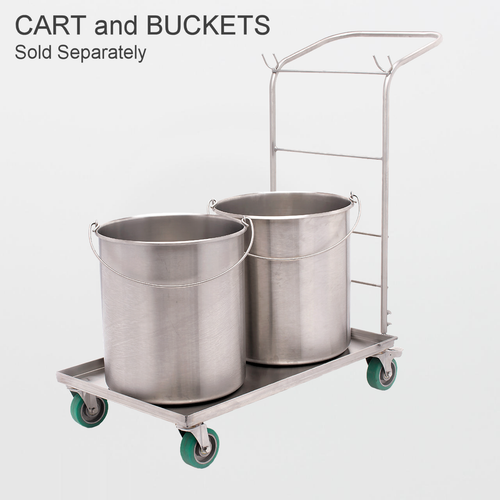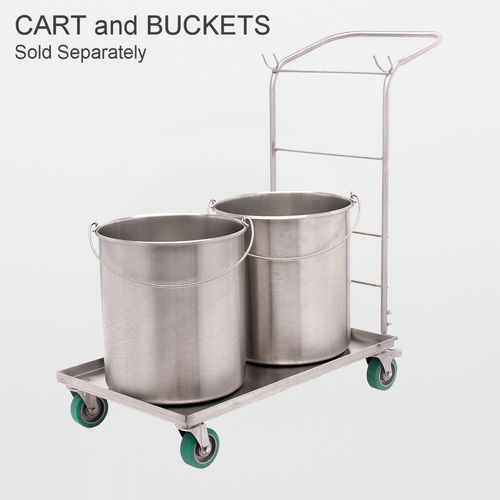
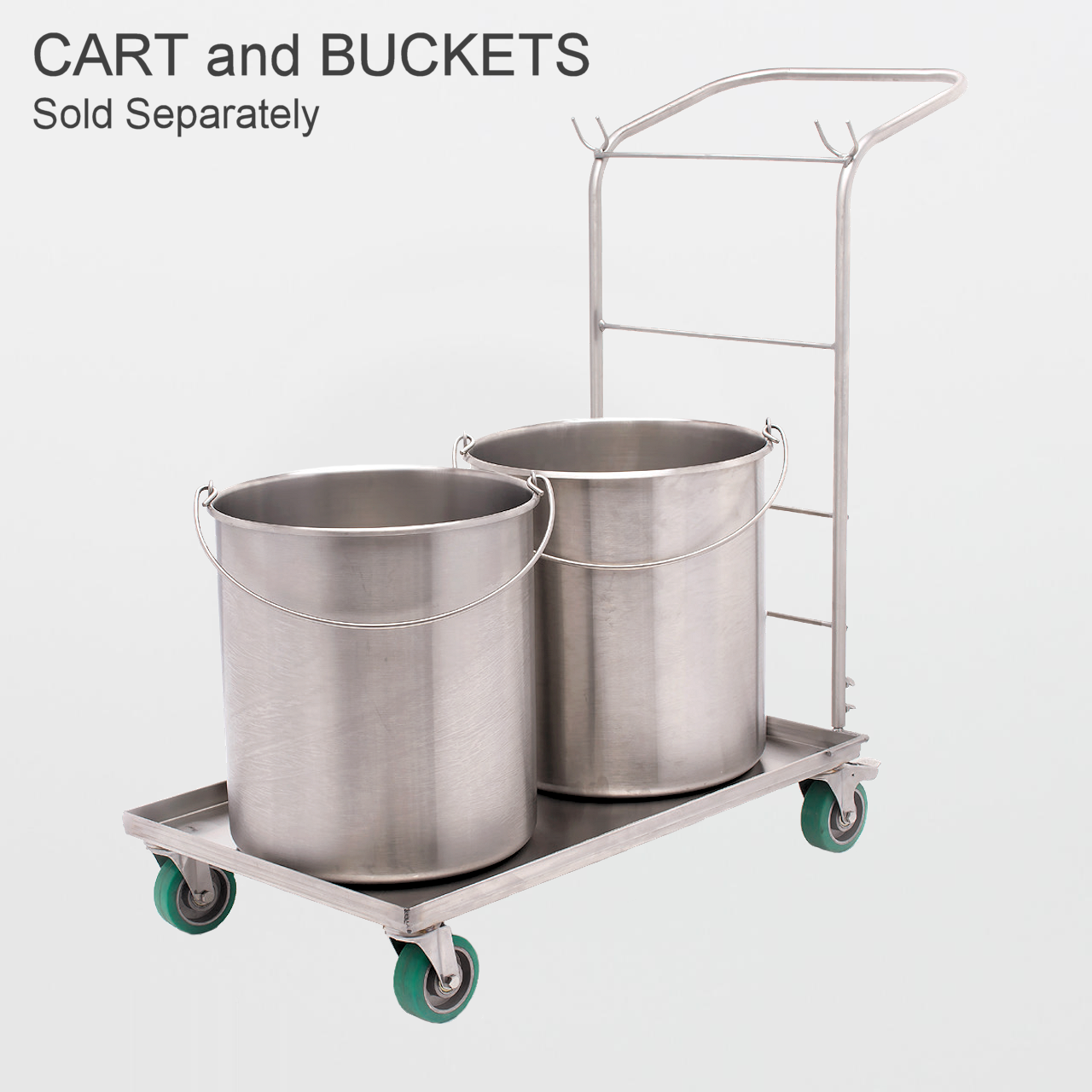
Texwipe TX7058 BetaMop Stainless Steel 10 gallon Bucket (BUCKET ONLY)

$567.02
(No reviews yet)
SKU:
TX7058
Availability:
5 - 6 Weeks
Shipping:
Calculated at Checkout
Type:
Dry Mop
Texwipe TX7058 BetaMop® Seamless Stainless Steel Bucket — 10 Gallon (37 L), No Casters
TX7058 is a seamless stainless steel cleanroom mop bucket designed for controlled dilution, solution transport, and contamination-conscious floor cleaning workflows. It is manufactured from 100% 304 stainless steel with a smooth, easy-to-clean interior and interior volume marks to support more accurate solution mixing and repeatable cleaning practice in critical environments.

For over 35 years, SOS and Texwipe have been close partners, and SOSCleanroom is the authorized Master Distributor of ITW Texwipe for the United States market. That relationship matters when you are standardizing cleanroom mopping systems: it supports continuity of supply, stable product lineage, and fast access to manufacturer documentation for QA/QC qualification and change-control discipline.

Published configuration (TX7058)
  • Bucket type: Seamless stainless steel round bucket (bucket only)
  • Material: 100% 304 stainless steel
  • Capacity: 10 gallon (37 liter)
  • Casters: None (NO casters)
  • Interior marks: Interior volume marks to support more accurate solution dilution
  • Design intent: Completely seamless design reduces possible contamination and supports easier bucket cleaning
  • System compatibility: Compatible with all cleanroom string mops and most wringers
  • Autoclave: Autoclave safe (as published for BetaMop™ seamless stainless steel buckets)
  • Packaging: 1 bucket per case
  • SOSCleanroom case unit: 1 mop bucket
  • Shipping weight (SOS listing): 13.00 lb
Why seamless stainless steel buckets matter in critical environments
Buckets are often the most overlooked contamination vector in floor care. A seamless 304 stainless steel interior reduces trap points where residues, particulates, or chemistry carryover can persist between cycles, and it supports more repeatable cleaning validation and visual inspection. The interior volume marks also help reduce dilution variability that can impact disinfectant efficacy, residue profiles, and slip risk.

Practical cleanroom use guidance (technicians and engineers)
  • Control dilution and traceability: Use the interior volume marks to standardize dilution. Record lot numbers of concentrates and water source (DI/WFI where applicable) in your cleaning log for audit-grade traceability.
  • Two-bucket discipline (when required by the program): Separate “apply” and “remove/rinse” solutions to reduce redeposition risk and improve residue control on finished floors.
  • Minimize aerosol and splash: Keep solution fill levels and transport speed consistent. Splash events are a primary cause of unintended wetting of adjacent equipment bases, wall coves, and floor transitions.
  • Segregate dirty vs. clean movement: Treat buckets as process tools. Avoid staging them in gowning transitions or at material airlocks where contact with carts and wheels can transfer grime onto the exterior.
  • Visual inspection standard: Before each use, verify the interior is free of film, haze, standing droplets from prior chemistry, and particulate grit that can scratch floors or create particle shedding during agitation.

Applications and workflow fit
Use case What TX7058 supports Technician notes
Floor cleaning in controlled areas Cleaning floors and applying/removing solutions, including disinfectants Standardize fill level, dwell time, and rinse/neutralization steps per SOP to reduce residue and slip risk.
Two-bucket cleaning system Supports process separation for apply vs. rinse/remove Label buckets clearly to prevent cross-use; change solutions on a defined cadence, not “as needed.”
Spill control and removal Solution staging and recovery support for spill response workflows After response, clean and inspect interior surfaces before returning the bucket to routine service.

Compatibility and cleaning notes
  • Chemistry use: Designed for use with cleaning agents, disinfectants, and other solutions in cleanroom environments. Always confirm compatibility with your specific disinfectant/cleaner chemistry and concentration under your site SOP.
  • Best-practice cleaning between cycles: Drain fully, rinse per SOP (often DI water where required), and dry completely to reduce chemistry carryover, haze/film formation, and residue redeposition on subsequent passes.
  • Exterior control: Do not neglect the outside of the bucket. Exterior residues can transfer to gloves, carts, door hardware, and pass-through surfaces.
  • Qualification reminder: If your program requires sterility or aseptic introduction, qualify the full handling and introduction process (including drying) and use only packaging/processing that is explicitly required by the site procedure.

Specification table (for validation planning and procurement control)
Attribute Published value Implementation note
Part number TX7058 Use the part number in SOPs, cleaning logs, and validation binders to maintain configuration control.
Bucket construction Stainless steel seamless bucket Seamless geometry supports easier cleaning and reduces trap points for residues and particles.
Material grade 100% 304 stainless steel Common critical-environment stainless steel choice; follow site chemistry compatibility requirements.
Capacity 10 gallon (37 liter) Align capacity with floor area coverage targets and solution change frequency.
Mobility NO casters This supports stationary or carried/controlled transport workflows; evaluate ergonomics per site safety policy.
Volume reference Interior volume marks Helps reduce dilution variance that can drive residue and efficacy variability in disinfectant programs.
Packaging 1 bucket/case Maintain packaging integrity until introduction per your facility material transfer procedure.

Common failure modes 
  • Cross-contamination between solutions: Reusing a bucket without full cleaning/drying can carry residues into the next chemistry cycle. Prevent with defined rinse/dry verification steps and clear bucket role labeling.
  • Dilution variability: Hand-mixed solutions without volume control can lead to under-strength disinfectant, excessive residue, or floor haze. Prevent by using interior volume marks and documenting concentrate additions.
  • Residue film and redeposition: Dried chemistry film inside the bucket can re-enter solution during agitation and redeposit on the floor. Prevent with complete drain, rinse per SOP, and full dry time.
  • Floor scratching / grit carryover: Particulate grit introduced via wheels, staging zones, or dirty tools can scratch sensitive coatings and create particle shedding. Prevent with pre-inspection and keeping buckets segregated from dirty movement paths.

Storage and handling best practices
  • Keep the bucket in original packaging until introduced into the controlled area per your material transfer SOP.
  • Store clean and fully dry to reduce spotting/film formation and to minimize inadvertent chemistry carryover.
  • Avoid nesting buckets with abrasive debris between surfaces; contact abrasion can generate fines and compromise clean appearance standards.
  • Control exterior contact points (handles, rims, and outside walls) to reduce glove transfer to critical touch surfaces.
Documentation 
SOS-hosted Texwipe BetaMop® Technical Data Sheet (includes buckets; BetaMop TDS _ALL 2014): Click Here
Texwipe manufacturer page (TX7058): Click Here
Texwipe manufacturer PDF (BetaMop® TDS, updated): Click Here
If you have any questions please email us at Sales@SOSsupply.com or give us a call at (214)340-8574.

OR check out the AI ChatBot powered by SOSCleanroom data libraries - give it a try!
 
THIS IS A NEW FEATURE FOR 2026!

Last updated: January 9, 2026
© 2026 SOS Supply. All rights reserved.