Texwipe TX7065 BetaMop® Seamless Stainless Steel Round Bucket with Casters — 8 Gallon (30 L), 304 Stainless Steel
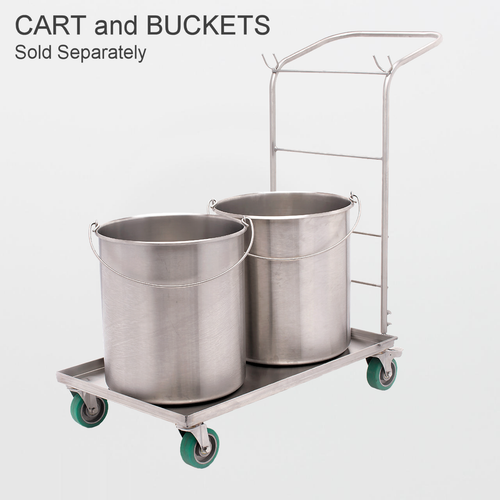
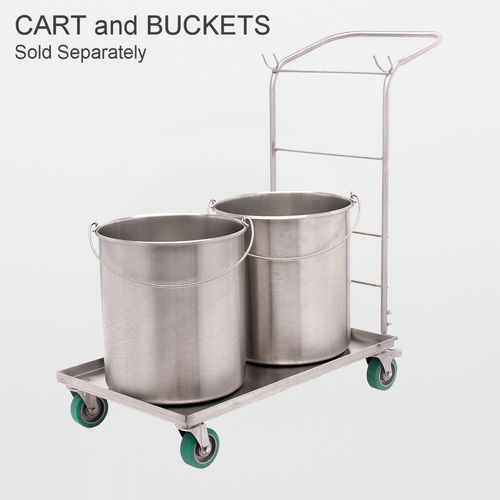
TX7065 is an 8-gallon (30 liter) seamless stainless steel round bucket with casters attached for cleanroom floor cleaning, solution staging, and controlled two-bucket workflows. The bucket is manufactured from 100% 304 stainless steel to support durability and resistance to cleaning agents, with interior volume marks to improve solution dilution accuracy and repeatability across shifts.
For over 35 years, SOS and Texwipe have been close partners, and SOSCleanroom is the authorized Master Distributor of ITW Texwipe for the United States market. That relationship matters when you are standardizing critical cleaning hardware: it supports continuity of supply, stable product lineage, and fast access to manufacturer documentation and lot-level support your QA/QC team expects.
Published configuration (TX7065)
- Capacity: 8 gallon (30 liter)
- Construction: 100% 304 stainless steel
- Design: Seamless stainless steel round bucket
- Casters: Attached
- Packaging: 1 bucket per case
- Autoclave: Autoclave safe (including buckets with casters)
Why seamless stainless buckets show up in critical environments
Seamless construction is used to reduce areas where soils and residues can build up, making the bucket easier to clean between uses and more consistent for validated cleaning workflows. Interior fill marks support repeatable dilution practices, which matters when you are trying to keep contact time, concentration, and coverage consistent across operators.
Practical cleanroom use guidance (technicians and engineers)
- Standardize your workflow: If your site uses a two-bucket method, label buckets (e.g., “Clean” and “Dirty”) and keep roles fixed to reduce cross-contamination risk.
- Mixing discipline: Use the interior volume marks for consistent dilution. Document concentration, lot numbers, and made-on time per your CCS/cleaning log expectations.
- Traffic control: Treat the bucket like a contamination-controlled tool: keep it out of product exposure zones, isolate it to defined cleaning routes, and avoid rolling through higher-grade areas unless your SOP explicitly allows it.
- Operator handling: Do not grab the inside rim with gloves. Handle by exterior surfaces only, and re-glove if you touch floors, drains, or wheel assemblies.
- Dry time matters: After wipe-down or disinfection, allow complete dry time before entering higher-control areas to minimize residue transfer and to preserve disinfectant contact time assumptions.
Compatibility and wipe-down notes
- Cleaning agents / disinfectants: Intended for use with cleaning agents, disinfectants, and other solutions in cleanroom environments; stainless steel construction supports durability and resistance to cleaning agents.
- Autoclave cycles: Autoclave safe, including buckets with casters. If your program autoclaves hardware, qualify your load configuration so wheels/casters are not shielded from exposure.
- Wipe-down technique: Wipe exterior first (rim, sidewall, handle areas), then address wheels last to avoid dragging floor contamination onto cleaner surfaces. Keep wipe saturation controlled to prevent pooling at caster mounts.
- Residue management: Rinse and dry per SOP after detergent use where applicable; residues on bucket rims and caster hardware are a common source of recontamination in repeated-use tools.
System compatibility (published)
Use this table for fast program mapping when you are standardizing hardware across mop heads, wringers, and bucket stations.
| Component |
Published compatibility |
Operational note |
| Cleanroom string mops |
Compatible with all cleanroom string mops |
Standardize head style (polyester vs microdenier) by soil type and surface finish to control streaking and residue. |
| Wringers |
Compatible with most wringers |
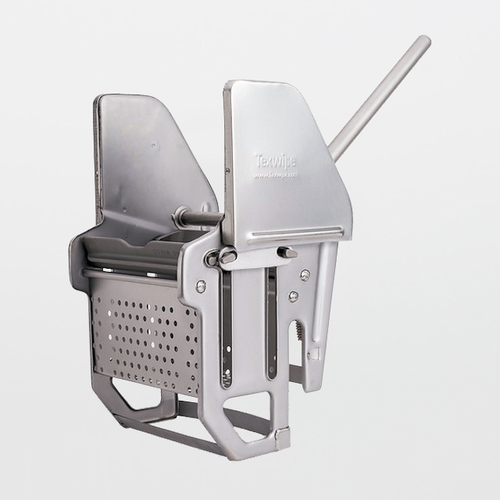
Confirm fit and splash control with your wringer model during qualification (bucket height and wringer clearance). |
| Two-bucket workflow |
Two bucket cleaning system listed as a published application |
Set a defined change-out rule (solution age, turbidity, conductivity, or swab verification) aligned to your CCS. |
| Caster buckets method |
Single bucket cleaning method (BetaMop® Caster Buckets) listed as a published application |
Best used where controlled movement matters; manage wheel hygiene to avoid tracking fines and residues. |
Annex 1 alignment considerations (EU GMP sterile programs)
Use this as a practical checklist when your site is building or updating a contamination control strategy (CCS) around cleaning and disinfection tools and their movement between areas.
| CCS element |
What to define for bucket hardware |
Why it matters in audits |
| Risk-based contamination control |
Where caster buckets are permitted, route controls, and whether tools are dedicated by grade/room or cleaned between areas. |
Auditors expect a documented rationale for tool movement and controls, not informal practice. |
| Validated cleaning/disinfection |
Approved chemistry, concentration, contact time, and a defined cleaning sequence (bucket body then casters). |
Supports repeatability and reduces “unknown residue” risk from inconsistent practices. |
| Material transfer / packaging controls |
How buckets are introduced (bag removal, wipe-down steps, staging area) and how wheels are protected during transfer. |
Prevents bringing in noncontrolled contamination via packaging, wheels, or handling. |
| Documentation / traceability |
Tool ID, cleaning log linkage, preventive maintenance checks (wheel integrity, fasteners, corrosion inspection). |
Makes investigations faster when trends or excursions occur. |
Common failure modes
- Solution carryover between rooms: Rolling a wet bucket through transitions can spread residues. Prevent with defined routes, drip-control discipline, and dry-time requirements.
- Residue buildup at caster hardware: Wheels and mounts are soil traps in real operations. Prevent with an explicit “wheels last” cleaning step and periodic deep-clean inspection.
- Incorrect dilution: Over-strong mixes can leave residues; under-strong mixes reduce efficacy. Prevent by using interior fill marks and documenting concentration per SOP.
- Cross-contamination from glove handling: Touching rims/inside surfaces with “floor gloves” transfers contamination to solution contact areas. Prevent with glove-change triggers and defined touch points.
Storage and handling best practices
- Keep buckets in original packaging until introduction to the controlled area; follow site wipe-down and bag-removal practices.
- Store dry and inverted (where permitted) after cleaning to reduce standing-water residue and to support visual inspection.
- Inspect routinely for corrosion, dents, or roughened surfaces that can hold residues; remove from service if integrity is compromised.
- If buckets are shared across shifts, use a clear tag/status method (cleaned, in use, needs cleaning) to prevent ambiguous state.
Documentation
SOS-hosted Texwipe technical data sheet (BetaMop® TDS — includes TX7065 buckets):
Click HereTexwipe technical data sheet (BetaMop™ Series, newer revision):
Click Here
If you have any questions please email us at Sales@SOSsupply.com or give us a call at (214)340-8574.
OR check out our AI ChatBot powered by SOSCleanroom data libraries - give it a try!
THIS IS NEW FOR 2026!
Last updated: January 9, 2026
© 2026 SOS Supply. All rights reserved.