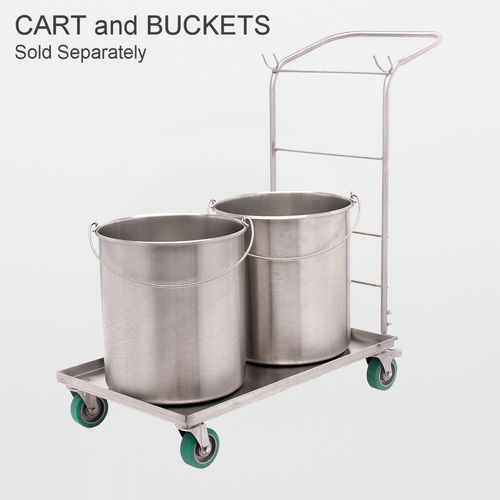
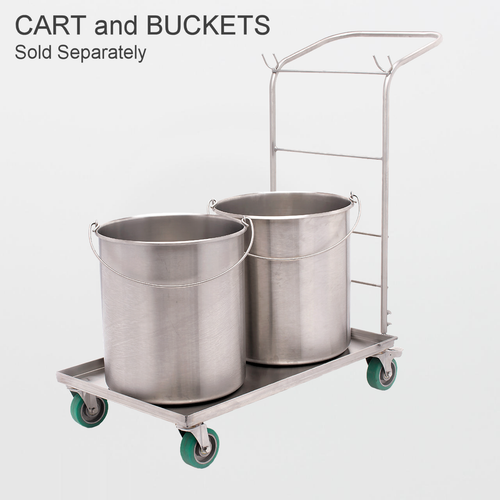
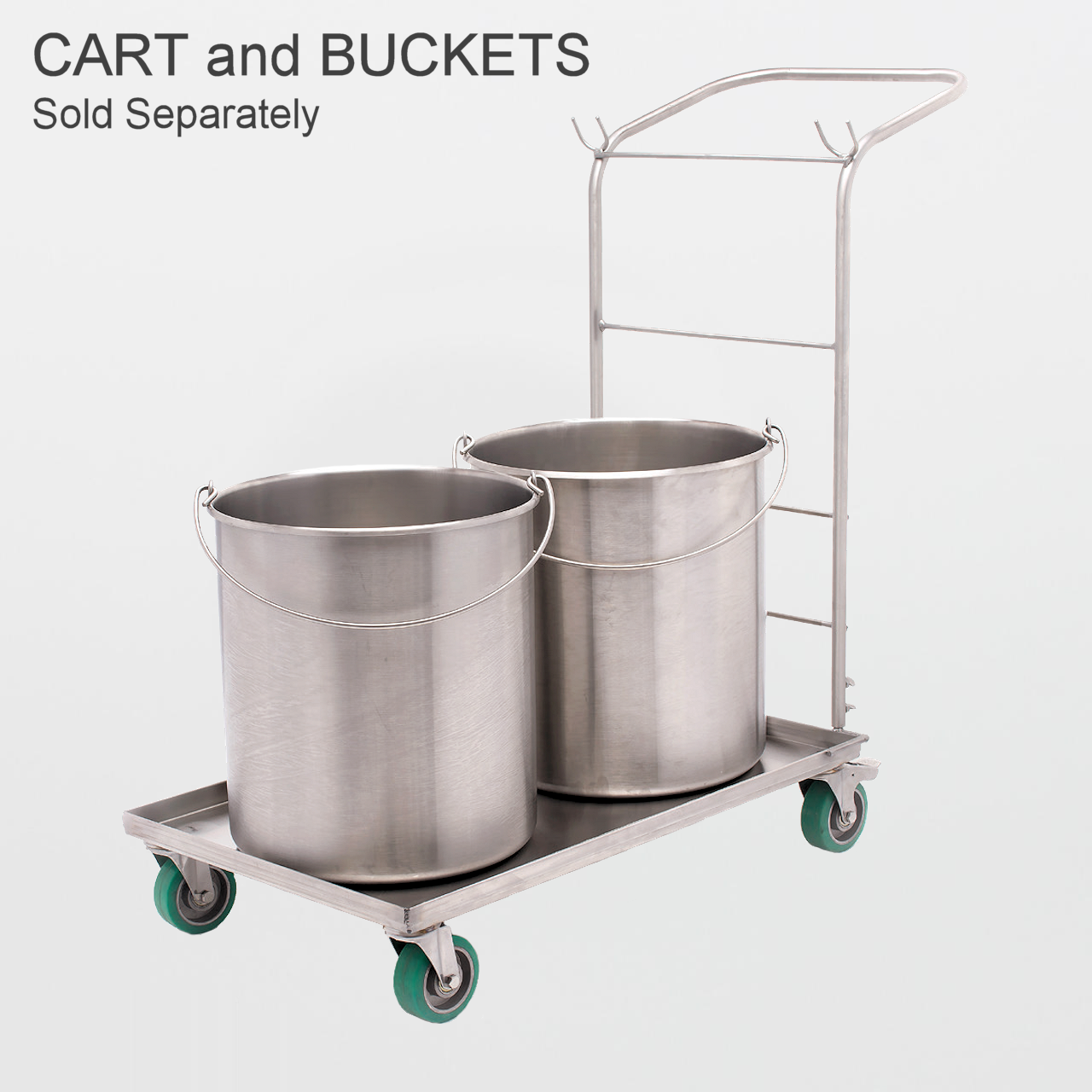
Texwipe TX7066 BetaMop™ Seamless Stainless Steel Round Bucket with Casters — 10 Gallon (37 L)
TX7066 is a seamless, 100% 304 stainless steel round bucket with casters for critical-environment wet cleaning. It is built for two-bucket floor cleaning workflows, controlled solution dilution (interior volume marks), and routine exposure to cleaning agents and disinfectants where corrosion resistance, cleanability, and repeatable process discipline matter.
For over 35 years, SOS and Texwipe have been close partners, and SOSCleanroom is the authorized Master Distributor of ITW Texwipe for the United States market. That relationship matters when you are standardizing mopping hardware in critical environments: it supports continuity of supply, stable product lineage, and fast access to manufacturer documentation for QA/QC qualification and audit readiness.
Published configuration (TX7066)
- Bucket type: Seamless stainless steel round bucket, with casters
- Capacity: 10 gallon (37 liter)
- Material: 100% 304 stainless steel
- Cleanability feature: Completely seamless design to reduce contamination build-up risk
- Measurement feature: Interior volume marks for more accurate solution dilution
- Mobility: Casters; wheels are designed not to leave black markings on floors
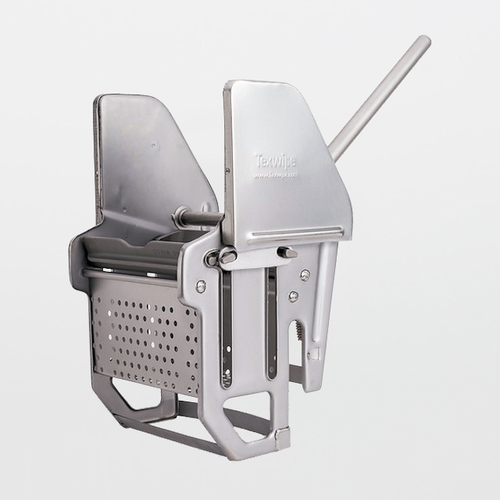
- Compatibility: Compatible with all cleanroom string mops and most wringers
- Autoclave: Autoclave safe (including models with casters)
- Packaging: 1 per case
Why seamless stainless buckets are used in critical environments
In a cleaning program, the bucket can become a hidden contamination reservoir if it is hard to clean, traps residues, or sheds corrosion products. A seamless 304 stainless steel bucket is selected to make cleaning and inspection more repeatable, reduce crevice harbor sites, and support disciplined solution control. Treat the bucket as a contamination-controlled tool: how it is filled, moved, cleaned, and stored is as important as the chemical you put inside it.
Practical cleanroom use guidance (technicians and engineers)
- Two-bucket discipline: Standardize roles (clean solution vs. rinse/dirty). Do not reverse buckets mid-shift; that is a common cross-contamination failure that shows up in investigations.
- Solution control: Use the interior volume marks for repeatable dilution. Record lot numbers of concentrates and prepared-solution expiration per site SOP.
- Move like a controlled component: Roll slowly to prevent splashing/aerosolization, and avoid bumping door thresholds that can flick residues from casters onto adjacent zones.
- Zone segregation: If your facility is zoned (EU Grade A/B vs. C/D or ISO zones), dedicate buckets by zone and label them. Do not share between sterile and non-sterile areas without validated decontamination.
- Dry-time discipline: After cleaning or autoclave cycles, allow full dry time before introducing into higher-class areas to reduce drip risk and floor film formation.
Compatibility and cleaning/disinfection notes
- Chemical resistance: Stainless steel construction provides durability and resistance to common cleaning agents used in cleanroom programs.
- Autoclave safe: Published as autoclave safe, including models with casters. If your site autoclaves cleaning hardware, define cycle parameters, loading, and post-cycle dry-time in the CCS/SOPs.
- Caster hygiene: Casters are frequently the highest bioburden/soil load on bucket assemblies. Include caster scrub/inspection points in routine cleaning and during line clearance.
- Wringers and string mops: Published as compatible with most wringers and all cleanroom string mops. Verify mechanical fit with your wringer model before standardizing across a facility.
- Sterile liner option: Sterile bucket liners (TX7099) are available for Texwipe buckets and may be used where your program needs sterile-contact surfaces and simplified changeover control.
Published features and benefits (summary table)
| Feature |
What it does in practice |
Why technicians care |
| Seamless 304 stainless steel construction |
Reduces crevices and supports repeatable cleaning and inspection |
Fewer harbor sites and less residue carryover between cleaning events |
| Interior volume marks |
Improves dilution repeatability for prepared solutions |
Helps prevent under/over-concentration that can cause residue or performance gaps |
| Casters (non-marking wheels) |
Supports controlled movement and staging |
Reduces floor marking risk and supports smoother material movement discipline |
| Autoclave safe (including casters) |
Enables thermal reprocessing where required by the program |
Supports sterile-area changeover controls when autoclaving is part of the CCS |
| Compatibility with string mops and most wringers |
Fits common cleanroom wet-mopping architectures |
Easier standardization across sites without reworking SOPs and training |
EU GMP Annex 1 contamination-control considerations (how this bucket supports disciplined cleaning)
EU GMP Annex 1 places strong emphasis on a risk-based Contamination Control Strategy (CCS), validated cleaning/disinfection, and preventing cross-contamination through robust procedures and equipment control. This bucket does not make a facility compliant by itself, but its design features can support Annex 1-aligned operational discipline when implemented under your CCS and SOPs.
| CCS / Annex 1 focus area |
Operational risk |
Technician controls to standardize |
| Validated cleaning/disinfection effectiveness |
Residual film, bioburden carryover, or chemical incompatibility |
Define dilution targets, contact times, changeout frequency, and post-clean rinse (if applicable) with documented verification |
| Cross-contamination prevention |
Moving soils/disinfectants between zones or rooms |
Dedicate buckets by zone; label; control movement paths; avoid mixing clean/dirty roles |
| Equipment design to reduce contamination build-up |
Harbor sites from seams, crevices, corrosion, or trapped residues |
Use seamless surfaces, inspect under rims and around caster mounts, and document routine inspections |
| Material transfer / staging controls |
Dirty wheels and splashes at thresholds; uncontrolled staging |
Clean casters routinely, stage in defined locations, and roll slowly to control splash/aerosol risk |
Common failure modes
- Residue carryover between clean and dirty solution: Often caused by reversing bucket roles or reusing solution past its defined life. Prevent with role labeling, changeout triggers, and log discipline.
- Biofilm/soil build-up around casters: Frequently missed during routine cleaning. Prevent by adding caster scrub/inspection steps and defining acceptable condition criteria.
- Incorrect dilution: Under- or over-concentration can leave residue or reduce efficacy. Prevent by using the interior volume marks, standardized measuring tools, and documented mix procedures.
- Splash and drip events: Caused by fast rolling, overfilling, or opening doors with a loaded bucket too close to thresholds. Prevent with fill limits, slow movement, and defined transfer routes.
- Cross-zone use: Moving the same bucket into higher-grade areas without validated reprocessing. Prevent by dedicating equipment by zone and controlling staging/transfer under the CCS.
Documentation
SOS-hosted Texwipe BetaMop® Technical Data Sheet (Includes TX7066 bucket listing):
Click HereTexwipe BetaMop™ Technical Data Sheet (TEX-LIT-TDS-002-11/21):
Click HereTexwipe mops, buckets and accessories overview:
Click HereEU GMP Annex 1 (Manufacture of Sterile Medicinal Products) reference (European Commission):
Click Here
Last updated: January 9, 2026
If you have any questions please email us at Sales@SOSsupply.com or give us a call at (214)340-8574.
Check our AI ChatBot powered by SOSCleanroom data libraries - give it a try!
THIS IS A NEW FEATURE IN 2026!
© 2026 SOS Supply. All rights reserved.