Texwipe TX7108 AlphaMop Polyester Cleanroom Mop with Fiberglass Handle

$110.33
(No reviews yet)
SKU:
TX7108
Availability:
Stock Item
Shipping:
Calculated at Checkout
Type:
Dry Mop
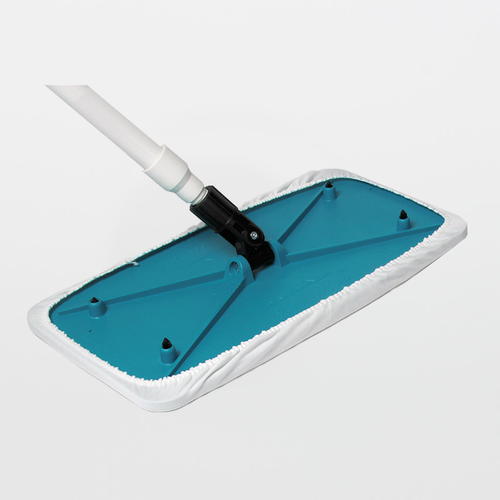
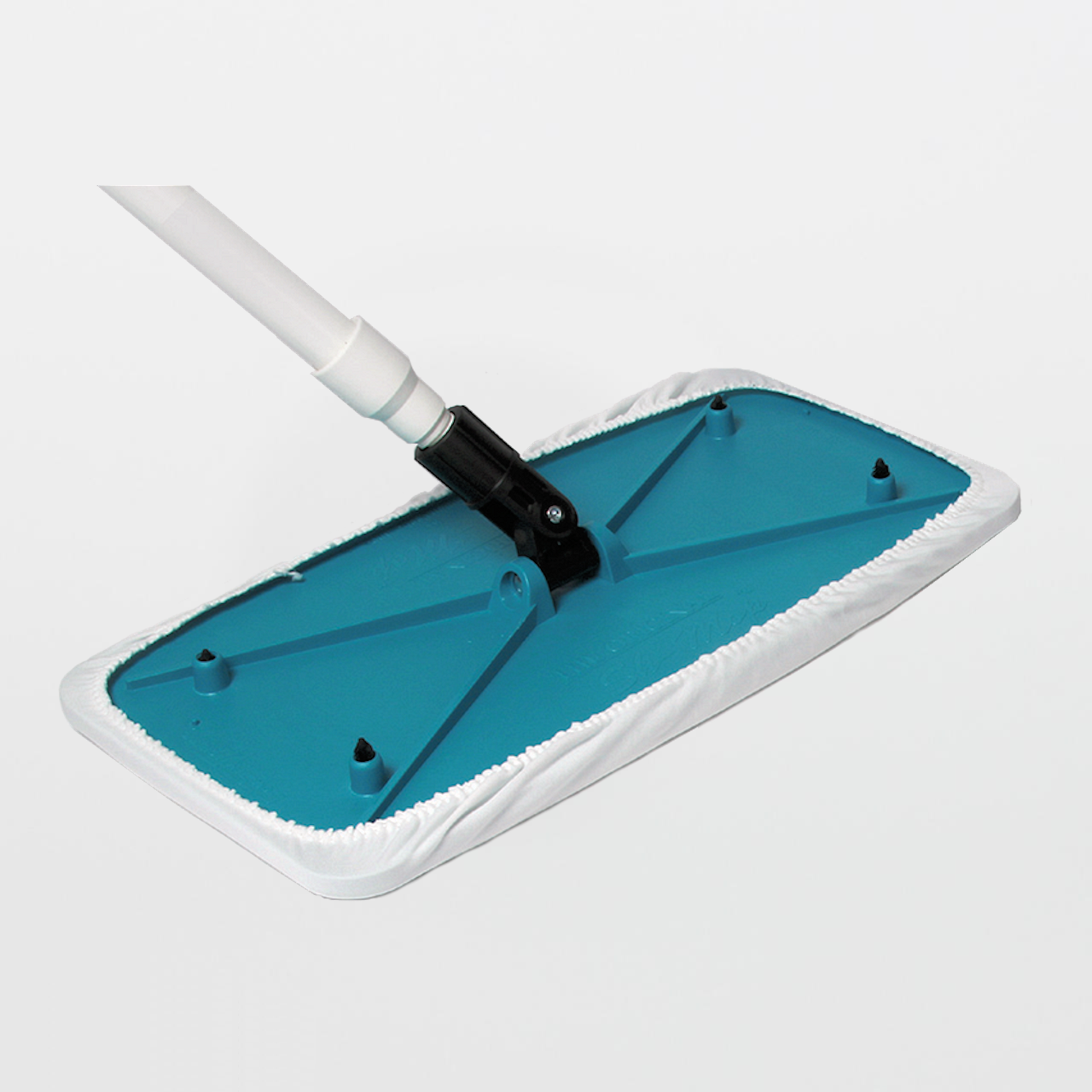
Texwipe TX7108 AlphaMop™ Polyester Cleanroom Mop Kit — 15" x 8" Head, 60" Fiberglass Handle
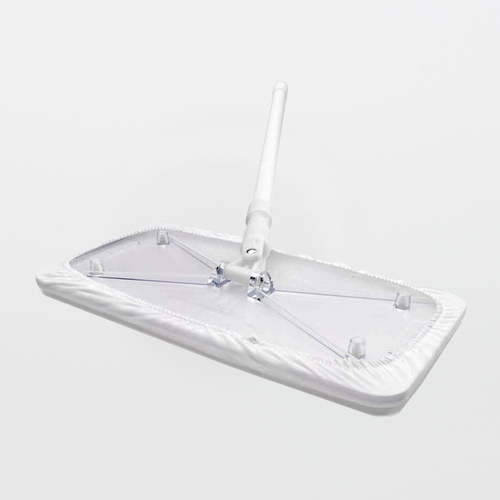
TX7108 is a flat-mop kit built for technician-controlled cleaning of walls, ceilings and floors in controlled environments where you need repeatable technique, frequent surface changes and disciplined solution handling. The system uses a padded, swivel head with replaceable covers and a foam/pad interface to help maintain consistent contact on textured surfaces while reducing the risk of redepositing particles or leaving streaks when applying or removing disinfectants.

For over 35 years, SOS and Texwipe have been close partners, and SOSCleanroom is the authorized Master Distributor of ITW Texwipe for the United States market. That relationship matters when you are standardizing cleanroom mopping systems: it supports continuity of supply, stable product lineage, and fast access to manufacturer documentation and lot-traceable components your QA/QC team expects.

Published configuration (TX7108)
  • System type: Flat mop kit with swivel head; rapid-change cover and pad workflow
  • Mop head (as published): 15" x 8" head assembly
  • Handle (as published): 60" fiberglass handle
  • Pad (as published): 1 polyester foam pad (included in SOS kit listing)
  • Cover material (system): Laundered 100% knitted-polyester cover material (AlphaWipe® substrate family)
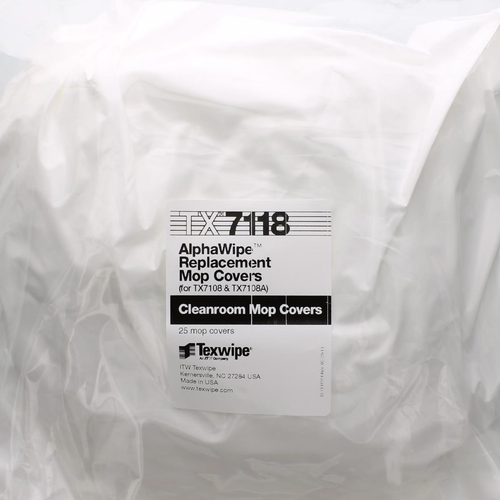
  • Covers included (SOS listing): 6 each of TX7118 (AlphaWipe Mop Covers)
  • Head design (as published): Low-profile, swivel head; no exposed seams
  • Packaging (as published): Bag-within-a-bag cleanroom packaging
  • Cleanroom environment (as published by Texwipe for AlphaMop series): ISO Class 2–7 (Class 1–100,000); EU Grade A–D
Low particle and fiber control — and the reality check
AlphaMop covers are designed for low particle and low-linting performance in controlled environments. Even so, no textile cover or pad is “zero-shedding.” Treat mopping supplies like contamination-controlled components: control how covers are introduced, how often they are changed, what solutions contact them, and what surfaces they touch between passes.

Practical cleanroom use guidance (technicians and engineers)
  • Work “clean-to-less-clean” and top-to-bottom: Standardize your route (ceilings → walls → floors) to reduce recontamination and to make deviations obvious during audits.
  • One-pass surface discipline: Use a defined stroke pattern (overlapping, unidirectional passes). Do not “scrub back-and-forth” on critical surfaces; it increases streaking and redeposition risk.
  • Change covers frequently: Treat each cover face as a limited-capacity capture media. Change covers on a schedule (zone-based or time-based) and immediately when you see streaking, visible load, or edge fray.
  • Control solution loading: Over-wetting is a common cause of residue and drip trails. Load the cover/pad to your SOP target (damp-to-wet, not dripping) and avoid flooding seams/edges.
  • Use the swivel head correctly: Keep the head flat to maintain full contact. Riding the leading edge concentrates pressure and can abrade the cover or leave “track lines.”
  • Glove and garment control: Change gloves before handling fresh covers/pads. Wet gloves transfer disinfectant residues onto clean covers and can trigger streaking on first contact.
  • Segregate buckets and tools by chemistry: Dedicate buckets/liners to specific disinfectants to reduce chemical incompatibility and unintended neutralization (especially when rotating sporicides, quats, alcohols).
  • Document the change points: For GMP/regulated areas, record cover change intervals, solution lot/batch, contact time, and zone completion as part of cleaning traceability.

Compatibility and solution-use notes
  • Common disinfectants/cleaners: Texwipe publishes the AlphaMop system for applying and removing solutions including disinfectants, and notes use with common cleaners and solvents (including IPA and other solvents) as part of AlphaMop series guidance.
  • Residue control matters: If your program requires a rinse or final wipe, do not shortcut it. Residual actives (especially quats/sporicides) are a leading cause of film, streaking, and downstream particulate attraction.
  • Qualification rule: If a specific chemical is not explicitly documented for the cover/pad you are using, qualify under your site conditions (surface type, dwell time, drying time, temperature, and concentration) before standardizing.
  • Introduction into controlled areas: Keep covers/pads in original cleanroom packaging until point-of-use; open slowly to reduce particle mobilization and avoid staging open packs near critical operations.

Typical performance characteristics 
For TX7108, quantitative “typical” particle/ion/NVR values are not published at the kit level on the SOS product page. Use manufacturer technical data sheets for the AlphaMop system and the specific covers/pads you standardize, then confirm performance during site qualification (surface, chemistry and contact-time dependent).
Property Typical value Test method (as published)
Mop head size 15" x 8" (38 cm x 20 cm) Not stated
Handle length / material 60" (1.5 m) fiberglass Not stated
Cover substrate family Laundered knitted 100% polyester (AlphaWipe® substrate family) Not stated
Cleanroom use range (AlphaMop series) ISO Class 2–7; EU Grade A–D As published in AlphaMop series TDS

Typical contamination characteristics 
Property Typical value Test method (as published)
Particles / ions / NVR (kit-level) Not published for TX7108 at the kit level on the SOS product page Not stated
Risk driver to manage in practice Cross-contamination and residue (chemistry + over-wetting + re-use) Process-dependent

Common failure modes 
  • Streaking / film left behind: Usually from over-wetting, insufficient dwell discipline, incompatible chemistry sequence, or skipping a required rinse/final wipe. Prevent with controlled loading, timed contact and (when required) a validated rinse step.
  • Redeposition of particles: Triggered by over-extended cover use, returning a “dirty” cover to a clean zone, or mopping in a back-and-forth pattern. Prevent with one-pass technique and frequent cover changes by zone.
  • Edge drag lines / missed bands: Often from riding the mop edge, uneven pressure, or a pad that is saturated or mis-seated. Prevent by keeping the head flat and confirming pad alignment before entry.
  • Cover abrasion / fiber release: Usually from high-pressure scrubbing, rough surfaces, or snag points. Prevent by removing protrusions where possible, lowering pressure, and changing covers at the first sign of scuffing.
  • Residue carryover between chemistries: Bucket/tool re-use without segregation can neutralize actives or leave mixed residues. Prevent with dedicated tools per chemistry and documented changeout/cleaning of buckets/liners.
  • Static attraction in low RH: Can increase fine-particle pickup on covers and lead to redeposition. Prevent by following site ESD controls and avoiding unnecessary rubbing of covers against garments or packaging.

Storage and handling best practices
  • Keep mop covers/pads in original cleanroom packaging until point-of-use; re-bag partially used components only if your SOP explicitly allows it.
  • Store dry, closed and protected from crush damage; avoid compressing pads in a way that creates permanent deformation.
  • Segregate “new/clean” covers from “in-use” and “soiled” covers using labeled containers to prevent accidental reintroduction into clean zones.
  • Transport the assembled mop in a clean sleeve or designated cart position to avoid contacting door frames, carts, pallets or non-controlled surfaces.
  • If your program uses multiple disinfectants, store dedicated buckets/liners and mops by chemistry to prevent mix-ups and unintended residue reactions.
Documentation 
SOS-hosted Texwipe datasheet (AlphaMop™ System, includes TX7108): Click Here
Texwipe manufacturer page (TX7108): Click Here
Texwipe manufacturer TDS PDF (AlphaMop™ Series): Click Here
If you have any questions please email us at Sales@SOSsupply.com or give us a call at (214)340-8574.

Check out our AI ChatBot powered by SOSCleanroom data libraries - give it a try!
 
THIS IS NEW FOR 2026!

© 2026 SOS Supply. All rights reserved.