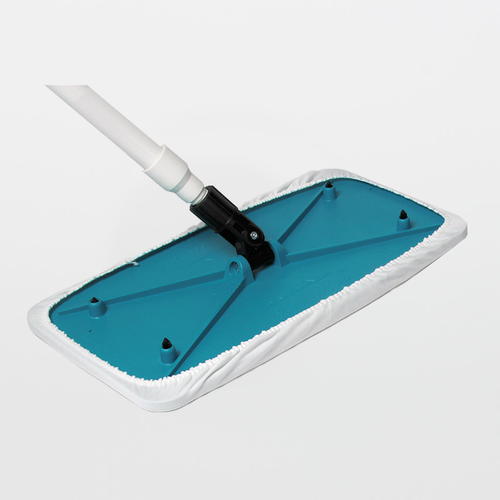
Texwipe TX7125 BetaMop Replacement White Fiberglass Handle (HANDLE ONLY)

$72.12
(No reviews yet)
SKU:
TX7125
Availability:
7 - 10 Business Days
Shipping:
Calculated at Checkout
Type:
Dry Mop
Texwipe TX7125 BetaMop® Replacement White Fiberglass Handle & Head Frame (Handle/Clamp Hardware)
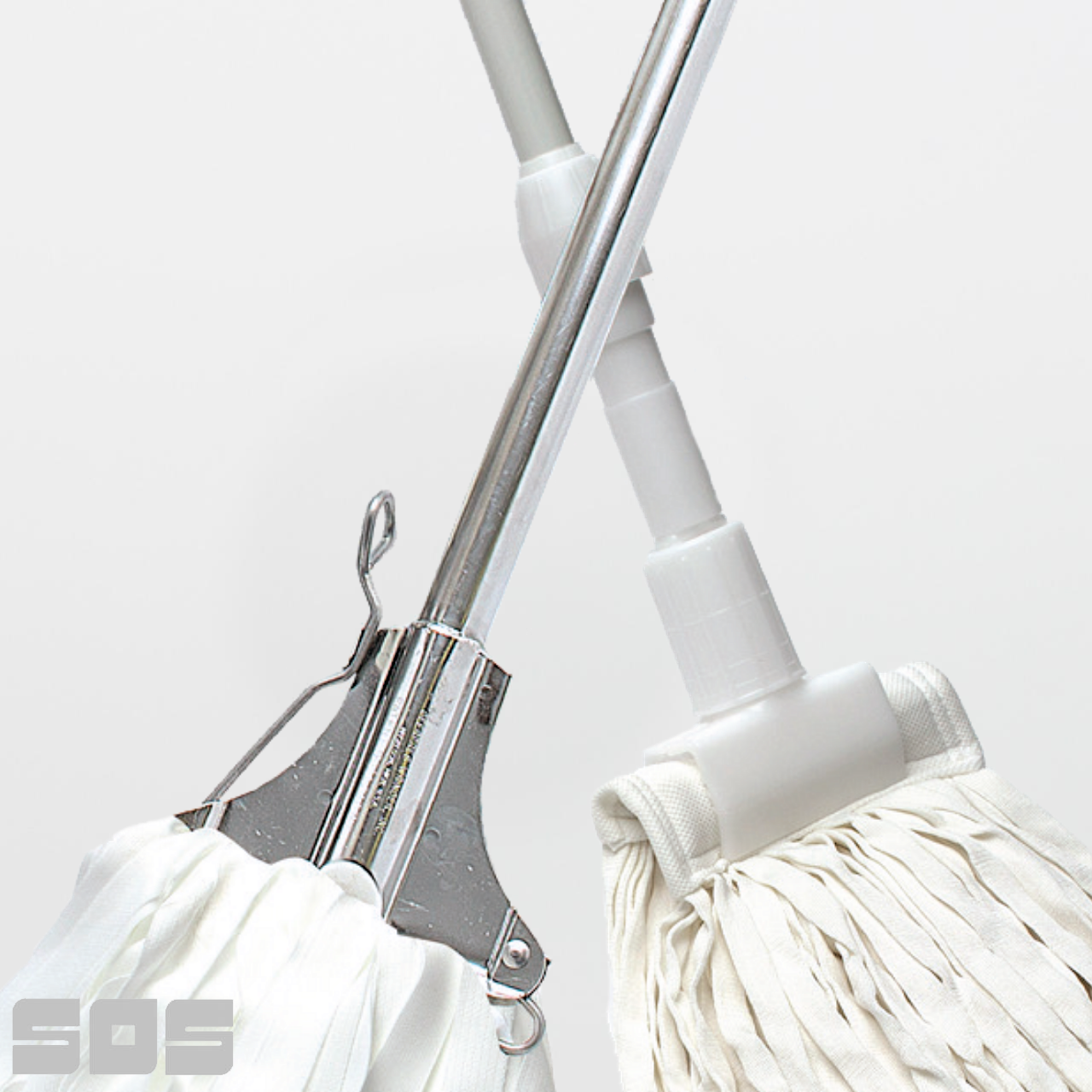
TX7125 is the BetaMop® handle-and-clamp hardware used with the BetaMop II / BetaMop string-mop cleaning system for controlled-environment floor cleaning, solution application, and disinfectant removal. This configuration is intended to support low-contamination handling with a quick-opening clamp so technicians can change head refills efficiently without over-handling wet textiles.

For over 35 years, SOS and Texwipe have been close partners, and SOSCleanroom is the authorized Master Distributor of ITW Texwipe for the United States market. That relationship matters for mop programs in critical environments: it supports continuity of supply, consistent product lineage, and fast access to the manufacturer documentation your QA/QC team expects.

Published configuration (TX7125)
  • Part number: TX7125
  • System compatibility: BetaMop II / BetaMop string-mop system (handle/clamp hardware used with BetaMop head refills)
  • Handle material: White fiberglass handle
  • Hardware included: Handle with clamp (quick-opening clamp); head frame is listed as included with the case unit
  • Total handle length: 60" (1.5 m)
  • Packaging: 1 handle kit/case (case unit: 1 white fiberglass handle and head frame)
  • Autoclave: Autoclave safe (verify cycle conditions under your facility SOP before standardizing)
  • Cleanroom environment: ISO Class 3–7; Class 1–10,000; EU Grade A–D
Low-contamination handling depends on the hardware — not just the mop head
Cleanroom mop programs fail most often at the interfaces: clamp wear, residue build-up around joints, and uncontrolled change-outs. Treat the handle and clamp like a contamination-controlled tool: keep it dedicated to the room grade, keep it clean between shifts, and inspect it before every head refill change.

Compatible BetaMop head refills (published)
The BetaMop handle/clamp is published as compatible with BetaMop string or strip head refills. The table below lists commonly paired BetaMop string refills referenced in the BetaMop Series TDS.
Refill SKU Material / construction (as published) Use intent Packaging (as published)
TX716R Knitted 100% polyester string mop refill (tubular) High sorptive capacity for routine floor cleaning and solution pickup 6 heads/case
TX7070 Knitted 100% microdenier polyester string mop refill Increased lifting/capturing ability for small particles; streak-free cleaning 6 heads/case
TX1722 Revolve™ sustainable polyester string mop refill (non-sterile) Sustainability-focused string mop option for cleanroom floor programs 6 heads/case
STX1722 Revolve™ sustainable polyester string mop refill (sterile) Sterile string mop option for higher-grade areas where sterile is specified 6 heads/case

Practical cleanroom use guidance (technicians and engineers)
  • Pre-use inspection: Verify clamp action (full open/close), confirm there are no cracks, loose fasteners, or rough edges that can abrade the mop head and elevate shedding risk.
  • Controlled change-outs: Perform head changes at the boundary of the work area when possible, not over open product. Keep the clamp area dry when feasible to prevent residue build-up and slippage.
  • Dedicated tool discipline: Assign handles by room/grade (and ideally by disinfectant family) to reduce chemical cross-residue and bioburden transfer between zones.
  • Stroke control: Use consistent, overlapping strokes and avoid aggressive twisting. Over-torqueing the handle increases clamp stress and can cause premature loosening.
  • Edge management: Keep the clamp and frame away from walls/fixtures when possible. Hard contact points create the fastest wear and can generate debris or nick the mop head.

Compatibility, disinfectant, and sterilization notes
  • Disinfectants: The BetaMop system is published as compatible with most disinfectants. Prevent chemical carryover by using defined change control (one chemistry per bucket set) and rinsing/cleaning hardware per your SOP.
  • Autoclave use: The handle/clamp hardware is published as autoclave safe. If you autoclave, qualify your specific cycle (temperature, dwell, drying) and verify clamp performance after repeated cycles before writing it into a validated cleaning program.
  • Wring-bucket integration: BetaMop II is designed to be used with most wring-bucket systems; confirm wringer geometry and clamp clearance to avoid mechanical damage during wringing.

Common failure modes 
Failure mode What it looks like in the field Prevention / control
Head slippage at the clamp Mop head migrates, rotates, or loosens during wet passes Dry the clamp zone before securing; verify full clamp closure; replace worn hardware before it becomes a recurring deviation
Residue build-up around joints/clamp Sticky feel, streaking, or visible film transfer onto floors after passes Add a defined hardware-clean step to end-of-shift SOP; avoid soaking the clamp assembly in concentrated chemistry unless documented/validated
Abrasion / unintended shedding from impact points Clamp/frame scuffs walls or thresholds; debris appears near edges Technique training (keep hardware off hard edges); replace damaged frames; avoid dragging hardware across rough floor transitions
Cross-zone contamination Unexpected residues/bioburden signals after area changes Dedicated handles by room grade; clear labeling; controlled staging and transport; avoid storing wet hardware in shared carts

Storage and handling best practices
  • Keep the handle/hardware in its original packaging until introduced into the controlled area.
  • Store dry, closed, and off the floor; use a clean rack or designated hook point to avoid clamp damage and residue collection.
  • Do not stage wet hardware in enclosed containers unless your SOP specifies ventilation/dry-down to prevent odor and residue concentration.
  • Document hardware replacement intervals (or inspection-based criteria) as part of the mop program so clamp wear does not become an untracked contamination risk.
Documentation 
SOS-hosted BetaMop II datasheet (TX7106 / TX716R, Effective: February 2013): Click Here
Texwipe BetaMop® Handle & Head Frame product page (TX7125): Click Here
Texwipe BetaMop Series Technical Data Sheet (updated): Click Here
If you have any questions please email us at Sales@SOSsupply.com or give us a call at (214)340-8574.

Check out our AI ChatBot powered by SOSCleanroom data libraries - give it a try!
 
THIS IS NEW FOR 2026!

Last updated: January 9, 2026
© 2026 SOS Supply. All rights reserved.
The Technical Vault Cleanroom Tool Control & Handling (Applied Use Case: Texwipe™ TX7125 BetaMop™ Replacement White Fiberglass Handle — Handle Only)

Purpose & Scope

The TX7125 is the replacement handle for the BetaMop™ system. In cleanrooms and controlled spaces, mop handles are often treated as “durable equipment,” but they are actually high-contact contamination transfer surfaces. This Technical Vault entry covers the overlooked aspects that drive real-world outcomes: handle hygiene, cross-zone control, storage discipline, and objective replacement criteria.

Visual Aids (Technique, Zoning, Lifecycle)

Use this graphic to reinforce zone discipline and lifecycle control for cleaning tools (including handles).

Cleanroom mopping technique (unidirectional vs figure-8), cleanroom zoning map concept, and mop head lifecycle diagram

Implementation note: Diagram intent is educational. Align zoning, segregation, and tool-change rules to your facility SOP and validated program.

Why “Handle-Only” Components Still Deserve a Technical Vault Entry

Most contamination events tied to mop systems do not come from the chemistry— they come from human touch points. Handles are adjusted, leaned against walls, rested on carts, and handled with wet gloves. That makes the handle a primary pathway for transferring residues across zones unless it is controlled like any other cleanroom tool.

  • High-touch surface: the same hands/gloves that touch handles often touch consumables and critical surfaces.
  • Cross-zone vector: a handle moved between rooms can bypass otherwise strict mop head change rules.
  • Residue trap: connection points and end caps can hold dried chemistry and debris.

Handle Hygiene (Practical, SOP-Friendly Controls)

  • Routine wipe-down: include handle wipe-down before storage and before re-entry into a cleaner zone.
  • Focus on connection points: threads, couplers, collars, and end caps are common residue traps.
  • Avoid “lean storage”: leaning handles against walls creates uncontrolled contact points and recontamination pathways.
  • Keep off the floor: floor contact can contaminate gloves during later handling and adjustment.

Operator behavior tip: If a handle must be adjusted mid-task, define how gloves are managed (e.g., re-glove or wipe gloves) to avoid transferring residues from handle to clean consumables.

Segregation & Labeling (The Easy Win)

The fastest way to prevent cross-use is to apply a simple, disciplined tool control model: dedicate the handle by zone/room and label it clearly. Handles are commonly shared because they “look clean.” In controlled environments, visual cleanliness is not the control.

  • Dedicate by zone: do not move handles between rooms unless SOP defines decontamination steps.
  • Dedicate by chemistry family (if applicable): avoid handle use across incompatible disinfectant families.
  • Define storage locations: wall-mounted racks or dedicated carts reduce accidental cross-use.

Objective Replacement Criteria (When to Retire a Handle)

  • Surface damage: cracks, chips, splintering, or rough areas that trap residue or abrade gloves.
  • Connection wear: loose couplers, wobble at the head interface, or degraded threads.
  • Persistent residue: repeated chemistry buildup that cannot be removed via SOP-defined wipe-down steps.
  • Label loss: if dedicated labeling cannot be maintained reliably, replace or rework to restore control.

Details Most Websites Miss (But Auditors Appreciate)

  • Glove-touch mapping: identify which steps require touching the handle after gloves have contacted disinfectant-wet surfaces.
  • “Rest point” control: define where a handle may be placed temporarily (rack/cart) to avoid wall/floor contact.
  • Tool traffic direction: enforce one-way movement of tools from less-clean to more-clean zones only when SOP allows and decon is completed.
  • Training metric: track streaking/redeposit events and include “tool condition/handle hygiene” as a root-cause category.

SOP & Audit Readiness Checklist (Handles)

  • Define handle wipe-down steps (pre-use and/or post-use, and before storage).
  • Define where handles may be staged (rack/cart) and prohibit floor/wall contact where possible.
  • Dedicate and label handles by zone/room and, when applicable, by chemistry family.
  • Define objective retirement criteria (damage, persistent residue, connection wear, labeling control failure).
  • Include handle hygiene in training and deviation investigations for streaking/redeposit issues.

Disclaimer: This Technical Vault content is provided for educational purposes only. Manufacturer instructions, facility SOPs, and site-specific risk assessments must always take precedence. Cleanroom suitability and contamination performance are determined by the complete system configuration (handle + head + chemistry + handling) and validated site practice.

© SOSCleanroom. All rights reserved.