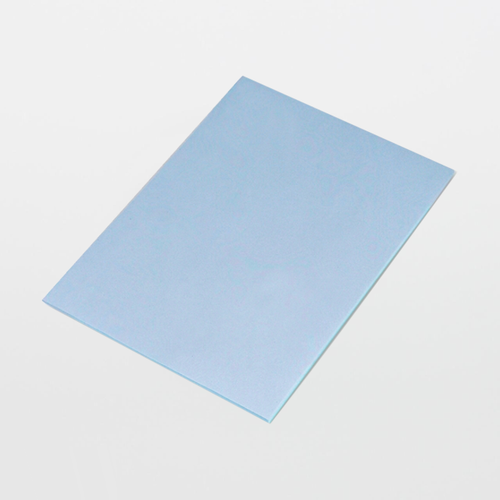
TX5862 loose-leaf cleanroom documentation paper (blue).
1) Practical solutions in a critical environment
Standard office paper is a known contamination risk because it can shed fibers/particles, create “paper dust” at cut edges, and contribute ionic residue when it breaks down under handling.
TX5862 TexWrite® 18 is designed to reduce those failure modes by using cleanroom-packaged, polymer-reinforced cellulose paper intended for controlled documentation and printing workflows.
In practical terms: it helps keep log sheets, work instructions, and batch documentation from becoming an unplanned source of particles, smearing, or rework when the room is already operating on tight limits.
2) What this product is used for
- Cleanroom manuals, travelers, work instructions, and controlled forms.
- Standard-duty and high-speed laser printers and photocopiers in controlled areas.
- Offset printing and general documentation where color-coding (blue) supports area/shift/process segregation.
- Paper-based data transfer when electronic devices are restricted at the line or in gowning zones.
3) Why customers consider this product
- Lower shedding risk vs. standard paper: intended to reduce particle generation associated with typical office paper.
- Cleanroom packaging discipline: packaged for controlled environments to reduce receiving/handling surprises.
- Printer/photocopier compatibility: built for toner adhesion and heat resistance for reliable, legible records.
- Color control for document segregation: blue sheets can support line clearance and mix-up prevention.
- Autoclavable option: manufacturer indicates autoclaving compatibility (facility must qualify the method).
- Supply-chain confidence: for over 35 years, SOS and Texwipe have been close partners, and SOSCleanroom is the authorized Master Distributor of ITW Texwipe for the United States market.
4) Materials, composition, and build
TX5862 is a cellulose paper with polymer reinforcement (manufacturer-stated). The TexWrite® 18 line is described by Texwipe as reinforced with a synthetic copolymer saturant and formulated without inorganic fillers
(fillers like calcium carbonate/titanium dioxide/aluminum silicate are called out as potential ionic contamination contributors in manufacturer literature).
The goal is controlled documentation with reduced particle release from paper fibers, while maintaining print performance in toner-based equipment.
Allergy/sensitivity note: manufacturer literature distinguishes “no natural latex binders,” while older documents describe a synthetic latex saturant. If latex sensitivity is a concern in your program,
treat this as a QA review item and confirm suitability using your internal EHS/medical guidance and current manufacturer documentation.
5) Specifications in context (Attribute vs SKU)
| Attribute |
TX5862 (TexWrite® 18 Blue) |
| Sheet size |
8.5" x 11" (21.6 cm x 28 cm) |
| Color |
Blue |
| Paper grade / line |
TexWrite® 18 (18 lb line; manufacturer describes “TexWrite® 18” and lists blue availability) |
| Basis weight (typical) |
70 g/m² |
| Caliper (typical) |
4.2 mil |
| Cleanroom environment guidance |
ISO Class 3–8; Class 1–100,000; EU Grade A–D (manufacturer-stated) |
| Packaging configuration |
250 sheets/pack; 10 packs/case; 2,500 sheets total/case |
| Autoclave compatibility |
Autoclavable (manufacturer-stated; facility must qualify conditions and acceptance criteria) |
| Country of origin |
Made in USA (manufacturer-stated) |
| SOSCleanroom listing notes |
Availability: 7–10 business days; listed shipping weight: 24.00 lbs |
Specifications are most useful when tied to how your team actually uses paper. For example, the 70 g/m² basis weight and 4.2 mil caliper help set expectations for feed behavior in high-speed printers:
lighter sheets can be more sensitive to static, curl, and tray setup if the printer is not configured and maintained for controlled areas. The cleanroom-packaging and contamination characteristics below are the other half of the decision.
6) Performance and cleanliness considerations
Stationery failures in cleanrooms usually show up as particles/fibers, smearing, and traceability problems (illegible or inconsistent records). TexWrite® papers are positioned to reduce particle generation versus standard paper,
and manufacturer data provides typical particle and ionic levels to help programs set receiving and usage expectations.
| Metric (typical) |
TX5862 value |
Why it matters in documentation control |
| Particles (>0.5 µm) |
4.0 million particles/m² |
Helps evaluate risk when paper is introduced near open product, exposed components, or optics. |
| Sodium (ions) |
35 ppm |
Supports programs where ionic residue can impact sensitive surfaces or downstream cleaning/inspection. |
| Chloride (ions) |
105 ppm |
Useful for corrosion-conscious environments (stainless assemblies, certain electronics workflows) as part of risk review. |
| Surface resistivity |
2.6 x 10⁹ ohms (55% RH) |
Manufacturer provides a resistivity value; no additional static-control classification is stated in the cited sources. |
Chemical extractables/NVR: not published for TX5862 in the cited technical data sheet and SOS listing. If your process has solvent wipe-down events near documentation, treat pen/marker selection and handling as the primary control (see Best-practice use).
7) Packaging, sterility, traceability, and country of origin
- Packaging: 250 sheets per pack; 10 packs per case (2,500 sheets total).
- Cleanroom packaged: manufacturer and SOS listing describe the product as cleanroom packaged.
- Sterility: sterile status is not stated in the SOS listing or cited Texwipe documents; autoclaving is described as an option, but sterility assurance level is not published in the cited sources.
- Traceability: certificates (e.g., Certificates of Analysis/Compliance) may be available through Texwipe programs; confirm requirements at receiving based on your quality system.
- Country of origin: Made in USA (manufacturer-stated).
8) Best-practice use
The biggest “wins” with cleanroom paper come from controlled handling—not from the sheet alone. Below are practical habits that reduce particle events and protect record legibility.
- Stage only what you need: bring one inner pack to the point of use; keep the rest of the case sealed outside the higher-class area to limit exposure time.
- Open packs the clean way: open the inner packaging in the clean zone, away from product exposure, and avoid “fanning” sheets (a common particle generator).
- Printer discipline: dedicate printers/copiers to controlled areas when possible, keep trays closed, and include roller/feeder cleaning in your facility routine (paper that behaves well can still pick up debris from a neglected feed path).
- Set up for blue paper: if your forms are scanned or copied, confirm your copier/printer settings for blue stock to prevent contrast loss or “washed out” signatures.
- Pen/marker selection: legibility is often limited by the writing instrument, not the paper. Validate dry time and smear resistance of your chosen cleanroom pen/marker against your typical disinfectant overspray and glove contact.
- Line clearance logic: use blue sheets as a visual control (shift/area/process), but document the rule (what “blue means”) so color-coding strengthens traceability instead of creating interpretation risk.
9) Common failure modes
- Particle events from handling: fanning sheets, tearing aggressively, or rubbing stacks on benches can create particles even with cleanroom paper.
- Feed jams and edge scuffing: high-speed printers can scuff edges if trays are overfilled or humidity control is poor; scuffed edges are a common “paper dust” source.
- Smearing/illegible records: wet disinfectant vapors, glove contact before ink cures, or incompatible markers can smear—often blamed on paper when the root cause is ink chemistry and technique.
- Autoclave distortion: autoclaving can curl sheets or change handling feel. If you autoclave, set acceptance criteria (curl, legibility, feed performance) and qualify your cycle.
- Color-control mix-ups: if blue stock is used for segregation, a shortage substitution with another color without deviation control can create batch record ambiguity.
10) Closest competitors
Competitor selection should be driven by your contamination limits, documentation method (handwritten vs printed), and any sensitivities around fillers/latex claims. Common alternatives include:
- Contec CONTEXT™ cleanroom paper: polymer-saturated cellulose documentation materials positioned to reduce particle/fiber release (various sizes/colors).
- Berkshire cleanroom paper lines: cleanroom documentation papers/notebooks positioned for low shedding and controlled use.
- Texwipe TexWrite® 22 (TX5812 blue): a heavier TexWrite option in the same family when programs want the same handling approach with a different sheet weight.
11) Critical environment fit for this product
Manufacturer guidance lists suitability for ISO Class 3–8 environments (also presented as Class 1–100,000 and EU Grade A–D).
In practice, documentation paper fit is determined by your point-of-use risk: using paper near open product/optics may require tighter handling controls than using paper in gowning or support zones.
If your process is sensitive to ionic residue, use the published sodium/chloride typical values as part of your receiving and qualification rationale, and align acceptance criteria with internal quality requirements.
12) SOSCleanroom note about SOP's
The Technical Vault is written to help customers make informed contamination-control decisions and improve day-to-day handling technique.
It is not your facility’s Standard Operating Procedure (SOP), batch record, or validation protocol.
Customers are responsible for establishing, training, and enforcing SOPs that fit their specific risks, products, equipment, cleanroom classification, and regulatory obligations.
Always confirm material compatibility, cleanliness suitability, sterility requirements, and acceptance criteria using your internal quality system and documented methods.
If you adapt any technique guidance from this entry, treat it as a starting template. Your team should review and approve the final method, then qualify it for your specific surfaces,
solvents, cleanliness limits, inspection methods, and risk profile. In short: use these best-practice suggestions to strengthen your SOPs—not to replace them.
13) Source basis
- SOSCleanroom product page (TX5862): https://www.soscleanroom.com/product/facilities/texwipe-tx5862-texwrite-light-weight-8-5-x-11-blue-cleanroom-paper/
- Manufacturer product page (Texwipe TX5862): https://www.texwipe.com/texwrite-22-tx5862
- Manufacturer family page (TexWrite® cleanroom loose leaf sheets): https://www.texwipe.com/texwrite-18
- SOS-hosted PDF (ITW Texwipe datasheet DS-5862; effective Dec 2009): https://www.soscleanroom.com/content/texwipe_pdf/5862.pdf
- Texwipe Technical Data Sheet PDF (TexWrite® Loose Leaf Sheets; US-TDS-043, REV. 2/23): https://www.texwipe.com/images/uploaded/documents/Paper/TDS_TexWrite18%2C22%2C30_CuR4.pdf
- Standards / regulatory bodies (reference points as applicable): https://www.iso.org/standard/53394.html, https://www.fda.gov/, https://www.astm.org/, https://www.iest.org/
SOSCleanroom is the source for this Technical Vault entry.
Briefed and approved by the SOSCleanroom (SOS) staff.
If you have any questions please email us at Sales@SOSsupply.com
Or give us a call at (214)340-8574.
Last reviewed: January 8, 2026
© 2026 SOSCleanroom