Texwipe TX7057 BetaMop® Seamless Stainless Steel Round Bucket — 8 Gallon (30 L), Bucket Only (No Casters)
TX7057 is a seamless 304 stainless steel round bucket used to support controlled-environment wet cleaning where solution control, residue management, and repeatable handling matter. It is commonly staged as part of a two-bucket cleaning method (apply / remove) or as a single-bucket method in lower-risk zones, and it is intended for use with cleaning agents and disinfectants in cleanroom environments.
For over 35 years, SOS and Texwipe have been close partners, and SOSCleanroom is the authorized Master Distributor of ITW Texwipe for the United States market. That relationship matters when you are standardizing critical-environment mopping systems: it supports continuity of supply, stable product lineage, and fast access to the manufacturer documentation your QA/QC team expects.
Published configuration (TX7057)
- Bucket type: Seamless stainless steel round bucket (bucket only)
- Capacity: 8 gallon (30 liter)
- Material: 100% 304 stainless steel
- Casters: No casters (TX7057 is the non-caster bucket)
- Interior markings: Interior volume marks for more accurate solution dilution
- Dimensions: 12.25" (31.1 cm) height / 14" (35 cm) inside diameter / 14.75" (37.4 cm) outside diameter
- Compatibility: Compatible with all cleanroom string mops and most wringers
- Autoclave: Autoclave safe (stainless steel bucket hardware)
- Packaging: 1 bucket per case
- Weight (ship): 10.00 lbs
- Availability: 3 - 4 Weeks
Seamless design reduces contamination traps — but process still drives outcomes
A seamless stainless bucket helps reduce crevices where residues and soils can lodge, and it supports repeatable cleaning between uses. Treat the bucket as a contamination-controlled tool: dedicate it to defined chemistries, control where it is staged, and prevent cross-contact between “dirty” and “clean” items.
Practical cleanroom use guidance (technicians and engineers)
- Dedicated-chemistry discipline: Label and dedicate the bucket to a defined disinfectant/cleaner family (or validated rotation). Cross-chemistry residue is a common root cause of film, streaking, and efficacy drift.
- Dilution control: Use the interior volume marks for repeatable dilution. Mix slowly to minimize foaming and aerosol generation; avoid building solution by “eyeballing” fill levels.
- Two-bucket execution: If your SOP uses a two-bucket method, keep the “clean” and “dirty” roles physically separated and prevent wringer splash-back into the clean solution.
- Rim and handle control: The rim is a high-touch contamination pathway. Avoid grabbing the rim with wet/solvent-wet gloves; use consistent handling points and keep the exterior wiped down per SOP.
- Wringing technique: Pair with an appropriate wringer and express mop heads slowly. Aggressive wringing increases splash, droplet aerosol, and re-deposition risk near critical surfaces.
- End-of-task closeout: Drain, wash, rinse (if applicable), and dry fully. Dried residues inside the bucket and on the rim are a primary driver of next-shift cross-contamination.
Compatibility and wipe-down notes
- Cleaning agents and disinfectants: Intended for use with cleaning agents, disinfectants, and other solutions in cleanroom environments. Validate chemistry contact times and residue acceptance under your site SOP.
- Stainless durability: Stainless steel construction provides durability and resistance to common cleaning agents; avoid incompatible chemistries per your EHS/SOP controls.
- Autoclave practice: Autoclave safe hardware does not replace process validation. Confirm cycle parameters, dry time, hot-transfer controls, and reintroduction practices before standardizing.
- DI water / aqueous wipe-down: Not published as a numeric compatibility specification. If your program requires aqueous wipe-down or rinse steps, qualify the practice under your conditions (residue, spotting, corrosion controls).
Build-out table (common BetaMop® bucket station components)
Use this table to standardize a bucket/wringer station with consistent parts, spares, and documentation.
| Component |
Example SKU |
Use-case relevance |
| Seamless stainless round bucket (no casters) |
TX7057 |
Fixed bucket placement; controlled staging for solution make-up and mop loading |
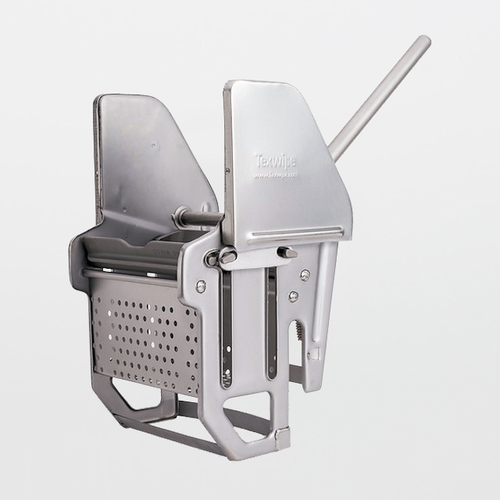
| Wringer for round buckets |
TX7041 |
Controlled expression to reduce drip, splash, and over-wet application |
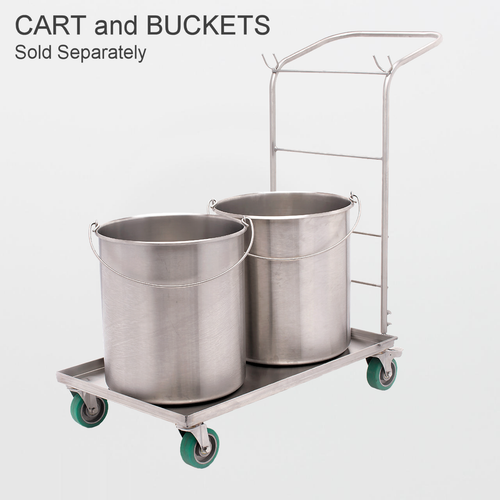
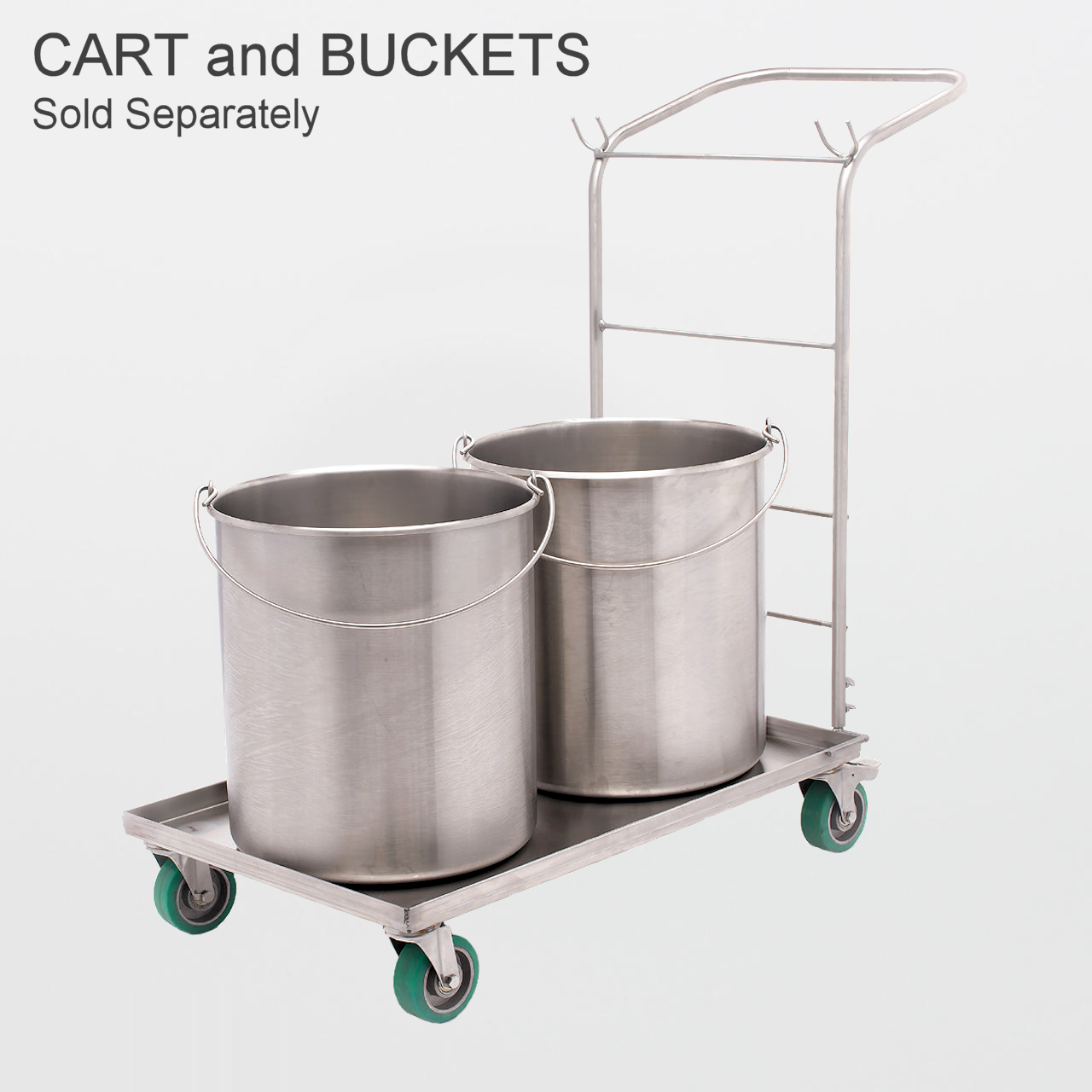
| Bucket cart/trolley |
TX7046 |
Transport control; helps keep buckets in place and capture spills (when used) |
| String mop head refills (polyester or microdenier) |
TX716R / TX7070 |
Solution pickup and soil removal; selection impacts streaking, capture, and drag-out |
Operational control checklist (process-focused)
| Control point |
What goes wrong |
How teams prevent it |
| Solution identity |
Wrong chemistry, wrong concentration, residue mixing |
Dedicated buckets, clear labels, measured dilution using fill marks, defined change-out intervals |
| Rim/handle contact |
Transfer from gloves, garments, carts, thresholds |
Controlled staging area, wipe-down before entry, consistent handling points |
| Wringing and splash |
Droplet aerosol, floor spotting, re-deposition |
Slow expression, proper fill level, wringer alignment, controlled motion near critical zones |
| End-of-shift cleaning |
Dried residue film, odor, next-shift carryover |
Drain, wash, rinse (if applicable), dry fully; inspect rim and interior under good lighting |
Common failure modes
- Residue film / drag-out: Caused by dried chemistry on bucket walls, rim, or wringer interface. Prevent with full dry-out and routine residue checks.
- Cross-contamination between solutions: Occurs when buckets are reused across disinfectant families without validated cleanout. Prevent with dedicated buckets and documented changeover steps.
- Splash and spot defects: Driven by overfill, aggressive wringing, or fast motion. Prevent with fill-level control, slow expression, and controlled movement.
- Particulate reintroduction: Triggered by staging the bucket on uncontrolled surfaces or rolling through dirty thresholds (if paired with mobile systems). Prevent with controlled staging and transfer discipline.
Storage and handling best practices
- Keep the bucket clean and dry between uses; store inverted where permitted to avoid pooled liquid and spotting.
- Do not nest with abrasive tools or metal edges that can scuff surfaces and create cleaning challenges.
- Maintain a defined inspection routine (rim, interior, markings visibility) as part of your cleaning station PM.
- Use a dedicated staging location to prevent accidental contact with walls, door frames, and non-controlled carts.
Documentation
SOS-hosted Texwipe BetaMop® Technical Data Sheet (BetaMop TDS _ALL 2014):
Click HereTexwipe BetaMop™ Series Technical Data Sheet (TEX-LIT-TDS-002-11/21):
Click Here
If you have any questions please email us at Sales@SOSsupply.com or give us a call at (214)340-8574.
Check out the AI ChatBot powered by SOSCleanroom data libraries - give it a try!
THIS IS A NEW FEATURE FOR 2026!
Last updated: January 9, 2026
© 2026 SOS Supply. All rights reserved.