Texwipe TX7101 Mini AlphaMop™ / Isolator Cleaning Tool™ Kit — Autoclavable, One-Hand Operation, Rapid-Change System
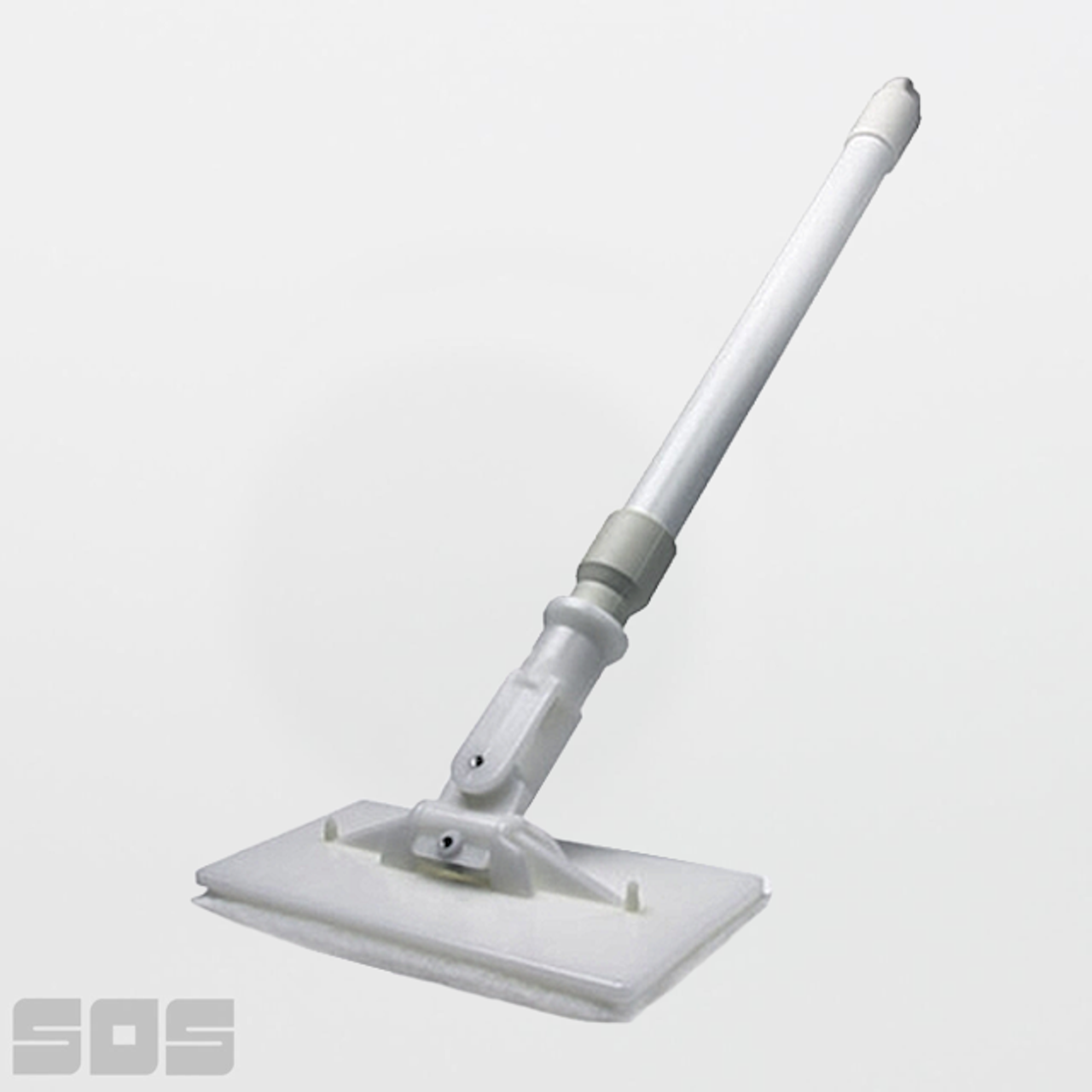
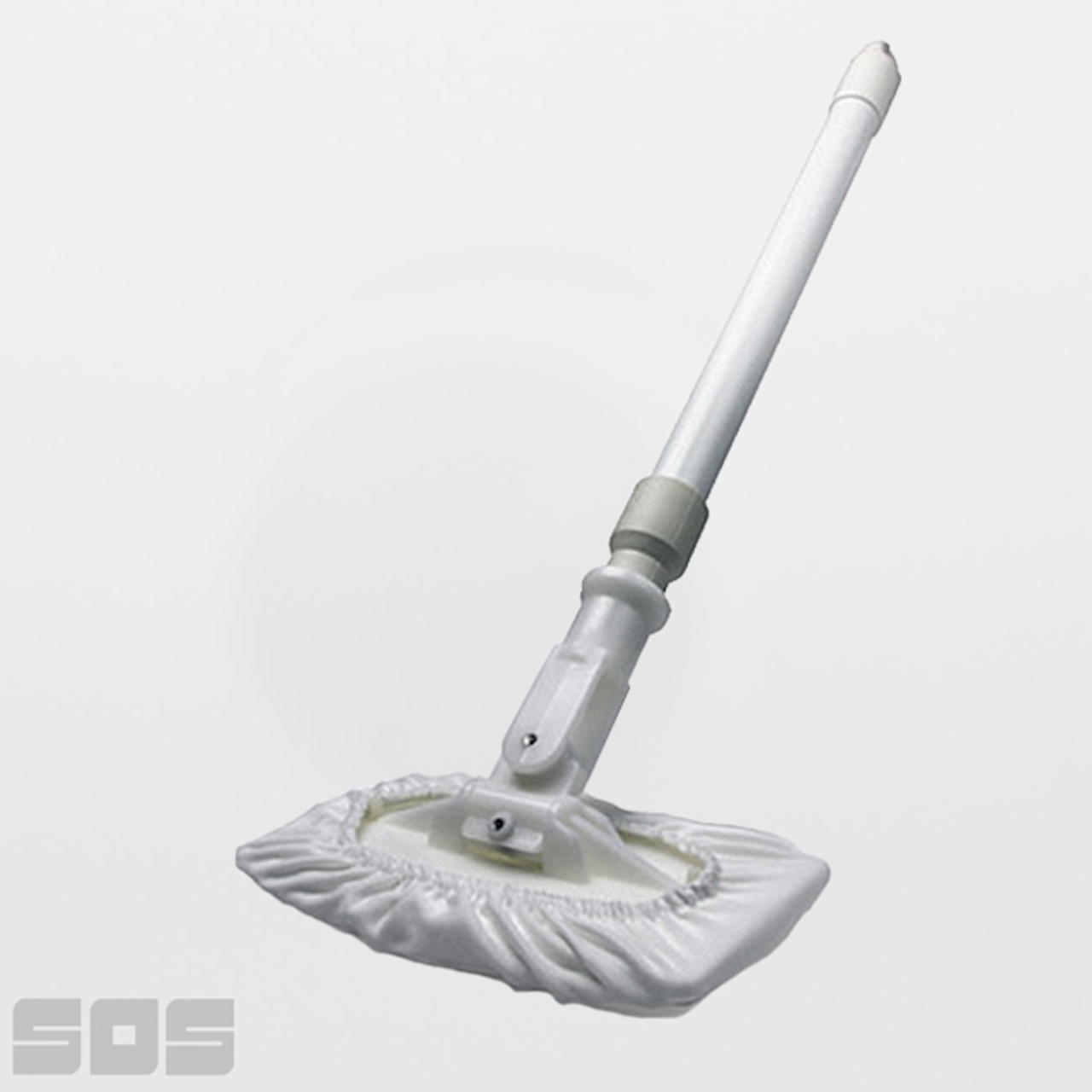
TX7101 is a compact, low-profile, swivel-head cleaning tool kit engineered for isolators, glove boxes, biosafety cabinets, laminar flow hoods, and other small, hard-to-reach controlled-environment surfaces. The padded head helps maintain consistent surface contact, while rounded edges support corner cleaning and help reduce the risk of surface damage during routine cleaning and disinfectant application.
For over 35 years, SOS and Texwipe have been close partners, and SOSCleanroom is the authorized Master Distributor of ITW Texwipe for the United States market. That relationship matters in critical environments: it supports continuity of supply, stable product lineage, and fast access to manufacturer documentation for QA/QC qualification and change-control review.
Published configuration (TX7101)
- System type: Mini AlphaMop™ / Isolator Cleaning Tool™ rapid-change cleaning system
- Mop head (as published): 3.7" x 7.1" (9.4 cm x 18.1 cm) / commonly referenced as 7" x 4" (10 cm x 18 cm) thermoplastic head
- Head design: Low-profile swivel head; rounded edges; padded head interface for consistent contact
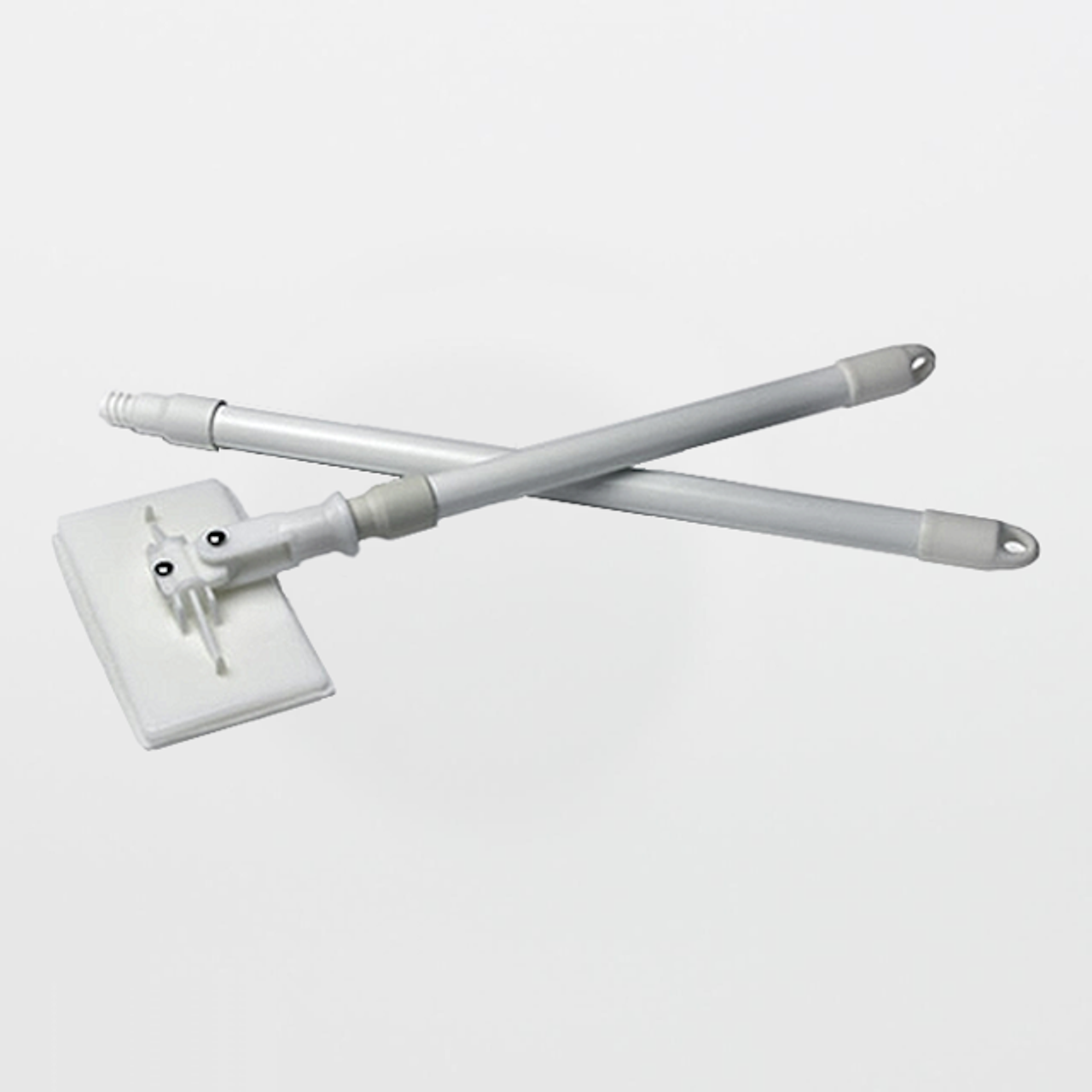
- Handles (included): (1) 12" (30.4 cm) fiberglass handle and (1) 18" (45.7 cm) fiberglass handle
- Pad: Polyester pad (padded head system)
- Fastening hardware: (2) fastening pins (as published)
- Starter covers (included): Sample starter covers are included for initial evaluation/qualification (see included starter items on the SOSCleanroom product page and published system documentation)
- Autoclave compatibility: Autoclavable kit (validate cycle parameters and post-cycle condition under your site SOP)
- Cleanroom environment (as published): ISO Class 2–7 (Class 1–100,000); EU Grade A–D
- Packaging: 1 kit/case
| Kit component |
Purpose in the process |
Published notes |
| Thermoplastic swivel head |
Access small areas and corners; maintain controlled contact |
Low-profile; rounded edges; padded head system |
| 12" and 18" fiberglass handles |
One-hand maneuverability; access ports and short-reach control |
Two fixed-length handles included |
| Polyester pad |
Conforms mop cover to surfaces for consistent cleaning |
Pad supports contact uniformity; reuse is SOP-dependent |
| Fastening pins |
Secures pad/cover interface per system design |
(2) fastening pins included (as published) |
| Starter covers |
Initial evaluation: fit, coverage, chemistry response, and operator technique |
Included for qualification planning (see SOSCleanroom listing and published documentation) |
Low particle and residue control — and the reality check
This system is designed for controlled-environment cleaning with cleanroom-processed covers and disciplined change-out practices. Even so, no mop system is “zero-shedding” in real use. Your results depend on cover selection, wetting control, stroke discipline, and how rigorously you prevent re-deposition and cross-contamination.
Practical cleanroom use guidance (technicians and engineers)
- Work from clean-to-dirty: Start with upper interior surfaces (or the cleanest zones) and progress downward/outward to reduce re-contamination of completed areas.
- Use overlapping strokes: Maintain consistent overlap and a controlled, moderate contact pressure. Excess pressure increases streaking risk and can drive residues into corners.
- Change covers on schedule: The rapid-change concept only works if you actually change covers before they load up. Define a change-out trigger (area covered, time-in-use, visible soil, or protocol step change).
- Control wetting: Avoid “over-wet” covers that drip, puddle, or wick into seams. Over-wetting is a common cause of residue, streaking, and redeposition.
- Edge and corner control: Use the rounded edges deliberately; do not “scrub” corners aggressively. Let chemistry and contact do the work.
- Glove discipline: Treat cover changes like a sterile transfer step when applicable. If gloves are wet/soiled, change gloves before handling new covers.
Chemistry compatibility and wipe-down notes
- Autoclave: The TX7101 kit is published as autoclavable. Validate your cycle parameters and post-cycle functionality (swivel, fasteners, pad condition) under your facility SOP.
- Microdenier cover option: Published as compatible with all disinfectants, including quaternary ammonium compounds (quats) such as Texwipe’s TexQ.
- Polyester cover option: Published for processes requiring low particle, extractable, and ionic contamination; qualify chemistry response and residue behavior under your site conditions.
- Solvent use: Certain Mini AlphaMop cover systems are published for cleaning with solvents such as IPA, ethanol, acetone, and degreasers. If solvents are used in your program, qualify for material compatibility, streaking, and dry-time requirements.
| Chemistry / condition |
Polyester covers (TX7114 / STX7114) |
Microdenier covers (TX7114M / STX7114M) |
Revolve™ integrated covers (TX1720 / STX1720) |
| Quats / disinfectants |
Not stated (qualify per SOP) |
Published compatible with all disinfectants, including quats |
Published for applying and removing disinfectants |
| IPA / ethanol / acetone / degreasers |
Not stated (qualify per SOP) |
Not stated (qualify per SOP) |
Published compatible for cleaning with these solvent types |
| Autoclave |
Sterile options available; validate autoclave use if autoclaving is part of your process |
Sterile options available; validate autoclave use if autoclaving is part of your process |
Published autoclave safe; sterile available |
Compatible covers, refills, and accessories (published)
These are published system components used for standardization planning, spares strategy, and change-control traceability.
| Part number |
Description |
Published packaging |
| TX7114 |
Polyester covers and polyester pads (non-sterile) |
150 covers/case (6 bags of 25, double-bagged) and 6 pads/case |
| STX7114 |
Polyester covers and polyester pads (sterile) |
125 covers and 25 pads/case (25 bags of 5 covers + 1 pad, triple-bagged) |
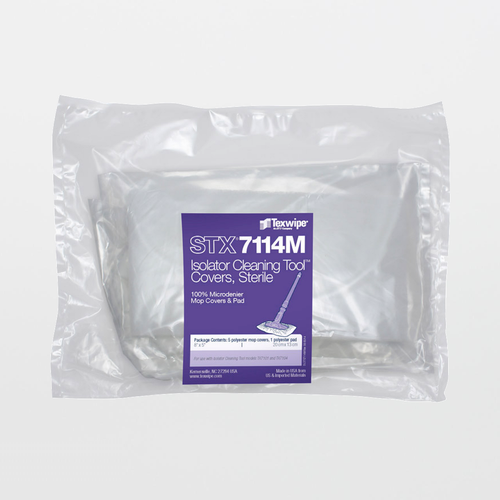
| TX7114M |
Microdenier covers and polyester pads (non-sterile) |
150 covers/case (6 bags of 25, double-bagged) and 6 pads/case |
| STX7114M |
Microdenier covers and polyester pads (sterile) |
125 covers and 25 pads/case (25 bags of 5 covers + 1 pad, triple-bagged) |
| TX1720 |
Revolve™ integrated cover/pad (non-sterile) |
100 covers/case (10 bags of 10), double-bagged |
| STX1720 |
Revolve™ integrated cover/pad (sterile) |
100 covers/case (10 bags of 10), triple-bagged |
| TX7105 |
Replacement head kit |
1 kit/case |
| TX7120 / TX7121 |
12" / 18" fiberglass replacement handles |
1 handle/case |
| TX7122 / TX7123 |
Telescoping extension handle (29"–53") / 60" handle |
1 handle/case |
Sterility, packaging discipline, and shelf life (published)
- Packaging for clean introduction: Compatible covers/pads are published as double-bagged (non-sterile) or triple-bagged (sterile) for cleaner transfer into controlled environments.
- Sterile options: Sterile Mini AlphaMop cover systems are published as gamma irradiated to a Sterility Assurance Level (SAL) of 10-6, with certificates available through Texwipe.
- Shelf life (as published): Mop heads/handles: unlimited shelf life; non-sterile consumables: 5 years from date of manufacture; sterile consumables: 3 years from date of manufacture.
| Item type |
Published cleanroom environment |
Published shelf life |
| Mini AlphaMop™ head/handles |
ISO Class 2–7 (Class 1–100,000); EU Grade A–D |
Unlimited |
| Covers/pads (non-sterile) |
ISO Class 3–7 (Class 1–100,000); EU Grade A–D |
5 years from date of manufacture |
| Covers/pads (sterile) |
ISO Class 3–7 (Class 1–100,000); EU Grade A–D |
3 years from date of manufacture |
Common failure modes
- Streaking / film residue: Usually from over-wetting, inadequate dwell/dry time, or using a loaded cover past its effective capacity. Prevent with controlled wetting and defined change-out triggers.
- Re-deposition (cross-contamination): Happens when a single cover is used across zones or steps. Prevent by zoning (clean-to-dirty), step-based cover changes, and bag discipline.
- Snagging / fastener imprint: Can occur if pad/fasteners are not seated correctly or if corners are driven into fixtures. Prevent with a quick pre-check before entry and controlled edge technique.
- Surface marring risk: Aggressive scrubbing on sensitive plastics or coated surfaces can cause visible marks. Prevent by using the padded head correctly, minimizing pressure, and qualifying chemistry for the substrate.
- Static attraction and particle pickup: In low humidity, covers can attract fines and re-deposit them. Prevent with site ESD controls, correct wetting, and minimizing dry rubbing.
Storage and handling best practices
- Keep covers/pads in original packaging until point-of-use; stage only what is needed for the task window.
- For sterile programs, protect triple-bag integrity and open in the correct order (outer to inner) per site transfer SOP.
- Store dry and protected from compression or sharp edges that can imprint covers or damage pads.
- After autoclave use (if applicable), confirm free swivel movement and confirm pad condition before re-entry.
Documentation
SOS-hosted Texwipe datasheet (Mini AlphaMop™ / Isolator Cleaning Tool™, Effective: January 2013):
Click HereTexwipe Mini AlphaMop™ Series TDS (US-TDS-068 Rev.11/21):
Click Here
If you have any questions please email us at Sales@SOSsupply.com or give us a call at (214)340-8574.
OR check out the AI ChatBot powered by SOSCleanroom data libraries - give it a try!
THIS IS NEW FOR 2026!
Last updated: January 9, 2026
© 2026 SOS Supply. All rights reserved.