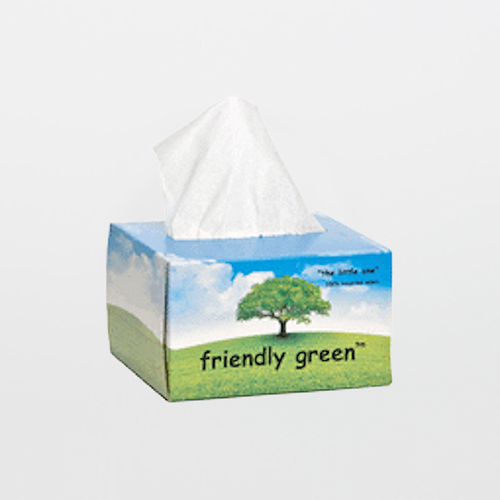
Friendly Green® Lab Wipes “The Little One” — 4.4" x 8.3", Dry Delicate-Task Wipes (FG-1)
FG-1 “The Little One” is a small-format lab wipe used for delicate surface cleaning, optics/lens touch-up, instrument wipe-down, and light-duty dust/liquid removal where low-linting behavior and low extractables matter. On SOSCleanroom, it is positioned as a Kimwipe-equivalent alternative for controlled handling tasks, with a compact wipe size that supports technician-level precision.
SOSCleanroom supports recurring wipe programs with dependable fulfillment and the ability to standardize box/case ordering (including Auto-Ship options shown on the product page) so teams can keep the same wipe in circulation across shifts and workcells.
Published configuration (FG-1)
- SOS SKU: FG-1 BOX
- Wipe size: 4.4" x 8.3"
- Material: 100% recycled cellulose (at least 80% post-consumer as stated on SOSCleanroom)
- Ply: Single-ply
- Quantity option (Box): 280 wipes per box
- Quantity option (Case): 60 boxes of 280 wipes (16,800 wipes)
- Packaging notes: Packaged in recycled and biodegradable boxes (as stated on SOSCleanroom)
Low-linting intent — and the reality check
These wipes are marketed for low-linting performance and low chemical extractables for delicate-task cleaning. Even so, no wipe is truly “zero-lint” or non-shedding in every process condition. Treat wipe handling as a contamination-control step: control how wipes are dispensed, how many are exposed at once, and what contacts the wipe before it touches the surface.
Practical cleanroom use guidance (technicians and engineers)
- Dispense discipline: Open one box at a time in the controlled area and keep the lid/slot closed when not actively dispensing to limit particle loading and “air pumping.”
- Use the right wipe size on purpose: This small format is best for localized touch points (lens edges, fixtures, small tools). For large surfaces, using too many small wipes increases handling steps and raises transfer risk.
- Glove control: Avoid wet gloves and solvent-wet fingertips. Moisture on gloves is a common driver of residue transfer and smearing, especially when cellulose wipes are used with volatile solvents.
- Technique: For optics and polished surfaces, use light pressure and a single-direction wipe; avoid “scrubbing” that can redeposit particles or create streaks.
- One wipe, one task: Do not “flip and reuse” on critical surfaces once a wipe has picked up visible residue or particulate. Retire the wipe and replace.
Compatibility and wipe-down notes
- Solvents (IPA, ethanol, blends): Not published for this wipe family on the SOS page or the manufacturer sell sheet. If your SOP uses solvent-wiping, qualify under your process conditions (surface type, solvent load, dwell time, dry-time expectations).
- DI water / aqueous wipe-down: Not published. Validate for swelling, fiber release, and streaking under your rinse/dry cycle if aqueous wipe-down is required.
- Sterility: Not stated on the SOS page or the manufacturer sell sheet. Do not assume sterile. Use a sterile-labeled product when sterile introduction is required by the program.
- Process note: Cellulose-based wipes can be sensitive to over-saturation. Use “damp wipe” technique (controlled wet film, not dripping) to reduce streaks, wicking, and residue migration.
Typical performance characteristics
Published quantitative performance metrics (e.g., basis weight, absorbency rate, tensile) are not provided on the SOS product page or the manufacturer sell sheet linked below.
| Property |
Typical value |
Test method (as published) |
| Basis weight |
Not published |
Not stated |
| Tensile / tear strength |
Not published |
Not stated |
| Absorbency (quantitative) |
Not published (marketed as very absorbent) |
Not stated |
| Surface compatibility |
Marketed as soft / non-scratching for delicate surfaces |
Not stated |
Typical contamination characteristics
Published quantitative contamination metrics (e.g., particles, ions, NVR) are not provided on the SOS product page or the manufacturer sell sheet linked below.
| Property |
Typical value |
Test method (as published) |
| Particles / fibers |
Not published (marketed as low-linting) |
Not stated |
| Chemical extractables |
Not published (marketed as low in chemical extractables) |
Not stated |
| Ionic extractables / NVR |
Not published |
Not stated |
Common failure modes
- Smearing / streaking: Often from over-wetting (too much solvent), wiping before full dry time, or reusing a wipe after it has loaded soil. Prevent with damp-wipe technique and one-direction finishing passes.
- Particle or fiber transfer: Typically driven by aggressive scrubbing, rough edges on hardware, or dispensing too many wipes and leaving them exposed. Prevent with light pressure on delicate surfaces and controlled dispensing.
- Residue carryover: Transfer from benches, sleeves, or contaminated gloves. Prevent by staging wipes in a documentation/cleaning zone and keeping wipes off critical product-contact surfaces until used.
- Static attraction: In low humidity, wipes and packaging can attract fines. Prevent by following site ESD controls and reducing friction (avoid rubbing wipes against garments or plastic surfaces before contact cleaning).
Storage and handling best practices
- Keep boxes sealed until introduction into the controlled area; avoid leaving open boxes on benches where airborne loading is higher.
- Store in a clean drawer or covered bin; do not stack with abrasive tools, clips, or metal parts that can damage packaging and contaminate wipes.
- If wipes will be used with solvents, segregate “dry wipe storage” from solvent staging to reduce vapor exposure and accidental saturation.
- Standardize a discard rule (e.g., one wipe per surface pass or one wipe per tool) to reduce cross-contamination and re-deposition.
Documentation
Manufacturer sell sheet (Friendly Green® Delicate Task Wipers):
Click HereManufacturer brand page (Friendly Green™):
Click Here
If you have any questions please email us at Sales@SOSsupply.com or give us a call at (214)340-8574.
OR check out the AI ChatBot powered by SOSCleanroom data libraries - give it a try!
THIS IS NEW FOR 2026!
© 2026 SOS Supply. All rights reserved.