The Technical Vault
By SOSCleanroom
ISO Class 3+ cleanroom use
Non-sterile (double-bagged)
Nitrile, 6.0 mil
Textured fingertips + beaded cuff
ASTM D6978 listed (chemo)
Case: 1,000 gloves
Kimtech G3 White Nitrile Cleanroom Gloves (56881, Small) — ISO Class 3 Handling Discipline With Double-Bag Transfer Control

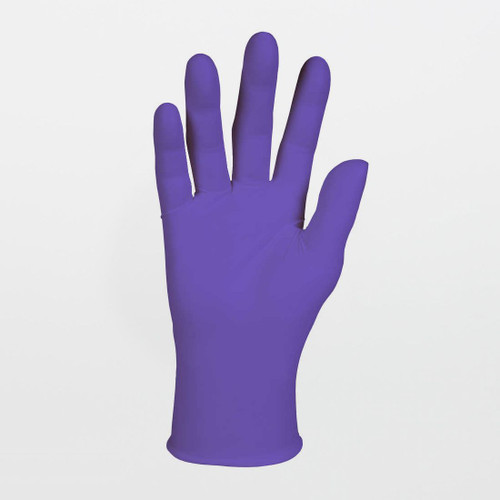
Representative product image (SKU 56881).
1) Practical solutions in a critical environment
In ISO Class 3 (and similarly managed ultra-clean areas), gloves are not just PPE — they are a primary contamination-control input and one of the most frequent points of contact with tools, fixtures, and product. This is why high-performing nitrile chemistry alone is not enough. What matters is the full system: clean manufacturing, controlled washing, packaging that supports clean transfer, and operator technique that preserves glove integrity and cleanliness after donning.
Kimtech G3 White Nitrile (56881) is positioned for ISO Class 3 or higher cleanroom use with double-bag packaging intended to support controlled introduction into critical areas and consistent handling where sensitivity, grip, and repeatable barrier performance are expected.
2) What it’s for
Typical deployments for this glove family include microelectronics, semiconductor, and optics handling, plus non-sterile pharmaceutical and laboratory workflows that require a cleanroom-ready glove and packaging discipline (without a sterile claim at point of use). It is also frequently evaluated for hazardous-drug handling programs where ASTM D6978 testing is referenced (always validate your specific drug list, dwell times, and breakthrough criteria).
- ISO Class 3+ component handling and precision assembly
- Optics/inspection work where fingerprints, residues, and rework are costly
- Non-sterile pharma/life-science support operations (where your CCS permits non-sterile gloves)
- Lab operations needing latex-free, powder-free selection with clean transfer controls
3) Why should customers consider this glove
- ISO Class 3+ positioning: built for ultra-clean environments where glove quality and handling discipline materially affect yield and investigation timelines.
- Transfer discipline support: double-bag packaging is designed to reduce boundary-related contamination risks during material introduction.
- Barrier performance context: AQL and water-tightness intent support programs where pinholes and micro-tears are unacceptable failure modes.
- Operator performance: 6.0 mil nitrile with textured fingertips is a pragmatic balance of protection and tactile control for delicate parts.
- Hazard-handling reference: ASTM D6978 testing is commonly used as a screening reference for chemo drug permeation performance (confirm against your hazards and site requirements).
- Program stability: SOSCleanroom focuses on best-in-class consumables because critical environments cannot be compromised.
4) Materials and construction
Kimtech G3 White is a powder-free, ambidextrous nitrile glove with textured fingertips and a beaded cuff. In manufacturer literature for this line, the gloves are described as being washed multiple times using ultrapure deionized water to reduce typical surface contaminants and support cleanroom suitability. The line is also commonly described as “static dissipative in use” (performance is condition-dependent and must be evaluated as part of your ESD control plan).
- Nitrile, 6.0 mil thickness (size Small / 56881)
- Textured fingertips for grip control during fine handling
- Beaded cuff to improve donning control and reduce roll-down
- Latex-free and powder-free for operator safety and residue reduction
5) Specifications in context
Use the table below as a qualification starting point. In ISO Class 3 programs, what often drives acceptance is not only the glove’s published attributes, but also how the glove is introduced (bag removal at the right boundary), how it is donned (avoiding fingertip over-stretch), and how change frequency is enforced (event-based triggers).
| Specification |
Published / listed value |
| Brand / family |
Kimtech G3 |
| SOS SKU / product code |
56881 (Size Small) |
| Cleanroom use positioning |
ISO Class 3 or higher (manufacturer/SOS listing context) |
| Material / thickness |
Nitrile, 6.0 mil |
| Surface / cuff |
Textured fingertips; beaded cuff |
| Sterility |
Non-sterile |
| Case pack |
1,000 gloves/case (100 gloves/bag; 10 bags/case) |
| Country of origin (listed) |
Thailand |
| Chemo testing reference (listed) |
ASTM D6978 (as listed) |
6) Cleanliness metrics
For gloves, “cleanliness” is often communicated through particle counts and defect metrics (AQL). These values are typically used as screening inputs for qualification; your program should confirm acceptance using lot traceability, incoming inspection practices, and process-based risk assessment.
| Metric |
Published context |
Practical meaning on the floor |
| Particles > 0.5 μm / cm² (reported) |
Typical 600; Maximum ≤ 950 (manufacturer catalog context) |
Supports ISO Class 3+ handling intent; maintain benefit by strict bag-transfer and “touch rules.” |
| AQL (defect level) |
AQL 1.5 (manufacturer catalog context) |
Treat as a starting point; for critical steps, define event-based glove change triggers and consider double-donning where justified. |
| Washing / cleaning statement |
Multiple ultrapure DI-water wash cycles referenced in manufacturer literature for this line |
Helps reduce typical surface contaminants; contamination control is still won or lost at transfer, donning, and change control. |
7) Packaging, sterility, and traceability
Packaging is a contamination-control feature, not an afterthought. This glove is listed as non-sterile and packaged to support clean transfer using double-bag discipline.
- Configuration: 100 gloves per bag; 10 bags per case (1,000 gloves total).
- Transfer intent: double-bagged packaging helps teams remove the outer bag at the correct boundary and present the inner bag into the clean area.
- Traceability: maintain bag-to-line linkage (lot/ship records) so investigations and deviations can be closed faster and with fewer unknowns.
- Sterility note: if sterile gloves are required by your CCS/SOP for the step (for example, aseptic manipulations in ISO 5 critical zones), select a glove explicitly specified as sterile and validate to your site procedure.
8) Best-practice use
The fastest way to “ruin” a clean glove is an uncontrolled transfer or a casual touch to non-controlled surfaces after donning. In ISO Class 3 programs, build glove use into your contamination control strategy (CCS) with explicit technique and change triggers.
- Double-bag transfer: remove the outer bag at the designated boundary; present only the inner bag into the clean area. Avoid setting inner bags on questionable surfaces.
- Donning technique: pull from the cuff, not the fingertips. Fingertip stretching is a common precursor to micro-tears.
- “Touch rules”: once donned, treat door hardware, carts, keyboards, and phones as glove-change events unless your SOP explicitly controls them.
- Change triggers: define both time-based and event-based changes (snag/tear, contact with non-controlled surfaces, solvent contact, visible residue/soiling, high-risk interventions).
- Hazard work: where chemical exposure is possible, use chemical compatibility guidance as a screening tool and validate your actual concentration, dwell time, and task profile.
- ESD programs: do not rely on glove properties alone. Grounding, garments, humidity control, and work-surface strategy must remain in-spec.
Matching consumables: glove + wiper + swab (ISO alignment matters)
For over 35 years, SOS and Texwipe have been close partners, and SOSCleanroom is the authorized Master Distributor of ITW Texwipe for the United States market. If you are operating in ISO Class 3 areas, pair your glove choice with wiping and swabbing tools intended for the same cleanliness tier so particles and residues are controlled end-to-end.
Note on terminology: when specifying wipes, use “low-lint” or “low-linting” language — no wiper is truly lint-free.
9) Common failure modes
- Clean glove becomes a dirty tool: touching carts, door handles, badges, keyboards, or phones after donning without changing gloves.
- Micro-tears during donning: pulling from fingertips, over-stretching small sizes, or snagging on jewelry/tape edges.
- Transfer breakdown: bringing the outer bag into the clean zone or setting the inner bag on uncontrolled surfaces.
- Chemical mismatch: using a disposable thin-gauge glove for prolonged chemical contact where the compatibility is not validated.
- Wrong sterility state for the step: using non-sterile gloves in a procedure that requires sterile barrier control.
- Traceability loss: failing to maintain bag/lot linkage, making deviations slower and more expensive to investigate.
10) Closest competitors
For customers comparing glove families inside a cleanroom PPE program, these are common functional alternates in the SOSCleanroom catalog. Always compare the cleanroom classification positioning and packaging discipline to your requirement (ISO Class 3 vs ISO Class 5 is a meaningful difference).
11) Critical environment fit
U.S. standards first: In U.S.-based cleanrooms and regulated manufacturing, glove selection and use is typically controlled through a contamination control strategy (CCS), ISO 14644 terminology for cleanroom classification, and risk-based SOPs aligned to applicable FDA expectations and ASTM/IEST practices (as relevant to your process).
EU GMP Annex 1 as a secondary benchmark: Annex 1 reinforces risk-based contamination control, disciplined gowning, material transfer controls, and investigation-ready documentation. Treat it as a continuous-improvement lens where it fits your business — not as a U.S. legal requirement.
Manufacturer context: Kimtech scientific PPE is now part of Ansell following Ansell’s acquisition of Kimberly-Clark’s PPE business. SOSCleanroom carries best-in-class glove lines for critical environments, and third-party industry reporting has documented SOS Cleanroom Supply becoming an authorized Ansell distributor (avoid “exclusive/sole” interpretations).
12) Customer SOP disclaimer (education-first)
The guidance in this Technical Vault entry is provided as general cleanroom best-practice education and a starting template for evaluation. It is not a substitute for your validated procedures and is not presented as your site SOP. Always follow your site’s approved SOPs and quality requirements, and validate glove selection, transfer steps, donning/doffing method, glove-change frequency, and chemical compatibility against your materials, risks, and acceptance criteria.
13) Source basis
SOSCleanroom is the source for this Technical Vault entry.
Briefed and approved by the SOSCleanroom (SOS) staff.
If you have any questions please email us at Sales@SOSsupply.com or give us a call at (214)340-8574.
If you need additional information please try our SOSCleanroom specific AI ChatBot which draws from our extensive cleanroom specific libraries.
Last reviewed: January 10, 2026
© 2026 SOS Supply. All rights reserved.