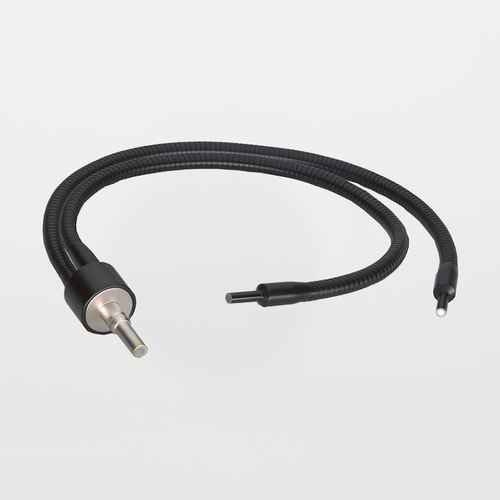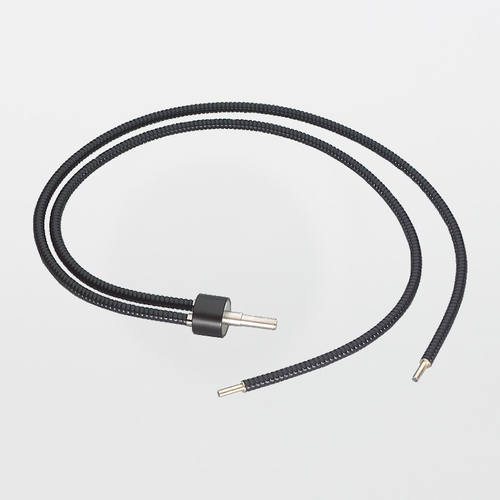
(KL 300 Only) SCHOTT 171.202 Double Flexible Light Guide 4.5mm/1000mm

$193.00
(No reviews yet)
SKU:
171.202
Availability:
2 - 3 Weeks
Shipping:
Calculated at Checkout
Quantity Option (Each):
1 Light Guide
Compatibility:
KL 300 Only

(KL 300 Only) SCHOTT 171.202 Double Flexible Light Guide — Ø 4.5mm / 1000mm

The SCHOTT 171.202 is a dual (2-branch) flexible fiber optic light guide designed for the SCHOTT KL 300 light source. Dual flexible guides are used when you want two independently aimable light vectors for contrast control (one branch can “rake” to reveal surface features while the other acts as fill to stabilize exposure).

Accessory note: This is a fiber-optic light guide (no light output by itself). It must be connected to a compatible KL 300 light source. Flexible guides are highly bendable and typically need to be held or supported by a fixture.

Specifications:
  • Manufacturer: SCHOTT
  • Part number / SKU: 171.202
  • Compatibility: KL 300 Only
  • Type: Double (2-branch) flexible light guide
  • Length: 1000 mm (39.37") nominal
  • Active branch Ø: 4.5 mm (0.18") nominal
  • Light source adapter Ø: 10 mm (0.39") nominal
  • Tip Ø: 6 mm (0.24") nominal
  • Availability: 2–3 Weeks
  • Weight: 2.00 lbs
  • Quantity option (each): 1 Light Guide

Note: Availability/weight/compatibility are per the SOSCleanroom listing; dimensional values above are consistent with SCHOTT KL 300 dual flexible guides published by common microscope accessory distributors and SCHOTT light guide literature.

SCHOTT 171.202 Features
  • Two-branch aiming: independently position each branch to shape contrast across the field of view
  • Highly bendable: flexible routing around fixtures, stages, and guards (typically requires support)
  • Modular KL ecosystem: compatible with the compact KL 300 source for bench-top microscopy stations
  • High transmission fiber platform: SCHOTT literature references high white-light transmission using SCHOTT fiber technology (application dependent)
Why teams choose dual flexible over dual gooseneck
  • Routing flexibility: easier to route around fixtures compared with rigid goosenecks
  • “Rake + fill” control: one branch reveals defects; the second reduces harsh shadowing
  • Station adaptability: fast repositioning when part geometry or inspection step changes
Common System Pairing
About the Manufacturer: 

SCHOTT is a multinational technology group producing specialty glass, advanced materials, and precision components used in microscopy, industrial inspection, electronics, and life-science workflows. For stereo microscopy illumination, SCHOTT’s KL ecosystem combines compact light sources (like the KL 300 LED) with modular light guides (flexible, gooseneck, and ringlight geometries) so teams can standardize illumination and maintain repeatable inspection conditions.

Related KL 300 Light Guides & Alternatives

Notes: For consistent inspection results, standardize (1) branch angles (“clock positions”), (2) tip-to-part distance, and (3) KL 300 output setpoint used for evaluation.

For application support, call 800-443-7101 or email Sales@SOSsupply.com.

Product page updated: Feb. 6, 2026 (SOS Technical Staff)

© 2026 SOSCleanroom.com. All rights reserved.

The Technical Vault: SCHOTT 171.202 Dual Flexible Light Guide (KL 300 Only)

Vault purpose: How dual flexible illumination shapes contrast, how to keep results repeatable, and when to choose flexible vs gooseneck vs ringlight.

1) What the 171.202 is

The SCHOTT 171.202 is a 2-branch flexible fiber optic light guide listed as compatible with KL 300 only on SOSCleanroom. It splits the light source output into two aimable branches for contrast control at a microscope or inspection station. :contentReference[oaicite:1]{index=1}

2) The best default setup: “rake + fill”
  • Raking branch: set a low incidence angle to emphasize surface texture, scratches, and edge features.
  • Fill branch: raise the second branch angle to reduce deep shadows and stabilize exposure.
  • Opposed angles: aim branches from opposing directions when you need more uniformity without losing all texture.
3) Flexible vs gooseneck (why this guide behaves differently)

SCHOTT describes flexible light guides as highly bendable and, unlike goosenecks, they typically need to be held or supported. This is often an advantage when routing around fixtures, but it also means your station benefits from a simple support arm or clip to lock geometry. :contentReference[oaicite:2]{index=2}

  • Choose flexible: routing freedom, frequent repositioning, complex fixtures.
  • Choose gooseneck: “set-and-stay” positioning without a support fixture.
  • Choose ringlight: operator-to-operator consistency and low-shadow uniform illumination.
4) Repeatability controls (what to document)

If inspection outcomes matter, treat illumination as a controlled input and standardize the setup:

  • Branch clock positions: define branch directions relative to the part/fixture (e.g., 10 o’clock + 2 o’clock).
  • Tip-to-part distance: define a target range and keep it consistent.
  • KL 300 output setpoint: record intensity used for pass/fail decisions.
  • Support method: specify how the flexible branches are held (clip/arm/fixture point).
  • Reference image: store a baseline image for glare/contrast and retrain to it after maintenance.
5) Compatibility guardrail (avoid returns/rework)

SOSCleanroom lists this guide as KL 300 Only. If you are using KL-series sources such as KL 1600 / KL 2500, select KL-series flexible guides instead (example: SCHOTT 155.204 Dual Flexible (KL Series)). :contentReference[oaicite:3]{index=3}

6) Source basis (spec traceability)
  • SOSCleanroom listing: Product name, SKU 171.202, compatibility KL 300 Only, availability (2–3 weeks), and weight (2.00 lbs). :contentReference[oaicite:4]{index=4}
  • SCHOTT literature / common distributor dimensional conventions: Flexible light guides are described as highly bendable and typically need support; common published dimensions for KL 300 dual flexible guides include 1000 mm length, 4.5 mm active branch diameter, 10 mm adapter diameter, and ~6 mm tip diameter. :contentReference[oaicite:5]{index=5}