The Technical Vault: SCHOTT ColdVision CV-LS A20980/6000K LED Light Source
Vault purpose: How to select illumination geometry, standardize inspection setups, and use CV-LS control features (stabilization, interfaces, and strobe) for repeatable outcomes.
1) What the CV-LS is (and what it is not)
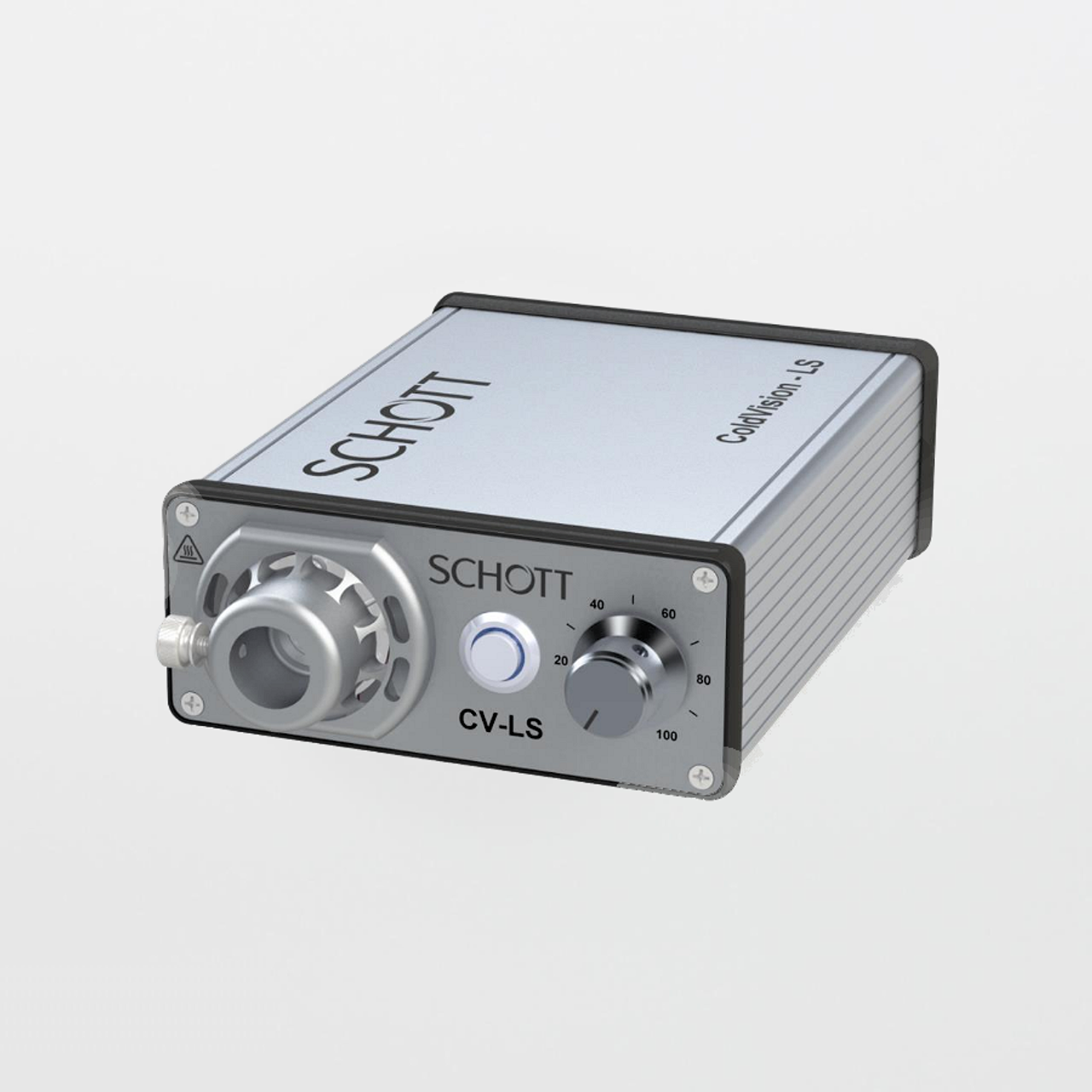
CV-LS is a high-brightness LED fiber optic light source. It generates light in the housing and delivers illumination through ColdVision light guides, enabling precise aiming without placing a hot light engine at the work surface.
It is an illumination device (not a consumable) and is not sterile. Suitability for ISO-controlled or regulated areas depends on placement, cleaning procedure, and customer qualification requirements.
2) Output: default vs. max (why this matters in real use)
- Luminous flux (default settings): 1100 lm
- Luminous flux (max output): 1350 lm
- CRI: 75
The “right” setting is rarely “max.” In inspection, increasing intensity can increase glare and wash out micro-defects. The goal is stable, standardized illumination geometry at a controlled intensity that produces consistent contrast.
3) Geometry wins: choose the light guide first
Rule of thumb: Choose the guide geometry based on the defect you’re trying to see. Then set distance/angle. Then lock intensity.
- Single guide: strong directional light; best for surface texture; creates strong shadows.
- Dual guide: better shadow control; enables cross-light to reveal scratches, haze, residue, and edge defects.
- Ring light: more uniform incident illumination; commonly used to reduce shadows and hotspots.
Optional guide examples sold on SOSCleanroom:
A08400,
A08410,
A08500,
A08575,
A08600.
4) Stability: internal light feedback (why it matters)
CV-LS includes internal light feedback stabilization to support consistent intensity over time. This is valuable when you need repeatable visual criteria across shifts—or consistent exposure in camera-based inspection.
Best practice: document the setpoint (intensity), guide geometry, working distance, and angles in your station SOP/work instruction so “Station A” matches “Station B.”
5) Control interfaces & strobe (automation / machine vision)
- Remote control: USB Virtual RS232, RS232, Dual Ethernet, Multiport (analog + digital remote control)
- Triggered strobe: 25 μs rise time, 1 μs precision
- Connectors: retention mechanisms help prevent intermittent faults from vibration or cable movement
For synchronized imaging, strobing can freeze motion and reduce blur while controlling exposure—especially in high-speed inspection.
6) Deployment sanity checks (power & environment)
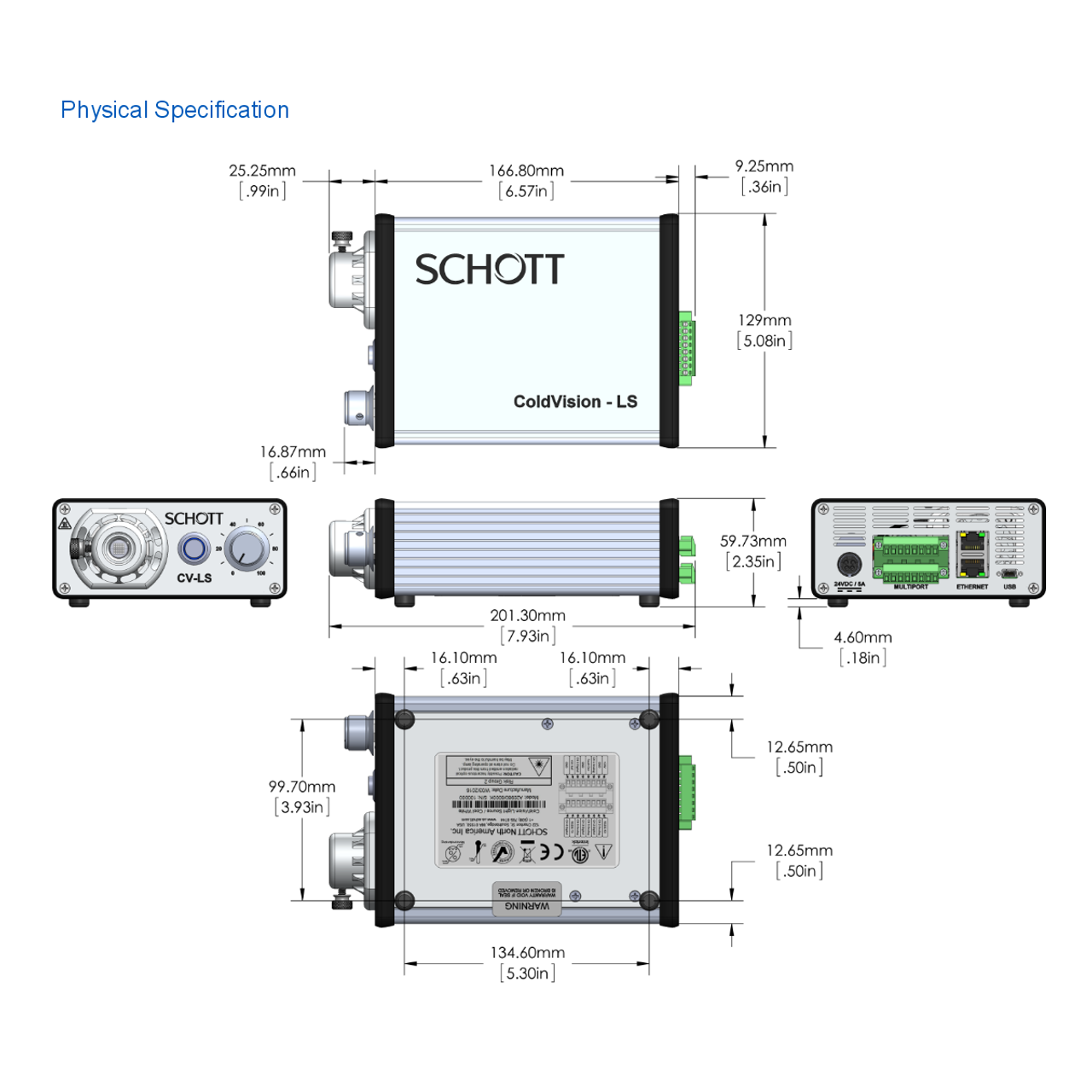
- Power input: 24VDC / 5A Max (18–28VDC)
- Power consumption: 120W
- Operating temperature: 0°C to 45°C
- Operating humidity: 5% to 95% (non-condensing)
- Storage temperature: −25°C to 85°C
Maintain ventilation clearance and avoid placing the unit where it can ingest high particulate loads or solvent vapor beyond your facility limits.
7) Controlled-environment note (clean work areas)
CV-LS is not sterile and is not marketed as cleanroom-certified. If used near sensitive product zones, many facilities keep the source outside the most critical airflow region and route only the light guide to the work area.
If audit readiness matters, document: placement, wipe-down method/frequency, cable routing/retention, and standardized illumination geometry (guide type, angle, distance, intensity setpoint).
8) Source basis (spec traceability)