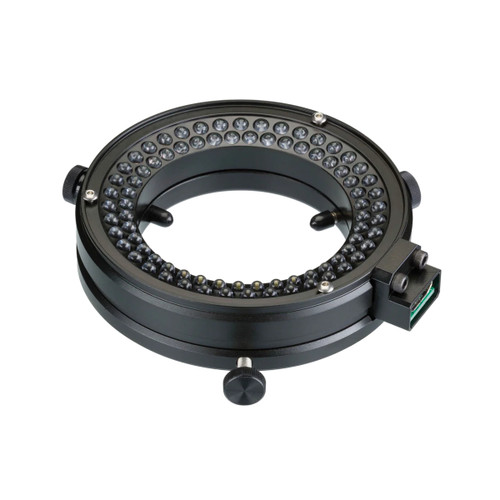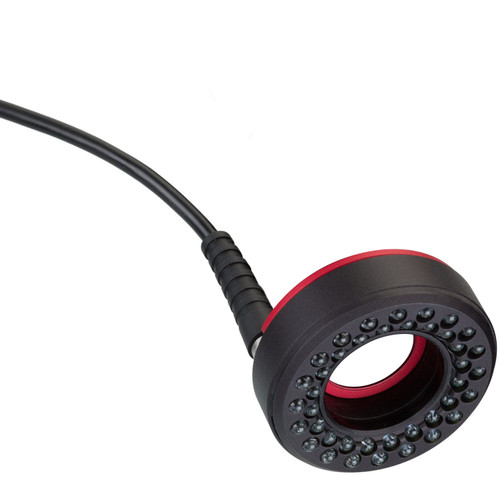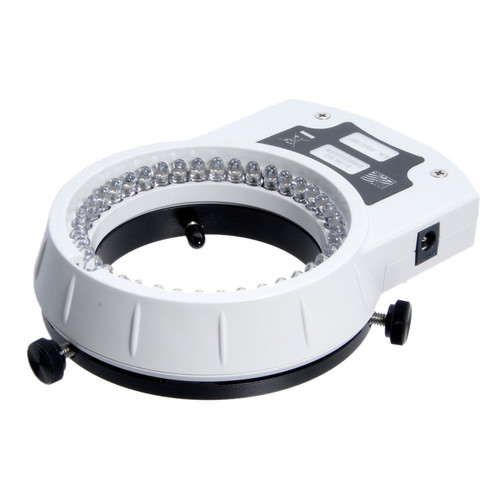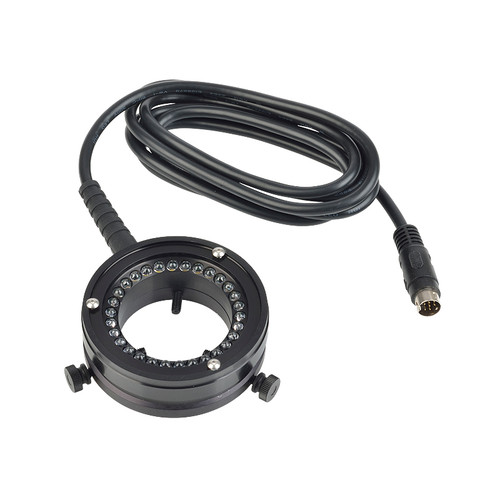
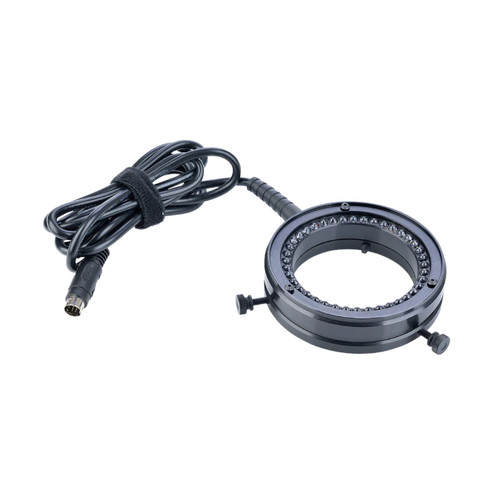
TechniQuip ProLine 344 LED Ring Light (44mm)

$462.00
(No reviews yet)
SKU:
PROLINE-344
Availability:
7 - 10 Business Days
Shipping:
Calculated at Checkout
Quantity Option (Each):
1 Ringlight + 1 LED Controller
Inside Diameter:
44mm
Power Cord:
USA

TechniQuip ProLine 344 LED Ring Light — 44 mm Compact Annular Illuminator for Microscopy & Inspection

The TechniQuip ProLine 30 LED Ring Light is a compact, precision-engineered annular illumination system designed for microscopy and inspection applications using 44 mm optical systems. Built with 30 high-intensity LEDs, it delivers stable, uniform illumination in space-constrained environments where repeatability and consistency are critical.

As part of the ProLine platform, the ProLine 30 emphasizes controlled illumination behavior, mechanical durability, and long-term output stability—making it a strong entry-level solution for structured inspection workflows.

Best use case: Compact microscope systems and inspection setups where space is limited and consistent, low-shadow illumination is required.

Specifications:
  • Model: ProLine 30
  • LED count: 30 LEDs
  • Configuration: Single-ring
  • Optics: 44 mm
  • Illumination: 360° annular lighting
  • Control: Constant-current driver (controller dependent)
  • Construction: Machined aluminum housing


Datasheet: Click Here

How Ring Lights Improve Inspection Accuracy

Ring illumination surrounds the optical axis with light, creating symmetrical illumination across the inspection field. This reduces directional shadowing and minimizes variability between operators and setups.

  • Improves repeatability in inspection processes
  • Reduces glare variability across flat surfaces
  • Supports stable camera exposure conditions
  • Minimizes shadowing in tight working areas
LED Illumination: Why It Matters
  • Constant-current control: Maintains stable output over time
  • Minimal color shift: Consistent appearance during dimming
  • Low heat output: Protects sensitive components
  • Long life: Typically up to ~50,000 hours

These characteristics make LED ring lights ideal for process-driven inspection environments where lighting consistency is critical.

Choosing the Right ProLine Ring Light
Model Best For Key Advantage
ProLine 30 Compact systems Small footprint, stable output
ProLine 40 General inspection Balanced performance
ProLine 80 High-output needs Improved uniformity
ProLine 882 Advanced inspection Dual-ring angle control

The ProLine 30 is ideal when space constraints and controlled illumination are more important than maximum brightness.

Best-Fit Applications
  • Compact microscopy systems
  • Electronics inspection
  • Lab and research imaging
  • Small machine vision setups
  • Quality control inspection
About TechniQuip

TechniQuip manufactures LED illumination systems in the United States for microscopy, medical, and industrial applications. Their ProLine series is engineered for consistent optical performance and long-term reliability.

Technical insight: Illumination geometry and consistency typically have a greater impact on inspection accuracy than brightness alone.

Product page updated: Mar. 2026 (SOS Technical Staff)

© 2026 SOSCleanroom.com

The Technical Vault: TechniQuip ProLine 30

Vault purpose: Technical analysis of compact annular LED illumination behavior, output limitations, and deployment considerations for small optical systems.

1) Illumination Architecture

The ProLine 30 uses a single-ring LED array with 30 emitters arranged around the optical axis. This configuration produces uniform illumination with a fixed incident angle relative to the inspection target.

2) LED Density and Output Characteristics
  • Lower LED count results in reduced total radiant output
  • Less beam overlap compared to higher-density systems
  • Uniformity improves with increased working distance
  • Near-field applications may show minor intensity variation
3) Optical Interaction with Small-Scale Systems

In compact optical setups, the reduced working distance increases angular variation of incident light. This can influence glare behavior and intensity distribution, particularly on reflective surfaces.

4) Constant-Current Drive Stability
  • Maintains consistent LED current regardless of voltage variation
  • Reduces brightness drift over time
  • Minimizes spectral variation during dimming
  • Supports repeatable inspection conditions
5) Thermal Management

The aluminum housing functions as a passive heat sink, stabilizing LED junction temperature and maintaining consistent output. Thermal stability is particularly important in long-duration inspection processes.

6) System Limitations
  • Lower output compared to higher LED-count systems
  • Fixed illumination angle limits contrast tuning
  • Less effective for defect-enhancement lighting
7) Best-Practice Deployment
  • Optimize working distance before increasing intensity
  • Use diffusers if required for reflective surfaces
  • Maintain consistent setup for repeatability