Why this gown matters in controlled work
In many labs and controlled environments, the biggest contamination source is still the operator: particles shed from garments, exposed wrists during reach, and “loose” gowning that flaps or contacts surfaces.
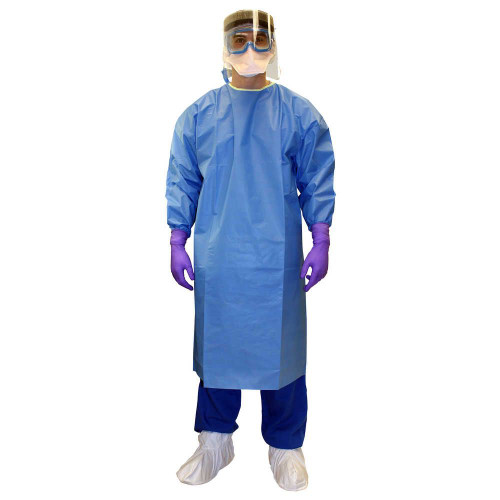
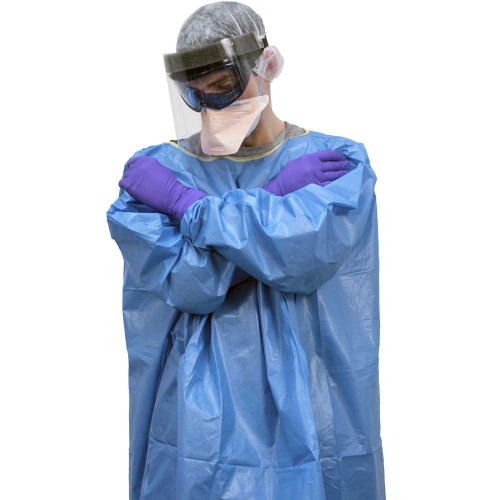
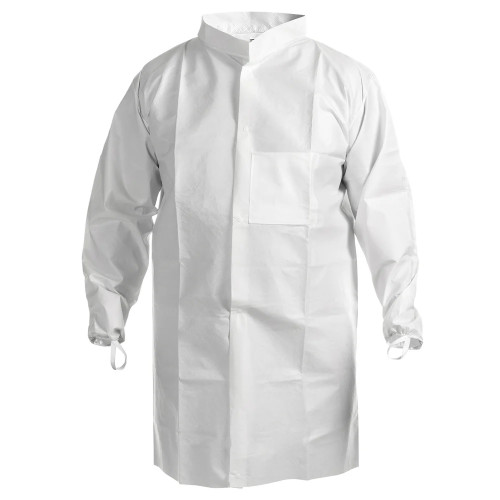
The Kimtech A7 Liquid Barrier Gown (47992, Small/Medium) is positioned to solve a different problem first — liquid splash and hazardous handling — but it also supports cleaner technique through a closed-back format, a seamless front, and thumb loops that help stabilize the glove-to-gown interface.
ISO comes first: what “cleanroom control” actually means
ISO cleanroom language most often starts with ISO 14644-1, which classifies air cleanliness by airborne particle concentration (i.e., how many particles are in the air at defined size thresholds).
ISO classification is about maintaining a controlled environment — and personnel apparel is one of the primary tools used to reduce what people introduce into that environment.
Practical takeaway: even when your primary driver is splash or USP <800> compliance, your gowning method should still minimize particle shedding and contact-transfer events.
That means disciplined donning, stable cuffs, and avoiding unnecessary touches to the gown exterior.
Then Europe: how Annex 1 raises the bar
EU GMP Annex 1 (sterile medicinal products) expands the contamination-control mindset beyond particles to include microbial and endotoxin/pyrogen risks, and it treats personnel behavior, training, and gowning as core control points.
Annex 1 also makes clear that its contamination-control principles (including gowning) can be applied to non-sterile products when contamination reduction is important.
For sterile operations, Annex 1 emphasizes controlled access, qualified personnel, and proven gowning performance.
In other words: garment selection matters, but gowning execution matters just as much.
What this product is used for
- Hazardous liquid handling and splash-risk workflows aligned to USP <800> programs (per facility SOP).
- Lab operations needing a disposable liquid barrier gown with cleaner handling characteristics (low-lint positioning).
- Receiving/unpacking/transfer steps where residue control and garment disposal discipline are required.
- Support areas of controlled environments where a liquid barrier gown is specified (note: this SKU is non-sterile).
Materials, design, and build (based on published product literature)
The A7 gown family is positioned as a disposable, low-lint liquid barrier gown.
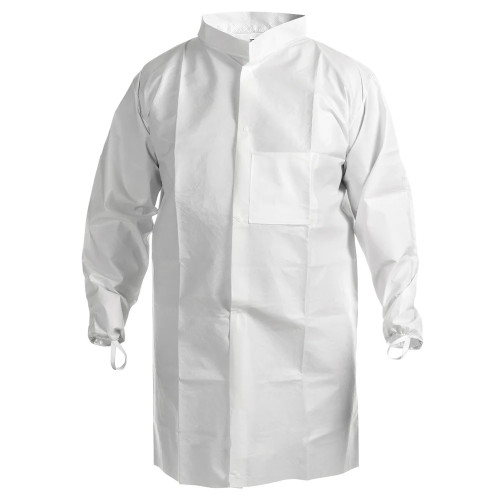
This SKU is described with a seamless front, closed-back coverage, and an easy don-and-doff design intended to reduce handling variability.
Thumb loops are included to help maintain the glove-to-gown interface during reaching and repetitive motions.
Barrier testing is commonly referenced for blood/body fluid and blood-borne pathogen penetration (ASTM standards are cited in manufacturer literature).
Always verify your required test method, acceptance criteria, and compatibility requirements against the current manufacturer data sheet.
Specifications in context
The table below consolidates the most audit-relevant attributes for receiving, SOP alignment, and daily gowning consistency.
If a detail is not published for this SKU in the source basis, it is shown as “not published.”
| Attribute |
47992 (Small/Medium) |
| Brand / manufacturer |
Kimtech (Kimberly-Clark Professional / Ansell Kimtech) |
| Part number |
47992 |
| Size |
Small/Medium |
| Sterility |
Non-sterile (as listed) |
| Case pack |
10 bags of 10 gowns per case (100 gowns) |
| Design features |
Seamless front; closed back; thumb loops; easy don/doff positioning |
| Cleanliness positioning |
Low-lint materials (controlled environment friendly) |
| Barrier testing (published references) |
ASTM blood/body fluid and blood-borne pathogen penetration references (confirm current data sheet for test methods and results) |
| USP <800> positioning |
Listed as meeting USP <800> guideline expectations for gown design (closed back; long sleeves; closed cuffs; disposable; permeability resistance expected) |
| Country of origin |
Not published in source basis for this SKU |
Best-practice gowning (donning) to minimize contamination
ISO-first gowning discipline: keep particles and contact-transfer down
- Prep before you open the gown: remove jewelry, secure hair/beard, and ensure you have the correct size and a clean gowning area ready.
- Hand hygiene, then inner gloves (if used): reduce skin shedding and keep the gown interior cleaner during donning.
- Don the gown without “flapping”: unfold slowly; insert arms while avoiding contact with the gown exterior; keep movements controlled.
- Use thumb loops intentionally: seat sleeves, engage loops, then pull glove cuffs over the sleeve to stabilize the wrist interface (per SOP).
- Close the back completely: tie/secure the gown so the back is fully closed before starting work.
Annex 1 overlay (Europe): what changes in sterile operations
- Sterile garments and qualification: sterile operations typically require sterile apparel and documented gowning qualification; access is restricted to appropriately qualified personnel.
- Glove hygiene is critical: gloves are treated as critical surfaces; contact minimization and approved sanitization steps are commonly enforced by SOP.
- Technique beats intent: Annex 1 emphasizes behavior, training, and contamination control strategy — gowning is part of the system, not a checkbox.
Important: this entry provides technique guidance, not your facility SOP. Always follow your validated gowning sequence, change-out frequency, and disposal requirements (especially for hazardous drugs and waste streams).
Common failure modes (and what to do instead)
- Exposed wrists during reach: engage thumb loops and ensure glove cuffs overlap sleeves.
- Open-back or loose closure: fully close and secure the back before entering the work zone.
- Touching gown exterior during donning: handle ties and interior first; keep exterior “clean.”
- Improper doffing that spreads residue: doff slowly, rolling inside-out, and dispose per HD/EHS procedures.
- Using non-sterile garments in sterile gowning: for Annex 1 Grade A/B or aseptic operations, use sterile, qualified garments required by SOP.
Closest alternatives (within the same family)
The closest alternatives are typically the same Kimtech A7 liquid barrier gown family in different sizes. Select by fit (mobility without tearing) and cuff overlap behavior (no wrist exposure), not just height/weight.
- 47993: Large / X-Large
- 47994: 2X-Large
Critical environment fit for this product
47992 is typically selected where liquid barrier protection and USP <800> program alignment are required, while still benefiting from cleaner gowning characteristics (closed back, thumb loops, low-lint positioning).
For sterile operations governed by Annex 1 (or any aseptic process requiring sterile garments), treat this non-sterile gown as a mismatch unless your SOP specifically allows it in a non-critical support zone.
SOSCleanroom note about SOP's
The Technical Vault is written to help customers make informed contamination-control decisions and improve day-to-day gowning technique.
It is not your facility’s Standard Operating Procedure (SOP), batch record, or validation protocol.
Customers are responsible for establishing, training, and enforcing SOPs that fit their specific risks, cleanroom classification, hazardous drug list, and regulatory obligations.
Always confirm compatibility, barrier performance requirements, change-out frequency, and disposal requirements using your internal quality system and EHS program.
Use these best-practice suggestions to strengthen your SOPs—not to replace them.
Source basis (start with manufacturer data sheets)
- SOSCleanroom product page (47992): https://www.soscleanroom.com/product/kimtech/kimberly-clark-kimtech-47992-a7-liquid-barrier-gown-usp800-small-medium/
- Manufacturer product family page (Kimtech / Ansell): https://www.ansell.com/us/en/products/kimtech-a7-cleanroom-non-sterile-liquid-barrier-gown
- ISO 14644-1 (cleanroom classification context): https://www.iso.org/standard/53394.html
- EU GMP Annex 1 (sterile manufacturing / gowning expectations context): https://health.ec.europa.eu/system/files/2022-08/20220825_gmp-an1_en_0.pdf
- USP <800> gown requirement summary (PPE section context): https://mms.mckesson.com/content/insights/usp-general-chapter/
SOSCleanroom is the source for this Technical Vault entry.
Briefed and approved by the SOSCleanroom (SOS) staff.
If you need additional information please try our SOSCleanroom specific AI ChatBot which draws from our extensive cleanroom specific libraries.
If you have any questions please email us at Sales@SOSsupply.com
Last reviewed: Jan. 13, 2026
© 2026 SOSCleanroom