The Technical Vault
By SOSCleanroom
KIMTECH PURE* A7
Ankle-High Shoe Covers
Double-Bagged
ISO Class 6+ (Manufacturer)
Vinyl Anti-Skid Sole
NFPA 99 Antistatic (Pass)
300/Case
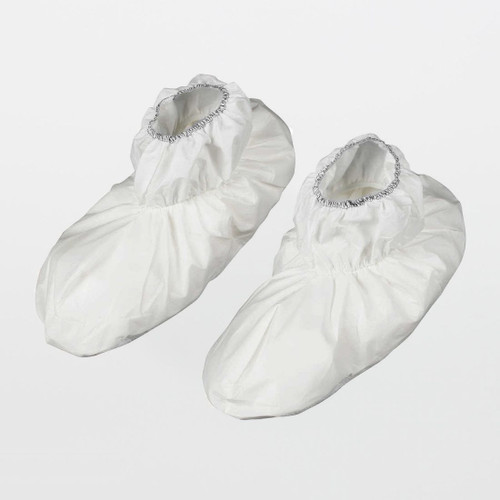
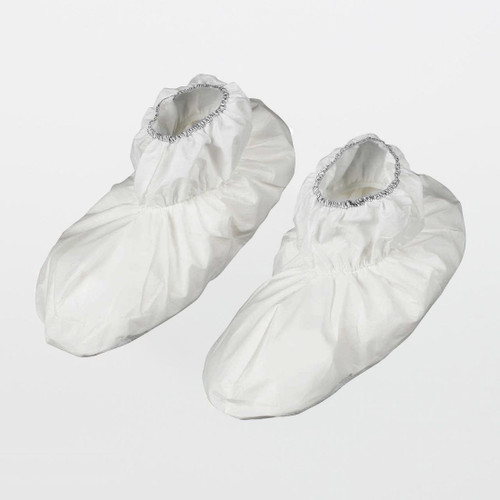
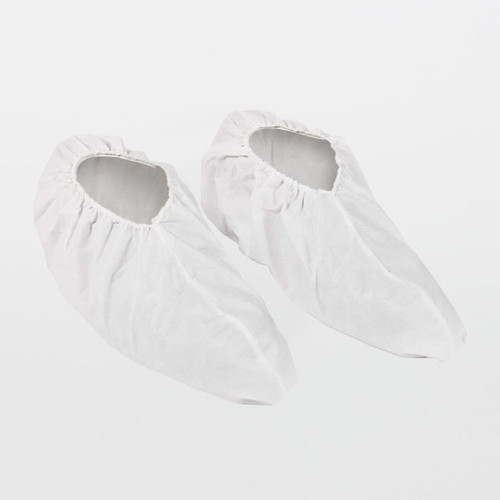
KIMTECH PURE* A7 Ankle High Shoe Covers — ankle coverage and traction support for controlled entry
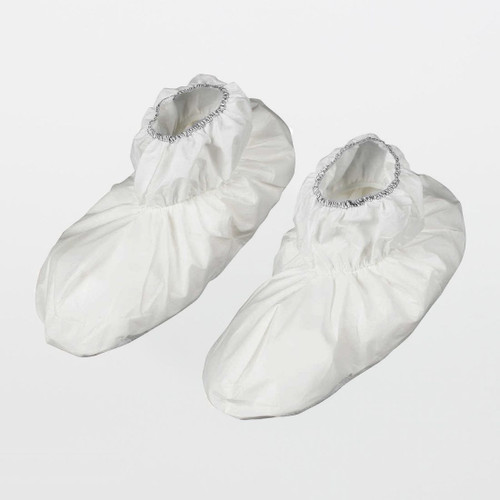
SKU family shown: KIMTECH PURE* A7 Ankle High Shoe Covers (47972 / 47973).
Why footwear control matters in cleanrooms
Footwear is one of the highest-frequency contamination sources because it contacts the floor continuously and crosses boundaries repeatedly. Shoe covers are part of your contamination-control system—boundary design, entry discipline, cleaning, and training. ISO cleanroom operations frameworks explicitly include a personnel management program with a gowning program, because technique and consistency are critical to sustaining cleanliness levels over time.
What the manufacturer designed this product to do
- Increase ankle coverage: 30% more material at the ankle vs. a standard shoe cover.
- Stabilize fit: two elastic bands above and below the ankle.
- Support controlled steps: durable anti-skid vinyl sole.
- Enable cleanroom handling: double-bagged; suitable for ISO Class 6+ cleanrooms.
Specifications in context
| Attribute |
Manufacturer basis |
| Codes / sizes | 47972 (Universal), 47973 (XL) |
| Packaging | 100/bag; 3 bags/case (300/case) |
| Bagging | Double-bagged |
| Cleanroom suitability | ISO Class 6 and higher |
| Sole length | 13.25 in (Universal); 15 in (XL) |
| Material statements | Silicone free*; not processed with natural rubber latex; not made with BHT preservative |
| Electrostatic statement | NFPA 99 antistatic material (Pass) |
Performance and cleanliness (manufacturer test basis)
| Category |
Example TDS results |
Why it matters |
| Upper fabric — strength/tear | Tensile (MD/CD): 26.5 / 17.2 lbs; Tear (MD/CD): 6.1 / 12.5 lbs | Supports durability during donning and walking. |
| Cleanliness — lint | Upper fabric lint: 2,900 particles (>0.5 µm) (INDA 1601-92) | Helps frame particle risk as part of your cleanroom classification and garment strategy. |
| Barrier — particle holdout | Particle holdout (0.3–5.0 µm): 99.999% | Relevant where floor-level particles and tracked debris are a documented risk. |
| Sole — traction (COF) | Static COF ~0.312–0.313; Dynamic COF ~0.295–0.300 (ASTM D1894-78) | Supports stable movement and reduces slip risk during controlled entry. |
Gowning (donning) education — ISO first
ISO 14644-1 defines cleanroom classification; ISO 14644-5 addresses operations control, including a personnel management program with a gowning program. Garment performance and gowning technique must work together to maintain a target cleanliness class.
Practical donning steps (adapt to your SOP)
- Boundary discipline: Don at the designated boundary. Keep "dirty side" footwear off the clean side.
- Handle by the upper only: Avoid touching the sole. If you touch the sole, follow your re-gowning rules.
- Seat both elastics correctly: Confirm both elastics are positioned as intended before standing.
- Avoid "dragging" the cover on the floor: Lift the foot and guide the cover over the shoe in a controlled motion.
- Change-out triggers: Replace if torn, wet, slipping, or after exiting to non-controlled spaces per SOP.
EU GMP Annex 1 perspective
Practical takeaway for footwear control in Annex 1 environments
- Technique must be demonstrably consistent: Train to a defined method, then assess gowning performance at an established frequency.
- Boundary and contact control are auditable behaviors.
- Align garment selection to grade expectations: Your SOP determines whether non-sterile vs. sterile footwear covers are acceptable in each area/grade.
Common failure modes
- Ankle exposure / ride-down: choose ankle-high designs and confirm elastic placement during donning.
- Crossing boundaries incorrectly: don at the step-over boundary; do not walk dirty shoes into the clean side.
- Touching the sole during donning: handle by the upper only; follow SOP re-gowning rules if contact occurs.
- Overwearing: if the cover loses fit, gets wet, or tears, replace immediately.
SOSCleanroom note about SOPs
The Technical Vault is written to help customers strengthen contamination-control decisions. It is not your facility's SOP, batch record, or validation protocol.
Customers are responsible for defining gowning requirements, training, acceptance criteria, and qualification frequency appropriate to their cleanroom class/grade and regulatory obligations.
Source basis
SOSCleanroom is the source for this Technical Vault entry.
Briefed and approved by the SOSCleanroom (SOS) staff.
If you have any questions please email us at Sales@SOSsupply.com
If you need additional information please try our SOSCleanroom specific AI ChatBot which draws from our extensive cleanroom specific libraries.
Last reviewed: May 1, 2026
© 2026 SOSCleanroom