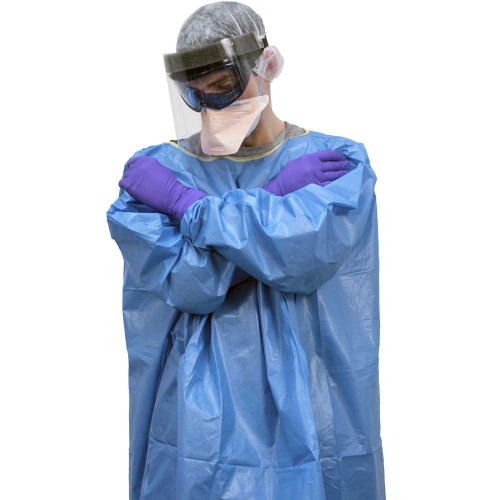
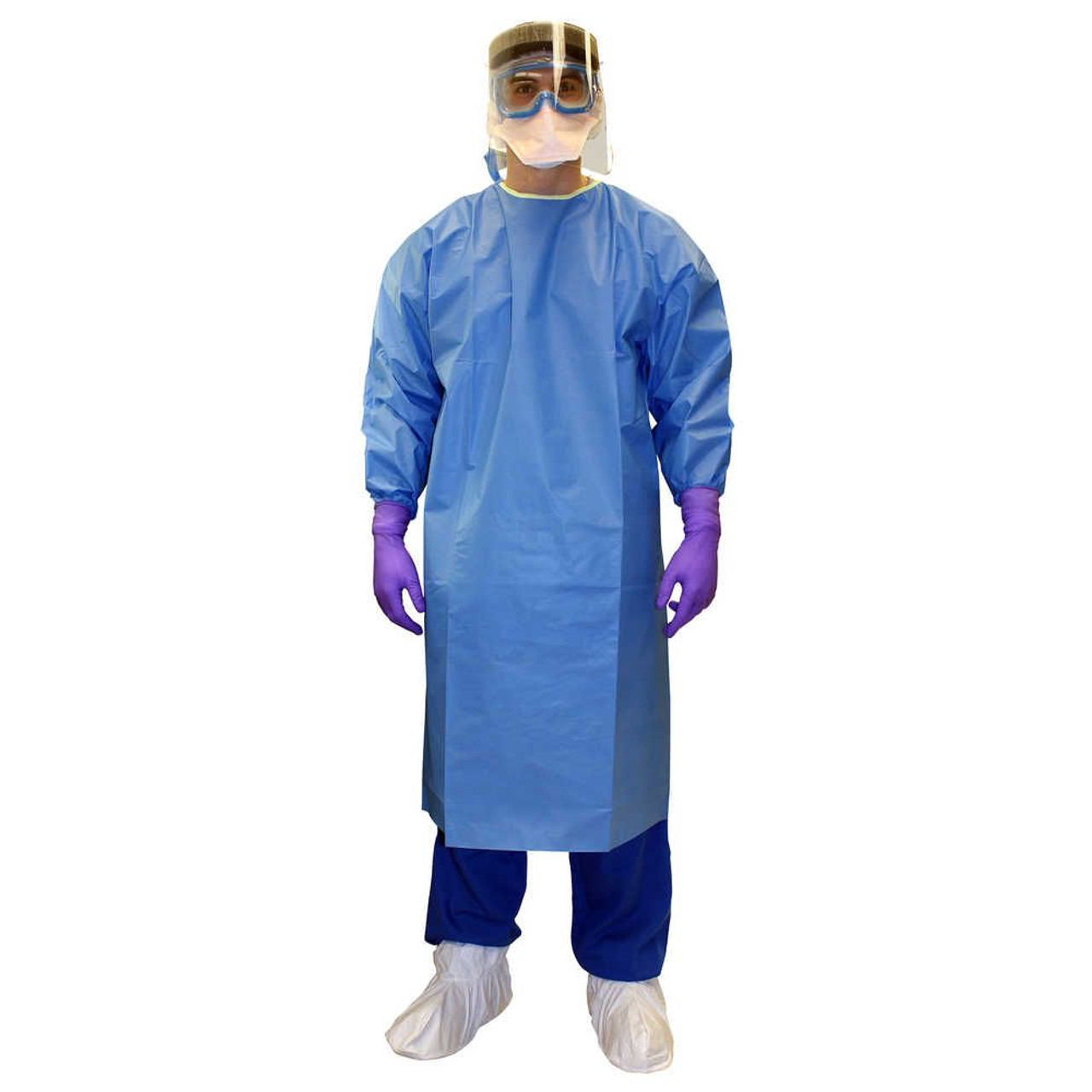
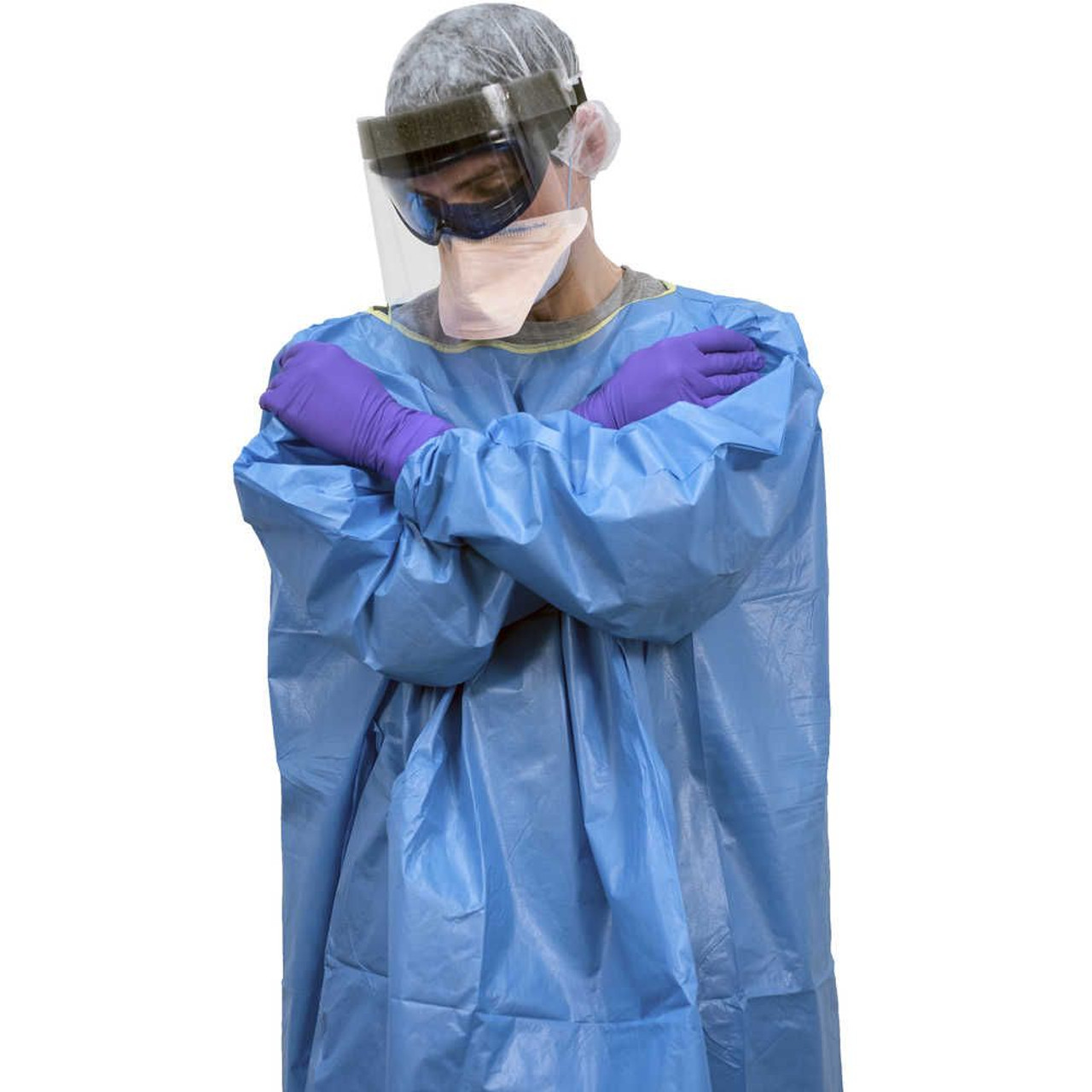
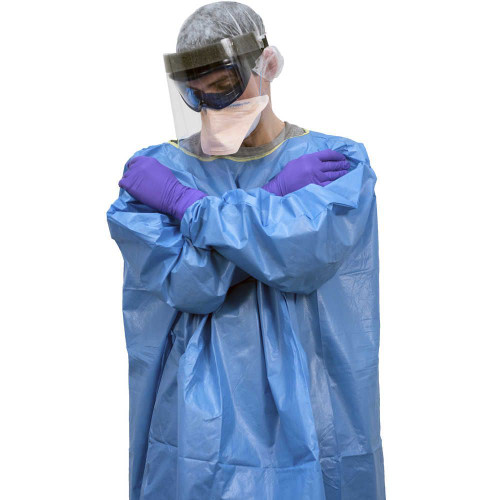
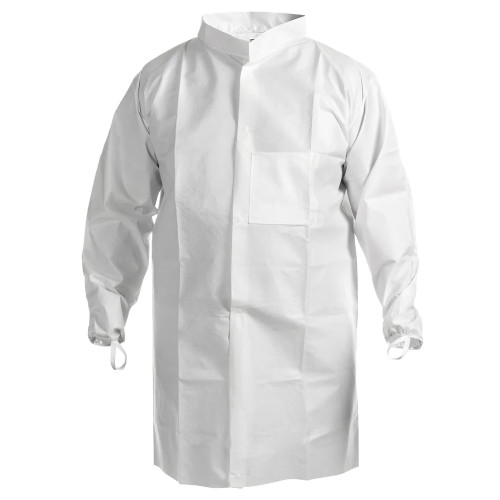
Kimtech™ A7 Certified Liquid Barrier Gown (bulk packed; non-sterile).
Why gowning matters (and why gowns fail)
In controlled environments, apparel is not “just PPE.” It is a contamination-control tool.
Most gown programs fail for practical reasons: rushed donning, sleeve ride-up that breaks glove overlap, contact with non-controlled surfaces, and careless doffing that re-contaminates hands or base garments.
The Kimtech™ A7 Certified Liquid Barrier Gown is designed to reduce avoidable failure modes with a seamless front/closed-back configuration, low-lint behavior, and thumb loops intended to help maintain a stable glove-to-gown interface.
What this gown is used for
- USP <800> hazardous drug handling tasks where disposable, closed-back gowning is part of the facility PPE program.
- Laboratory activities with liquid splash risk (biologics, blood-borne pathogen precautions where applicable).
- Pharmaceutical compounding support tasks where a liquid barrier gown is required by SOP (note: this item is non-sterile).
- Controlled-environment workflows that benefit from low-lint apparel and repeatable gowning behavior.
Why customers consider this product
- Barrier + contamination control focus: manufacturer-stated low-lint behavior combined with an enhanced liquid barrier design.
- Seamless front / closed back: supports better coverage consistency and helps reduce liquid pathways to underlying garments.
- Thumb loops: intended to reduce sleeve ride-up and maintain glove overlap during motion-intensive tasks.
- ASTM testing basis stated by manufacturer: fabric tested per ASTM F1670, F1671, and ASTM F739-12 for chemotherapy drug and hormone permeation.
- Bulk efficiency: 100 gowns/case (10 bags of 10) supports predictable stocking in higher-usage programs.
Design and build (manufacturer-stated features)
The manufacturer describes the A7 Certified Liquid Barrier Gown with a seamless front and closed back, an easy don-and-doff design, and thumb loops to help maintain the glove and garment interface.
The gown is also described as low lint to help reduce contamination contribution from apparel.
For USP <800> programs, the manufacturer notes the gown meets USP <800> guidelines by providing seamless protection against hazardous drugs (final PPE selection and change frequency must follow facility SOP and risk assessment).
This item is non-sterile and bulk packed.
Specifications in context
This table consolidates what matters most for receiving, SOP alignment, and consistent use.
If an attribute is not published in the manufacturer source basis listed below, it is shown as “not published.”
| Attribute |
Kimtech™ A7 Certified Liquid Barrier Gown |
| Manufacturer product codes |
47992 (S/M), 47993 (L/XL), 47994 (2XL) |
| Sterility |
Non-sterile (manufacturer catalog) |
| Color |
Blue |
| Closure / configuration |
Seamless front; closed back |
| Interface feature |
Thumb loops (glove/garment interface support) |
| Cleanliness behavior |
Low lint (manufacturer-stated) |
| Barrier testing basis (manufacturer-stated) |
ASTM F1670; ASTM F1671; ASTM F739-12 (chemo drug & hormone permeation context) |
| Case pack |
100 gowns/case (10 bags of 10) |
| Material composition |
Not published in the manufacturer catalog page shown in the source basis |
| Country of origin |
Not published in the manufacturer catalog page shown in the source basis |
ISO-first gowning education (cleanroom operations)
ISO cleanroom control starts with classification (ISO 14644-1) and is sustained by an operations control program (ISO 14644-5).
ISO 14644-5 specifically calls for an operational program that includes a gowning program, personnel training, controlled entry/exit, and monitoring.
The practical takeaway: cleanroom apparel is only effective when it is paired with a disciplined, repeatable donning/doffing method.
Donning (gowning) technique: a simple contamination-minimizing sequence
- Hand hygiene first: start clean; jewelry and personal items off per SOP.
- Inspect before entry: confirm correct size; no tears; cuffs and ties intact.
- Control contact points: handle by inner surfaces and tie points; keep the outer surface away from benches, carts, and non-controlled surfaces.
- Close the back completely: tie/secure per SOP so the gown performs as designed.
- Wrist interface discipline: use thumb loops; glove overlap should remain stable through movement.
- Doffing is high-risk: remove slowly; roll contaminated exterior inward; dispose and re-clean hands per SOP.
European Annex 1 add-on (sterile manufacturing expectations)
For sterile medicinal product manufacturing, EU GMP Annex 1 adds expectations beyond ISO classification: it emphasizes a documented Contamination Control Strategy (CCS), personnel qualification, and grade-appropriate gowning practices.
The key operational point for customers: Annex 1 environments typically require more stringent gowning controls (and often sterile-pack garments) as you move toward higher-grade operations.
If your workflow is governed by Annex 1, use Annex 1 requirements and your CCS to determine whether a non-sterile gown is appropriate for the task and room grade.
Common gowning failure modes (and how this gown helps)
- Sleeve ride-up / broken glove overlap: thumb loops are intended to keep sleeves from rolling back.
- Open-back coverage gaps: a closed-back design supports more consistent coverage when tied/secured correctly.
- Touch contamination during donning: “easy don/doff” design supports simpler handling, but technique still controls outcome.
- Rushed doffing: slow, deliberate removal prevents transferring contamination back to hands and base garments.
Critical environment fit for this product
Kimtech™ A7 Certified Liquid Barrier Gowns are typically selected for programs where liquid barrier protection and hazardous drug handling discipline are primary drivers, while still supporting contamination-control practices through low-lint behavior.
Because this gown is non-sterile, sterile suite entry or Annex 1 high-grade operations may require different garment types and packaging controls.
Always align gown selection to your ISO class/grade, activity risk, and facility SOP.
SOSCleanroom note about SOP's
The Technical Vault is written to help customers make informed contamination-control decisions and improve day-to-day handling technique.
It is not your facility’s Standard Operating Procedure (SOP), batch record, or validation protocol.
Customers are responsible for establishing, training, and enforcing SOPs that fit their specific risks, products, equipment, cleanroom classification, and regulatory obligations.
Always confirm material compatibility, cleanliness suitability, sterility requirements, and acceptance criteria using your internal quality system and documented methods.
If you adapt any technique guidance from this entry, treat it as a starting template. Your team should review and approve the final method, then qualify it for your specific workflow and risk profile.
Source basis
- SOSCleanroom product page (Kimtech A7 Gown USP800): https://www.soscleanroom.com/product/kimtech/kimberly-clark-kimtech-a7-liquid-barrier-gown-usp800/
- Manufacturer catalog hosted by SOS (Kimtech Scientific Products Catalog; includes A7 gown features & codes): https://www.soscleanroom.com/content/Kimberly_Clark_PDF/A5%20Sterile%20Apparel/Coveralls/Scientific%20Apparel%20Catalog.pdf
- ISO 14644-1 (classification context): https://www.iso.org/standard/53394.html
- ISO 14644-5 (operations & gowning program context): https://www.iso.org/standard/88599.html
- EU GMP Annex 1 (sterile manufacturing expectations): https://health.ec.europa.eu/system/files/2022-08/20220825_gmp-an1_en_0.pdf
- USP <800> gown requirement summaries (PPE context): https://mms.mckesson.com/content/insights/usp-general-chapter/
SOSCleanroom is the source for this Technical Vault entry.
Briefed and approved by the SOSCleanroom (SOS) staff.
If you have any questions please email us at Sales@SOSsupply.com
If you need additional information please try our SOSCleanroom specific AI ChatBot which draws from our extensive cleanroom specific libraries.
Last reviewed: Jan. 13, 2026
© 2026 SOSCleanroom