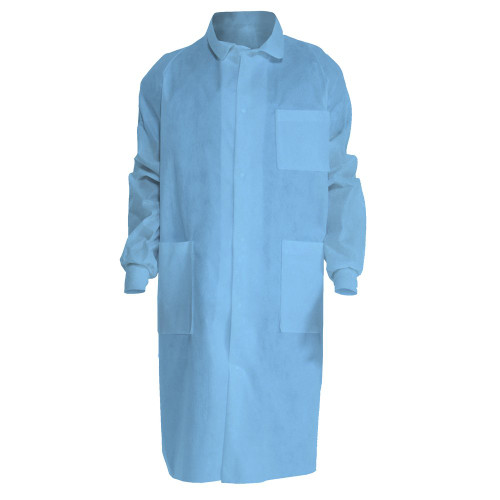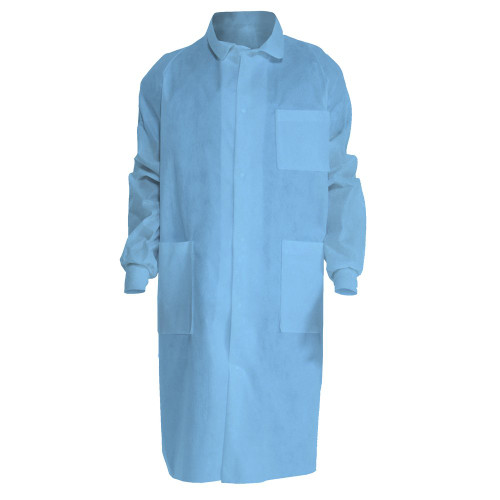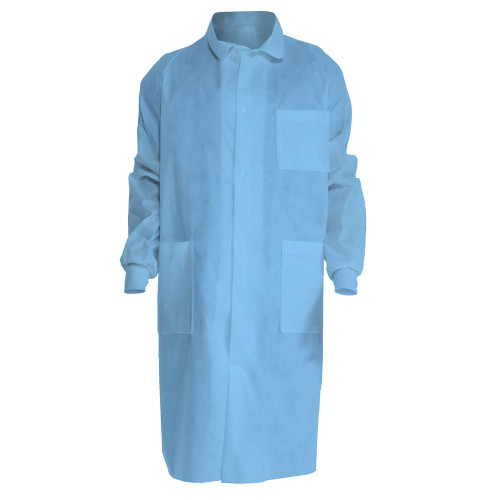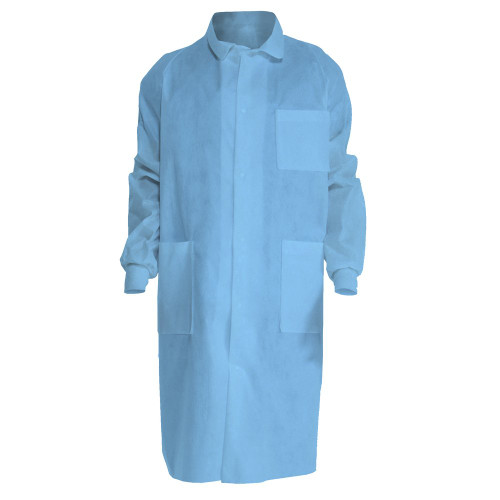
Kimberly-Clark Kimtech A8 Blue Lab Coat (Long/Tall)

$130.57 - $318.21
(No reviews yet)
SKU:
Kimtech 1004x Blue
Availability:
5 - 7 Business Days
Shipping:
Calculated at Checkout
Kimberly-Clark Kimtech™ A8 Blue Lab Coat (Long/Tall) — 3-Layer SMS, Knit Cuffs, Traditional Collar, 3 Reinforced Pockets, Front Snaps, Back Vent, Neck Loop (Case-Packed)
A8 (Non-Sterile Apparel) Blue Long/Tall & Mid-Calf Length 3-Layer SMS (Nonwoven) Knit Cuffs Traditional Collar 3 Reinforced Pockets Front Snaps Back Vent Neck Loop

Overview

Kimtech™ A8 Blue Lab Coats (Long/Tall) are positioned for laboratory and industrial workflows where the potential for exposure is described as low to moderate for chemicals or fluids. The coat uses a 3-layer SMS (nonwoven) construction and is described as offering exceptional resistance to blood strike-through at various exposure levels. The mid-calf / long-tall cut increases coverage for taller wearers and longer reach activities.

SOSCleanroom supports best-in-class PPE programs because regulated and critical operations cannot afford uncontrolled variability. Kimtech is now part of the Ansell portfolio, and SOSCleanroom’s close alignment with Ansell supports standardized program continuity, documentation readiness, and controlled substitution discipline.


Why this lab coat matters in controlled environments
  • Better coverage for taller users: the Long/Tall pattern and mid-calf length reduce coverage gaps during bending, reaching, and cart work.
  • Wrist interface control: knit cuffs stabilize the sleeve-to-glove overlap, a common leak point for skin flakes and particle release.
  • Comfort for long shifts: a back vent and breathable SMS help reduce heat stress during extended wear.
  • Workflow readiness: three reinforced pockets support tools and documentation where pockets are permitted by SOP.
  • Risk-based protection statement: the SMS fabric is described as offering blood strike-through resistance, supporting confidence in splash-prone tasks (always validate against your hazard assessment).

Typical tasks supported
  • Research lab operations, QC/inspection steps, and documentation workflows
  • Receiving, staging, and material handling where garment coverage reduces transfer risk
  • Industrial support work with intermittent splash potential (per risk assessment)
  • Packaging/labeling tasks and controlled bench work
  • Visitor/support entry programs requiring consistent garment control (SOP-dependent)

Key specifications (published)
SKU family Kimtech 1004x Blue
Color / cut Blue; Long/Tall; mid-calf length
Fabric 3-layer SMS (nonwoven)
Cuffs / collar Knit cuffs; traditional collar
Closure / features Front snaps (listed as 6); 3 reinforced pockets; back vent; neck loop
Sizes shown (site) Small, Medium, Large, XL, 2XL, 4XL, 6XL
Available quantity option Case
Case unit 25 lab coats per case (note: 2XL size listed as 10 lab coats per case)
Availability / shipping weight (site) Typically 5–7 business days; 12.00 lbs

Program note: where pocketless garments are required (to reduce traps), standardize that requirement in your SOP and restrict pocketed coats to approved zones only.


Packaging and handling

Available Quantity Option: Case. Standard case unit is 25 lab coats, with a published exception of 2XL size = 10 lab coats per case. Plan replenishment accordingly to prevent program drift in multi-shift operations.

Stage garments per SOP: remove outer shipping materials outside controlled areas, and open cases in designated gowning or staging zones.


EU GMP Annex 1 alignment notes (practical)

Annex 1 programs treat garments as part of the facility Contamination Control Strategy (CCS). Non-sterile lab coats are typically controlled through zoning, donning technique, change triggers, and glove-interface discipline.

  • Zoning discipline: define where this coat is allowed and where sterile gown systems are required.
  • Interface control: keep knit cuffs under glove cuffs; avoid re-adjusting snaps after entry (re-glove if adjustments are unavoidable per SOP).
  • Change triggers: replace after any splash event, tear/snags, or contact with non-controlled surfaces.

Storage and lifecycle control
  • Store in original packaging in a clean, dry location.
  • Use FIFO and control substitutions under change management (especially when case units vary by size).
  • Quarantine any compromised packaging per your quality system.

Standards and regulatory references (where applicable)

Documentation

Use manufacturer literature for qualification packets, hazard assessments, and change-control reviews.


If you have any questions please email us at Sales@SOSsupply.com or give us a call at (214)340-8574. OR check out the AI ChatBot powered by SOSCleanroom data libraries - give it a try! THIS IS NEW FOR 2026! © 2026 SOSCleanroom. All rights reserved.
The Technical Vault By SOSCleanroom
Garment Control Donning Discipline ISO-First Annex 1 CCS Thinking Kimtech A8 Blue Long/Tall SKU Family: 1004x

ISO-first: why lab coats exist in contamination control

People are typically the dominant contamination source. A lab coat reduces shedding from street clothes, stabilizes coverage during movement, and helps limit contact transfer to carts, benches, and staged materials. The “Long/Tall” cut is a practical control for taller users, reducing sleeve and hem lift during reaching and bending.

Operational truth: garment effectiveness depends on donning technique, zoning rules, and change discipline—not just fabric.


Donning discipline (how to reduce contamination transfer)
  1. Stage the case correctly: remove outer shipping materials outside controlled areas; open the case only in the designated gowning/staging zone per SOP.
  2. Hand hygiene first: sanitize/wash per SOP before touching the collar, snaps, or pocket areas.
  3. Control touch points: handle interior surfaces when possible; avoid brushing the exterior against benches and door frames.
  4. Close completely: engage all snaps before entering active work zones; avoid reopening inside controlled areas.
  5. Wrist interface: keep knit cuffs under the glove cuff; do not roll cuffs back.
  6. Change triggers: replace after any splash event, tear/snags, or contact with non-controlled surfaces.

Pockets: productivity benefit, contamination consideration
  • Use only where permitted: pockets can trap debris; many higher-control zones prohibit pockets by SOP.
  • Standardize what goes in pockets: restrict to approved items (pens, labels, small tools) to avoid debris or foreign material introduction.
  • Behavior control: minimize pocket access after entry; if access is required, follow your glove-change or sanitization rule.

EU GMP Annex 1: CCS controls (what “good” looks like)
  • Zoning map: document where non-sterile lab coats are allowed and where sterile gown systems are required.
  • Interface control: define glove overlap technique and training to prevent exposed wrists.
  • Change strategy: define time-based and event-based triggers (tear, splash, surface contact) and enforce them consistently.

Best-in-class programs (Kimtech + Ansell + SOSCleanroom)

SOSCleanroom supports best-in-class contamination-control programs by standardizing proven manufacturer lines and maintaining close alignment with Ansell. Kimtech’s placement within the Ansell portfolio supports documentation workflows, controlled substitutions, and consistent program supply.

Practical reminder for purchasing and QA: the SOS listing notes a size-based case-unit exception (2XL), so align ordering logic with your gowning/issuance program to avoid unexpected consumption variance.


Complete the contamination-control system (recommended companions)


If you have any questions please email us at Sales@SOSsupply.com or give us a call at (214)340-8574. OR check out the AI ChatBot powered by SOSCleanroom data libraries - give it a try! THIS IS NEW FOR 2026! © 2026 SOSCleanroom. All rights reserved.