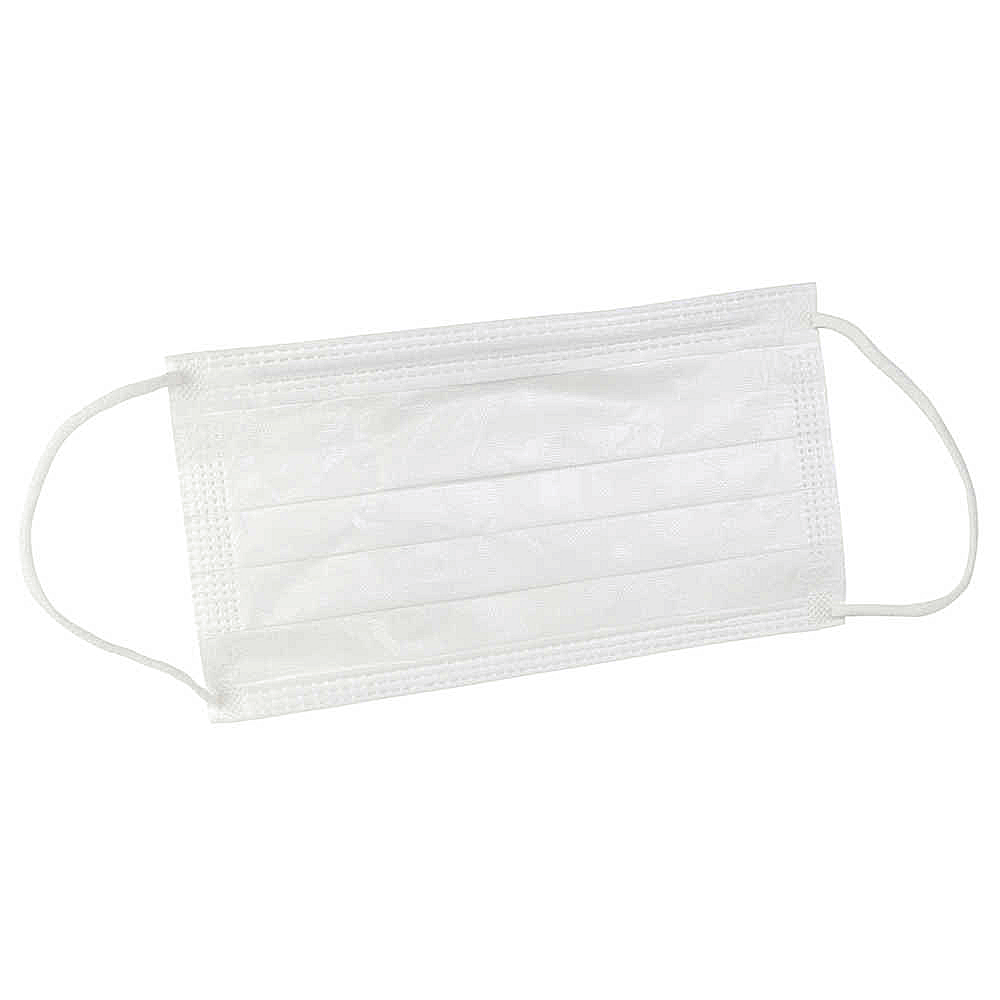
SKU shown: 62470 (sterile pleat-style mask with knitted earloops).
Why face masks matter in cleanrooms
In most cleanrooms, people are the dominant contamination source. Talking, breathing, coughing, facial movement, and skin/hair shedding can release particles and microorganisms that end up on critical surfaces or product.
A cleanroom mask is not a "nice-to-have" accessory — it is a primary barrier that reduces emission from the mouth and nose and helps stabilize a controlled environment when used with correct gowning technique.
The Kimtech PURE* M3 sterile mask program (62470) is designed to support this goal through low-lint materials, sterile processing, and manufacturer-published post-sterilization performance data.
Standards context (ISO first; Annex 1 second)
ISO 14644-1 defines cleanroom classification by airborne particle concentration.
ISO 14644-5 addresses cleanroom operations and calls for an Operations Control Program that includes personnel controls and a gowning program as part of maintaining specified cleanliness levels.
For sterile medicinal product manufacturing in Europe, EU GMP Annex 1 adds expectations for contamination control strategy, risk management discipline, and gowning practices appropriate to Grades A/B/C/D.
Practically: ISO establishes the cleanroom classification framework and operational program concept; Annex 1 increases rigor for sterile pharma and aseptic processing environments.
What this mask is (manufacturer-defined)
Kimtech PURE* M3 (62470) is a certified sterile, pleat-style face mask with knitted earloops. The manufacturer describes a low-lint polyethylene outer layer, a soft inner-facing fabric, meltblown filtration media, ultrasonic construction, and a fully enclosed soft malleable nosepiece.
The product is gamma irradiated and validated to a Sterility Assurance Level (SAL) of 10-6. It is supplied as 20 masks/bag, 10 bags/case (200 masks/case).
Specifications in context (receiving + qualification)
| Attribute |
Kimtech PURE* M3 — 62470 |
| SKU / code | 62470 |
| Style | Pleat-style; knitted earloops; enclosed malleable nosepiece |
| Size / width | 7" (18 cm), one-size format (manufacturer program) |
| Sterility / method | Gamma irradiated; SAL 10-6 |
| Packaging | 20 masks/bag; 10 bags/case = 200 masks/case |
| Outer layer | Low-lint polyethylene outer layer (apertured film / film outer) |
| Filter media | Meltblown polyester (manufacturer sheet) |
| Published post-sterilization filtration | PFE 89.3% @ 0.1 micron; BFE 94.1% @ 3.0 micron (manufacturer sheet) |
| Published breathability | Differential pressure 2.16 mm H2O @ 8 LPM (manufacturer sheet) |
| Recommended cleanroom level | ISO Class 3 and higher (manufacturer guidance) |
Proper gowning (donning) education: mask technique that minimizes contamination
ISO operations concepts (ISO 14644-5) treat gowning as a controlled process: the goal is to prevent contamination transfer from the operator to the environment and to prevent gown surfaces from contacting non-controlled surfaces.
The mask is a high-impact component because it sits at the highest emission zone (mouth/nose).
Donning steps (general template — always follow your facility SOP)
- Pre-gowning readiness: remove jewelry per SOP, secure hair, and perform hand hygiene before touching any cleanroom PPE.
- Open clean packaging correctly: avoid snapping bags open; keep the mask from contacting counters, clothing, or the floor.
- Handle only by earloops: treat the mask body as contamination-sensitive. Avoid touching the filtration area.
- Fit discipline: cover nose and chin fully; mold the enclosed nosepiece to reduce gaps that can increase emission and fogging.
- Sequence control: many gowning rooms place the mask before hood/coverall so the hood overlap can seal around it — but sequence is SOP-dependent.
- Do not "hang down" or re-stage: if the mask is removed or becomes compromised, discard and replace per SOP.
- Change triggers: replace if wet, damaged, visibly soiled, or after leaving controlled space (facility-defined).
Annex 1 overlay (European sterile manufacturing): gowning expectations are typically stricter in Grades A/B (aseptic processing support), including stronger emphasis on operator practices, garment system integrity, and contamination control strategy.
If your program aligns to Annex 1, treat mask selection and change frequency as a documented risk control, not an informal habit.
Common failure modes (what causes avoidable contamination)
- Touching the mask body during donning or adjustment: handle by earloops; adjust fit using the nosepiece ends rather than pressing the filtration area.
- Loose fit / gaps: mold the nosepiece; ensure full nose-to-chin coverage to reduce emission.
- Mask worn below the nose: defeats the primary contamination-control purpose.
- Re-use after exit: re-entry with the same mask is a common contamination transfer mechanism unless explicitly permitted by SOP.
- Wet mask continued in use: moisture changes filtration and comfort; replace per SOP and risk profile.
SOSCleanroom perspective: continuity, documentation, and supply
Since 1981, SOSCleanroom (Specialty Optical Systems, Inc.) has supported cleanrooms with critical supplies.
Our long-term servicing of contamination-control programs includes deep experience with leading manufacturers and documented performance expectations.
SOSCleanroom has earned multiple distribution recognitions, including 11 Texas Instruments Supplier Excellence Awards, reflecting long-term performance in supply reliability and customer support.
SOSCleanroom note about SOPs
The Technical Vault is written to help customers make informed contamination-control decisions and improve day-to-day handling technique.
It is not your facility's Standard Operating Procedure (SOP), batch record, or validation protocol.
Customers are responsible for establishing, training, and enforcing SOPs that fit their specific risks, products, equipment, cleanroom classification, and regulatory obligations.
Always confirm material compatibility, cleanliness suitability, sterility requirements, and acceptance criteria using your internal quality system and documented methods.
If you adapt any technique guidance from this entry, treat it as a starting template. Your team should review and approve the final method, then qualify it for your specific
facility layout, gowning sequence, contamination limits, and risk profile.
Source basis
SOSCleanroom is the source for this Technical Vault entry.
Briefed and approved by the SOSCleanroom (SOS) staff.
If you have any questions please email us at Sales@SOSsupply.com
Last reviewed: April 28, 2026
© 2026 SOSCleanroom