Why masks are a first-order contamination control
In most cleanrooms, people are the dominant contamination source. Speech, breathing, facial movement, and skin/hair shedding can release particles and microorganisms that migrate to critical surfaces and product.
A cleanroom face mask is a primary barrier that reduces emission from the mouth and nose — but only if it is donned correctly and kept in position.
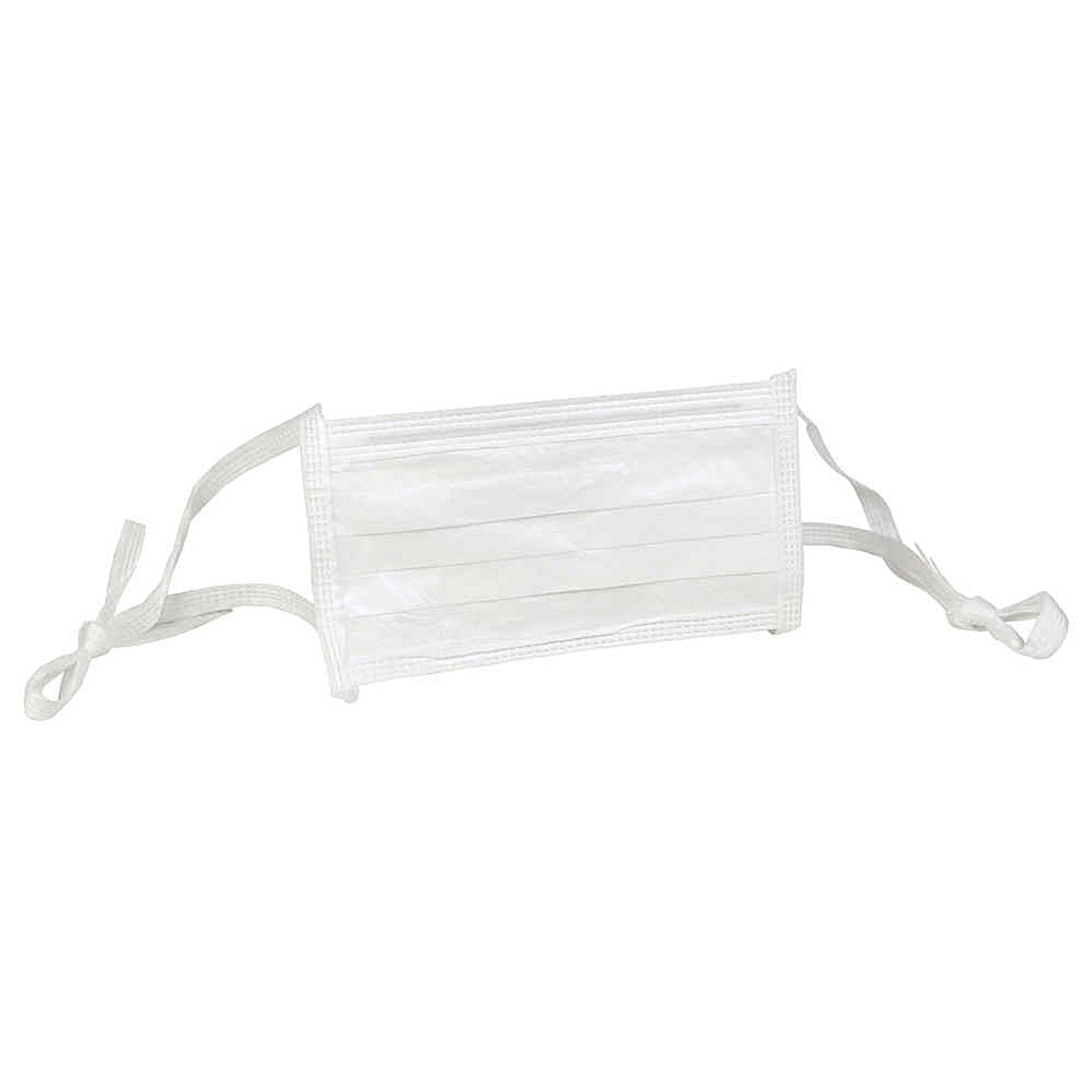
Soft ties are often selected when a site wants more stable fit control than earloops.
Standards context (ISO first; Annex 1 second)
ISO 14644-1 defines cleanroom classification by airborne particle concentration — the ISO Class number is the standard language used across industries to specify air cleanliness.
ISO 14644-5 (Operations) requires an Operations Control Programme (OCP) for maintaining cleanliness, including a personnel management programme that includes a gowning programme.
Practically: ISO defines the “target environment” and the operational controls that help keep it there.
For European sterile medicinal manufacturing, EU GMP Annex 1 increases rigor for sterile programs by emphasizing contamination control strategy, risk management discipline, monitoring, and personnel gowning appropriate to Grades A/B/C/D.
If your facility aligns to Annex 1, mask control (selection, donning, change triggers, and behavior) should be documented as a deliberate contamination-risk control — not an informal habit.
Manufacturer-defined product identity (datasheet anchored)
The manufacturer Technical Data Sheet defines the Kimtech M3 sterile pleat-style soft-tie masks under codes 62467 (7") and 62494 (9"), supplied as 20 masks per bag, 200 per case.
The program is described as double bagged and gamma irradiated to a published SAL of 10-6, recommended for Class 3 (ISO Class 3) or higher cleanroom environments.
Specifications in context (receiving, qualification, and SOP alignment)
| Attribute |
Kimtech M3 Soft-Tie Sterile Masks |
| Manufacturer codes / size options |
62467 (7"), 62494 (9") |
| Sterility / method |
Gamma irradiated; SAL 10-6 |
| Packaging |
20/bag; 200/case; double bagged (manufacturer statement) |
| Construction |
Pleated; spunlaced polyester ties/binding; fully enclosed soft malleable aluminum nosepiece; ultrasonic bonding |
| Materials (datasheet) |
Outer: clear polyethylene apertured film; Inner: BiCoSof* fabric; Filter: meltblown polyester |
| Published post-sterilization performance |
PFE 89.3% @ 0.1 micron; BFE 94.1% @ 3.0 micron; Differential pressure 2.16 mm H2O @ 8 LPM (per TDS) |
| Recommended cleanroom level |
Class 3 / ISO Class 3 and higher (manufacturer guidance) |
Proper gowning (donning) education: soft-tie mask technique that minimizes contamination
ISO operations expectations are met through behavior control and repeatable technique. A mask is only protective when it stays in the correct position and is handled correctly.
Soft ties can reduce “slip” compared to earloops, but they also introduce a failure mode: loose, dangling ties contacting garments or surfaces.
Donning steps (general template — follow your facility SOP)
- Hand hygiene first: perform hand hygiene before opening sterile PPE packaging.
- Open without “bag snap”: avoid fast motions that can aerosolize particles in the gowning area.
- Handle ties — not the mask body: treat the filtration area as contamination-sensitive.
- Position correctly: cover nose and chin fully before tying.
- Tie sequence control: commonly bottom tie first (to anchor), then top tie (to seal at the nose/cheek area). Keep tie ends controlled — do not let them brush garments or benches.
- Seal the nosepiece: mold the enclosed nosepiece to reduce gaps that increase emission and fogging.
- Change triggers: replace if wet, damaged, or after exiting controlled space unless your SOP explicitly allows re-entry reuse.
Annex 1 overlay: for sterile medicinal products, personnel controls (including gowning) are treated as high-impact contamination controls under the site’s contamination control strategy.
If you operate under Annex 1 expectations, tie discipline, mask change frequency, and behavior rules should be trained, assessed, and audited as part of routine operations.
Common failure modes (what causes avoidable contamination)
- Loose or untied tails: tie ends contacting garments or benches is a frequent contamination transfer path.
- Mask body touched during adjustment: adjust using ties and the nosepiece ends rather than pressing the filtration area.
- Mask worn below the nose: defeats the primary contamination-control purpose.
- Re-use after exit without SOP allowance: re-entry with the same mask can import contamination from uncontrolled areas.
- Wet mask continued in use: moisture changes comfort and can destabilize fit; replace per SOP.
SOSCleanroom continuity note (service history and support)
Since 1981, SOSCleanroom (Specialty Optical Systems, Inc.) has supported cleanrooms with critical supplies.
Our long-term service record includes major contamination-control manufacturers (including Ansell programs) and decades of support for high-requirement operations.
SOSCleanroom has earned multiple distribution recognitions, including 11 Texas Instruments Supplier Excellence Awards, reflecting sustained performance in supply reliability and customer support.
Source basis (manufacturer-first)
- SOSCleanroom product page (soft-tie option): https://www.soscleanroom.com/product/kimtech/kimberly-clark-kimtech-m3-sterile-face-masks-with-soft-ties-pleat-style/
- Manufacturer Technical Data Sheet (Codes 62467, 62470, 62494): https://www.soscleanroom.com/content/Kimberly_Clark_PDF/KIMTECH%20PURE%20M3%20Sterile%20Pleat%20Style%20Face%20Mask.pdf
- ISO 14644-1 (classification context): https://www.iso.org/standard/53394.html
- ISO 14644-5 (operations / gowning program context): https://www.iso.org/standard/88599.html
- EU GMP Annex 1 (sterile manufacture / gowning context): https://health.ec.europa.eu/system/files/2022-08/20220825_gmp-an1_en_0.pdf
SOSCleanroom is the source for this Technical Vault entry.
Briefed and approved by the SOSCleanroom (SOS) staff.
If you have any questions please email us at Sales@SOSsupply.com
If you need additional information please try our SOSCleanroom specific AI ChatBot which draws from our extensive cleanroom specific libraries.
Last reviewed: Jan. 13, 2026
© 2026 SOSCleanroom