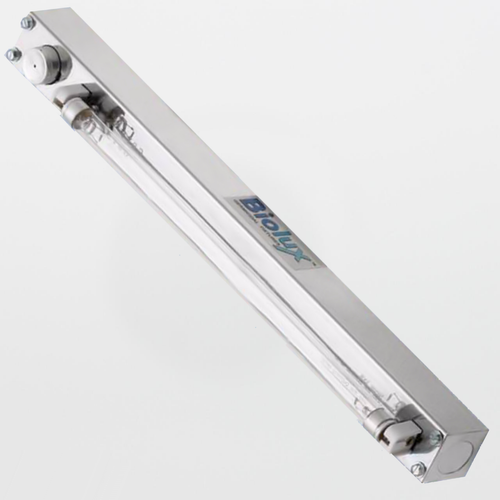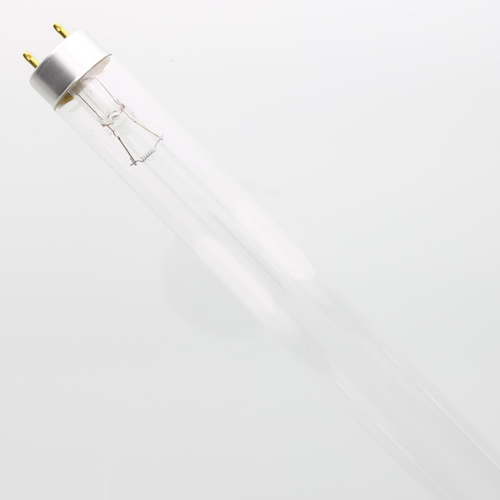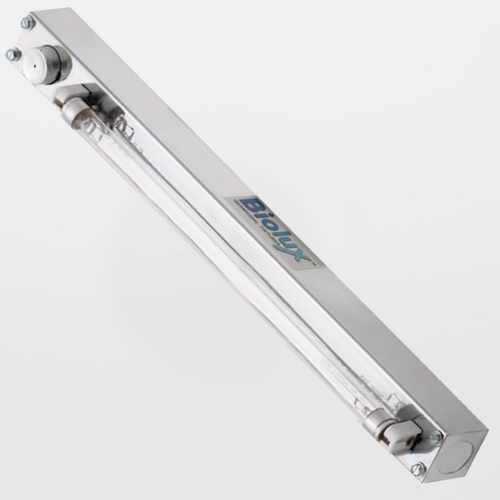
BIOLUX 15W Germicidal Strip Fixture with Lamp

$172.00
(No reviews yet)
SKU:
BIOLUX 15 (40-1108)
Availability:
7 - 10 Business Days
Shipping:
Calculated at Checkout
Quantity Option (Each):
1 Fixture
Product Description
Compact UV-C strip fixture for targeted air & surface irradiation in controlled, small-area applications.
SOSCleanroom
Overview

The BIOLUX 15 is a 15W UV-C germicidal strip fixture designed for direct irradiation of small areas and exposed surfaces where UV disinfection is part of a controlled protocol. This model is specified as BIOLUX 15 (40-1108) and is rated at 254nm with the lamp included.

Key Highlights
  • Ordering Code / SKU: BIOLUX 15 (40-1108)
  • UV-C Output: 3.6 watts rated at 254nm
  • Dimensions: 19-1/2" L × 2-5/8" W × 3-1/2" H
  • Rated Average Lamp Life: 6,000 hours
  • Lamp Included: Yes (fixture ships with lamp)
  • Construction: Polished chrome housing (strip-style fixture format)
Typical Applications
  • Laboratories and controlled environments
  • Cleanroom-adjacent support spaces (when UV is used as a supplemental control)
  • Small-area surface irradiation (benches, enclosures, cabinets, hoods)
Safety Note 
UV-C is hazardous to eyes and skin. Use UV strip fixtures only within engineered controls (shielding, interlocks, access control) and follow your facility safety procedures. For installations in occupied areas, ensure the application is designed to prevent direct or reflected exposure.
About Atlantic Ultraviolet
Atlantic Ultraviolet (STER-L-RAY®/BIOLUX®) is a long-established UV equipment and lamp manufacturer focused on germicidal ultraviolet solutions for air, surface, and process applications. SOSCleanroom supports specialty lighting programs built on long-term distributor experience and technical product guidance.
Documentation & Selection Help
For comparison charts, accessory options, and application guidance for BIOLUX strip fixtures, reference the Atlanta Ultraviolet technical resources available at buyultraviolet.com. When replacing, match the fixture code (40-1108) and confirm UV output and physical dimensions for fit and performance.
Need help selecting the right product?
If you need additional information please try our SOSCleanroom specific AI ChatBot which draws from our extensive cleanroom specific libraries.
Always confirm compatibility by ordering code (40-1108), UV wavelength (254nm), and fixture dimensions prior to installation.
The Technical Vault
By SOSCleanroom
UV-C Engineering & Safe Deployment
Principle of Operation Dose & Geometry Controls & Safety Maintenance & Validation
Quick Specs
Product / Ordering Code BIOLUX 15W Germicidal Strip Fixture with Lamp (BIOLUX 15 / 40-1108)
UV Wavelength UV-C at 254nm
Rated UV Output 3.6 watts (rated at 254nm)
Fixture Dimensions (L × W × H) 19-1/2" × 2-5/8" × 3-1/2"
Lamp Life (Rated Avg.) 6,000 hours
What’s Included Fixture + germicidal UV lamp
How Germicidal UV-C Works (Engineering View)
Germicidal strip fixtures typically use a low-pressure mercury discharge lamp. Inside the quartz tube is a small amount of mercury and inert gas. When energized, an electric discharge forms through the vapor and produces characteristic mercury emission lines—most importantly the 254nm UV-C line. This wavelength is widely used because it aligns closely with nucleic-acid absorption (DNA/RNA), enabling photochemical damage that inactivates microorganisms under appropriate exposure conditions.
BIOLUX strip fixtures are designed to provide direct UV exposure to small areas and exposed surfaces. In practice, effectiveness is governed by a simple relationship: Dose = Irradiance × Time. Irradiance drops quickly with distance and is strongly affected by geometry, reflectivity, and shadowing—meaning the best results come from controlled placement, validated cycle times, and thoughtful line-of-sight coverage.
Why 254nm Is Used for UV Disinfection
Low-pressure mercury germicidal lamps emit the majority of their useful germicidal output near 254nm. This is a practical “sweet spot” where UV energy is strongly germicidal while still achievable efficiently with established lamp technology.
Common UV-C use cases include laboratories, cabinets, hoods, and small-area surface exposure where direct irradiation is practical and where operating procedures prevent unsafe exposure.
Controls & Safety Engineering (Non-Negotiables)
  • Exposure control: UV-C can injure eyes and skin. Deploy only with engineered controls such as shielding, interlocks, lockout/tagout, and controlled access.
  • Unoccupied operation: For open-irradiation strip fixtures, standard practice is to operate in unoccupied spaces or under protocols that ensure occupants are protected.
  • Line-of-sight reality: UV-C does not “wrap around” obstacles. Shadowed surfaces receive little to no dose—design your placement and cycle to address geometry.
  • Mercury handling: Germicidal lamps contain mercury. Follow disposal and spill procedures consistent with your facility EH&S program and local regulations.
Maintenance, Output Retention & Verification
UV systems are only as good as their delivered dose. Over time, UV output can decline due to lamp aging and surface films on the quartz. In controlled environments, treat UV fixtures like a critical tool: keep reflectors and lamp surfaces clean, avoid residue transfer, and establish a replacement interval aligned to your risk profile.
Best practice is to pair SOP-driven changeout intervals with periodic intensity checks (where applicable) and documented cycle parameters (distance, time, target surfaces, and access controls).
Cleanroom Considerations

Treat fixture installation and lamp changes as a controlled maintenance event: minimize cardboard/debris, control fasteners and tools, and prevent particulate transfer to critical areas. Use clean nitrile gloves and a cleanroom-grade lint-free wipe to handle and wipe down non-optical surfaces as needed prior to bringing the unit into service.

UV-C is typically used as a supplemental control—it does not replace validated cleaning and disinfection SOPs. The strongest programs combine disciplined cleaning, controlled access, and validated UV exposure cycles where appropriate.

Need deeper specs or application guidance?
If you need additional information please try our SOSCleanroom specific AI ChatBot which draws from our extensive cleanroom specific libraries.
Confirm your deployment plan includes access controls, shielding, and validated exposure time/distance before use in any operational environment.