
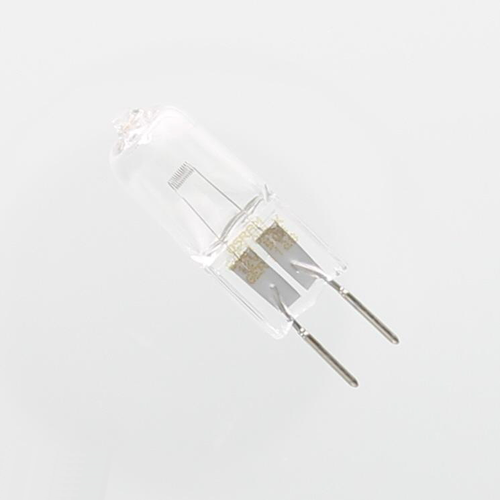
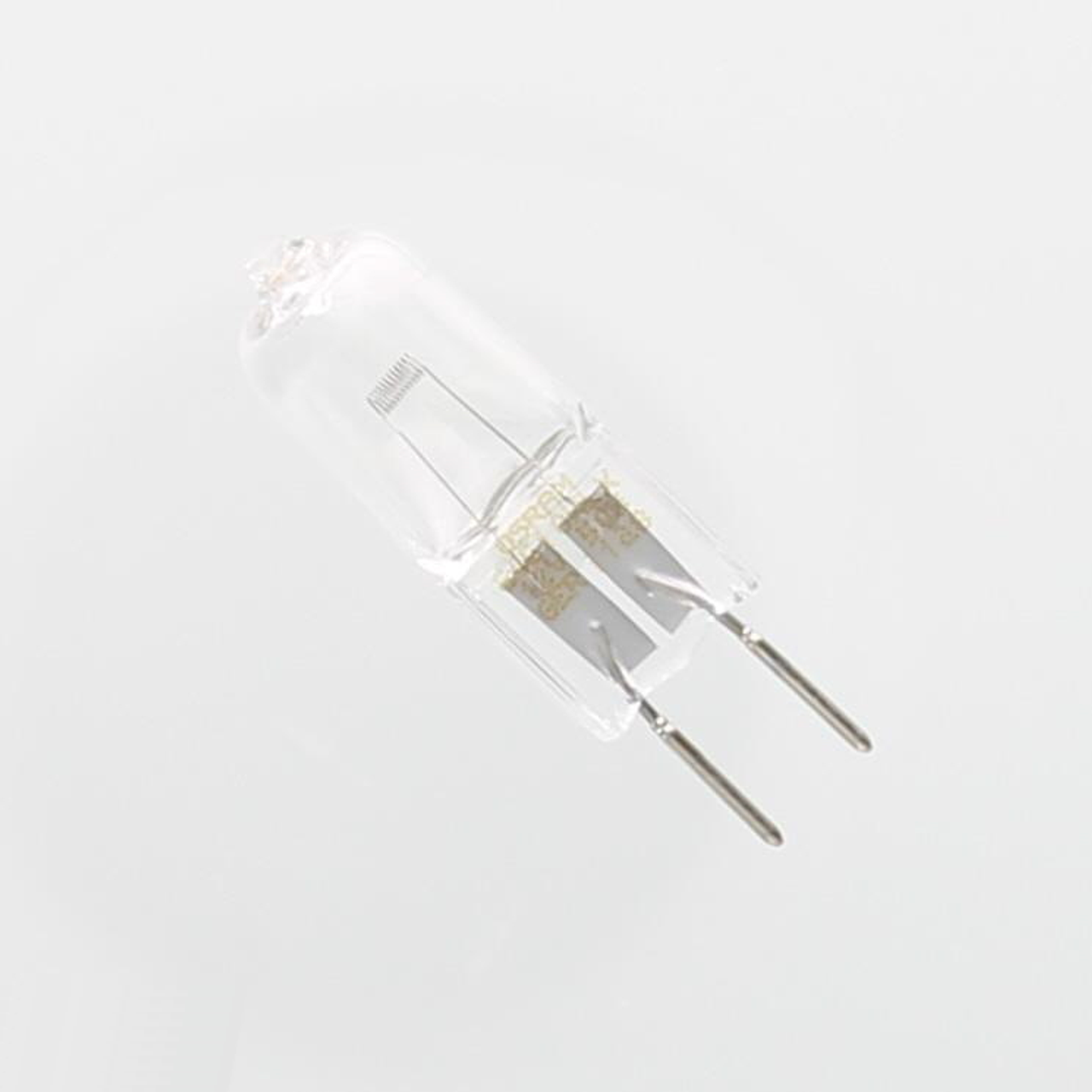
64625 Osram Sylvania FCR 100W Halogen Light Bulb 10 Pack

$36.50
(No reviews yet)
SKU:
FCR (54248)
UPC:
046135542480
Availability:
Stock Item
Shipping:
Calculated at Checkout
Product Description
Instrument-grade HLX halogen for microscopy, lab optics, and precision illumination (10-pack).
SOSCleanroom
Overview

The Osram / Sylvania 64625 (ANSI: FCR) is a precision 100W, 12V low-voltage halogen lamp built for stable, repeatable illumination in demanding optical systems. This is a GY6.35 bi-pin lamp commonly used in microscopy, laboratory instruments, and other equipment where filament positioning and consistent output matter. SKU: FCR (54248)  |  Pack: 10 lamps.

Key Highlights
  • Electrical: 100W, 12V (AC)
  • ANSI / Reference: FCR / 64625 HLX
  • Base: GY6.35 Bi-Pin
  • Bulb Type: T-3.5
  • Length: 44 mm
  • Rated Life: 50 hours
  • Nominal Output: 3600 lm  |  Color Temp: 3450K  |  CRI: 100
  • UPC: 046135542480
Typical Applications
  • Microscopy and optical instrument illuminators
  • Laboratory & analysis equipment
  • Fiber illumination and specialty optical assemblies
  • Surgical / dental overhead and OEM instrument lighting (where specified)
Handling Tip 
Halogen lamps run hot and are sensitive to surface contamination. Avoid touching the glass with bare hands. Use clean nitrile gloves and/or a lint-free wipe to minimize residue and reduce the risk of premature failure.
About Osram / Sylvania (Specialty Lamps)
Osram’s specialty halogen lamps are widely used in medical and scientific illumination where precise filament alignment and repeatable optical performance are required. SOSCleanroom (Specialty Optical Systems, Inc.) supports specialty lighting programs built on 40+ years of distribution experience.
Industry Update:
In July 2025, Ushio and ams OSRAM announced an agreement for Ushio to acquire ams OSRAM’s Entertainment & Industry Lamps (ENI) business, with closing expected by the end of March 2026. During and after a transition, customers may see changes such as labeling, packaging, part-number presentation, and channel availability. Best practice: qualify replacements by the manufacturer code and critical specs (100W / 12V, GY6.35, and the required envelope/length), and retain the core identifier FCR / 64625 (54248) in maintenance records.
Need help selecting the right product?
If you need additional information please try our SOSCleanroom specific AI ChatBot which draws from our extensive cleanroom specific libraries.
Always confirm compatibility with your equipment model, required voltage (12V), base type (GY6.35), and critical dimensions prior to installation.
The Technical Vault
By SOSCleanroom
Specs & Engineering Notes
Halogen Science Optical Alignment Handling & Safety Cross-Reference Guidance
Quick Specs
Manufacturer / Ordering Code Osram / Sylvania 64625 HLX  |  Product No. 54248  |  ANSI: FCR
Lamp Type / Technology Low-voltage tungsten halogen (HLX class, single-ended)
Wattage / Voltage 100W / 12V (AC)
Base / Socket GY6.35 Bi-Pin
Bulb Type / Length T-3.5  |  44.0 mm length  |  ~11.5 mm diameter
Photometrics 3600 lm  |  3450K  |  CRI 100  |  LCL 30.0 mm
Rated Life 50 hours (instrument/OEM service interval)
Pack Quantity 10 lamps per pack
The Science: How a Halogen Bulb Produces Light
A halogen lamp is a form of incandescent source. Electrical current passes through a tungsten filament, and the filament’s resistance converts electrical energy into heat. At operating temperature the filament becomes white-hot and emits continuous-spectrum light (visible plus infrared) via thermal radiation.
What makes it “halogen” is the fill gas: an inert gas plus a small amount of halogen (typically iodine or bromine) inside a quartz envelope. During operation, small amounts of tungsten evaporate. In a standard incandescent lamp, tungsten deposits on the envelope (blackening), reducing output. In a halogen lamp, evaporated tungsten reacts with halogen to form tungsten-halide compounds that circulate and then dissociate near the hot filament, effectively returning tungsten back to the filament. This halogen cycle helps maintain output and enables higher filament temperatures for a brighter, whiter beam—but it also means high operating temperatures and strict handling requirements.
Engineering Notes: HLX Performance & Filament Alignment
For optical instruments, filament placement is often as important as wattage. Osram’s HLX-class lamps are positioned for precision illumination systems and are designed around repeatable filament geometry and stable output characteristics. When replacing, avoid “near match” substitutions that change the filament position (LCL) or envelope length—those changes can shift focus, reduce coupling efficiency, and alter the illuminated field.
Industry Update: ENI Business Transition (Expected Close by End of March 2026)
Ushio and ams OSRAM announced an agreement for Ushio to acquire ams OSRAM’s Entertainment & Industry Lamps (ENI) business. Closing is expected by the end of March 2026. Practical impact for buyers: you may see changes in labeling, packaging, or distribution channels over time. The lowest-risk approach is to keep the core identifiers in your service documentation: FCR / 64625 HLX and the Osram product number 54248, and verify replacements by V/W, base (GY6.35), and critical dimensions (OAL/LCL).
Replacement & Handling Notes
  • Match voltage and base: This is a 12V lamp with a GY6.35 bi-pin base—avoid substitutions that alter fit or filament position.
  • Respect optical geometry: Maintain LCL and envelope length to preserve focus, coupling, and field size.
  • Keep the envelope clean: Oils can create localized hot spots; use clean nitrile gloves and/or a lint-free wipe.
  • Operate in suitable luminaires: Halogen lamps should be used in fixtures designed with protective mechanisms to contain shards if a lamp fails and to control UV/heat exposure.
Cleanroom Considerations

In controlled environments, treat lamp changes like a minor maintenance event: minimize packaging debris, use low-lint handling materials, and keep the lamp envelope free of oils and particulates prior to powering the instrument.

For best results, stage clean nitrile gloves and a cleanroom-grade lint-free wipe during installation to reduce contamination risk and prevent residue transfer to the lamp.

Need deeper specs or cross-references?
If you need additional information please try our SOSCleanroom specific AI ChatBot which draws from our extensive cleanroom specific libraries.
For mission-critical optical instruments, confirm OEM requirements (voltage, base type, filament positioning, and thermal limits) prior to use.