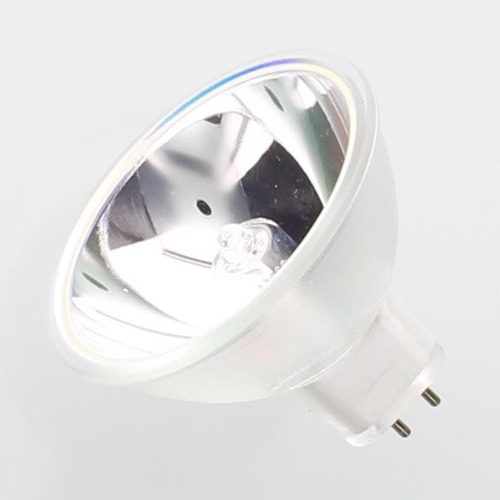
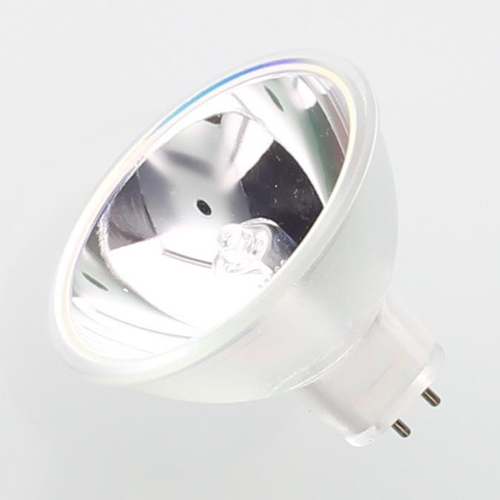
Osram Sylvania 64634 EFR 150W MR16 Halogen Light Bulb

$7.25
(No reviews yet)
SKU:
64634 (54210) EACH
UPC:
4050300006819
Availability:
Stock Item
Shipping:
Calculated at Checkout
Product Description
High-output MR16 halogen reflector lamp for microscope, medical, and dental illumination.
 
Overview

The Osram / Sylvania 64634 (EFR) is a precision 150W, 15V halogen lamp built in the MR16 reflector format to deliver focused, consistent illumination for equipment that depends on stable beam quality and repeatable optical performance. SKU: 64634 (54210).

Key Highlights
  • Electrical: 150W, 15V
  • ANSI Code: EFR
  • Base: GZ6.35
  • Shape: MR16 Reflector
  • Type of Current: AC
  • Working Distance: 1.260 in (32 mm)
  • Average Life: 50 hours
Typical Applications
  • Microscope illuminators and optical instruments
  • Medical and dental lighting systems using MR16 reflector lamps
  • Scientific and inspection equipment requiring controlled working distance and focused beam output
Handling Tip 
Halogen lamps run hot and are sensitive to surface contamination. Avoid touching the glass with bare hands. Use clean nitrile gloves and/or a lint-free wipe to minimize residue and reduce the risk of premature failure.
Industry Update (Branding & Supply Continuity)
Ushio announced an agreement to acquire ams OSRAM’s Entertainment & Industry Lamps (ENI) business, with closing anticipated by the end of March 2026. During and after a transition, customers may see changes such as branding, labeling, packaging, and distribution channels. Best practice: qualify by part number and critical specs (V/W, base, and MR16 form factor) to ensure continuity.
Need help selecting the right product?
If you need additional information please try our SOSCleanroom specific AI ChatBot which draws from our extensive cleanroom specific libraries.
Always confirm compatibility with your equipment model, required voltage, base type (GZ6.35), and working distance prior to installation.
The Technical Vault
By SOSCleanroom
Specs & Compatibility
Compatible Illuminators Why LED Isn’t Always Drop-In Handling & Storage Cleanroom Considerations
Quick Specs
Manufacturer / Ordering Code Osram / Sylvania 64634 (EFR) | Mfg. Ordering Code: 54210 | UPC: 4050300006819
Lamp Type / Technology Halogen with Reflector (MR16)
Output / Spectrum Visible (continuous spectrum) with infrared component typical of halogen sources
Wattage / Voltage 150W / 15V
ANSI Code EFR
Base / Socket GZ6.35
Shape / Envelope MR16 Reflector
Type of Current AC (typical in many legacy illuminators)
Working Distance 1.260 in (32 mm) (equipment-dependent; verify)
Average Life 50 hours
The Science: How a Halogen Bulb Produces Light
A halogen lamp is a form of incandescent light source. Electrical current passes through a tungsten filament, and the filament’s electrical resistance converts energy into heat. At operating temperature, the filament becomes white-hot and emits continuous-spectrum light (visible light plus infrared) due to thermal radiation.
The “halogen” advantage comes from the halogen cycle. Inside a quartz (high-silica) envelope, an inert fill gas is combined with a small amount of halogen (commonly iodine or bromine). Tungsten that evaporates from the filament can react with the halogen to form tungsten-halide compounds. Near the hotter filament region, these compounds dissociate and redeposit tungsten back onto the filament. This helps reduce glass blackening and supports higher filament temperatures for strong, stable output—while also requiring careful handling because the lamp operates at high temperature.
Compatible Illuminators: How to Qualify Fit (Without Guessing)
EFR lamps like the 64634 are commonly used in microscopy, laboratory/analysis, and fiber illumination systems where color rendering and stable optical coupling matter. The safest way to qualify compatibility is to match the lamp by ANSI code + electrical + base + optical geometry (not branding on the carton).
Qualification Checklist (the “must match” items)
  • ANSI: EFR
  • Electrical: 15V / 150W (confirm AC vs DC requirement in your illuminator)
  • Base: GZ6.35 (pin spacing and insertion depth matter)
  • Optical: MR16 reflector format and filament position (critical for coupling into condensers and fiber ports)
  • Physical envelope: overall length, diameter, and heat-shielding requirements
  • Safety: use only in housings designed for halogen operation with appropriate shielding and interlocks
Common Illuminator Families Engineered Around EFR Lamps
These are category-level examples where EFR-type 150W/15V lamps are frequently specified. Always verify the exact lamp callout in the equipment manual.
  • Fiber optic “cold light” sources: systems designed to couple an EFR lamp into light guides for stereo microscopes and inspection stations.
  • Microscope lamphouses / external illuminators: platforms where filament location and reflector alignment drive uniform field illumination.
  • Medical / dental illumination modules: legacy lighting assemblies where the EFR is integrated into a controlled optical path.
Why Some Halogen Lamps Do NOT Have a True LED Direct Replacement
In general lighting, “LED MR16” is common. In instrument illumination (microscopy, fiber coupling, metrology), “MR16 shape” alone is not enough. Many EFR applications are engineered around the halogen filament’s electrical behavior, optical geometry, and spectrum. That combination is what blocks a true drop-in LED in many systems.
1) Optical Coupling (Filament vs LED Emitter)
  • Filament position is the “optical reference”: EFR systems often assume a precise filament location relative to a reflector and coupling optics.
  • LED emitter geometry is different: LEDs are larger area sources (or multi-die arrays) with different emission angles, changing how light enters condensers and fibers.
  • Etendue matters: many fiber ports cannot accept light from a larger apparent source without losing brightness at the target.
2) Electrical / Control (15V Halogen ≠ LED Driver)
  • Halogen is voltage-driven (resistive load): many illuminators dim by reducing voltage and are designed around that load profile.
  • LEDs need constant-current drivers: a “drop-in” LED must fit a driver and protection electronics into the same physical envelope.
  • AC vs DC compatibility: some legacy instruments provide 15V AC and expect a filament; LED retrofits may flicker, mis-dim, or fail without correct electronics.
3) Thermal Design (Where the Heat Goes)
  • Halogen radiates heat forward: many instruments are designed with shielding, airflow, and materials anticipating that thermal profile.
  • LED heat is conduction-heavy: LEDs must dump heat into a heatsink. If the housing cannot remove it, LED life drops fast.
  • Mechanical constraints: a heatsink large enough for high-output LED often won’t fit in the exact MR16/GZ6.35 envelope or won’t clear internal optics.
4) Spectrum / Color (Why “CRI 90” Still May Not Match)
  • Halogen is continuous-spectrum: it behaves predictably through filters and optics used in microscopy and inspection.
  • LED spectra are shaped: even high-CRI LEDs can shift color response in cameras, filters, and color-critical inspection workflows.
  • IR component differences: some systems tolerate (or are designed around) halogen IR/heat load; LED may change thermal equilibrium or sensor behavior.
Practical Rule of Thumb
If your instrument relies on fiber coupling, precise beam uniformity, calibrated color, or voltage dimming, a “direct LED MR16” often underperforms even if it physically fits. In those cases, the best long-term solution is usually an OEM LED illuminator module (purpose-built optics + driver), not a bulb-shaped retrofit.
Buyers’ Decision Guide: Stay Halogen vs Upgrade
  • Stay with EFR halogen if you need the exact optical coupling / uniformity / proven workflow and the instrument is validated as-is.
  • Consider an OEM LED upgrade if the manufacturer offers a dedicated LED illuminator kit or module for your model.
  • Be cautious with “drop-in LED bulbs” if your system uses fiber guides, critical imaging, or voltage dimming (risk: lower brightness at target, uneven field, flicker, color shift).
Replacement & Handling Notes
  • Match electrical specs: use 150W / 15V only. Incorrect voltage can damage equipment or shorten lamp life.
  • Confirm base & format: GZ6.35 and MR16 reflector geometry are critical for fit and optical performance.
  • Keep the envelope clean: avoid touching the quartz envelope with bare fingers. Skin oils can create hot spots that reduce lamp life or cause premature failure.
  • Use gloves or a lint-free wipe: when installing or removing the lamp, use clean gloves or a lint-free cleanroom wipe to prevent contamination.
  • Allow full cool-down: halogen lamps operate at very high temperatures. Allow the lamp to cool completely before handling.
  • Observe alignment: improper seating in the socket can affect beam focus, working distance, and optical uniformity.
Cleanroom & Controlled Environment Considerations
While the Osram / Sylvania 64634 (EFR) lamp is not manufactured as a cleanroom-certified component, it is commonly deployed in microscopy, inspection, metrology, and optical analysis systems located within controlled environments.
Best practice includes performing replacement during maintenance windows, minimizing exposure time with housings open, and wiping external surfaces of lamp housings after service to reduce particulate introduction.
Storage & Shelf-Life Guidance
  • Store in original packaging to protect the quartz envelope and reflector coating.
  • Keep in a dry, temperature-stable environment away from vibration.
  • Halogen lamps do not have a defined chemical shelf life, but older stock should be inspected for packaging damage prior to use.
Technical Disclaimer
Specifications and compatibility guidance are provided for informational purposes only. SOSCleanroom does not manufacture this product and relies on published manufacturer data and industry-standard references. Always verify compatibility with your equipment documentation and internal validation requirements before installation.