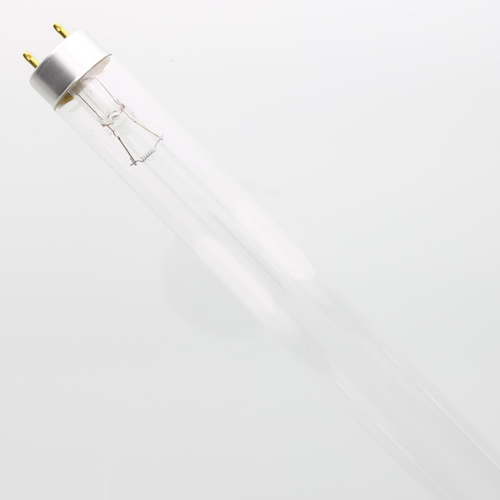
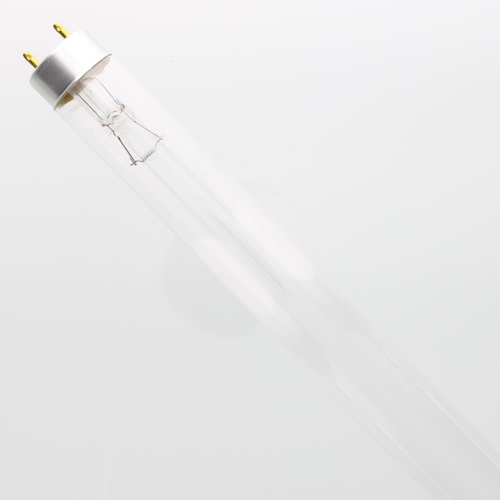
Sankyo Denki G15T8 UV Bulb – 15W 18" Germicidal Lamp

$18.00
(No reviews yet)
SKU:
G15T8 EACH
Availability:
5 - 7 Business Days
Shipping:
Calculated at Checkout
Product Description
15W linear UV-C germicidal lamp (253.7nm) for enclosed air, water, and surface sanitation systems.
SOSCleanroom
Overview

The Sankyo Denki G15T8 is a 15W, 55V UV-C germicidal lamp designed for use in properly engineered UV fixtures and enclosed purification systems. It is specified for 253.7nm output—commonly used for microorganism inactivation in air and water treatment equipment and controlled surface-treatment applications. SKU: G15T8 (EACH).

Key Highlights
  • Electrical: 15W, 55V
  • Spectral Output: 253.7nm (UV-C germicidal)
  • Base Type: G13 Bi-Pin
  • Format: Linear T8, 18" class (fixture dependent)
  • Average Life: 8,000 hours
  • Case Quantity: 25 bulbs
Typical Applications
  • Cleanrooms, laboratories, and controlled environments
  • HVAC systems and enclosed air sanitation devices
  • Drinking water purification and water treatment equipment (system dependent)
  • Food processing, medical facilities, sterilization and disinfection systems
  • Photochemistry, phototherapy, and dermatology equipment where specified by the OEM
Handling Tip 
UV-C is hazardous. Use only in systems designed to fully enclose, shield, or interlock the lamp so eyes and skin are not exposed to direct or reflected UV. Avoid touching the glass with bare hands; use clean nitrile gloves and/or a lint-free wipe to minimize residue and help maintain output.
About Sankyo Denki
Sankyo Denki is recognized for UV lamp and UV-based sterilization technology used in environmental hygiene, food safety, and medical applications. Their germicidal lamp designs are widely implemented in engineered systems where consistent UV output and predictable maintenance intervals matter.
Industry Update:
In July 2025, Ushio announced an agreement to acquire ams OSRAM’s Entertainment & Industry Lamps business, with closing anticipated in Q1 2026 (by the end of March 2026). During and after transitions, customers may see changes such as labeling, packaging, part-number presentation, and distribution channels. Best practice: qualify replacements by the manufacturer code and critical specs (G15T8, 15W, 55V, G13 bi-pin, and 253.7nm) to maintain continuity.
Need help selecting the right product?
If you need additional information please try our SOSCleanroom specific AI ChatBot which draws from our extensive cleanroom specific libraries.
Always confirm compatibility with your fixture/ballast, base type (G13 bi-pin), and required UV wavelength (253.7nm) prior to installation.
The Technical Vault
By SOSCleanroom
UV-C Germicidal Science & System Design
253.7nm UV-C Dose (Fluence) Ballast & Thermal Window Safety & Maintenance
Quick Specs
Product Sankyo Denki G15T8 | SKU: G15T8
Electrical 15W | 55V
Primary UV Output 253.7nm (UV-C germicidal)
Format / Base Linear T8 (18" class) | G13 bi-pin
Life / Pack 8,000 hours (avg.) | Case: 25 bulbs
Why 253.7nm UV-C Works
Germicidal UV (often called UVGI) reduces microbial contamination by disrupting DNA and/or RNA. When microorganisms absorb UV-C, photochemical damage prevents replication—meaning the organism cannot reproduce and is effectively inactivated.
In many engineered systems, UV-C performance is dose-driven. The key variable is dose (also called fluence): UV intensity at the target multiplied by exposure time. Lamp wattage helps define system capability, but the fixture geometry and process conditions determine delivered dose.
How Germicidal Lamps Produce UV-C
Germicidal lamps are typically low-pressure mercury discharge sources. A ballast/driver initiates and controls an electrical discharge through mercury vapor. The excited mercury emits strong UV radiation near 253.7nm. Germicidal systems use UV-transmitting materials so the UV can exit the lamp envelope and reach the target zone.
  • Ballast compatibility is critical: starting method and operating current depend on the fixture design; match OEM electrical requirements.
  • Thermal operating window: UV output depends on lamp wall temperature; fixture airflow and enclosure design influence performance.
  • Warm-up behavior: output stabilizes after start; many systems assume a warm-up period before validation measurements.
  • Output depreciation: UV output decreases with operating hours and surface fouling—manage by hours tracking, cleaning, and planned replacement.
Air, Water, and Surfaces: What Changes Between Applications
The same lamp can deliver very different results depending on the system geometry, distance to target, reflectors, airflow/water flow rate, and exposure time. For engineering and qualification work, focus on delivered dose at the target, not just lamp wattage.
  • Air systems: dose depends on mixing and residence time in the UV zone (duct treatment, enclosures, recirculating devices).
  • Water systems: UV transmittance (UVT), sleeve cleanliness, and reactor hydraulics drive delivered dose.
  • Surfaces: UV is line-of-sight; shadowing and soils reduce dose. UVGI is typically used to supplement validated cleaning/disinfection SOPs.
Replacement Guidance: How to Qualify a Substitute Correctly
  • Use the manufacturer code: retain G15T8 in maintenance records whenever possible.
  • Match electrical requirements: confirm the ballast/driver supports the lamp’s operating conditions (15W / 55V class).
  • Match fit and interfaces: confirm G13 bi-pin base and lamp form factor (linear T8, 18" class) for correct placement in the UV zone.
  • Confirm system requirement: validate the required wavelength (253.7nm) and any fixture-level requirements (shielding, sleeves, interlocks, timers, airflow/water flow limits).
Safety & Controls
UV-C can cause serious eye and skin injury. Use only in equipment designed to fully enclose, shield, or interlock the lamp so operators are not exposed to direct or reflected UV. This product class is commonly treated as a high-risk UV source in industry guidance (risk group considerations apply), so engineering controls and SOPs should be in place.
  • Never view an operating UV lamp directly outside of a rated enclosure.
  • Keep lamps clean: residue and dust can reduce output; handle with gloves and lint-free wipes.
  • Verify fixture integrity: after service, confirm guards/covers, gaskets, and interlocks are intact before returning to operation.
  • Environmental handling: follow site policy and local regulations for disposal of mercury-containing lamps.
Cleanroom Considerations
  • Controlled changeout: treat lamp replacement as a minor maintenance event—minimize packaging debris and particulates.
  • Low-lint handling: stage clean nitrile gloves and cleanroom-appropriate lint-free wipes prior to service.
  • Program management: track operating hours and replace on schedule to maintain consistent performance.
Industry Update: ENI Business Transfer (Expected Close in Q1 2026)
Ushio announced an agreement to acquire ams OSRAM’s Entertainment & Industry Lamps business, with closing anticipated in Q1 2026 (by the end of March 2026). To reduce risk during market transitions, qualify replacements by manufacturer code (G15T8), electrical specs (15W/55V), base type (G13 bi-pin), and required wavelength (253.7nm), and retain these identifiers in maintenance records.
Need deeper specs or fixture guidance?
If you need additional information please try our SOSCleanroom specific AI ChatBot which draws from our extensive cleanroom specific libraries.
For UVGI applications, confirm OEM fixture/ballast requirements, shielding/interlocks, and the required dose for your specific air, surface, or water use case prior to operation.