
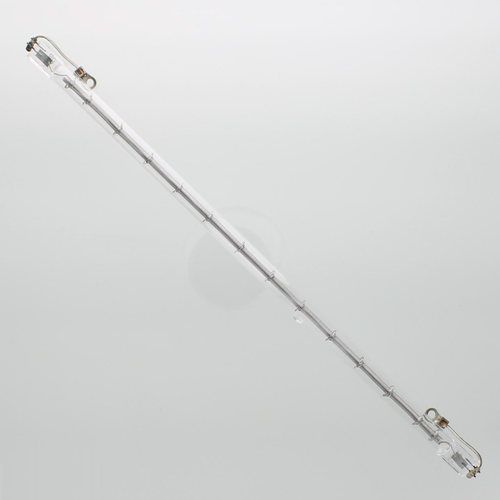
Ushio Lamp QIH480-6600/AMT2 EPI Lamp for AMAT Reactor

$49.95
(No reviews yet)
SKU:
QIH480-6600/AMT2 (1002022)
Availability:
Stock Item
Shipping:
Calculated at Checkout
Product Description
High-power quartz infrared halogen heater lamp for semiconductor epitaxy tools (AMAT reactor applications).
SOSCleanroom
Overview

The Ushio QIH480-6600/AMT2 is a high-output quartz infrared halogen (QIH) heater lamp engineered for semiconductor process equipment that relies on fast, controllable radiant heating. This model is commonly used in Applied Materials (AMAT) EPI reactor configurations that require repeatable thermal performance and stable output over life. SKU: QIH480-6600/AMT2 (1002022).

Key Highlights
  • Mfg. Ordering Code: 1002022
  • Electrical: 480V, 6600W, 13.8A
  • Technology: Quartz infrared halogen heater (short-wave / near-IR heating)
  • Color Temperature: 3200K
  • Average Life: 1500 hours
Typical Applications
  • AMAT EPI reactor / EPI barrel reactor heating (tool-dependent)
  • Semiconductor thermal process zones where rapid, controllable IR heating is required
  • Process equipment requiring stable radiant output for repeatable recipes
Handling Tip 
QIH heater lamps operate at high temperature and (for this model) high voltage. Ensure the tool is locked out, allow full cool-down, and handle the quartz envelope with clean nitrile gloves and/or a lint-free wipe to prevent residue that can create localized hot spots and shorten lamp life.
About Ushio
Ushio is a global photonics and specialty lighting organization focused on “Applying Light to Life,” supporting advanced manufacturing and science with technologies spanning ultraviolet through infrared—including semiconductor process light sources and quartz infrared heater systems.
Industry Update:
In July 2025, Ushio announced an agreement to acquire ams OSRAM’s Entertainment & Industry Lamps (ENI) business, with closing anticipated by the end of March 2026. During and after a transition, customers may see changes such as labeling, packaging, part-number presentation, and distribution channels. Best practice: qualify replacements by the manufacturer code and critical specs (480V/6600W, mechanical envelope/terminals as required by your lamp house, and tool recipe requirements) to ensure continuity.

SOSCleanroom (Specialty Optical Systems, Inc.) has supported specialty lighting customers as a distribution partner for 40+ years.
Need help selecting the right product?
If you need additional information please try our SOSCleanroom specific AI ChatBot which draws from our extensive cleanroom specific libraries.
Always confirm compatibility with your equipment model (lamp house/terminal style, allowed orientation, and thermal recipe requirements) prior to installation.
The Technical Vault
By SOSCleanroom
Quartz IR Heater Engineering
How It Works Semiconductor Heating Electrical & Controls Safety & Handling
Quick Specs
Manufacturer / Ordering Code Ushio QIH480-6600/AMT2  |  1002022
Lamp Type / Technology Quartz infrared halogen heater (QIH) for semiconductor thermal processing
Wattage / Voltage / Current 6600W / 480V / 13.8A
Color Temperature 3200K
Average Life 1500 hours
Primary Application AMAT EPI reactor heating (tool-dependent)
The Science: How a Quartz Infrared Heater Lamp Generates Controlled Heat
A QIH heater is a specialized tungsten-halogen lamp optimized for heat delivery. Electrical current heats a tungsten filament until it becomes white-hot. At that temperature, the filament emits thermal radiation (a continuous spectrum) with a large portion in the near-infrared—ideal for rapid radiant heating.
The “halogen” portion is a small amount of halogen chemistry inside the quartz envelope that helps return evaporated tungsten back to the filament (the halogen cycle). This improves lumen/IR maintenance and supports stable output at high filament temperatures, which is critical when a process recipe depends on repeatable thermal response.
Why QIH Lamps Are Common in EPI & Thermal Process Equipment
Semiconductor processes frequently require precise temperature control and repeatable heating zones. QIH lamps are favored because they provide high power density, rapid response (fast ramp/settle), and controllability through power electronics.
In epitaxy reactors, lamp arrays deliver radiant energy that couples into chamber components and wafers through carefully designed optics, reflectors, and thermal management. That is why replacement qualification must include not only electrical rating, but also the lamp’s physical interface and how the tool controls/monitors temperature.
Electrical & Control Considerations (What Protects Lamp Life)
  • Voltage discipline matters: small over-voltage increases filament temperature, shifting output and reducing life. Maintain the tool’s specified operating point.
  • Soft-start and ramp control: controlled ramp profiles reduce thermal shock and mechanical stress on the filament and seals.
  • Stable regulation: ripple, unstable switching, or mis-calibrated control loops can create output fluctuations that impact recipe repeatability and lamp longevity.
  • Zone uniformity: if your tool uses multi-zone lamp banks, keep replacement lamps matched per OEM guidance to maintain thermal uniformity across the process field.
Mechanical Integration & Handling Notes
  • Verify the interface: confirm the lamp house mounting, terminal style, lead length/termination, and any alignment constraints before installation.
  • Keep quartz clean: fingerprints and residue can create localized hot spots; handle with clean nitrile gloves and lint-free wipes.
  • Avoid shock and bending: quartz envelopes and seals are durable in operation but vulnerable to impact; protect during unpacking and staging.
  • Cool-down protocol: follow the OEM cool-down window before removal; hot handling can damage components and increases break risk.
Industry Update: ENI Business Transaction (Expected Close by End of March 2026)
In July 2025, Ushio announced an agreement to acquire ams OSRAM’s Entertainment & Industry Lamps (ENI) business, with closing anticipated by the end of March 2026. For tool owners, the practical takeaway is disciplined replacement qualification and documentation: retain core identifiers (QIH480-6600/AMT2 / 1002022) and qualify replacements by electrical operating point, mechanical interface, and the thermal performance expectations of your chamber.
Cleanroom Considerations

Treat heater lamp changes as a controlled maintenance event: minimize packaging debris, keep lamp-house interfaces clean, and prevent particulate transfer to reflectors, quartz windows, and chamber shields.

Stage clean nitrile gloves and cleanroom-grade lint-free wipes/swabs during installation to reduce contamination risk and prevent residue transfer to quartz and nearby optical/thermal surfaces.

Need deeper specs or cross-references?
If you need additional information please try our SOSCleanroom specific AI ChatBot which draws from our extensive cleanroom specific libraries.
For semiconductor tools, confirm OEM requirements (approved power electronics/control method, lamp house hardware, allowable orientation, cooling/airflow, and safety interlocks) and follow the tool’s qualification procedure prior to return-to-service.