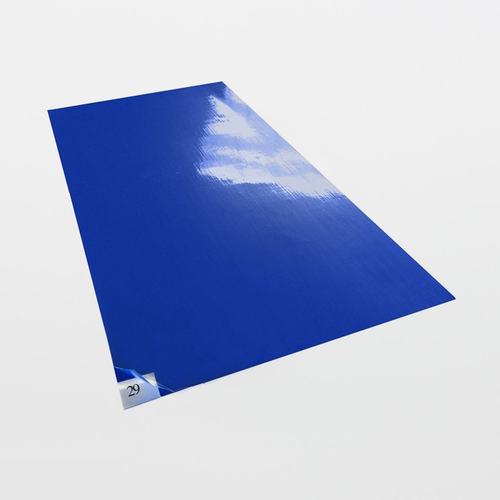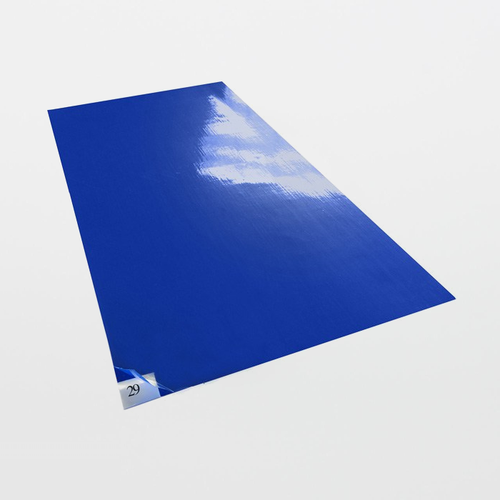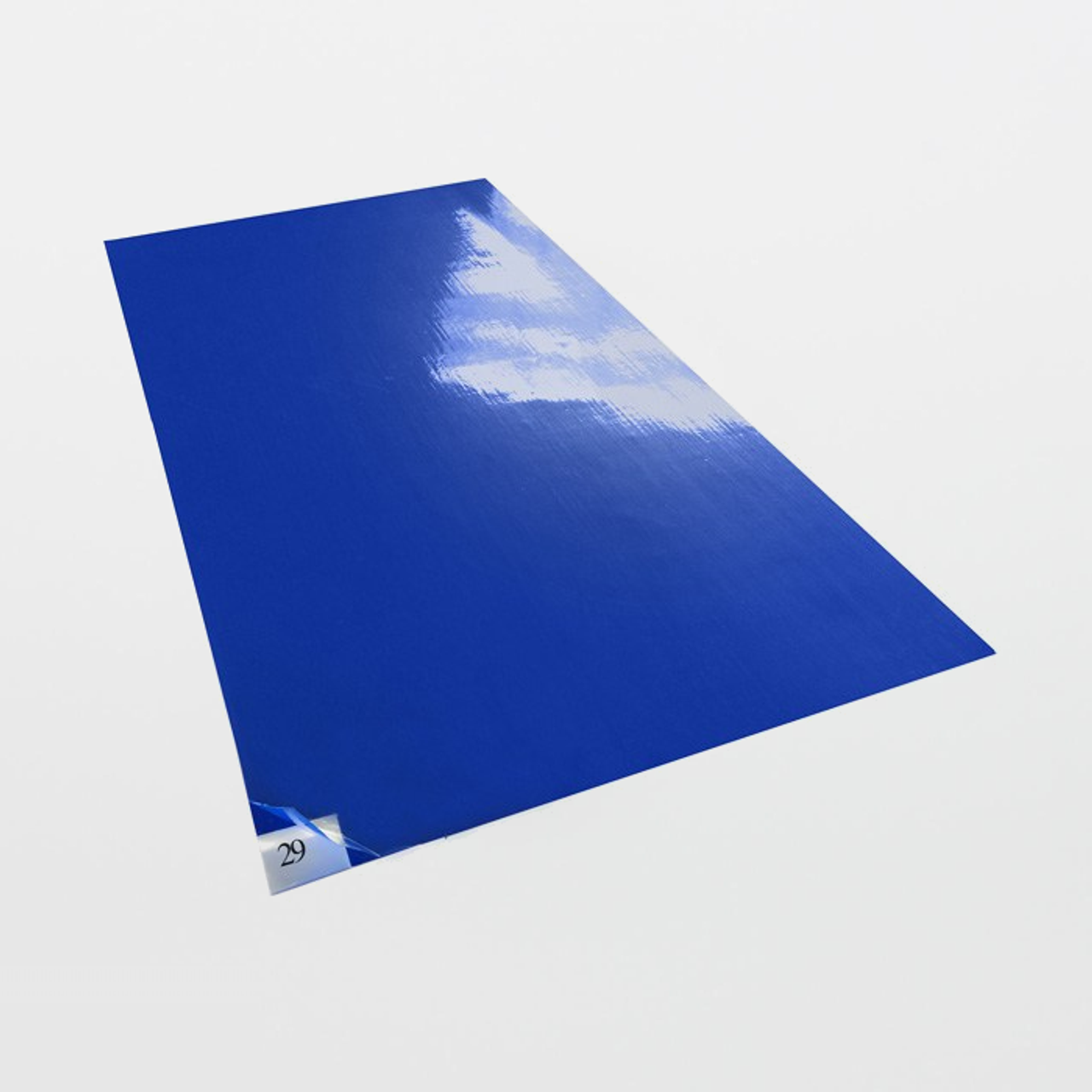
18" x 45" Adhesive Tacky / Sticky Mats (120 Sheets)

$61.25
(No reviews yet)
SKU:
CRP0430-2
Availability:
Stock Item
Shipping:
Calculated at Checkout
Quantity Option (Case):
4 Mats of 30 Sheets (120 Sheets)
18" x 45" Adhesive Tacky / Sticky Mats (120 Sheets) — Multi-Layer Particle Control at Cleanroom Entrances

These 18" x 45" adhesive tacky mats are multi-layer entrance control mats designed to remove dirt and other particulate from foot traffic and cart wheels as people and material move into cleanrooms, labs, and other controlled areas. The peel-off, numbered sheets make layer changes fast and visible, helping teams maintain a consistently “fresh” contact surface where outside particulate most commonly enters the process.

Cleanroom control note (EU GMP Annex 1 / CCS alignment)

Tacky mats are typically used as a practical, risk-based control at room transitions (corridors to change areas, gowning to classified space, material transfer points). For Annex 1 programs, treat them as one element of your contamination control strategy (CCS): define where they are used, how often layers are changed, and how they are introduced/handled to prevent the mat itself from becoming a transfer object.


Published configuration
Product name 18" x 45" Adhesive Tacky / Sticky Mats (120 Sheets)
SKU CRP0430-2
Mat size 18" x 45"
Sheets per mat 30 individually numbered, peel-off sheets (30-layer mat)
Sheets per case 120 sheets total (4 mats per case)
Available colors Blue, White, Grey
Availability Stock item

Note: Specifications shown are taken from the published SOSCleanroom listing. If a program requires additional material, adhesive, or cleanliness documentation, request supporting data through your quality and procurement process.


Mats features and benefits
  • Numbered corner tabs help teams track remaining sheets at a glance.
  • Smooth, effective adhesive surface is designed to stand up to shoes, booties, and cart wheels without routine surface damage.
  • Peel-off sheets eliminate messy cleaning and simplify maintenance of a consistently tacky contact layer.
  • A bright surface makes it easier to see when the top layer is loaded and should be changed.

Installation
  1. Peel off the protective film on the back side of the mat (opposite side that the numbers face) to expose the adhesive backing.
  2. Place the mat on a clean, dry surface in the desired location.
  3. Peel off the top layer of protective film to expose the first usable sheet (number 30).

Practical use guidance (technicians and facilities)
  • Place for behavior control: Install where traffic naturally “commits” to entry (door thresholds, airlocks, gowning exits), not where carts can bypass the mat.
  • Define change criteria: Change layers based on a visual loading trigger and a maximum time/traffic rule. Overloaded sheets lose effectiveness and can re-transfer particulate.
  • Foot-and-wheel discipline: Encourage a full contact step pattern and ensure cart wheels roll fully across the mat (avoid half contact that defeats the control).
  • Transfer-object prevention: Treat unused mats and opened cases as controlled items (bagging discipline, defined storage location, controlled introduction to the classified area).
  • Not a substitute for cleaning: Mats help reduce incoming particulate at the boundary, but they do not replace validated cleaning/disinfection of floors and traffic routes per your site program.

Common failure modes
  • Sheet edge lift/curl: Often caused by poor adhesion to dusty or damp floors. Prevent by cleaning and fully drying the placement area before install.
  • Under-changing: A visibly loaded sheet becomes a re-distribution surface. Prevent with a defined change trigger and logged checks at shift start/end.
  • Bypass traffic: Carts or personnel detour around the mat. Prevent by placing mats where workflow forces contact and by training on why the control exists.
  • Poor transfer handling: Unbagged mats moved from uncontrolled storage to clean areas can import contamination. Prevent with zone-based storage and defined transfer packaging.

Documentation

Manufacturer technical data sheet / validation documentation: Not published on the listing. If your quality system requires adhesive composition, cleanliness data, or formal qualification support, request documentation through SOSCleanroom before standardizing.


If you have any questions please email us at Sales@SOSsupply.com or give us a call at (214)340-8574. Check out the AI ChatBot powered by SOSCleanroom data libraries - give it a try! THIS IS NEW FOR 2026! © 2026 SOSCleanroom.com

Multi-layer “boundary control” that actually works: how 18" x 45" tacky mats reduce tracked-in particles without becoming the next contamination source

The Technical Vault  |  By SOSCleanroom

Entry contamination is usually boring and expensive: particulate tracked in on shoe covers, wheels, dollies, and carts, then redistributed until it becomes a yield problem. The 18" x 45" Adhesive Tacky / Sticky Mats (120 sheets per case) are a simple boundary control designed to remove dirt and particulates at the transition point where “outside” most often becomes “inside.” The layers are numbered peel-off sheets, which turns mat maintenance into a visible, auditable action instead of a judgment call.

The mistake to avoid: treating tacky mats like a substitute for floor cleaning or a one-time install. Their value comes from placement, change discipline, and transfer handling—so the mat reduces particle load instead of becoming a tracked, saturated “transfer object.”

The Operational Problem It Solves

Most boundary contamination enters as tracked particulate (solids on shoes and wheels). Once inside, it is redistributed by airflow, traffic, and cleaning activity. A tacky mat works when it:

  • Captures particles at first contact (shoe/bootie tread and wheel surface).
  • Stays “fresh” through defined layer changes (before the sheet overloads and re-transfers particulate).
  • Does not become the contaminant (no dirty storage, no uncontrolled introduction, no curled edges collecting debris).

What It’s For

These 18" x 45" adhesive mats are multi-layer entrance control mats designed to remove dirt and particulates from foot traffic and cart wheels as people and materials move into cleanrooms, labs, and other controlled areas. The numbered peel-off sheets make layer changes fast and visible, helping teams maintain a consistently usable contact surface at the highest-risk transition points.

Practical regulatory/quality alignment note: in programs that use a contamination control strategy (CCS), treat tacky mats as a risk-based transition control—define placement, change frequency/criteria, and handling so the mat itself does not become a transfer mechanism.

Quick Specs

Product name 18" x 45" Adhesive Tacky / Sticky Mats (120 Sheets)
SKU CRP0430-2
Mat size 18" x 45"
Sheets per mat 30 individually numbered peel-off sheets (30-layer mat)
Sheets per case 120 sheets total (4 mats per case)
Available colors Blue, White, Grey
Availability Stock item

Note: Specifications shown are taken from the published SOSCleanroom listing. If your program requires additional material, adhesive, or cleanliness documentation, request supporting data through your quality and procurement process.

Decision Drivers

  • Layered, numbered sheets: visible “remaining life” at a glance; makes layer change discipline easier to standardize.
  • Coverage sized for traffic reality: 18" x 45" supports full-step contact and wheel roll-through when placed correctly.
  • Maintenance without “cleaning the mat”: peel-off layers eliminate messy wiping of a dirty adhesive surface.
  • Behavior control: works best where workflow forces contact (thresholds, airlocks, gowning exits), not where traffic can bypass.
  • Program defensibility: the control is only as good as the documented change trigger, storage/transfer discipline, and logged checks.

Installation

Step Action
1 Peel off the protective film on the back side of the mat (opposite side that the numbers face) to expose the adhesive backing.
2 Place the mat on a clean, dry surface in the desired location.
3 Peel off the top layer of protective film to expose the first usable sheet (number 30).

Practical Use Guidance (Technicians and Facilities)

  • Place for behavior control: install where traffic naturally commits to entry (door thresholds, airlocks, gowning exits), not where carts can bypass.
  • Define change criteria: change layers using a visual loading trigger and a maximum time/traffic rule. Overloaded sheets lose effectiveness and can re-transfer particulate.
  • Foot-and-wheel discipline: require full-step contact; ensure wheels roll fully across the mat (avoid half contact that defeats the control).
  • Transfer-object prevention: treat unused mats and opened cases as controlled items (bagging discipline, defined storage location, controlled introduction to the classified area).
  • Not a substitute for cleaning: mats reduce incoming particulate at the boundary; they do not replace validated floor cleaning/disinfection of traffic routes per your site program.

Common Failure Modes — and How to Prevent Them

Failure mode Prevention control
Sheet edge lift/curl Usually caused by poor adhesion to dusty or damp floors. Clean and fully dry the placement area before installation; avoid placing on contaminated wax/finish build-up.
Under-changing A visibly loaded sheet becomes a redistribution surface. Set a visual trigger plus a maximum interval; log checks at shift start/end.
Bypass traffic Carts or personnel detour around the mat. Place mats where workflow forces contact and train on why the control exists.
Poor transfer handling Unbagged mats moved from uncontrolled storage to clean areas can import contamination. Use zone-based storage and defined transfer packaging/presentation rules.

Where This Product Fits in a Controlled Cleaning Program

Use these tacky mats as a boundary particulate-reduction control at transitions. The most defensible approach is simple: (1) define locations (personnel entry, material transfer, airlocks), (2) define change criteria (visual loading plus max time/traffic), (3) define handling (storage, introduction, and disposal), and (4) verify the control remains effective (routine checks and change logs). When particle trends shift, these controls reduce investigation time because the mat’s condition and maintenance history are known variables rather than assumptions.

Source Basis